Ornamental · Fabaceae
Hairy Vetch
Vicia villosa
Sown in fall, this nitrogen-fixing cover crop dresses the winter ground and quietly readies the plot for spring.
Full sun
Every 7–14 days
180–240 days
USDA 4–8
Overview
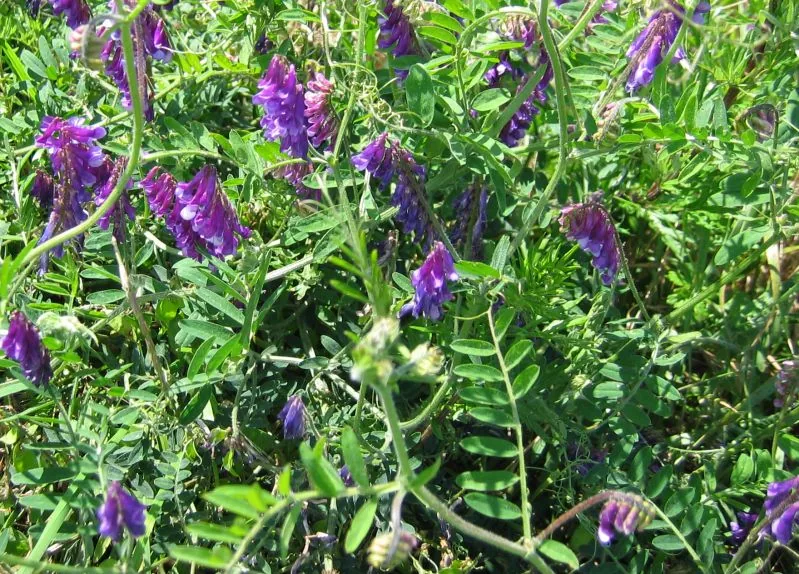
Hairy vetch is the cool-season legume that turns bare autumn ground into something with purpose, grown less for display than as a working cover crop and green manure. It settles across the plot as a low, vine-like mat of fine, feathery leaves and reaches for anything it can climb, which is why it looks so at home threaded through a stand of cereal rye. Its spring moment arrives with violet-purple to blue-purple flowers, a brief flush of color just before the planting is cut back.
The season it keeps is what makes it such a satisfying part of the garden's rhythm. As a legume it works with Rhizobium bacteria to draw nitrogen from the air and store it in root nodules, then returns that nitrogen to the ground as the terminated planting breaks down. A healthy stand can carry much of the nitrogen a following corn crop asks for, so the plot arrives at spring already nourished.
It fits a place beautifully, with two things worth keeping in view. It is hard-seeded and reseeds freely, so it can overstay its welcome as a volunteer if left to set seed. And unlike the untroubled clover, heavy grazing can poison cattle and horses, so it belongs in the plot as a soil crop first and a forage a distant second.
Care
The short version: give it full sun, well-drained ground, and seed inoculated with the right Rhizobium. Sow it in fall to fix nitrogen over winter, then cut it down at flowering before it sets seed.
Light
Hairy vetch shows its best in full sun and accepts partial sun with little complaint. More light means a fuller stand and more nitrogen fixed, so an open, sunlit corner of the plot is the place to give it.
Water
Once established it takes dry, well-drained soil in stride and leans on the moisture of fall, winter and spring, so watering it outdoors is rarely part of the routine. Waterlogging is the one thing it will not abide, since standing wet invites crown and root rot.
Soil
It settles happily into well-drained sandy to loam soils and forgives low fertility and a little acidity, preferring a pH of 6.0 to 7.5. Its appetite for nitrogen is slight, though it does want enough phosphorus, potassium and sulfur to come into its own.
Temperature
This is a hardy cool-season plant, at ease with cold from about -20°F to 75°F (-29°C to 24°C). That winter constitution is exactly what lets it hold the ground as an overwintering cover crop across zones 4 to 8.
Humidity
Everyday outdoor humidity suits it, so there is no figure to chase. Air movement is the greater consideration, since a crowded, damp stand is what invites crown rots to settle in.
Feeding
As a legume it feeds itself, fixing its own nitrogen through Rhizobium nodules, so nitrogen fertilizer has no place in its care. Inoculate the seed well and see that the soil carries enough phosphorus, potassium and sulfur instead.
Pruning
Grown as an ornamental it asks for no pruning. As a cover crop the parallel step is termination, mowing, rolling or crimping at flowering, or tilling it in, before it sets mature seed, so it gives up its nitrogen and does not reseed.
Repotting
none
Size & spacing
A stand rises to 3 to 12 feet (90 cm to 3.7 m) of trailing growth, with each plant reaching about 2 to 6 feet (60 to 180 cm) as it drapes over its neighbors. Sown thickly as a cover crop, it settles into a smooth, dense mat across the plot rather than standing as separate plants.
When to plant
Hairy vetch keeps a graceful fall-to-spring calendar. Sow it about 30 to 45 days before the killing frost so it roots before winter, let it hold quiet through the cold, and terminate the stand as it flowers in spring to release its nitrogen and forestall reseeding.
Northern hemisphere
Southern hemisphere
Typical months for a temperate climate: start earlier in warm zones, later where spring frosts linger.
- Sow: Not started indoors; direct sown outdoors
- Plant: Late summer to fall, about 30 to 45 days before killing frost, to overwinter; often mixed with cereal rye for support
- Harvest: Violet-purple to blue-purple flowers in spring; terminate at bloom for green manure
Hardiness
USDA hardiness zones: 4–8
Temperature: down to -34°C
Troubleshooting
Most of what troubles hairy vetch gathers around three themes: seed that reseeds, a planting that never found its feet, and wet-soil rots or the aphids of spring. Read the signs below and you can address the cause rather than the symptom.
Vetch that lingers as a volunteer in the next season
The habit to plan around is hard-seed reseeding, the quiet cost of letting a planting run all the way to maturity. Somewhere between 10% to 20% of the seed carries a hard coat, so it can rest in the soil for a season or longer, then surface in a later grain or vegetable bed and drift toward the edges of the plot. Timing is the whole answer: cut the stand at flowering before seed forms, then cultivate or spot-treat any stragglers well before they bloom, and the planting stays where you intended it.
Fix:
- Terminate the stand at flowering, before mature seed forms, by mowing, rolling/crimping or tilling
- Cultivate or spot-treat volunteer seedlings before they flower
A pale, uneven planting with little nitrogen to show
Behind a lackluster, patchy planting the usual story is failed inoculation. When the right Rhizobium never reaches the seed, few nitrogen-fixing nodules form and the foliage settles into a tired yellow. A late sowing, loose seed-to-soil contact, waterlogged ground, or thin phosphorus, potassium and sulfur can each dull the effect further. Lift a few roots to look for pink, active nodules, then inoculate with fresh vetch or pea Rhizobium, firm the seed in 30 to 45 days before killing frost, and set the drainage right.
Fix:
- Inoculate seed with the correct vetch/pea Rhizobium before sowing
- Drill or firm seed for good soil contact and sow 30 to 45 days before killing frost
- Choose well-drained sites and correct P, K and sulfur deficiencies
Wilt, soft crowns, and aphids arriving with spring
Waterlogged ground sets the stage for root and crown rots such as Sclerotinia, which leave soft, discolored tissue and a whitish fuzz gathering at the base of the plants. Aphids are the season's other visitor, settling onto tender new shoots and the undersides of leaves as spring warms. A well-drained site keeps the rots at bay, a rotation away from legumes helps where they build, and the lady beetles the planting draws in tend to the aphids on their own.
Fix:
- Improve drainage and avoid waterlogged sites
- Rotate away from legumes if soilborne rots build up
- Encourage lady beetles and other beneficials, which vetch attracts, to manage aphids
Toxicity
For cats, dogs and people the growing planting is low risk, and the leafy foliage suits rabbits and birds in moderation. The seeds hold mild toxins, so keep them out of reach. The clear warning belongs to grazing animals: heavy hairy vetch can cause fatal toxicosis and bloat in cattle and horses, so never let livestock graze pure or thick stands.
Toxic to
Horses · Livestock
Safe for
People · Cats · Dogs · Rabbits · Birds
Horses Caution
The real concern belongs to horses turned out on heavy vetch. Grazing it can bring on hairy vetch toxicosis, marked by fever, skin sores, hair loss and weight loss, while a lush legume planting can also invite bloat.
Livestock Caution
Cattle face the very hazard horses do. A ration weighted toward hairy vetch can bring on fatal granulomatous toxicosis, with fever, dermatitis, alopecia and weight loss, alongside the familiar legume bloat, so pure or heavy plantings are no place to graze stock.
Cats Safe
Around the growing planting a cat is at low risk. Should one graze a good deal of foliage, or more often nose into the seeds, a brief upset stomach is the extent of it.
Dogs Safe
The story for dogs echoes the cats. A mouthful of leaves tends to pass through unremarked, while a helping of gulped seeds may bring a bout of vomiting or a loose stool.
Rabbits Safe
A modest share of the leafy growth sits comfortably within a mixed forage. The seeds are the part to keep out of reach, since they hold the plant's mild toxins.
Birds Safe
Foraging birds move through the foliage untroubled. Since the seeds hold mild toxins, they are not a feed to offer by design.
People Safe
This belongs in the field, not on the table. Handling it presents no real hazard, though the raw seeds and sprouts hold L-canavanine and are not food.
The growing cover-crop foliage is low risk for pets; keep cats and dogs from gorging on plants and especially from eating the seeds. The greater hazard is to grazing livestock: do not let cattle or horses graze pure or heavy hairy vetch stands, which can trigger hairy vetch toxicosis and bloat.
Helpline numbers

United States
ASPCA Animal Poison Control: (888) 426-4435 (fee applies)

United Kingdom
Animal PoisonLine: 01202 509000 (fee applies)

Australia
Animal Poisons Helpline: 1300 869 738
Varieties
Only a few named selections reach the seed trade, most of them shaped for better winter survival and an earlier spring maturity.
'Purple Bounty'
A cold-hardy release shaped to weather northern winters and flower early, which brings the spring termination forward on the calendar.
'Purple Prosperity'
A companion to 'Purple Bounty' that carries through winter dependably and matures early, offering the same welcome head start on spring termination.
Common vetch (Vicia sativa)
A related cover crop set apart by its larger seed and slimmer cold tolerance beside hairy vetch, with seeds that share the same vetch toxicity concerns.
Companions
Hairy vetch pairs best with a sturdy grain it can climb and a heavy feeder that wants the nitrogen it leaves behind, and worst with the winter grains it can contaminate by reseeding.
Plant near
Cereal rye: Rye provides a sturdy structure for the climbing vetch tendrils to scramble up, improves weed suppression and residue, and balances the nitrogen contribution
Corn: Hairy vetch terminated in spring supplies a large flush of fixed nitrogen that can partially replace fertilizer for a following corn crop
Keep apart
Winter wheat or other winter grains: Hard-seeded vetch readily reseeds and becomes a contaminating volunteer weed in winter grain crops
How to propagate
Hairy vetch enters the plot in a single way, from seed sown straight into the ground, and the right inoculant is the quiet detail that makes all the difference.
SeedEasy
Late summer to fall, about 30 to 45 days before killing frost, for overwintering · Establishes in fall, grows slowly over winter, then accelerates in spring
Hairy vetch comes into the garden by one graceful route, sown straight into the ground in late summer to fall, about 30 to 45 days before the killing frost, so it can settle before winter closes in. Give the seed the proper Rhizobium first, then drill it at roughly 15 to 20 lb per acre or broadcast 25 to 30 lb per acre, most often woven together with cereal rye for support. The planting roots in fall, holds quiet through winter, and surges back in spring as the warmth returns.
Myths
Vetches and legume cover crops make harmless grazing, much like clover.
Vetch looks the part of easy pasture, yet it does not play that role the way clover does. Hairy vetch is a lovely nitrogen-fixing cover crop, but its seeds carry L-canavanine and, in some vetch seed, cyanogenic compounds, and heavy grazing can cause hairy vetch toxicosis, a systemic granulomatous disease, along with bloat in cattle and horses. Keep it as a soil crop, not safe pasture.