Ornamental · Fabaceae
White Clover
Trifolium repens
A soft green carpet that turns the lawn into an easy, unfussy place to live outdoors.
Full sun
Every 5–10 days
40–90 days
USDA 3–10
Overview
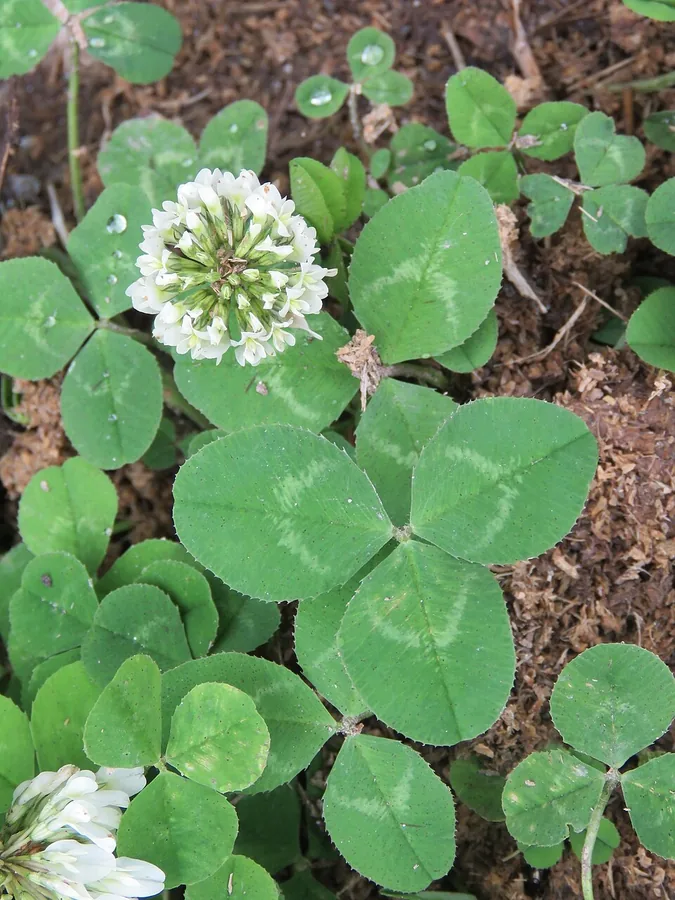
White clover reads as a soft, even carpet across a yard, equally at home in a polished lawn or a loose, meadowy border. It knits itself together through stolons, low stems that travel across the ground and root as they go, so a planting settles into one continuous, ground-hugging layer. Its trifoliate leaves, marked with a pale V-shaped watermark, and its round white to pinkish flower heads give the whole space a relaxed, cottage-garden ease.
Part of its appeal is how little it asks of a household. Partnering with Rhizobium bacteria at the roots, it draws its own nitrogen from the air and feeds the plants around it, which keeps a lawn green without the routine of feeding. That self-sufficiency is why it suits the low-maintenance garden, tucked into lawn blends, run as a cover crop, or laid as living mulch beneath vegetables and orchard trees.
It also fits a life lived outdoors. White clover shrugs off cold to -29°F (-34°C), takes mowing and foot traffic in stride, and stays green on little water, so it holds up to garden gatherings and everyday play alike. The two things to plan around are its habit of spreading beyond its bed and the bees it welcomes at ground level through the flowering season.
Care
The short version: set white clover in full sun to light shade on moist, well-drained soil, water it through a hard drought, and leave the fertilizer aside, since it feeds itself. An occasional mow keeps the look low and tidy.
Light
White clover looks its best in full sun, where it forms the thickest, most even carpet and the most flowers, though it takes partial sun and partial shade in stride. A shadier corner still fills in, just a little more open, which suits a soft, informal planting.
Water
Keep the soil moist but well drained, watering roughly every 5 to 10 days through dry weather. Once established, clover carries a garden through drought, and even if a long hot spell leaves it brown and thin, it greens back up on its own when the rain returns.
Soil
Clover is undemanding and settles into most soils, though it looks its lushest in a moist, fertile, well-drained loam. A pH of 6.0 to 7.0 suits it, and good drainage counts for more than rich ground, since the plant supplies its own nitrogen.
Temperature
This is a plant for a garden that lives through every season, holding from cold as low as -29°F (-34°C) to summer heat near 95°F (35°C). That reach is what carries it across hardiness zones 3 through 10.
Humidity
Ordinary outdoor air suits it perfectly, so there is nothing to adjust. Clover takes dry spells and humid stretches alike, as long as the soil stays evenly moist.
Feeding
One of its quiet luxuries is that it needs little to no fertilizer, drawing its own nitrogen from the air. The only worthwhile step is coating the seed with Rhizobium where those soil bacteria are missing, more often in warmer zones.
Pruning
An occasional mow or trim keeps clover low and tidy and the look composed, and the plant takes the cut without complaint. Regular mowing also eases back the flowers, a tidy touch in play areas where bare feet and foraging bees might otherwise meet.
Repotting
none
Size & spacing
White clover stays low at 4 to 8 inches (10 to 20 cm), while each plant travels outward on stolons to cover 1 to 3 feet (30 to 100 cm). That easy spread is what turns a light sowing into an unbroken carpet across a single season.
When to plant
Clover is easy to work into the calendar. Sow it outdoors in spring or late summer, allowing about 40 days before the first hard frost, and it greens up within weeks. The flowers arrive from late spring through fall, peaking in early summer for a soft, seasonal display.
Northern hemisphere
Southern hemisphere
Typical months for a temperate climate: start earlier in warm zones, later where spring frosts linger.
- Sow: Not typically started indoors; direct sow outdoors.
- Plant: Spring or late summer; allow about 40 days before first killing frost for late-summer seeding.
- Harvest: Late spring through fall (peak early summer); round white to pinkish flower heads.
Hardiness
USDA hardiness zones: 3–10
Temperature: down to -40°C
Troubleshooting
White clover rarely causes real trouble, and most of its so-called problems come down to where it sits in a garden and the company it keeps. Match what you notice below, then decide whether to guide it or simply enjoy it as it is.
Clover fading brown and thin in a dry spell
Because its roots sit shallow, a long, hot drought can leave clover looking brown and patchy for a time. Happily, an established planting almost always returns once the rain does. Water deeply through the driest stretch to hold the soil moist, then let the garden recover at its own pace.
Fix:
- Water deeply during prolonged drought to keep soil moist
- Allow established stands to recover naturally once rainfall resumes
Clover drifting into the lawn in spreading patches
The spreading patches trace back to creeping stolons, low stems that run over the soil and root wherever a node lands, so a few plants merge into a mat. Low soil nitrogen quietly favors clover over hungry grass. Where a crisp lawn is the goal, feed the turf to thicken the grass and treat with a broadleaf herbicide containing fluroxypyr or clopyralid, which works best in fall.
Fix:
- Decide whether clover is desirable (eco-lawn) or a weed before acting
- Fertilize turf with nitrogen to favor grass over clover
- For removal, apply a broadleaf herbicide such as one containing fluroxypyr or clopyralid, most effective in fall
Bees at work in the flowers underfoot
In bloom, white clover draws honeybees and bumblebees right down at ground level, a lovely thing for the garden but a consideration for bare feet in play areas. The graceful fix is to mow off the open flowers before children are out, wear shoes on flowering patches, and leave some clover unmown elsewhere so the pollinators keep their place in the garden.
Fix:
- Mow before or during peak bloom to temporarily remove flowers in high-traffic or play areas
- Wear shoes when walking on flowering clover
- Keep some unmowed clover elsewhere to support pollinators
Toxicity
For most homes this is reassuring: white clover is non-toxic and even edible. Cats, dogs, rabbits, birds, and people share the garden with it safely, and its young leaves and flowers have long found their way into the kitchen in small amounts. The single caution is for grazing horses and livestock, where heavy feeding on lush stands can bring on bloat or a harmless drooling called slobbers.
Safe for
People · Cats · Dogs · Horses · Rabbits · Livestock · Birds
Cats None
Nothing here to trouble a cat. A leaf or flower nibbled in passing does no harm, since clover holds nothing that bothers them.
Dogs None
Dogs can nose through it, chew it, or roll across it freely. As a non-toxic plant, it makes a curious mouthful a non-event.
Horses Mild
For horses, clover is good forage in normal amounts. The one thing to watch is heavy grazing on lush stands, where clover can occasionally carry a fungus behind the harmless but messy drooling known as slobbers.
Rabbits Safe
A rabbit favorite and a wholesome treat, with both the leaves and flowers safe to graze.
Livestock Mild
Fine pasture, though a belly full of lush, wet clover can bring on bloat in cattle, sheep, and goats. A swollen left flank and clear discomfort are the signs, so ease ruminants onto rich stands rather than turning them out hungry.
Birds Safe
No concern for birds. Hens and other poultry can peck the leaves and flowers with no trouble.
People Safe
The young leaves and flower heads are edible and have long been eaten in small amounts, so clover is safe for people, with no toxic parts to work around.
Safe for cats, dogs, and people. Note that lush white clover can cause bloat in grazing ruminant livestock (cattle, sheep) and clover can occasionally accumulate cyanogenic glycosides or fungal infection affecting grazing animals, but it is excellent forage and not poisonous to pets or people.
Varieties
White clover comes in a range of scales, from tall forage types to compact lawn selections, each lending a slightly different look to a space. These are the ones most likely to suit a garden.
Ladino clover
Ladino is the large, vigorous forage type, growing two to four times taller than the intermediate clovers and fixing the most nitrogen of the group.
Dutch white clover
Dutch white clover is the classic low lawn clover, around 6 to 12 inches (15 to 30 cm) tall and unbothered by summer heat, the easy choice for a relaxed green space.
Microclover
Microclover gathers the small-leaved turf selections such as Pirouette and Pipolina, which stay low, flower sparingly, and melt almost invisibly into a lawn.
Companions
Clover pairs well with plants it can feed. Its nitrogen-fixing roots support neighboring grass and crops, which is why it turns up in lawn mixes and as a living mulch.
Plant near
turf grasses (fescue, ryegrass): Clover fixes nitrogen via Rhizobium that feeds neighboring grass, reducing fertilizer needs in lawn mixes.
vegetables and orchard/vineyard crops: Low-growing living mulch that suppresses weeds and enriches soil with nitrogen.
How to propagate
Filling out a planting could hardly be simpler. Sow fresh seed, or let the clover spread itself and settle in on its own.
SeedEasy
Spring or late summer (about 40 days before first killing frost) · Establishes within several weeks; full stand in one season
Most clover is simply scattered over the soil in spring or late summer, allowing about 40 days before the first hard frost for a late sowing. Where the right soil bacteria are absent, more common in warmer zones, coat the seed with Rhizobium first. A new planting settles in within a few weeks and covers the ground fully across one season.
DivisionEasy
Spring through early fall · Quickly, as stolons root at the nodes
Clover also fills a space on its own, sending out creeping stolons that root at every node into a self-mending carpet. Rooted pieces can be lifted and moved any time from spring through early fall, and they take hold quickly because their roots are already formed.
Myths
Clover is only a lawn weed, best done away with.
Clover earned its weedy reputation in the era of broadleaf herbicides, yet it brings far more to a garden than that suggests. It fixes its own nitrogen, feeds pollinators, and asks for next to nothing, which is why designers and gardeners now weave it on purpose into eco-lawns, bee lawns, cover crops, and living mulch.