Shrub · Rosaceae
Hybrid Tea Rose
Rosa
Give it full sun, deep water, and a hard spring cut, and the hybrid tea rose brings long-stemmed blooms to the garden from summer to fall.
Full sun
Every 3–8 days
USDA 5–9
3–7 ft · 0.9–2.1 m
Overview
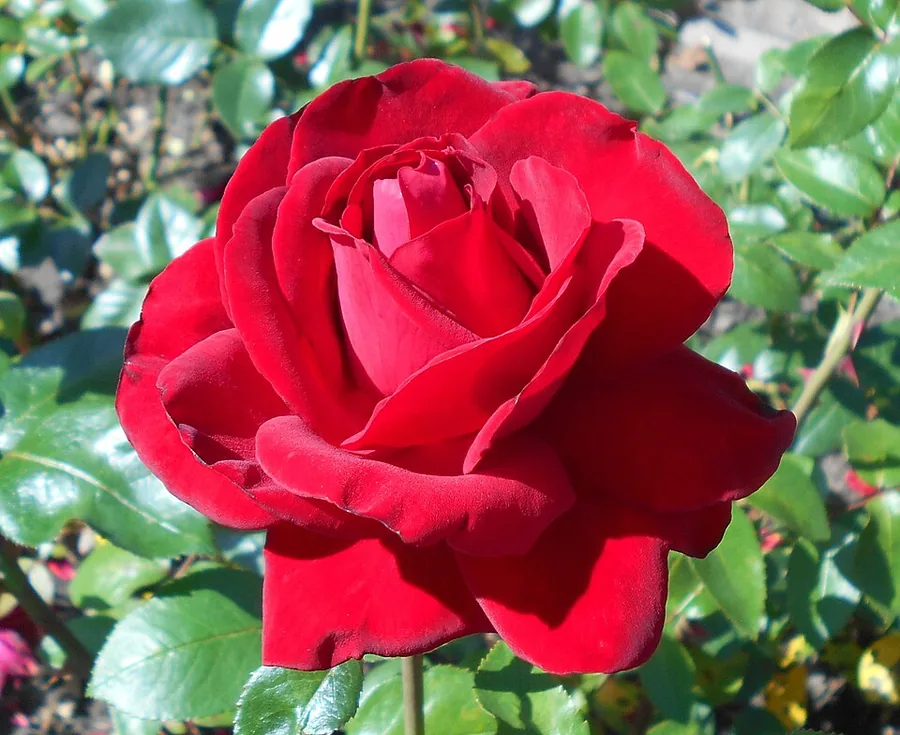
The hybrid tea is the rose of the imagination, the one bloom held high on a long, elegant stem that fills the florist's bucket and, cut fresh, a vase on the dining table. It descends from the old tea roses crossed with hardier hybrid perpetuals, and it carries the best of that heritage. What it gives the garden is repeat blooming across the season on a plant poised enough to overwinter outdoors through zones 5 to 9.
Upright and quietly formal, these shrubs make a natural centerpiece where you want the eye to land, whether that is a bed by the entry or a border framing a seating area. They rise 3 to 7 feet (90 to 210 cm) and set the tone of a sunny, well-tended corner, asking only for full sun, rich soil, and steady moisture. The one exchange for that presence is care, since a hybrid tea calls for a firm annual pruning and an occasional watch for disease.
None of that need deter someone new to the border, so long as the seasonal routine becomes part of the week. A hard spring cut, a deep drink at the base, feeding through each flush, and dry foliage keep it handsome and generous with cut stems all summer, ready to move from garden to table. The thorns are the only real hazard, so a pair of gloves belongs with the tools.
Care
The short version: give it full sun, at least six hours, in a spot with loose, rich, well-drained soil that suits a considered garden. Water deeply at the base so the top half of the soil dries between drinks, cut the canes hard each spring, and feed through the season until about six weeks before frost.
Light
Hybrid teas want full sun, six hours or more of direct light a day, to bloom well and stay in fine form for the border. They will accept a little partial sun, though shade only brings weak, leggy growth and far fewer flowers to enjoy. Morning sun is the most flattering, since it lifts the dew early and keeps disease at a distance.
Water
Water deeply but seldom, soaking the root zone and then letting the top half of the soil dry before the next drink. In warm weather that settles at about twice a week, easing to every 8 days as the season allows. Always water at the base with a soaker hose, since wet leaves are simply where black spot and mildew begin.
Soil
Plant into loose, rich, well-drained loam generous with organic matter. A pH between 6.0 and 7.0, close to neutral, suits it best. Drainage is what truly matters, since a rose will not forgive ground that stays soggy underfoot.
Temperature
These roses hold up across a wide band, weathering lows near -20°F (-29°C) in zone 5 and summer highs to 100°F (38°C). Even the hardiest appreciate a winter mulch drawn over the graft in the coldest zones.
Humidity
Ordinary outdoor humidity serves it perfectly, so there is no figure to chase. Airflow counts for far more than the moisture in the air, since crowded, still, damp corners are exactly where the fungal diseases settle.
Feeding
Feed through the growing season, beginning as the plant first leafs out and again after each flush of bloom. Choose a balanced rose fertilizer or a slow-release shrub formula, and stop about six weeks before your first frost so no tender growth is coaxed out into the cold.
Pruning
Cut hard in early spring as the buds break, keeping three to five of the strongest canes and shortening them to about 15 to 18 inches. Remove anything thinner than a pencil along with dead, diseased, or crossing wood. Through the season, deadhead spent blooms to a five- or seven-leaflet leaf to keep the display coming.
Repotting
Roses are seldom repotted and prefer a settled home in the ground. A container-grown plant announces it has outgrown its pot when roots circle the drainage holes, water slips straight through, and the blooms shrink. Lift it into a larger container or a bed once those signs show.
Size & spacing
A hybrid tea grows fast to 3 to 7 feet (90 to 210 cm) tall with a spread of 24 to 35 inches (60 to 90 cm). Allow each plant that much room so air moves freely through the canes and the leaves can dry, the surest way to keep both the plant and the planting looking their best.
When to plant
A rose keeps time with the garden's own calendar. Set out bare-root or container plants in early spring once the soil can be worked and before the buds break, prune hard in the same stretch, and let the display unfold in repeating flushes from summer into fall.
Northern hemisphere
Southern hemisphere
Typical months for a temperate climate: start earlier in warm zones, later where spring frosts linger.
- Plant: early spring after the soil can be worked, planting bare-root or container roses before bud break
- Harvest: summer to fall, repeat blooming
Hardiness
USDA hardiness zones: 5–9
Temperature: down to -29°C
Troubleshooting
Most rose trouble reveals itself first on the leaves, and the two chief fungal diseases both travel on wet foliage. Notice the early signs and you can act before a plant loses its looks. Match what you see below, then step in while it still counts.
Black spots ringed with yellow, then leaves dropping
The culprit here is black spot, the fungus that shadows roses more than any other. It takes hold when moisture rests on the leaves in warm weather, rising quietly from the base of the plant upward. Clear away the marked leaves, tidy up the fallen ones, and shift your watering to the base so the foliage keeps its poise and stays dry.
Fix:
- Remove and discard infected leaves and prune severely affected canes in late winter
- Rake up and destroy fallen leaves and replace mulch
- Switch to base watering with soaker hoses to keep foliage dry
- Apply a labeled fungicide such as chlorothalonil, mancozeb, myclobutanil, or propiconazole during high-disease periods
White powdery dust on new leaves and buds
That soft, chalky film is powdery mildew, a fungus that arrives with mild days, humid nights, and a plant left too long in the shade. The new growth loses its shape and the buds refuse to open on cue. Trim away the affected stems, invite in more sun and moving air, and turn to a labeled fungicide only if the problem lingers.
Fix:
- Remove and destroy infected foliage during the season
- Improve air circulation and sun exposure by spacing and pruning
- Apply a labeled fungicide such as sulfur, myclobutanil, propiconazole, thiophanate-methyl, or horticultural oil when needed
Soft green or pink insects crowding the new shoots
Those small clusters gathered on the tips are aphids, forever drawn to the soft new growth and flower buds of spring. They leave the young shoots curled and a sticky film in their wake. A firm rinse of water sends most of them packing, and the lady beetles and lacewings they summon quietly finish the job.
Fix:
- Dislodge colonies with a strong spray of water
- Encourage and protect natural predators such as lady beetles and lacewings
- Apply insecticidal soap or horticultural oil to heavy infestations if needed
Toxicity
Reassurance for a home with pets or children: true roses are safe throughout. The ASPCA lists them as non-toxic to cats, dogs, and horses, and the petals and hips are edible for people. The only real hazard is mechanical rather than chemical, so mind the thorns and reach for gloves before you prune.
Safe for
People · Cats · Dogs · Horses · Rabbits · Livestock · Birds
Cats Safe
A true rose carries nothing to poison a cat, so a stray nibble of petal or leaf leaves no cause for concern in the household. The only detail worth noting is the thorns, which can scratch an inquisitive nose or paw.
Dogs Safe
A dog may sample the leaves, petals, or hips with no risk of poisoning at all. Keep a gentle watch on the prickly canes, since an eager chew can scratch the mouth or a paw.
Horses Safe
Roses sit firmly among the non-toxic plants for horses, and many will graze the soft new growth and flowers with ease. Only the thorns ask for care, since they can prick the lips and muzzle.
Rabbits Safe
Rabbits take rose leaves and petals in stride, often grazing a plant right down to the stem. Simply pare away the thornier canes before offering any to a house rabbit.
Livestock Safe
Cattle, goats, and sheep may browse roses with no poisoning to speak of. The prickles are the single detail that might catch a soft mouth.
Birds Safe
Roses hold no harm for birds, and many return for the rose hips across autumn and winter. Not a single part of the plant carries a toxin for them.
People Safe
Rose petals and hips have a place in the kitchen, appearing in teas, jams, and syrups, so the plant is a graceful choice for a home with children. The lone caution is the thorns, the one real hazard a rose brings indoors or out.
The hazard from roses is mechanical, not chemical: the thorns and prickles on canes can cause scratches and puncture wounds to people and pets, so handle and site plants accordingly. Wear gloves when pruning.
Varieties
Hybrid teas run to the hundreds, yet a few classics return again and again to gardens and florist shops for good reason. These are the names worth carrying with you.
Mister Lincoln
A tall, commanding dark red rose that rises to roughly 3 to 7 feet and offers long, richly scented stems that were made for the vase.
Peace
One of the most beloved and widely grown hybrid teas anywhere, gracing a garden with large yellow blooms edged in soft pink.
Double Delight
A fragrant bicolor whose creamy white petals deepen to a red rim the longer they linger in the sun.
How to propagate
Roses can be increased in a handful of ways, none quite as effortless as rooting a houseplant on the windowsill. The route you choose depends on whether you want a single copy for the garden or a true commercial plant.
GraftingDemanding
Propagated commercially by T-budding onto a vigorous rootstock during the active growing season · One or more seasons to produce a saleable plant
Nearly every hybrid tea that reaches a nursery began this way, its flowering top T-budded onto a hardier, more disease-resistant rootstock during the growing season. The rootstock lends its vigor to the bloom above, though a season or more must pass before the plant is fit to sell. It remains exacting work, which is why it stays in the hands of commercial growers rather than the home gardener.
Stem cuttingsModerate
Take semi-hardwood cuttings from current-year stems during the growing season · Several weeks to root, longer to establish
Take a semi-hardwood cutting around 8 inches long from a healthy current-year stem with several leaf nodes, at any point in the growing season. Allow a few weeks for roots to appear and rather longer for the plant to settle. Hybrid teas root less readily than many roses, and much depends on the cultivar in hand.
LayeringModerate
Spring to summer while canes are flexible · One season for roots to form before separating
This is the gentlest method for a home gardener to try. While a cane still bends freely in spring or summer, pin it to the soil and let it rest undisturbed. Give it a full season to form roots of its own, then part it from the parent as a new plant.
Myths
Roses are poisonous to cats and dogs.
The ASPCA places true roses among the non-toxic plants for cats, dogs, and horses, leaving nothing worse than a thorn scratch to worry about. The confusion springs from unrelated plants that borrow the name, such as desert rose and Lenten rose, which are the genuinely toxic ones.
Roses should be pruned hard in the fall.
The hard cut is an early spring ritual, made just as the buds break dormancy. Autumn calls for nothing more than light cleanup and winter protection, since a heavy fall pruning leaves the open canes at the mercy of cold and dieback.