Shrub · Rosaceae
Knock Out Rose
Rosa
Set it in full sun with one easy spring prune, and the Knock Out carries a garden in color from June to frost.
Full sun
Every 7–14 days
USDA 5–9
3–4 ft · 0.9–1.2 m
Overview
The Knock Out rose earned its place by giving a garden the romance of a rose without the upkeep of one. Breeder William Radler wanted a shrub that would flower all season without the endless spraying and tending older roses asked for, and the original 'Radrazz' arrived in 1999. It belongs to the rose family, yet it lives in a garden as a relaxed, low-care landscape shrub, the kind of plant that carries a border rather than demanding a stage of its own.
Its charm is in how easily it fits a life. The shrub is self-cleaning, dropping its faded flowers on its own, and it reblooms from June to frost, holding color through the long middle of the season when a garden most needs it. It stands up to black spot and powdery mildew, the fungal troubles that once made roses feel precious, and once settled it takes a dry week in stride.
Its proportions make it endlessly placeable, keeping to a rounded mound of 3 to 4 feet (91 to 122 cm) in most gardens. That scale reads well along a foundation, as a low informal hedge that softens a walk, or in a large container framing a doorway or terrace, where its months of bloom set an easy, welcoming tone.
Care
The short version: give it full sun, well-drained loam, and a deep drink while it settles in, then water only during dry stretches once established. Mulch the root zone, feed in spring, and cut back about a third of the oldest canes each spring to keep it open and flowering.
Light
This rose gives its fullest display in full sun, six to eight hours a day, the light a bright, open border offers. It will carry on in partial shade, though the show thins to fewer flowers and the shape opens looser and leggier.
Water
Water it deeply and often just after planting until the roots settle, then step back, since it is drought tolerant once established and forgiving of a busy week. A soak every 7 to 14 days in dry weather is enough, and about 3 inches of mulch kept off the stem holds moisture and keeps the bed tidy.
Soil
Plant it in well-drained loam with a pH between 6.0 and 7.0. It is easy about soil, but drainage is what matters, so work compost into heavy clay before planting to give it a comfortable footing.
Temperature
A cold-hardy rose, it takes winter lows near -20°F (-29°C) and summer heat to 100°F (38°C). That range lets it hold its place in most temperate gardens without any special sheltering.
Humidity
Everyday outdoor humidity suits it, so there is no figure to chase. Open air around the plant matters more, since crowded, still corners are where the occasional fungal spot finds a foothold.
Feeding
A single spring feeding with a balanced rose or general-purpose fertilizer sets up that first flush of bloom. A seasonal feeding through the year keeps the color coming, and this undemanding shrub asks for nothing further.
Pruning
It asks very little at the pruning bench. In spring, use the renewal method and cut about one-third of the oldest canes to the soil line to keep the shrub open and draw out fresh growth. Deadheading is optional, since it tidies itself, though snipping spent blooms nudges the next flush along.
Repotting
In a container it rarely needs moving, but watch for roots circling or slipping out the drainage holes, water running straight through, or growth that stalls. Any of these is the cue to move it into a larger pot.
Size & spacing
The shrub settles into a rounded form of 3 to 4 feet (91 to 122 cm) tall and about as wide. Allow each plant that same 3 to 4 feet (91 to 122 cm) so air moves freely and the canes keep their easy, uncrowded shape.
When to plant
A cold-hardy shrub that weathers winters to -20°F (-29°C), it stays in the garden the year round across zones 5 through 9. Plant it in spring once the last frost has passed, and it rewards the setting with a long, repeating show of bloom from June until frost draws the season to a close.
Northern hemisphere
Southern hemisphere
Typical months for a temperate climate: start earlier in warm zones, later where spring frosts linger.
- Plant: spring after last frost
- Harvest: June to frost (repeat blooming spring through fall)
Hardiness
USDA hardiness zones: 5–9
Temperature: down to -29°C
Troubleshooting
Knock Out roses spare a garden most of the fuss that comes with other roses, so trouble is rare. The one exception worth knowing is rose rosette disease, which is fatal and best caught early. Match what you see below before you act.
Broom-shaped red shoots crowded with pliable thorns
The one problem that can end a Knock Out is rose rosette disease, a virus spread by a mite far too small to see, and it changes the whole look of the shrub. New canes flush a strange bright red and cluster into a broom shape, crowded with soft, pliable thorns. Nothing brings it back, so lift the entire plant with its roots, bag it, and remove it from the garden before the mite reaches the roses nearby.
Fix:
- There is no cure; infected plants cannot be saved and the virus is systemic so it cannot be pruned out
- Promptly remove and bag the entire infected plant including roots and dispose of it
- Do not replant a rose in the same spot until remaining roots are gone
Summer leaves reduced to lacework beside frayed blooms
When the summer foliage turns to lacework and the open blooms look ragged, Japanese beetles are usually to blame, eating away the soft tissue between the veins and marring the flowers. A quiet morning ritual handles them: tip the sluggish beetles into a jar of soapy water while the air is still cool. The shrub carries light damage gracefully and keeps its display going, so save any real effort for the times aphids, thrips, or mites gather on the fresh growth too.
Fix:
- Hand-pick Japanese beetles into soapy water
- Tolerate minor feeding on this vigorous shrub
- Manage aphids with a strong spray of water or appropriate controls as needed
Inky flecks spreading over foliage that yellows and lets go
A scatter of dark marks across the leaves points to black spot, a fungus that surfaces in warm, wet weather, though it seldom troubles this series, which was bred to resist it. The spots read as round black blotches with feathery edges on the upper leaf, and the leaf yellows and falls not long after. Clear the fallen leaves and bin them, open the shrub for freer air, and keep watering to the base so the foliage stays dry.
Fix:
- Remove and dispose of fallen infected leaves
- Improve air circulation and avoid wetting foliage when watering
Toxicity
For a home with pets or children, true roses bring reassurance along with their color. Every part of this rose is non-toxic to cats, dogs, horses, and people, and the petals and hips are even edible. The only real hazard is the thorns, which can scratch a curious nose or prick a bare hand at pruning time.
Safe for
People · Cats · Dogs · Horses · Rabbits · Livestock · Birds
Cats None
A cat is safe in its company, with no poison to worry about. The thorns are the only caveat, since they can scratch a curious nose or paw, and a cat that eats a good deal of woody stem may feel briefly unsettled.
Dogs None
There is no poisoning risk for a dog around this rose. The thorns deserve a passing thought, as a dog that chews the canes can prick its mouth, and a large mouthful of stem sits heavily and resists digestion.
Horses None
Listed as non-toxic to horses by the ASPCA, it lets a horse browse the leaves or petals with no harm done. The sharp thorns are the single detail to bear in mind.
Rabbits None
Rabbits may nibble the leaves and petals safely, with nothing toxic in play. A thorn can still scratch, so a smooth, thornless length of stem makes the more comfortable browse.
Livestock None
Cattle, goats, and sheep can browse the foliage with no risk of poisoning. The thorns are the lone consideration, and most animals simply feed around them.
Birds None
Nothing in this rose will harm a bird, and many find welcome cover among the thorny canes. The hips that follow the flowers offer a graceful source of winter food.
People None
The rose is gentle company for people, and both the petals and the hips are edible. The thorns are the only hazard, so a pair of gloves at pruning time is all the caution needed.
Although non-toxic, the canes bear thorns that can cause mechanical injury (mouth or paw trauma); ingesting large amounts of stem material could pose a foreign-body obstruction risk.
Varieties
Knock Out is less a single rose than a small family, its selections shifting the flower color, the fullness of the bloom, and the size of the shrub to suit a scheme. These are the ones a garden most often calls for.
Knock Out (Rosa 'Radrazz')
This is where the whole story begins, William Radler's original 1999 to 2000 introduction in single cherry-red, the parent of every selection that followed.
Double Knock Out
A double-flowered member of the group whose fuller, many-petaled blooms bring a more lavish look to a bed.
Pink Knock Out
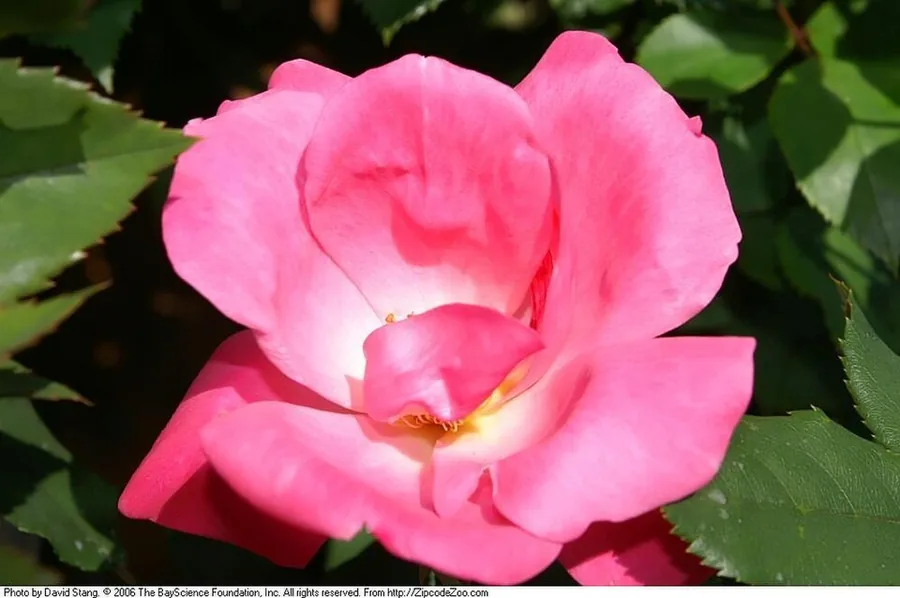
The pink-flowered selection of the series, a softer palette for a scheme that wants something gentler than the original red.
Rainbow Knock Out
A smaller selection whose coral-pink blooms, lit by a yellow eye at the center, suit a more playful planting.
Petite Knock Out
The compact, miniature-scale form made for small beds, tidy edges, and containers on a terrace or patio.
How to propagate
Cuttings root readily enough, but a legal detail is worth knowing before you raise a new plant from one already in the garden.
Stem cuttingsModerate
Late spring to summer from softwood or semi-hardwood growth · Several weeks to root, established over a season
Cuttings taken from softwood or semi-hardwood growth in late spring through summer will root over several weeks and find their feet across a full season. One caveat sits above the method itself. This cultivar is patented under US Plant Patent PP#11836, so propagating it to sell or pass along remains legally off-limits while the patent holds.
Myths
Knock Out roses stay flawless, never touched by any disease.
They do live up to their reputation against black spot and powdery mildew, setting aside the fungal troubles that shadowed older roses. Yet immunity is a step too far. Rose rosette disease, a fatal virus with no cure, reaches them like any other rose, so the red, broom-like growth that betrays it is worth a watchful eye.
Knock Out roses only keep blooming when the spent flowers are removed.
They see to themselves, letting spent blooms fall and reblooming from spring to frost without your attention. Trimming the faded flowers only ushers the next flush along sooner, which makes it a small pleasure rather than an obligation.