Tree · Rosaceae
Medlar
Mespilus germanica
A slow, heritage fruit tree that anchors a garden and ripens only after the first frosts.
Full sun
Every 7–14 days
USDA 5–8
15–20 ft · 4.6–6.1 m
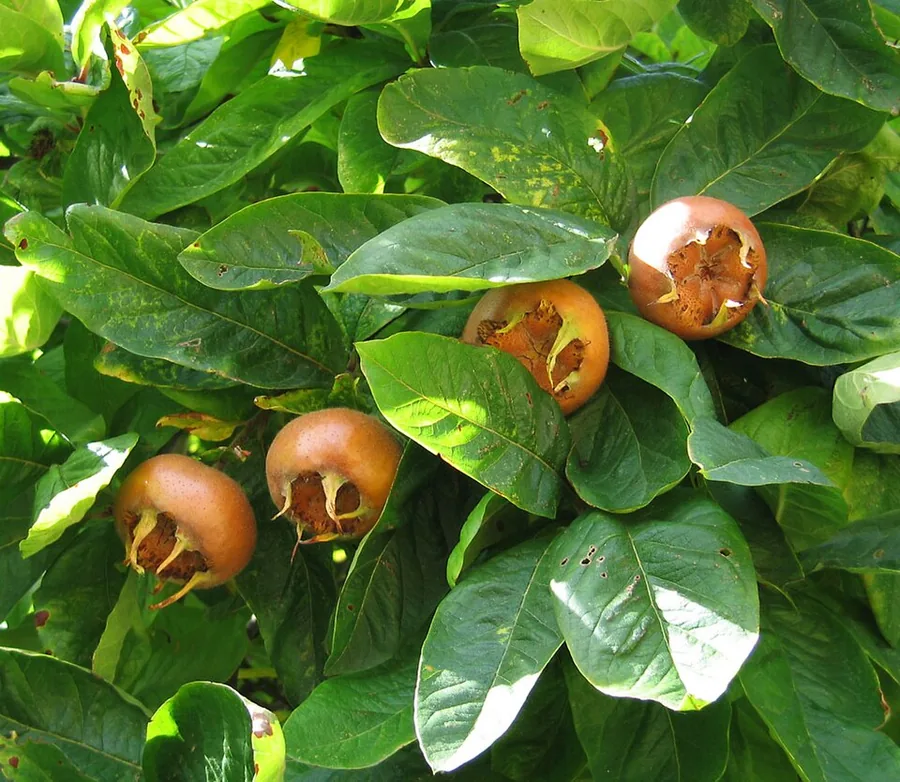
Overview
Medlar is a heritage tree with a quiet sense of occasion, once a fixture of European orchards and now an uncommon choice that sets a garden apart. A member of the rose family alongside apples and pears, it settles into a small, spreading tree of 15 to 20 feet (4.5 to 6 m) that carries large white-to-pink blossom through late spring, the kind of understated flowering that reads well against brick, stone, or a soft green border. It suits the gardener who prefers character over the obvious.
What gives the tree its charm is its rhythm at the table. The fruit arrives hard and sharply astringent and comes into its own only after bletting, an old autumn ritual of softening by frost or storage that leaves the flesh brown, sweet, and rich, close to spiced apple butter or dates. It is a tree that rewards a slower kind of household, one happy to let the season set the pace and to keep a bowl of ripening fruit on a cool windowsill.
As a fixture it asks for very little. Medlar is hardy down to -20°F (-29°C), self-fertile so a single specimen earns its keep, slow-growing, and rarely troubled by pests or disease, which makes it an easy anchor for a courtyard, a lawn edge, or the far corner of a plot. Give it sun and decent ground and it becomes a lasting part of the place.
Care
The short version: give it a sunny spot in moist, fertile, well-drained loam, water deeply during dry spells and while the fruit fills, and keep pruning to a light late-winter tidy. It settles into a low-maintenance, cold-hardy fixture once established.
Light
Medlar flowers and fruits best in full sun, though it accepts a little part shade, so place it where an open sky can reach it. Too little light is a common reason a young tree stays shy of blossom, which makes a bright, unshaded spot the difference between a plain tree and a generous one.
Water
Once established, the tree wants moderate, even moisture and takes a fair range of soils in its stride. Water deeply through dry spells and while the fruit is swelling, then ease off. Between waterings, let the top half of the soil dry rather than leaving it soggy.
Soil
Plant in moist, fertile, well-drained loam for the finest growth, though medlar copes gracefully with less. A soil pH anywhere from 6.0 to 7.5 suits it, from slightly acidic to slightly alkaline, so most garden ground obliges.
Temperature
This is a genuinely cold-hardy tree, comfortable in winter lows of -20°F (-29°C) and summer heat up to 95°F (35°C). The frost it takes in stride is also what begins bletting, so a cold snap works in the garden's favour.
Humidity
Ordinary outdoor air, roughly 40% to 70%, is all it asks, with no figure to manage. Damp, still corners matter only because they invite leaf spot, so an open, airy position keeps the canopy looking its best.
Feeding
A single balanced feed in spring, applied seasonally, keeps most trees content. Keep a light hand, since heavy nitrogen drives leafy growth at the expense of the flowers and fruit that give the tree its season.
Pruning
Prune in late winter while the tree is dormant, taking out dead, damaged, or crossing branches to hold an open, sculptural framework. Medlar fruits on spurs and needs only light pruning once established, so a restrained hand keeps its natural shape.
Repotting
Medlar belongs in open ground and is rarely repotted. If a young one is grown in a container for a season, move it on when roots circle the pot, water runs straight through, or growth stalls.
Size & spacing
Plan for a small, spreading tree of 15 to 20 feet (4.5 to 6 m) tall and about as wide. Give it room to open to its full 15 to 20 foot (4.5 to 6 m) canopy so it stands as a shapely presence rather than a crowded one.
When to plant
Medlar moves to a slow, seasonal calendar that suits an unhurried garden. Set bare-root or container trees in place while dormant, from late autumn into early spring. Blossom opens in late spring, and the fruit lingers well past leaf drop, ready to gather in late autumn once the first frosts have begun the bletting.
Northern hemisphere
Southern hemisphere
Typical months for a temperate climate: start earlier in warm zones, later where spring frosts linger.
- Plant: Plant bare-root or container trees in late autumn to early spring while dormant.
- Harvest: Blooms in late spring (about May to June); fruit is harvested in late autumn after leaf drop and first frosts, then bletted before eating.
Hardiness
USDA hardiness zones: 5–8
Temperature: down to -29°C
Troubleshooting
Medlar asks little of a gardener, and most of its quirks trace back to the fruit's unusual ripening rather than to any disease. Match what you see below and a change of timing or a small shift in care usually restores it.
A young tree slow to earn its place
More often than not the tree is simply still young, and time is on your side, since medlars are self-fertile and usually begin cropping by their second year, then settle into a fuller display as they mature. A shaded corner is the other likely reason. Give it an open, sunlit spot, keep the nitrogen feed modest so leaves do not crowd out flowers, and let the seasons do their work.
Fix:
- Be patient and allow the tree to mature
- Site or move the tree to a position with full sun
- Avoid heavy nitrogen feeding that favours leaves over flowers
Fruit that stays hard and unwelcoming at the table
Brought in too soon, a medlar is hard and so astringent it dries the mouth, because the tannins have yet to mellow. The remedy belongs to the season: bletting. Gather the fruit in late autumn after leaf fall and the first frosts, then set it in a cool, dark, airy corner for two to three weeks, until the flesh turns soft, brown, and sweet enough for the bowl.
Fix:
- Harvest in late autumn after leaf fall and the first frosts
- Store fruit in a cool, dark, airy place for two to three weeks until the flesh turns soft and brown
- Eat or process only once the flesh is soft and sweet
Spotted leaves that dull the summer canopy
Medlar keeps such good company with the garden that widespread spotting usually signals a fungal leaf spot, drawn in by wet, crowded growth. Clear away and dispose of the fallen leaves so nothing carries into next year, thin the canopy to let air move freely through it, and keep water off the foliage so the tree stays a clean presence in the border.
Fix:
- Rake up and remove fallen leaves
- Prune to improve air circulation
- Avoid overhead watering
Toxicity
Medlar is a reassuring tree to live alongside. People enjoy the bletted flesh, it is harmless to pets and grazing animals, and the tree carries no toxic foliage or sap. The one small footnote, shared with apples, pears, and other rose-family fruit, is that the seeds hold a cyanide compound and should not be crushed and eaten in quantity.
Safe for
People · Cats · Dogs · Horses · Rabbits · Livestock · Birds
Cats Safe
A cat drifting through the garden rarely gives the fruit a second look, and a taste of the soft flesh does no harm. The only thing to note is a cat crunching through a pile of the hard seeds.
Dogs Safe
A little bletted flesh makes a harmless treat to share with a dog on an autumn walk. Keep it away, though, from mouthfuls of crushed seeds, which hold the same cyanide compound found across the rose family.
Horses Safe
The tree and its ripe fruit pose no real danger to horses grazing nearby. Keep watch only for large amounts of chewed seeds.
Rabbits Safe
Rabbits can nibble the leaves and a little soft flesh without trouble. As with any treat, fruit is best kept a small part of their diet.
Livestock Safe
Cattle, goats, and sheep graze around medlar without poisoning. The single caution is the seeds inside windfall fruit, and only where a great many are crushed and swallowed.
Birds Safe
Garden birds happily peck the ripe fruit, and the flesh is fine for them. They leave the hard seeds alone.
People Safe
Bletted medlar is a sweet, wholesome treat for the table, soft and brown like spiced apple butter. As with apple and other rose-family fruit, skip the seeds rather than crushing and eating them.
The soft, bletted flesh is edible; avoid letting pets or children chew or swallow large numbers of crushed seeds.
Helpline numbers

United States
ASPCA Animal Poison Control: (888) 426-4435 (fee applies)

United Kingdom
Animal PoisonLine: 01202 509000 (fee applies)

Australia
Animal Poisons Helpline: 1300 869 738
Varieties
Only a handful of medlar cultivars are still grown, yet they range from small and intensely aromatic to giant-fruited, enough to suit a courtyard tree or a statement specimen. These are the names worth seeking out.
Nottingham
An old favourite of fairly upright, compact form that suits a smaller garden, prized for its smaller, richly aromatic fruit.
Royal
A reliable, heavy cropper carrying medium-sized fruit of good flavour for a generous autumn harvest.
Breda Giant
A Dutch selection of the giant-fruited type, grown for its large fruit and the fine autumn leaf colour that lifts a border.
Large Russian
A vigorous form that produces some of the biggest fruit of any medlar, a talking point at the table.
How to propagate
Medlar is not a tree to multiply casually. Named varieties come grafted so they stay true, while seed is a slow, uncertain route best left to the patient.
GraftingDemanding
Late winter to early spring for bench grafting, or summer for budding · 1 to 2 years to a young, sellable tree
Named cultivars almost always arrive grafted or budded onto quince, pear, or hawthorn rootstocks, so they come true and the grower keeps the tree's vigour in check. Bench graft in late winter to early spring, or bud in summer, and allow 1 to 2 years before a young tree is ready to take its place in the garden.
SeedDemanding
Autumn, after prolonged cold stratification · Several years to first fruiting
Raising a medlar from seed is a slow indulgence. The seed needs a long spell of cold stratification sown in autumn, comes up slowly and unevenly, and the seedlings do not come true to the parent. Expect several years before one of them flowers and fruits.
Myths
Medlars are rotten or spoiled once they are soft enough to eat.
That softening is bletting, a natural stage of ripening in which tannins fade and starch turns to sugar. Properly bletted fruit is soft, sweet, and perfectly safe to serve, not spoiled, even though its look suggests it has gone over.
You need two medlar trees for pollination to set fruit.
A single tree crops beautifully on its own, which makes it easy to place in a smaller plot. Medlar is self-fertile and often begins bearing by its second year, so there is no need to find room for a pollination partner.
Medlar fruit can be eaten straight off the tree like an apple.
Freshly picked fruit is hard and so astringent it dries out the mouth. It has to blett first, softened by frost or a few weeks in storage, before the flesh turns brown and worthy of the table.