Houseplant · Orchidaceae
Brazilian Pansy Orchid
Miltonia
Give it warmth, steady moisture, and humid air, and the Brazilian pansy orchid brings a room star-shaped blooms.
Bright indirect
Every 5–7 days
55–84°F · 13–29°C
USDA 10–12
Overview
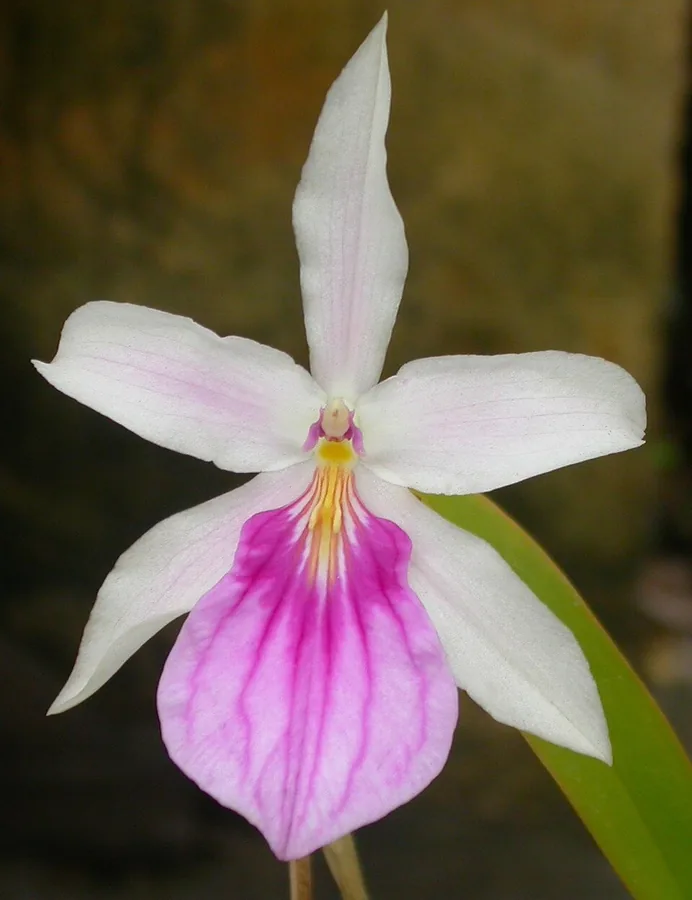
The Brazilian pansy orchid, known to botanists as Miltonia, is a warm-growing epiphyte from the forests of Brazil, and it carries that origin into a room like a quiet piece of the tropics. It asks for a bright, humid corner and pays the room back with sprays of flat, showy flowers. Compact at around 8 to 18 inches (20 to 45 cm) tall, it settles onto a windowsill or side table without crowding the space it graces.
Style it where it will be seen and cared for at once, since a bright bathroom or a plant-filled kitchen suits it best, echoing the humid air it favors. It sits comfortably beside other greenery, and grouping it that way makes a small daily ritual of watering feel less like a chore and more like a pause in the day. People often take it for the cooler florist Miltoniopsis, but a true Miltonia earns its place with a warmer, brighter spot.
It reads as moderate to keep for a simple reason: it wants even moisture at the roots and humid air around it, both at once. Fold those into a steady weekly routine and it becomes a long-lived companion for the home. Let its conditions swing from dry to soggy and it lets the room know, its leaves pleating and its bulbs drawing in.
Care
The short version: set it in bright indirect light with tepid water whenever the bark mix nears dryness, keep the air humid around 50% to 70%, hold the room between 55°F and 84°F (13°C to 29°C), and feed at half strength through the growing season.
Light
Place it in bright indirect light, the soft glow of an east window or a spot set back from a brighter one. It puts up with medium light and a touch of shade, but keep it out of harsh direct sun, which scorches the leaves and yellows them.
Water
Reach for tepid, low-mineral water whenever the bark mix is nearing dryness, about every 5 to 7 days, and never let the roots dry out fully. Let every drop drain away after, because roots left standing in water rot fast.
Soil
Pot it in an open, free-draining orchid bark mix, fine to medium grade, with a little sphagnum or perlite worked through. Keep it slightly acidic, a pH of 5.5 to 6.5, and loose enough that air reaches the roots.
Temperature
A warm grower, it feels most at home between 55°F and 84°F (13°C to 29°C). Ordinary room warmth suits it, so long as it stays clear of cold drafts and chilly windowsills in winter.
Humidity
This orchid wants humid air, ideally 50% to 70%, which is part of why a bathroom shelf flatters it. Where the room runs dry, a pebble tray, a cluster of other plants, or a humidifier keeps the leaves from crimping.
Feeding
Through the growing season, from spring into early autumn, feed it every two weeks with a balanced water-soluble orchid fertilizer diluted to half strength. Ease off as its growth quiets for the year.
Pruning
Once the blooms fade, cut the spent flower spike back to its base. Trim away any shriveled or dead pseudobulbs and roots with sterile tools, and leave the healthy green leaves as they are.
Repotting
Refresh its pot every 1 to 2 years, ideally just after flowering as new growth begins. Move it on when new growth spills over the rim, roots crowd out of the pot, or the bark has broken down and stays soggy.
Size & spacing
Compact by nature, it reaches 8 to 18 inches (20 to 45 cm) tall and spreads 6 to 12 inches (15 to 30 cm) across. That tidy footprint lets it grace a windowsill or a humid bathroom shelf without dominating the room.
Troubleshooting
Most Miltonia complaints trace to the roots and the moisture in the air around them, the very things a home's routine shapes. Pleated leaves, wrinkled bulbs, and yellowing all say watering or humidity has drifted. Find the match below, then check the roots, where the real story tends to sit.
Black, soft, mushy roots
Roots gone black and mushy mean root rot, the gravest trouble these orchids meet, brought on by a mix left waterlogged or so broken down that its air pockets have vanished. Lift the plant and test each root by hand, since the sound ones stay firm while the rotted ones collapse and darken to brown or black. Trim away every dead root with sterile scissors, resettle the plant in fresh open bark, and water with restraint until new roots take hold.
Fix:
- Remove all dead roots with sterile scissors
- Repot into fresh, open bark mix
- Resume careful watering as new roots develop
Pseudobulbs shriveling and wrinkling
The pseudobulbs are where this orchid banks its water, so a puckered look is its way of flagging a shortage. Two paths lead there: everyday dehydration, or roots gone to rot that can no longer take up a drink. Ease the plant from its pot and read the roots. Firm white or green ones call only for more water and higher humidity, while soft brown ones point to root rot, which asks for trimming, fresh mix, and measured watering until new roots appear.
Fix:
- If roots are healthy, increase watering frequency and humidity
- If roots are rotted, trim dead roots, repot in fresh mix, and water carefully while new roots form
Leaves turning yellow
A lone old leaf yellowing at the base is nothing more than age catching up, but a broader wash of yellow usually traces to overwatering and root rot or to sun that is simply too strong. Check the roots for sogginess and notice whether the plant sits in unshaded light. Pare back the watering, sharpen the drainage, repot where roots are rotting, and settle the plant into bright indirect light clear of the hot sun.
Fix:
- Reduce watering and improve drainage; repot if roots are rotting
- Move to bright indirect light away from hot direct sun
Fresh leaves emerging as accordion-style pleats
A leaf that unfurls ridged instead of smooth is showing concertina growth, which arrives when the roots fall behind on water as the leaf expands, usually after the mix ran dry or the room's air turned parched. The pleat is permanent on that leaf, yet it does the plant no real harm. Keep the bark evenly moist, lift the humidity into the 50% to 70% range, and repot if the roots have suffered or the mix has broken down.
Fix:
- Establish a consistent watering schedule keeping the mix evenly moist
- Raise humidity to 50-70%
- Repot into fresh bark mix if roots are unhealthy or medium is broken down
Toxicity
For a home with pets or children, the Brazilian pansy orchid earns an easy welcome: it is non-toxic across the board. No part of it holds a poison, so a curious nibble from a cat, dog, or child is nothing to fear. The most that follows is a little stomach upset from eating a plant that simply isn't food.
Safe for
People · Cats · Dogs · Horses · Rabbits · Livestock · Birds
Cats None
A household cat can share space with this orchid in peace. Its leaves hold no toxin, and a stray nibble brings nothing worse than a little stomach upset from eating something that isn't food.
Dogs None
There is nothing toxic here for a dog that chews a leaf or bloom. Keeping the bark mix out of reach is still worth doing, since a swallowed piece can scratch the gut.
Horses Safe
Horses come to no harm from this plant. It lives indoors and rarely meets them, but a chance taste would pass without trouble.
Rabbits Safe
A rabbit may sample the foliage without risk. The leaves carry no poison, though they are hardly a treat worth offering on purpose.
Livestock Safe
Goats, sheep, and cattle face no danger from this tropical orchid. It seldom crosses their path, and a mouthful would do no harm.
Birds Safe
A pet bird can perch on or peck the plant with no worry. Leaves and blooms alike are free of toxins, so a little chewing means nothing.
People Safe
Handling and growing this orchid is safe for adults and children both. It is not grown to be eaten, yet no part of it will poison a child who mouths a leaf.
No special handling precautions for toxicity; wash hands after handling fertilizer or wet potting media as general practice.
Varieties
Several Brazilian species stand behind the Miltonia name, parting ways most in the color and shape of their flowers. These are the ones you are most likely to bring home.
Miltonia spectabilis
The genus type species carries large, flat, richly fragrant flowers whose broad lip deepens from pink into purple.
Miltonia regnellii
It bears several pale white-to-pink flowers to a spike above a rose-veined lip, and it takes readily to the outdoors in mild climates.
Miltonia clowesii
Its star-shaped flowers are barred in chestnut-brown and yellow over a fiddle-shaped lip touched with white and purple.
Miltonia flavescens
This one raises a tall arching spike crowded with many narrow, pale-yellow, star-shaped flowers.
How to propagate
Miltonia is increased by dividing a plant you already keep rather than by seed at home. It rewards patience, handing you exact copies of an orchid that has already found its place in the room.
DivisionModerate
Just after flowering, as new growth begins (typically spring) · 1-2 years to re-establish and reach flowering size
Split a mature clump just after it finishes flowering, as fresh growth begins in spring. Cut the rhizome so each piece keeps at least three to four healthy pseudobulbs along with an active new growth, work with sterile tools, and settle each division into fresh bark mix. Patience is part of it, since the new plants take a year or two to establish and reach flowering size.
Myths
Any flat-faced pansy orchid on the florist's bench is a Miltonia.
The cool-growing, flat pansy-faced plants most people call to mind are usually Miltoniopsis, a separate genus once split away from Miltonia. True Miltonia are warm-growing Brazilian species with more star-shaped flowers, and they prefer the warmer, brighter conditions that set them apart from their look-alike cousins.
Orchids are parasites, siphoning their sustenance from the trees they inhabit.
Miltonia and most cultivated orchids are epiphytes that lean on a tree only for support. They make their own food through photosynthesis and gather water and nutrients from rain, air, and the debris that settles around their roots, taking nothing from the host.
Setting ice cubes on the bark is the correct method for hydrating these orchids.
This is a warmth-loving tropical orchid, and freezing meltwater can chill and injure its roots. What it prefers is tepid water on a regular schedule, which leaves the bark mix uniformly moist.