Tree · Rosaceae
Peach
Prunus persica
Give it full sun, sharp drainage, and a hard yearly pruning, and a peach tree pays you back in summer fruit.
Full sun
Every 7–14 days
USDA 5–9
15–25 ft · 4.6–7.6 m
Overview
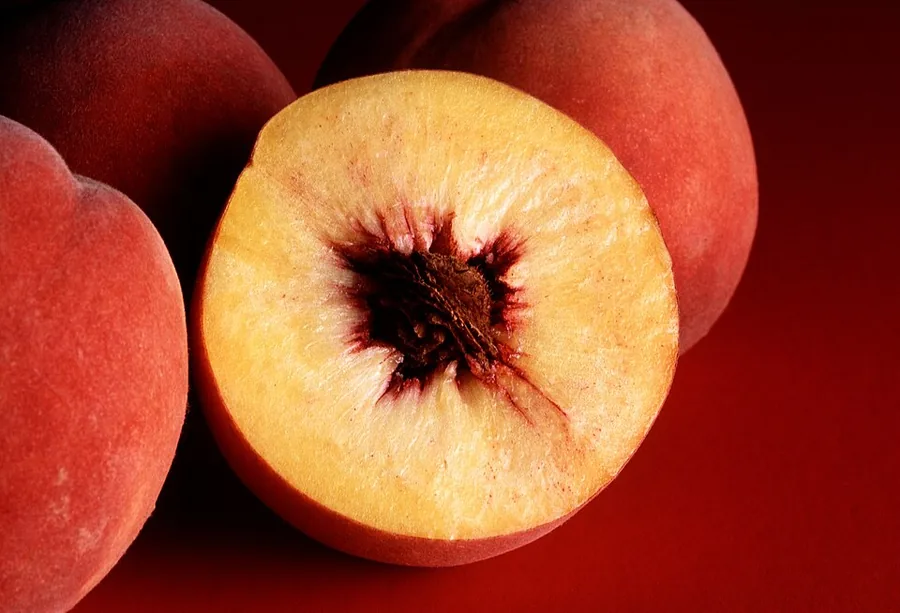
A peach tree gives a sunny corner of the garden a sense of season, opening with pink spring bloom and closing with fruit that ripens from about mid-June through mid-September depending on the cultivar. A member of the rose family, it grows quickly to 15 to 25 feet (4.6 to 7.6 m) tall and about as wide, though most home gardeners keep it lower and more in scale with a courtyard or a modest yard. Set near a patio or a path, it becomes the piece the outdoor room is arranged around.
The peach asks for warmth and, just as surely, for a real winter, which shapes where it belongs. It settles comfortably into USDA zones 5 through 9, drawing the chill it needs to flower while staying clear of the deepest cold. In cooler gardens the concern is a late frost on early bloom, so a sheltered position, perhaps against a warm wall, and a cold-hardy cultivar make the tree a lasting fixture.
This is a tree that repays a little attention rather than one to plant and forget, and it earns its keep across the calendar. It wants full sun, sharp drainage, and a firm yearly pruning to stay open and productive, and it invites a short list of fungal diseases and borers that a watchful gardener keeps at bay. Tend the basics and a single tree can furnish a table with more fruit than one household finishes.
Care
The short version: full sun and fast-draining sandy loam, a deep soak every week or two through dry spells, and an open-center pruning each late winter that keeps light and air moving through the canopy.
Light
A peach wants full sun, the more of it the better, both to sweeten the fruit and to dry the damp that invites disease. Give it the most open, sunniest place the garden offers, well clear of buildings and larger trees that would cast it into shade.
Water
Soak the tree deeply every 7 to 14 days when rain runs short, and hold to that through the first two years and while the fruit is sizing. What a peach will not abide is wet feet, so sharp drainage counts for far more than a steady hand with the hose.
Soil
A peach is at its best in well-drained sandy loam, since standing water rots the roots faster than almost anything else. Aim for a soil pH of 6.0 to 7.0, near neutral, the range in which the tree draws up its nutrients most readily.
Temperature
The peach takes a wide swing, from about -15°F to 100°F (-26°C to 38°C), yet it still needs winter chill to set flower buds and shrinks from a late spring frost on open bloom. A sheltered corner of the garden softens both extremes.
Humidity
Ordinary outdoor air around 40% to 70% suits a peach well enough. Air flow is the real concern, since humid, crowded growth invites leaf curl and brown rot, so pruning to keep the canopy open does double duty.
Feeding
Feed in spring with a balanced 10-10-10 fertilizer once a season, then follow with calcium nitrate after fruit set to carry the crop. Nitrogen calls for a light hand, or it pushes soft, leafy growth that disease settles into.
Pruning
Prune firmly each late winter to early spring, shaping the tree to an open-center, vase-like form. Taking out crossing, dead, and overly vigorous shoots lets sun and air reach the whole canopy, which is the surest defense the fruit has against disease.
Repotting
The peach is a ground-grown tree rather than a houseplant, so no repotting cycle enters the picture. Plant it once in the right spot and it holds that place for good.
Size & spacing
A mature tree reaches 15 to 25 feet (4.6 to 7.6 m) tall and about as much across, though pruning keeps most garden specimens in gentler proportion. Give it that full spread of open ground so light and air move freely through the branches.
When to plant
The peach enters the garden dormant and bare. Planted in late winter to early spring, before the buds break, it settles into place ahead of the season, then blooms that spring and ripens fruit across the summer, roughly mid-June into mid-September depending on the cultivar.
Northern hemisphere
Southern hemisphere
Typical months for a temperate climate: start earlier in warm zones, later where spring frosts linger.
- Plant: Plant dormant bare-root trees in late winter to early spring (about December to mid-March in mild regions).
- Harvest: Blooms in spring; fruit ripens in summer (about mid-June to mid-September depending on cultivar).
Hardiness
USDA hardiness zones: 5–9
Temperature: down to -29°C
Troubleshooting
Most peach trouble is fungal or bores quietly into the wood, and it surfaces on the spring leaves, the ripening fruit, or low on the trunk. Caught early, none of it unsettles an otherwise sound tree. Match what you see below, then act while attention still tells.
Brown rot spreading across blossoms and ripening fruit
Brown rot, brought on by Monilinia fungi, darkens the blossoms and then works its way through the ripening fruit, leaving tan-gray spore tufts and hard mummies that linger on the branches. Those mummies quietly carry the disease into the following season, so clearing them away with any infected wood is the first order of business. From there, an open canopy for better air flow and fungicide at bloom and again as the fruit takes on color keep the crop sound.
Fix:
- Remove mummies and infected tissue, improve air flow, and apply fungicide at bloom and as fruit ripens.
Gummy sap and frass at the base of the trunk
Gummy sap laced with sawdust-like frass near the soil line is the calling card of the peachtree borer, the larva of a clearwing moth, Synanthedon exitiosa, at work beneath the bark. Left to feed, the larvae can girdle and drain a young tree. A steady eye on the trunk base through the season, the removal of any larvae found, and labeled trunk treatments timed to moth flight together keep the problem in check.
Fix:
- Monitor at the trunk base, remove larvae, and use labeled trunk treatments timed to moth flight.
Reddened, puckered, curling new leaves in spring
Thick, blistered, red-flushed spring leaves that pucker and then fall are the mark of peach leaf curl, the work of a fungus called Taphrina deformans that arrives when the season turns cool and wet. The trouble is more a matter of the calendar than of labor. A single dormant fungicide laid down before the buds break usually settles the whole business, with a second pass reserved for an especially wet spring.
Fix:
- Apply a dormant fungicide before bud break; one application usually controls it, with a second in very wet years.
Toxicity
The ripe flesh is a summer pleasure, but the rest of the tree asks for real care in a household with animals. The leaves, stems, bark, and pit hold cyanogenic glycosides that release cyanide, and wilted leaves are the most dangerous of all. Keep prunings, fallen foliage, and discarded pits well away from dogs, cats, horses, and grazing livestock.
Toxic to
Cats · Dogs · Horses · Rabbits · Livestock · Birds
Safe for
People
Cats Toxic
The leaves, stems, and pit hold cyanogenic glycosides that release cyanide, which puts them off limits to a curious cat. A poisoned cat may show brick-red gums, widened pupils, and labored, panting breath before sliding into shock. The ripe flesh is harmless, though a swallowed pit brings its own risk of choking or a blocked gut.
Dogs Toxic
A dog that chews peach leaves, twigs, or a cracked pit can take up cyanide from the same glycosides. The warning signs are bright red gums, heavy panting, breathing trouble, and a sudden loss of strength. The pit deserves its own watch, since dogs swallow them whole and they can lodge in the intestines.
Horses Toxic
For horses, wilted leaves carry the greatest danger, as drooping, damaged foliage gives up cyanide fastest. A grazing horse can fail within minutes, showing flared nostrils, brick-red gums, an unsteady gait, and collapse. Fencing set well clear of prunings and storm-fallen branches keeps that scene from ever unfolding.
Rabbits Toxic
Peach leaves, bark, and twigs all carry the cyanide-releasing compounds, so none of them belong within a rabbit's reach. In so small an animal, even a modest amount can bring on breathing distress and a swift decline. An occasional bite of ripe, pitted flesh is the limit, with clippings kept well outside the hutch.
Livestock Toxic
Cattle, sheep, and goats face the sharpest risk when wilted peach leaves drift into a pasture after pruning or a storm. Grazing that fallen foliage can set off rapid cyanide poisoning, with gasping breath, red mucous membranes, and sudden death in the worst instances. Cut branches belong well away from any grazing ground.
Birds Caution
The leaves, stems, and pit carry the same cyanogenic glycosides, so those parts stay off the menu for birds. A little ripe flesh makes a fine treat, while the pit and the kernel within it do not. Only pitted fruit should be offered, and a pet bird should never forage among cuttings.
People Ripe flesh safe
The ripe peach is a summer staple and thoroughly good to eat. The pit, on the other hand, is best left whole and never cracked for its kernel, since the seed and the leaves hold cyanide-releasing amygdalin. Children do well to set the stone aside rather than bite into it.
Keep prunings, fallen leaves, and discarded pits away from pets, horses, and children; the ripe fruit flesh is safe.
Helpline numbers

United States
ASPCA Animal Poison Control: (888) 426-4435 (fee applies)
Poison Control: (800) 222-1222



Canada
Poison Centres: 1-844-764-7669
Varieties
Hundreds of peach cultivars exist, grouped mostly by ripening season and by how cleanly the flesh leaves the pit. These few are the ones worth knowing by name as you plan the garden.
Redhaven
A widely adapted early-to-midseason yellow freestone, this is the standard reference peach that growers hold others up against.
Elberta
The classic late-season yellow freestone, an heirloom that has held its place as a benchmark across generations.
O'Henry
A firm, late-season yellow freestone long favored for the fresh market thanks to how gracefully it keeps.
Contender
A cold-hardy freestone whose dependable bud hardiness carries it through colder zones where other peaches falter.
How to propagate
Peaches do not come true from seed, so nearly every named tree in the trade was budded onto a rootstock. Here is how that works, and why raising one from a pit is a gamble.
GraftingModerate
Named cultivars are carried forward by budding, either chip or T-budding, onto a seedling rootstock. That step holds the new tree true to type, since a peach raised from its own seed will not reliably echo its parent.
SeedModerate
A peach seed calls for a spell of cold stratification before it will sprout. The seedlings do not come true to type, so growers mostly raise them as rootstock onto which a known cultivar is budded, rather than as fruiting trees in their own right.
Myths
You need two peach trees to get fruit.
Most peaches are self-fruitful, so one tree pollinates its own blossoms and sets a full crop on its own. A single tree fruits perfectly well, with no need for a second one nearby as a pollinizer.
The whole peach is poisonous to people.
The ripe flesh is safe and lovely to eat, and it is the very thing you grow the tree for. Only the stems, leaves, and the seed inside the pit carry cyanogenic amygdalin, so the stone and foliage simply stay out of the kitchen.