Shrub · Rosaceae
Shrubby Cinquefoil
Potentilla fruticosa
An unfussy summer performer, shrubby cinquefoil brings effortless color to the sunniest edges of a garden.
Full sun
Every 7–14 days
USDA 2–7
2–4 ft · 0.6–1.2 m
Overview
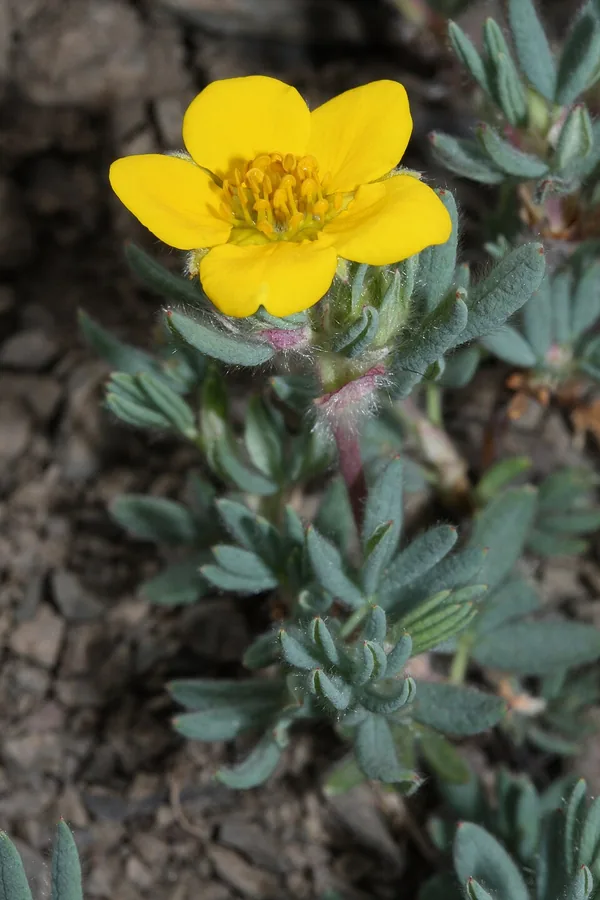
Some shrubs make a garden feel considered without demanding much in return, and shrubby cinquefoil is one of them. A small, rounded deciduous plant from the rose family, it settles into the sunny margins of a border and turns them into a long ribbon of summer color, its simple five-petaled flowers in buttery yellow arriving from June through September. At a modest 2 to 4 feet (61 to 122 cm) tall, it reads as tidy and intentional, an easy anchor for a low hedge, a path edge, or the frame around a seating area.
Its appeal for a busy household is how gracefully it fits a real routine. It stands up to cold as far as USDA zone 2 and takes poor, sandy, alkaline, or clay ground in stride, which means it thrives in the overlooked corners most plants refuse, from a hot driveway strip to an exposed boundary. Once established it rides out dry weather on its own, so it suits a garden meant to look composed with little weekend upkeep. Beyond the familiar yellow, white, pink, and orange forms let it slot into almost any planting scheme.
Style it where summers stay temperate and it rewards you all season. Heat dulls its color and tires the look, so it belongs in northern and cool-summer gardens, at its best in full sun with free-draining ground. Pair it with an annual spring cutback and it holds a relaxed, well-kept shape through the warm months with almost nothing asked of you.
Care
The short version: full sun, free-draining soil, and one firm cutback in late winter or early spring. It wants little feeding, shrugs off drought once established, and turns a cool summer into effortless, season-long color.
Light
Place it in full sun and it flowers at its fullest, which is exactly where its season-long color earns its keep. It will accept partial shade or partial sun, though the display thins and the shape loosens in lower light, so the brightest, most open spot is the one that shows it off.
Water
Its watering rhythm suits an unfussy garden. Keep young plants watered while they establish, then step back, because a settled shrub is notably drought tolerant and asks for water only in a long dry spell. Letting the top half of the soil dry between waterings keeps it content and low-maintenance.
Soil
Few shrubs are so forgiving about their footing. Average, well-drained soil is all it needs, and it takes clay, loam, sand, and even poor or alkaline ground in stride across a pH of 5.5 to 8.0, which makes it a natural for the difficult spots a design has to work around.
Temperature
Its comfort range is generous, holding from a severe -49°F (-45°C) up to about 86°F (30°C). The warm end is the one to plan for, since prolonged heat softens the flower color, so a cool-summer setting keeps the display looking its freshest.
Humidity
It carries itself best in dry, open air. Low humidity with good airflow keeps the planting clean and unblemished, while muggy, stagnant corners invite the leaf spot and mildew that spoil the look.
Feeding
Feeding is barely part of the routine. A balanced general-purpose fertilizer or a little compost in early spring is all it asks, and it flowers handsomely even on lean ground if the task slips by.
Pruning
One seasonal ritual keeps it looking intentional. Because it flowers on new wood, a hard shear in late winter to early spring holds its compact, rounded form and drives the fresh growth that carries the blooms, with any leggy or ragged stems tidied away at the same time.
Repotting
In the ground it never needs repotting, and even in a container it rarely does. Move it up a size only when roots circle the pot, water runs straight through, or growth stalls and the plant loses its poise.
Size & spacing
Plan for a rounded mound of about 2 to 4 feet (61 to 122 cm) tall, spreading a touch wider at 3 to 5 feet (91 to 152 cm) across. Give each plant that footprint and the form fills in evenly, reading as a calm, deliberate part of the design.
When to plant
This is a cold-hardy shrub made for a long, generous northern season. Set young plants out in spring once frost has passed, or in early fall, then shear them back in late winter so the display carries cleanly from June into September.
Northern hemisphere
Southern hemisphere
Typical months for a temperate climate: start earlier in warm zones, later where spring frosts linger.
- Sow: Late winter (stratified seed), 8-10 weeks before last frost
- Plant: Spring after last frost, or early fall
- Harvest: June to September
Hardiness
USDA hardiness zones: 2–7
Temperature: down to -46°C
Troubleshooting
Shrubby cinquefoil keeps a composed look with very little intervention, and the occasional off day usually traces to heat, humidity, or a spring cutback that got missed. Match what you notice on the leaves or flowers below, then step in early to keep the planting looking its best.
Dulled, bronzing leaves veiled in fine webbing
Leaves that turn stippled and bronze under a faint veil of webbing are the mark of spider mites, which settle in through hot, dry, stagnant spells and quietly drain the color from the planting. Confirm them by tapping a branch over white paper and watching for moving specks. A firm jet of water on the leaf undersides, more air around the plant, and insecticidal soap or horticultural oil for a heavy case restore the fresh look.
Fix:
- Spray foliage with a strong jet of water, focusing on leaf undersides
- Improve air movement and avoid hot, stagnant, dry locations
- Apply insecticidal soap or horticultural oil if infestation is heavy
Dark spotting or a chalky bloom on the leaves
Distinct dark spots signal fungal leaf spot, while a chalky white film is powdery mildew, and both settle in where the air hangs humid and still. Clear away the marked foliage, keep water off the leaves, and thin the plant so air can circulate, and the planting soon looks clean again.
Fix:
- Remove and dispose of affected foliage
- Avoid overhead watering and wetting foliage
- Thin or prune to improve air circulation
Faded flowers on a loose, open shrub
When the color pales and the base grows woody and bare, the look is usually undone by summer heat washing out the blooms alongside a skipped spring cutback. Shear the shrub hard in late winter to early spring to bring back fresh flowering wood. In warmer settings, pink and red cultivars hold their color far better, so choose them where the design calls for dependable summer color.
Fix:
- Shear or prune hard in late winter to early spring to renew flowering wood
- Site in cooler, sunny locations; pink and red cultivars hold color better in cool climates
Toxicity
For a garden shared with pets or children, this is a reassuring choice. The ASPCA lists cinquefoil as non-toxic to cats, dogs, and horses, with nothing in it to threaten other animals or people, so it can take pride of place anywhere the household gathers.
Safe for
People · Cats · Dogs · Horses · Rabbits · Livestock · Birds
Cats None
A safe companion for cats, with no toxins to worry about should one nibble a leaf or flower.
Dogs None
Dogs can pass by or chew at it freely, with no risk of poisoning.
Horses None
Horses can graze alongside it without harm, as the ASPCA lists cinquefoil non-toxic to them.
Rabbits Safe
Rabbits may browse the foliage with no concern about toxicity.
Livestock Safe
Cattle, goats, and sheep can feed around the planting in complete safety.
Birds Safe
Garden birds that pick at the shrub come to no harm.
People Safe
Safe to handle and to live alongside with children about, though it is an ornamental rather than something for the table.
No special handling precautions for toxicity; wear gloves if desired when pruning woody stems.
Varieties
This long-loved garden shrub now comes in a range far wider than the classic yellow, giving you room to match it to a scheme. These are the cultivars most worth seeking out.
'Abbotswood'
A compact form whose pure white flowers lend a cool, refined note above blue-green foliage.
'Goldfinger'
A dense, mounded selection that carries large, deep golden-yellow flowers for a long stretch of the season.
CHEESEHEAD ('SMPFMY')
A bright yellow cultivar prized for the neat, rounded silhouette it holds in a bed.
Happy Face Pink Paradise
A soft pink selection that keeps its color beautifully where summers stay cool.
How to propagate
Building a fuller planting is simple and satisfying, whether you root a cutting, divide an established clump, or raise a batch from seed and welcome a little variation.
Stem cuttingsEasy
Softwood cuttings in late spring to summer · 4-8 weeks to root
Cuttings are the most reliable route to more plants. Take softwood or semi-hardwood pieces in late spring to summer, keep them under humidity, and they root willingly in about 4 to 8 weeks, ready to fill out a scheme.
SeedModerate
Sow stratified seed in late winter to early spring · Several weeks to germinate; cultivars do not come true from seed
Seed rewards a little patience. Give it a cold stratification, sow in late winter to early spring, and it comes up over several weeks, though named cultivars will not come true from seed, so expect the seedlings to differ.
DivisionEasy
Spring or early fall · One growing season
An established plant can be divided in spring or early fall. Lift a clump or a rooted sucker, separate it, and replant, and the divisions settle into their new place over one growing season.
Myths
Like so many flowering garden shrubs, shrubby cinquefoil must be unsafe around pets.
It is a worry you can set aside. The ASPCA lists cinquefoil, Potentilla spp., as non-toxic to cats, dogs, and horses, so there are no toxins to trouble animals, and it earns its place even in a garden where pets roam freely.
Prune potentilla straight after flowering, the way spring-blooming shrubs are shaped.
That timing would sacrifice next year's display, since this shrub flowers on new wood. A hard shear in late winter to early spring is the move, keeping the form crisp and the summer show full.