Tree · Rosaceae
Quince
Cydonia oblonga
A tree with old-orchard soul, quince turns a quiet garden corner into a seasonal event and ends each year as fragrant golden fruit on the kitchen counter.
Full sun
Every 7–14 days
USDA 5–8
10–15 ft · 3–4.6 m
Overview
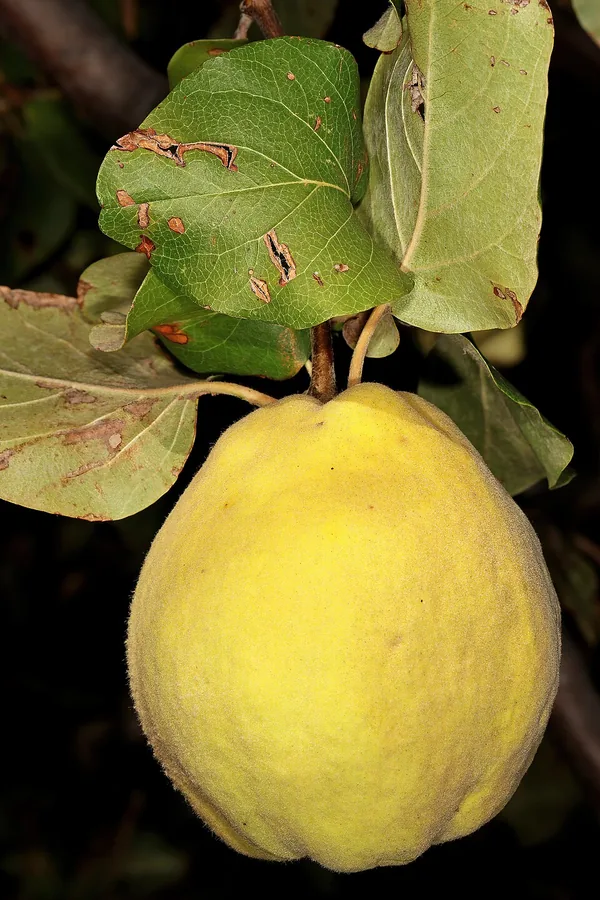
Quince is a tree with a sense of history, the kind grown in kitchen gardens long before apples and pears filled the orchard. It keeps a modest, well-mannered scale, rarely rising past 10 to 15 feet (3 to 4.5 m), so it settles into a garden corner or the end of a border without taking over. Late spring brings a soft flush of pink blossom, and by autumn the branches carry golden pomes that perfume a whole room the moment you bring them indoors.
This is a tree for people who like their garden to end up on the table. The fruit is a cook's ingredient rather than a snack, hard and tart until the stove softens it into something sweet and deep rose. Its high pectin makes it the quiet star of homemade jelly and the Spanish paste called membrillo, a seasonal ritual as much as a recipe. It belongs to the rose family, Rosaceae, in the good company of apples, pears, and plums.
Living with quince means keeping company with a slow, patient tree. It settles in gradually and asks for a watchful eye, carrying one real vulnerability in its strong tendency toward fire blight. Give it a sunny, open spot with room to breathe and prune it with intention, and it rewards the household with years of bloom in spring and fruit for the kitchen each fall.
Care
The short version: set quince in a sunny, well-drained corner, water it deeply as it establishes and as the fruit swells, prune to an open shape in late winter, and stay watchful for fire blight from the first bloom.
Light
Quince earns its best crop in full sun, where long, bright days coax out sweetness and ripen the fruit. It will accept a little partial shade, though the trade shows up as fewer fruit and a gentler flavor.
Water
As the tree establishes, and again while the fruit fills out, water deeply about every 7 to 14 days, letting the season set the pace. Allow the top half of the soil to dry between waterings. A settled tree takes a short dry spell in stride, yet steady moisture is what brings the finest fruit to the table.
Soil
Give quince a fertile, well-drained loam on the slightly acidic side, around a pH of 6.0 to 7.0. It is a gracious tree about soil and grows in many types, provided its roots are never left standing in water.
Temperature
This is a hardy tree of wide temperament, at ease through winters near -20°F (-29°C) and summers up to 95°F (35°C). The chill of a temperate winter is part of the rhythm that sets it up to bloom and fruit, so the cold season plays its own quiet role.
Humidity
Ordinary outdoor humidity, in the 40% to 70% range, suits quince without fuss. What matters more to its wellbeing is air drifting freely through the canopy, since still, damp air is what invites the fungal troubles this tree can be prone to.
Feeding
A balanced fertilizer or a topdressing of compost in early spring is all the nourishment quince asks for through the year. Keep the nitrogen restrained, since a surge of soft new growth is exactly what fire blight favors.
Pruning
Prune in late winter while the tree is dormant, shaping it to an open, vase-like form that welcomes light and air to the center. Take out suckers, crossing limbs, and dead wood, and cut any fire-blight damage well below the canker, wiping the blades clean between cuts.
Repotting
Quince is a tree of the open garden and rarely needs repotting. Choose its place with care and room to spread, plant it once, and let it settle in for the long season of its life.
Size & spacing
A mature quince stands about 10 to 15 feet (3 to 4.5 m) tall and spreads 9 to 12 feet (2.7 to 3.7 m) wide. Plan that full footprint into the garden from the start, so light and air move freely around every branch.
When to plant
Quince is a cold-hardy tree for gardens in zones 5 to 8, and it prefers to be planted while it rests. Set out a bare-root or container tree in early spring, or in fall where winters stay mild. The show begins with late-spring bloom and closes with fruit that ripens through fall, ready to gather around October before the first hard frost.
Northern hemisphere
Southern hemisphere
Typical months for a temperate climate: start earlier in warm zones, later where spring frosts linger.
- Plant: Plant bare-root or container trees in early spring while dormant, or in fall in mild-winter regions.
- Harvest: Blooms late spring (April to May); fragrant golden pome fruit ripens in fall (about October) and is harvested before the first hard frost.
Hardiness
USDA hardiness zones: 5–8
Temperature: down to -29°C
Troubleshooting
Nearly every quince problem traces back to a fungus or bacteria, and most fade with good airflow, tidy housekeeping, and well-judged pruning. Fire blight is the serious one that can claim a tree, so learn its look first. Match what you see below, then step in before it takes hold.
Blossoms and shoot tips blacken and curl into a hook
Of everything that troubles a quince, fire blight deserves top billing, since few trees are as prone to it. The bacteria arrive in open flowers and tender shoots through warm, wet spring weather, blackening the tips until they bend into a shepherd's crook. Cut well below the damage, 20 to 30 cm beneath any visible canker, sterilize your tools between cuts, and hold back on nitrogen so the tree stops offering the soft growth the bacteria favor.
Fix:
- Prune out blackened, shepherd's-crook shoots 20 to 30 cm below visible cankers, disinfect tools, avoid excess nitrogen, and consider bloom-time bactericide sprays.
Warped, crusted patches appear on the ripening fruit
Quince rust keeps unusual company, needing both quince and a nearby juniper or cedar to complete its cycle. Its spores travel in on the spring air at bloom and leave the fruit misshapen. Remove alternate juniper hosts within range where you can, and shield the tree with a fungicide through flowering.
Fix:
- Remove nearby alternate juniper hosts where practical and apply protective fungicides during bloom.
Dark spots scatter across the leaves before an early fall
Leaf blight stirs in wet weather, freckling the foliage with dark spots and sending leaves down ahead of autumn. Gather and destroy the fallen leaves so spores cannot overwinter at the base, open the canopy to move air through, and turn to a fungicide only when the tree is shedding leaves badly.
Fix:
- Rake and destroy fallen leaves, improve air circulation, and apply fungicides if defoliation is severe.
A soft white bloom dusts the leaves
Powdery mildew settles as a pale, dusty film when the air hangs humid and still, and it seldom leaves lasting harm. Prune to let air pass through the canopy, and treat with a fungicide only if it begins to cover much of the tree.
Fix:
- Prune for airflow and treat with fungicide if widespread.
Toxicity
The cooked flesh of quince is safe and is the part that earns its place in jelly and membrillo. The caution lives in the seeds, which carry cyanogenic compounds like the pips of apples, cherries, and other rose-family fruit. Whole seeds usually pass through without trouble, but chewed in quantity they can release cyanide, so keep cores away from pets and grazing animals and leave the pips out of the pot.
Toxic to
Cats · Dogs · Horses · Rabbits · Livestock · Birds
Safe for
People
Cats Mild
The flesh is no cause for concern, and a cat that samples a fallen fruit will be fine. The attention belongs on the seeds, since chewed pips can release cyanide and bring on drooling, brick-red gums, and labored breathing if a cat swallows a fair number.
Dogs Mild
A dog would need to work through a great many seeds to come to harm, as whole pips tend to pass through untouched. Look for drooling, dilated pupils, or heavier breathing after a dog chews into the cores, and keep fallen fruit gathered up.
Horses Mild
Windfall quince left in a pasture is the real concern, since horses can swallow whole fruit and grind the seeds as they chew. Large amounts of crushed seed may bring weakness, quick breathing, and reddened gums, so clear dropped fruit from grazing ground.
Rabbits Mild
Keep cores and seeds well out of reach, since the cyanogenic pips have no place in a rabbit's diet. A small taste of the flesh, cooked or raw, does no harm, but the seeds hold the risk.
Livestock Mild
Goats, sheep, and cattle will work through fallen fruit and the seeds within, and the seeds are where the cyanide waits. Clear windfalls near grazing areas so the animals cannot gorge on a quantity of seed.
Birds Mild
Backyard hens and other birds may peck the soft flesh without any trouble. The seeds are the part to withhold, so avoid tossing cores or split fruit into the run.
People Cooked fruit safe
Cooked quince is a genuine pleasure at the table, turning sweet and pink in jelly and membrillo with nothing to fear. Simply leave the seeds aside, and teach children to spit out the hard pips rather than chew them.
Keep seeds and cores away from pets and children; the hard astringent flesh is eaten cooked, and jelly or membrillo made from the flesh is safe.
Helpline numbers

United States
ASPCA Animal Poison Control: (888) 426-4435 (fee applies)
Poison Control: (800) 222-1222



Canada
Poison Centres: 1-844-764-7669
Varieties
Only a select few quince varieties find their way into home gardens, chosen more for how gracefully they cook than for fresh eating. These are the names worth knowing.
Pineapple
A California favorite whose tender flesh carries a faint note of pineapple, which is what makes it such a rewarding one to cook with.
Smyrna
Bears large, deeply fragrant fruit that cooks down into something memorable.
Orange
Sold at times as Apple quince, this dependable old variety offers round orange-yellow fruit that generations of cooks have turned into jelly.
Champion
A late arrival with large, pear-shaped fruit and a softer, more delicate flavor than most.
How to propagate
Quince is increased by vegetative means rather than seed, since seedlings never quite echo their parent. Each method below carries a favorite tree forward, true to form.
GraftingModerate
Named quince varieties are budded or grafted onto rootstock rather than raised from seed, keeping each one true to character. Quince plays the opposite part in the orchard too, a favored dwarfing rootstock for pears.
Stem cuttingsModerate
Hardwood cuttings taken from the dormant tree in winter root with a little patience and grow on into faithful copies of the parent.
LayeringModerate
Pin a low stem to the ground to root while it stays joined to the tree, or stool the plant to raise several shoots at once. It is the time-honored way nurseries have long increased quince rootstock.
Myths
Quince and flowering quince are the same plant.
The name is all they truly share. Quince is the small Cydonia oblonga tree grown for its large, fragrant golden fruit, while flowering quince is a separate ornamental shrub, Chaenomeles, prized for its showy spring color and small hard fruit. One belongs to the kitchen, the other to the flower border.
Quince can be eaten raw off the tree like an apple.
Reach for a raw quince and you meet hard, sour flesh that puckers the mouth. Cooking is the transformation, drawing out sweetness and a deep pink glow, and the fruit's high pectin is the very reason jelly and membrillo set so gracefully.