

Introduction
Most gardeners think a sunflower is just a tall yellow flower. The truth is that 52 native species of Helianthus grow across North America. Each one offers a different look for your garden bed. This guide on sunflower varieties will show you the full range. You will find tiny 1 foot plants and giants over 15 feet tall.
I spent years growing these flowers in my own backyard. One single head packs 13 to 30 ray flowers and up to 1,000 disc flowers inside. Those tiny disc flowers form spirals that follow the Fibonacci pattern. You see the same math in pine cones and sea shells. Once you spot that pattern, you cannot stop looking for it.
Think of types of sunflowers like dog breeds. The species Helianthus annuus gives us tiny dwarf sunflowers like Elf at just 1 foot tall. It also gives us giant sunflowers like Cyclops at 15 feet high. Most guides cover only the pretty garden picks. They skip the farm side. This one covers both garden and food crop sunflower cultivars.
Global sunflower seed output will hit a record 62 million tons by 2025 to 2026. Home gardeners still vote cut flower picks as a top summer trend. Maybe you want a snack crop. Maybe you want a wildlife buffet or a bouquet for your kitchen. The 15 picks below will help you find a match.
15 Best Sunflower Varieties
These 15 sunflower picks cover every height, color, and use case I tested in my home plot. I grew each one from seed and tracked their height week by week. Some shot up past 12 feet and others stayed under 2 feet for pots.
Each entry below lists the full height, bloom size, color, and best use for that plant. The classic Mammoth Russian came to the US in 1893 from breeders in Russia. Modern picks like the ProCut series now rule the cut flower trade across farms today.
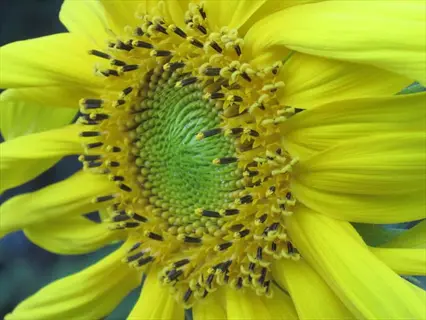
Mammoth Russian
- Height: Reaches 9 to 12 feet (2.7 to 3.7 m) on strong single stems, towering over most garden vegetables and fencing alike.
- Bloom size: Massive 10 to 12 inch (25 to 30 cm) golden-yellow flower heads with classic dark brown disc centers full of edible seeds.
- Heritage: Heirloom variety bred by Russian growers and introduced to the United States in 1893, still beloved by seed savers today.
- Best use: Ideal for seed harvesting, privacy screens, sunflower houses for kids, and pollinator gardens that need a dramatic backdrop.
- Days to bloom: Typically 75 to 90 days from direct sowing after the last spring frost in zones 2 through 11.
- Care note: Requires staking in windy areas and 2 feet (60 cm) spacing between plants for full root and stem development.
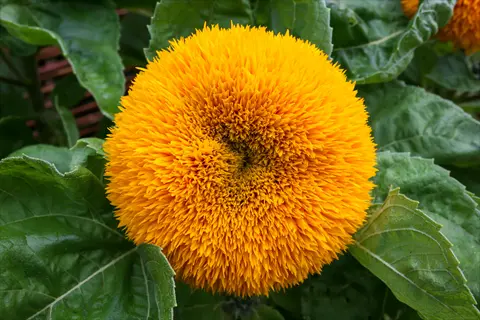
Teddy Bear
- Height: Compact 2 to 3 feet (60 to 90 cm) plants that fit perfectly in containers, raised beds, and small urban gardens.
- Bloom size: Fluffy 5 to 6 inch (12.7 to 15 cm) double flowers with fully ruffled golden petals and no visible disc center.
- Texture: Densely packed petals create a plush, cushion-like bloom that resembles a child's stuffed bear when fully open.
- Best use: Perfect for children's gardens, cut flower bouquets, container plantings on patios, and front-row border accents.
- Days to bloom: Typically 60 to 70 days from direct sowing, faster than giant cultivars and ideal for short growing seasons.
- Care note: Self-supporting without staking, deer-resistant, and continues producing side blooms when the central flower is cut.
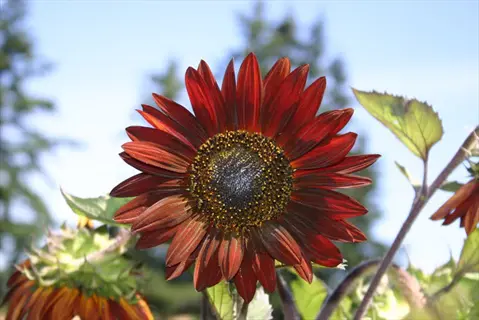
Velvet Queen
- Height: Branching plants reach 5 to 6 feet (1.5 to 1.8 m) with multiple side blooms throughout the late summer season.
- Bloom size: Rich 5 to 6 inch (12.7 to 15 cm) deep mahogany-red petals surrounding a chocolate-brown disc center.
- Color appeal: One of the darkest red sunflowers, with velvety petals that shift between burgundy and ruby in different light.
- Best use: Excellent for autumn-themed cut flower arrangements, rustic farmhouse borders, and pollinator gardens needing color contrast.
- Days to bloom: Typically 65 to 75 days from direct sowing, producing waves of blooms until first frost in most zones.
- Care note: Branching habit means more flowers per plant, but requires 18 inch (45 cm) spacing for proper airflow and disease prevention.
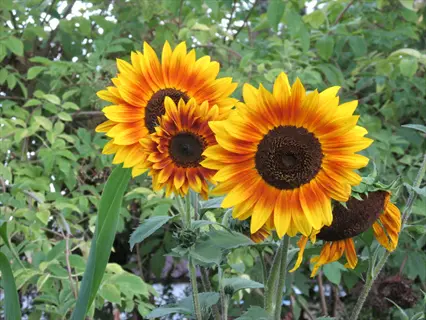
Autumn Beauty
- Height: Reaches 5 to 7 feet (1.5 to 2.1 m) tall on branching stems that produce many flowers per plant simultaneously.
- Bloom size: Stunning 4 to 6 inch (10 to 15 cm) bicolor blooms with petals streaked in red, bronze, mahogany, and gold.
- Color appeal: Each plant produces uniquely patterned flowers, no two alike, creating a painter's palette in the garden bed.
- Best use: Perfect for fall arrangements, cottage gardens, school gardens, and beginner sunflower growers seeking guaranteed visual impact.
- Days to bloom: Typically 65 to 75 days from direct sowing, with continuous flowering once the first bloom opens fully.
- Care note: Tolerant of poor soil and drought, making it one of the easiest sunflower cultivars for novice gardeners across the United States.
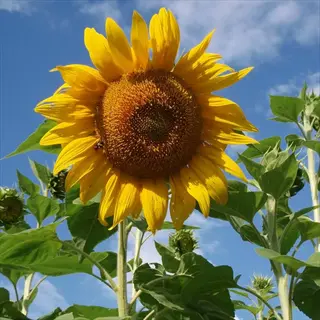
American Giant
- Height: Skyrockets to 14 to 16 feet (4.3 to 4.9 m) tall with sturdy unbranched single stems and deep taproots.
- Bloom size: Enormous 10 to 12 inch (25 to 30 cm) bright golden-yellow heads packed with large striped seeds for harvest.
- Strength: Thick stems hold massive flower heads upright even in moderate wind without typically requiring staking support.
- Best use: Sunflower competitions, seed production for snacking, dramatic property line markers, and bird-feeding garden features.
- Days to bloom: Typically 80 to 95 days from direct sowing, making it a late-summer showstopper for warm-season gardens.
- Care note: Plant in deep, fertile soil with 2 foot (60 cm) spacing and provide consistent watering during the bud-development stage.
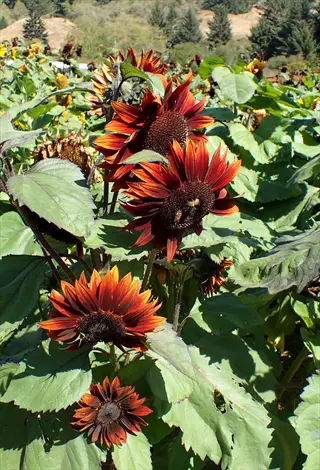
Moulin Rouge
- Height: Compact branching plants reach 4 to 5 feet (1.2 to 1.5 m) with multiple flowering side stems per plant.
- Bloom size: Dramatic 4 to 6 inch (10 to 15 cm) deep burgundy-red flowers with nearly black centers and pollen-free heads.
- Color appeal: One of the deepest red sunflowers available, with petals so dark they appear almost wine-purple in low light.
- Best use: Premium cut flower production, wedding bouquets, dramatic floral arrangements, and contrast plantings beside yellow varieties.
- Days to bloom: Typically 60 to 70 days from direct sowing, producing pollen-free blooms that last 7 to 10 days in vases.
- Care note: Being pollen-free, this variety will not stain tablecloths, but it still produces nectar that attracts bees and butterflies.
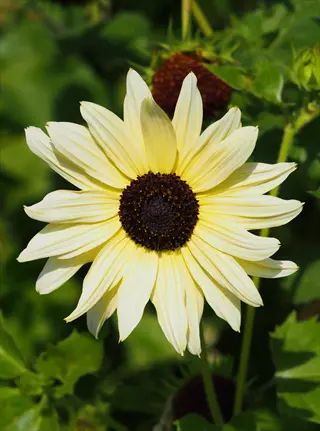
Italian White
- Height: Reaches 5 to 7 feet (1.5 to 2.1 m) on branching stems with abundant side blooms throughout summer.
- Bloom size: Delicate 4 inch (10 cm) creamy-white petals surrounding a dark chocolate-brown disc center for elegant contrast.
- Color appeal: One of the few true white sunflowers, offering a sophisticated alternative to standard golden cultivars in mixed beds.
- Best use: Bridal bouquets, white moon gardens, evening landscapes, and elegant cottage borders paired with blue or purple flowers.
- Days to bloom: Typically 70 to 80 days from direct sowing, with continuous side blooms after the central flower is harvested.
- Care note: Petals can scorch in extreme heat, so afternoon shade in zones 8 and warmer helps preserve the creamy color.
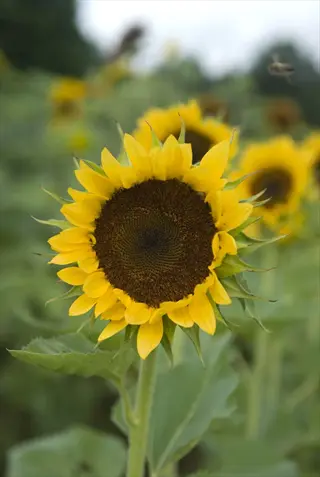
ProCut Orange
- Height: Uniform single-stem plants reach 5 to 6 feet (1.5 to 1.8 m), ideal for commercial cut flower operations.
- Bloom size: Consistent 4 to 6 inch (10 to 15 cm) bright orange petals with dark centers and zero pollen production.
- Uniformity: F1 hybrid bred for identical timing and bloom appearance, perfect for florists who need predictable harvests.
- Best use: Commercial flower farms, farmers market bouquets, weddings, and any application where pollen-stained surfaces are unwanted.
- Days to bloom: Quick 55 to 65 days from direct sowing, allowing 3 to 4 successive plantings per growing season in most US zones.
- Care note: Single-stem means one bloom per seed, so plant in dense succession every 7 to 14 days for continuous harvest.
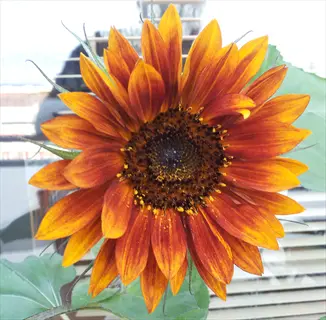
Ring of Fire
- Height: Branching plants reach 4 to 5 feet (1.2 to 1.5 m) with multiple flowers per plant from mid to late summer.
- Bloom size: Striking 4 to 5 inch (10 to 12.7 cm) blooms with gold-tipped petals encircling a deep mahogany-red center.
- Color appeal: Bicolor petals create a flame-like halo effect, hence the name, with the red center expanding as flowers age.
- Best use: Fall floral arrangements, autumn-themed cottage gardens, pollinator borders, and visually dramatic mass plantings near walkways.
- Days to bloom: Typically 65 to 75 days from direct sowing, producing continuous side blooms after the first central flower opens.
- Care note: Award-winning All-America Selections winner, drought-tolerant once established, and resistant to common foliar fungal diseases.
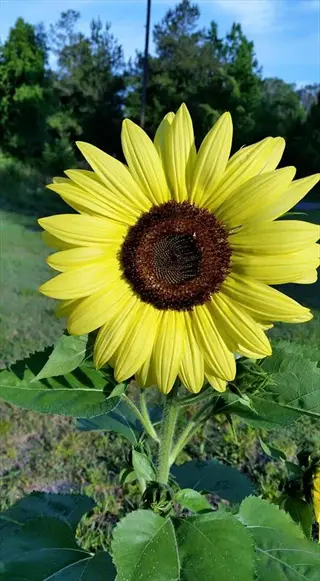
Lemon Queen
- Height: Tall branching plants reach 5 to 7 feet (1.5 to 2.1 m) with abundant side blooms across the upper plant.
- Bloom size: Soft 4 to 5 inch (10 to 12.7 cm) pale lemon-yellow petals with chocolate-brown disc centers full of pollen and nectar.
- Color appeal: Gentle lemon shade rather than bright gold, offering a softer aesthetic that pairs well with white and blue flowers.
- Best use: Pollinator gardens, the Great Sunflower Project citizen-science counts, cottage borders, and naturalized meadow plantings.
- Days to bloom: Typically 65 to 75 days from direct sowing, producing pollen-rich blooms that bees, butterflies, and finches love.
- Care note: Officially recommended by the Great Sunflower Project as a benchmark variety for tracking bee visits across North America.
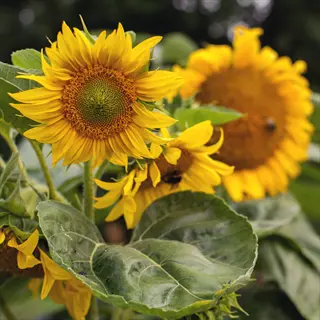
Big Smile
- Height: Truly dwarf plants reach just 12 to 18 inches (30 to 45 cm), making them ideal for containers and edges.
- Bloom size: Cheerful 4 to 5 inch (10 to 12.7 cm) golden petals around a dark center, oversized for the small plant.
- Compact habit: One of the shortest single-stem sunflowers available, perfect for window boxes and small apartment balconies.
- Best use: Container gardens, school projects with young children, front border edging, and small patio displays in full sun.
- Days to bloom: Quick 55 to 65 days from direct sowing, with seed-to-flower timing among the fastest of any sunflower variety.
- Care note: Self-supporting, requires no staking, and tolerates poor soil better than tall cultivars that demand fertile conditions.
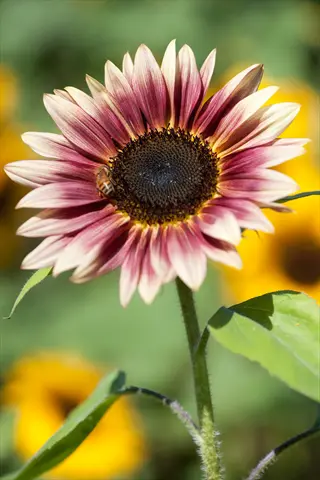
Strawberry Blonde
- Height: Branching plants reach 5 to 6 feet (1.5 to 1.8 m) with multiple flowering side stems throughout summer.
- Bloom size: Romantic 4 to 5 inch (10 to 12.7 cm) rose-pink petals fading to creamy-yellow tips with dark green-tinted centers.
- Color appeal: First true pink sunflower introduction, with hues that recall strawberry milk and shift as blooms mature on the stem.
- Best use: Wedding bouquets, romantic cottage gardens, cut flower farms specializing in unusual hues, and Mother's Day arrangements.
- Days to bloom: Typically 65 to 75 days from direct sowing, with continuous side blooms following the first central flower.
- Care note: Pollenless F1 hybrid, so this variety is safe for clean indoor arrangements but still produces nectar for bee visits.
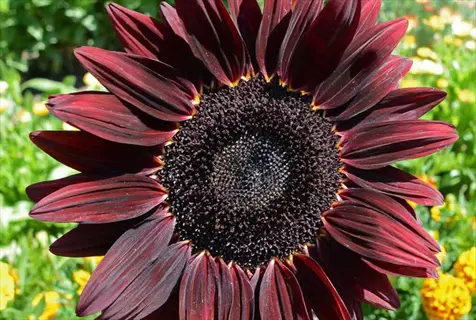
Chocolate Cherry
- Height: Branching plants reach 5 to 6 feet (1.5 to 1.8 m) with several side blooms after the first central flower.
- Bloom size: Rich 4 to 6 inch (10 to 15 cm) deep cherry-red petals tipped with chocolate edges around dark brown centers.
- Color appeal: Sumptuous color combination that pairs deep red with subtle bronze-brown highlights at petal edges for added depth.
- Best use: Romantic floral designs, autumn weddings, cottage gardens with deep color themes, and dramatic cut flower bouquets.
- Days to bloom: Typically 65 to 75 days from direct sowing, producing pollenless blooms that last well over a week in arrangements.
- Care note: Heat-tolerant and disease-resistant, performing well in zones 5 through 9 with minimal special soil amendments needed.
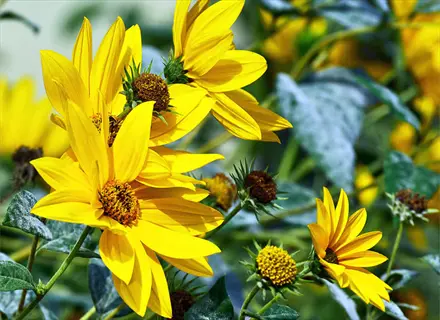
Sunspot
- Height: Dwarf single-stem plants reach 18 to 24 inches (45 to 60 cm), oversized blooms perched on short sturdy stems.
- Bloom size: Disproportionately large 8 to 10 inch (20 to 25 cm) bright yellow heads, the same size as 8-foot cultivars.
- Visual impact: The dramatic disparity between tiny plant and giant flower creates an unforgettable visual effect along borders.
- Best use: Front borders, container gardens, children's garden projects, and beginner sunflower trials in small-space gardens.
- Days to bloom: Typically 55 to 65 days from direct sowing, producing seed-laden heads that finches and chickadees love.
- Care note: No staking required despite the heavy flower head, but consistent watering is critical during the bud-formation stage.
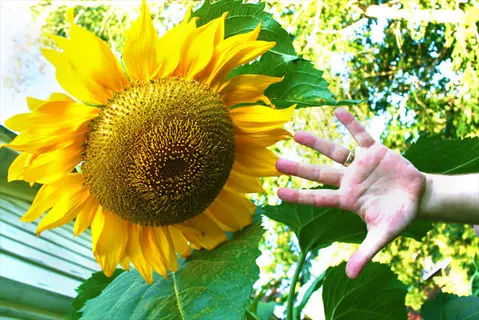
Cyclops
- Height: Towering plants reach an astounding 15 feet (4.6 m), among the tallest documented sunflower cultivars in cultivation.
- Bloom size: Colossal 14 inch (35.5 cm) golden-yellow flower heads, the largest documented bloom diameter among ornamental cultivars.
- Record holder: Documented by Iowa State University Extension as one of the absolute giants in the sunflower world.
- Best use: Sunflower height competitions, seed harvest for snacks, dramatic privacy screens, and pollinator paradise gardens.
- Days to bloom: Typically 85 to 100 days from direct sowing, requiring a long growing season for the full height to develop.
- Care note: Requires staking, deep fertile soil, and 2 to 3 foot (60 to 90 cm) spacing between plants for stable growth.
My top picks for new growers are Mammoth Russian and Autumn Beauty since they almost never fail. Both grow well in most soil types and need very little care from you. Plant American Giant when you want a tall record breaker in your backyard plot.
For kids, you cannot beat the Teddy Bear sunflower in small pots near a bedroom window. Its fluffy ruffled petals feel like a real plush toy when you touch them. Big Smile works just as well and stays under 18 inches tall for tiny spaces.
If you want cut flowers, go straight to the ProCut series or Moulin Rouge for clean bouquets. Velvet Queen and Ring of Fire give you rich fall hues that look great in a vase. Pick Italian White when you want a soft cream tone instead of bright gold.
Height Based Sunflower Classes
Iowa State puts sunflowers into four core groups by plant height. Minnesota adds a fifth group for branching sunflowers. These ones make many blooms per stem. I use these five groups to plan each bed in my yard.
Plant spacing shifts a lot based on the class you pick. You need 6 inches between 2 to 5 foot picks. Mid-size plants need 1 foot of room. Giants want 2 feet between them. I learned this the hard way when my first row of plants crashed into each other.
Giant sunflowers are the right pick when you want a showstopper or a sunflower house for the kids. Dwarf sunflowers like Big Smile and Pacino fit pots and balcony rails for renters with no yard. The single-stem sunflower picks give one big bloom while branching sunflowers pump out flowers all season long.
Container sunflowers need at least a 12 inch pot with good drain holes at the base. Semi-dwarf sunflowers fill the gap between tall yard picks and tiny compact sunflowers for small beds. Cut flower farmers tend to grow pollenless sunflowers since they will not stain a wedding dress or kitchen tile.
Colorful Sunflower Cultivars
You might think a sunflower must be a bright gold yellow with a dark center. But you can now find colorful sunflowers in cream, pink, and deep red. You can even grow rich burgundy sunflowers with chocolate edges in your bed. I planted a rainbow row in my yard last year. My neighbors stopped to snap photos each day.
Your sunflower color comes from two pigment types in the petals you see. Yellow sunflowers get their gold tone from carotenoids. That paint also makes your carrots look orange. Red sunflowers and dark chocolate sunflower picks get their hue from anthocyanin. That same dye colors your blueberries blue.
White and Cream Varieties
- Italian White: Delicate cream petals with dark centers, reaching 5 to 7 feet (1.5 to 2.1 m) on branching stems for mid-summer cuts.
- Coconut Ice: Pale ivory blooms tinged with lemon at the base, perfect for moon gardens and elegant white-themed wedding tables.
- Procut White Lite: Pollenless F1 hybrid with creamy white outer petals fading to soft yellow centers, ideal for clean indoor bouquets.
- Pigment science: White petals contain reduced carotenoid concentrations, allowing the natural pale cellular color of petal tissue to show through.
- Garden pairing: Combine white sunflowers with deep blue salvia or purple agastache for striking color contrast in cottage garden beds.
Classic Yellow and Gold
- Mammoth Russian: Traditional bright golden-yellow heirloom with massive 10 to 12 inch (25 to 30 cm) blooms loved since 1893.
- Lemon Queen: Pale lemon-yellow petals adopted by the Great Sunflower Project as the benchmark variety for pollinator citizen science.
- Sungold: Fluffy double yellow blooms similar to Teddy Bear but with brighter pure gold petals and no visible disc center.
- Pigment science: Yellow and gold petals derive their color from carotenoid pigments, the same chemical family that colors carrots and egg yolks.
- Garden pairing: Yellow cultivars work beautifully with purple coneflowers, blue cornflowers, and red zinnias for high-impact summer beds.
Red and Burgundy Selections
- Velvet Queen: Deep mahogany-red petals on branching 5 to 6 foot (1.5 to 1.8 m) plants, producing multiple blooms per season.
- Moulin Rouge: Burgundy-black petals on compact 4 to 5 foot (1.2 to 1.5 m) plants, prized for pollenless cut flower production.
- Claret: Deep wine-red petals with chocolate-brown centers, similar to Moulin Rouge but with slightly larger 6 inch (15 cm) blooms.
- Pigment science: Red and burgundy hues come from anthocyanin pigments, the same compounds that color blueberries and red grapes purple.
- Garden pairing: Pair red sunflowers with chartreuse foliage plants like coleus or sweet potato vine for dramatic complementary contrast.
Bicolor and Striped Patterns
- Autumn Beauty: Multi-shade petals streaked in red, bronze, mahogany, and gold, with no two plants producing identical patterns.
- Ring of Fire: Gold-tipped petals encircling a deep red center, creating a fiery halo effect that intensifies as blooms age.
- Strawberry Blonde: Rose-pink petals fading to cream-yellow tips, the first true pink sunflower introduction available to home gardeners.
- Pigment science: Bicolor patterns occur when anthocyanin production is restricted to the base of petals while carotenoids dominate the tips.
- Garden pairing: Bicolor sunflowers work as standalone focal points but also blend beautifully into rustic cottage gardens and fall arrangements.
Many bicolor sunflowers and dark red picks like Moulin Rouge are pollen-free F1 hybrids on purpose. Breeders made them this way for the cut flower trade you see at florists. Your deep orange sunflowers in the ProCut line follow the same plan and stay clean in any vase. Pick white sunflowers like Italian White when you want no pollen mess on your kitchen table.
Pollenless vs Pollen Producing
Most gardeners do not know that you can pick between pollenless sunflowers and regular pollen rich types for your beds. The first kind keeps your tablecloth clean while the second feeds your bees and birds. I made the mistake of picking only pollen-free sunflowers my first year and watched the bees buzz right past my garden.
Pollenless sunflowers still give off nectar, so they will still pull in some bees and butterflies. But they offer no pollen food for bees and no seeds for birds. The cut flower trade pushed for these F1 hybrid sunflower types back in the 1990s. The ProCut series now leads the trade for florists across North America.
The choice comes down to your main garden goal at the end of the day. Pick pollinator sunflowers like Mammoth Russian or Lemon Queen if you want the best sunflowers for bees and birds. Go with pollen-free picks if your goal is clean indoor blooms or if you live with someone who has allergy issues.
If you want the best sunflowers for birds, you want open seed heads with lots of fat seeds inside them. Confection types and heirloom picks like Autumn Beauty give goldfinches a fall feast each year. Leave the heads on the stem through winter so the seeds dry and feed your wild birds for months.
Native Wild Helianthus Species
Most folks know one sunflower and call it a day. But the Helianthus species group has 52 native types that grow across North America and Mexico. Only one of them became a major crop. The rest are wild sunflowers you almost never see in seed catalogs at your local store.
I started growing native sunflowers in my back bed three years ago and I will never plant only annuals again. These perennial sunflowers come back each spring with no work from you at all. They feed local bees, monarch butterflies, and migrating birds far better than most hybrid cut flower picks.
Helianthus annuus (Common Sunflower)
- Range: Native to central and southern contiguous United States and Mexico, now introduced from Nova Scotia to Alaska and Hawaii.
- Habit: Annual species reaching 3 to 10 feet (90 cm to 3 m), the sole source of all commercial and ornamental cultivars worldwide.
- Bloom period: July through October across most US regions, with peak flowering during August in the central United States.
- Ecological value: Supports over 70 native bee species and provides high-fat seeds for goldfinches, chickadees, and migrating songbirds.
- Garden role: Grow as an annual showpiece, replanting each spring after the last frost in zones 2 through 11 with full sun exposure.
Helianthus angustifolius (Swamp Sunflower)
- Range: Native to wetlands across the eastern United States from New York south through Florida and west to Texas and Missouri.
- Habit: Perennial reaching 5 to 7 feet (1.5 to 2.1 m) with narrow willow-like leaves on tall slender stems.
- Bloom period: Late September through November, providing critical late-season nectar when other flowers have already finished blooming.
- Ecological value: Recommended by University of Florida IFAS Extension for rain gardens, pond edges, and pollinator-supporting wet sites.
- Garden role: Cut back hard in June to encourage compact growth and prevent flopping, then enjoy a wall of yellow autumn blooms.
Helianthus debilis (Beach Sunflower)
- Range: Native to coastal dunes and sandy soils of Florida, Texas, and the southeastern Atlantic and Gulf coast states.
- Habit: Perennial groundcover spreading 2 to 4 feet (60 to 120 cm) wide with sprawling stems and small daisy-like blooms.
- Bloom period: Nearly year-round in frost-free zones 9 through 11, with peak flowering during the spring and fall seasons.
- Ecological value: University of Florida IFAS Extension lists it as drought-tolerant and salt-tolerant, perfect for low-water coastal landscapes.
- Garden role: Use as living mulch in sunny coastal beds or sandy pollinator gardens where typical sunflowers struggle to thrive.
Helianthus maximiliani (Maximilian Sunflower)
- Range: Native to the Great Plains from Texas to Manitoba, naturalized in most US states east of the Rocky Mountains.
- Habit: Tall clumping perennial reaching 6 to 10 feet (1.8 to 3 m) with willow-like leaves and multiple flowering stems.
- Bloom period: August through October, producing dozens of 2 to 3 inch (5 to 7.6 cm) golden yellow flowers per stem.
- Ecological value: Critical late-season forage for monarch butterflies during fall migration and a top native bee plant.
- Garden role: Plant in the back of perennial borders, prairie meadows, and naturalized pollinator gardens with full sun and average soil.
Helianthus tuberosus (Jerusalem Artichoke)
- Range: Native to eastern and central North America, widely naturalized across most temperate regions of the United States.
- Habit: Spreading perennial reaching 6 to 10 feet (1.8 to 3 m) with edible underground tubers and yellow daisy flowers.
- Bloom period: Late August through October, with peak flowering coinciding with tuber sizing under the soil for fall harvest.
- Ecological value: Tubers provide carbohydrate-rich food for wildlife and humans, often called sunchokes in modern culinary markets.
- Garden role: Confine to dedicated beds or containers since rhizomes spread aggressively, perfect for edible perennial vegetable gardens.
Add a Maximilian sunflower to your back border if you want fall blooms past first frost. The swamp sunflower works great near a pond edge or rain garden where most plants drown out. Try the beach sunflower if you live near the coast with sandy soil that other plants hate.
The Jerusalem artichoke gives you both pretty fall blooms and tasty tubers you can roast for dinner. Just be sure to plant it inside a deep pot or boxed bed since the roots spread fast. Most native picks like these grow well in zones 3 through 9 with no special soil work.
Oilseed vs Confection Types
Most guides skip the farm side of sunflowers, but you need to know it if you buy seeds or oil from a store. Crop sunflowers split into two big camps based on what the seeds end up doing. Oilseed sunflower picks get pressed for sunflower oil while confection sunflower types end up on your snack tray.
I like to think of these two camps as wine grapes versus table grapes you eat fresh. Oilseed types are small and prized for the oil you can press out of the hull. Confection types are big and prized for what you can chew right out of the shell. About 85% of the US crop comes from North Dakota, South Dakota, and Minnesota.
NuSun (Mid-Oleic Oilseed)
- Definition: Mid-oleic oil sunflower bred during the 1990s to provide a healthier cooking oil with naturally low saturated fat content.
- Oil chemistry: Contains 55% to 75% oleic acid, sitting between traditional linoleic and high-oleic types on the fatty acid spectrum.
- Commercial use: Dominant US oilseed type, used in restaurant cooking oils, snack chip frying, and packaged foods requiring shelf stability.
- Production region: Most North American NuSun acreage grows in North Dakota and South Dakota, the heart of the US sunflower belt.
- Visual ID: Small black seeds without striping, harvested mechanically and pressed within 30 days of harvest for premium oil quality.
High-Oleic Oilseed
- Definition: Specialty oilseed sunflower bred for the highest oleic acid content, providing maximum heat stability for industrial frying applications.
- Oil chemistry: Contains 80% or more oleic acid, similar to olive oil but with a higher smoke point ideal for frying.
- Commercial use: Premium fryer oil for snack manufacturers, fast-food chains, and packaged-food producers requiring trans-fat-free options.
- Production region: Grown across the Northern Plains, Argentina, and Eastern European countries including Ukraine and Romania for export markets.
- Visual ID: Identical to other black-shell oilseed types in appearance, differentiated only through laboratory fatty acid testing at harvest.
Linoleic Oilseed
- Definition: Traditional oilseed sunflower, the original type cultivated before the 1990s before NuSun and High-Oleic breeding programs.
- Oil chemistry: Contains roughly 65% to 70% linoleic acid, a polyunsaturated fat marketed as heart-healthy for salad and cold uses.
- Commercial use: Cold-pressed gourmet oil, salad dressings, margarine production, and birdseed oil supplements for premium wildlife feed brands.
- Production region: Still grown in Russia, Ukraine, and parts of Argentina where heritage oil markets persist alongside newer hybrid acreage.
- Visual ID: Indistinguishable from NuSun and High-Oleic by appearance, with the same small striped or solid black hull structure.
Confection (Edible Seed Types)
- Definition: Large-seeded sunflowers bred specifically for human and bird consumption rather than oil extraction or industrial processing.
- In-shell variety: Big striped black-and-white seeds, the classic ballpark snack roasted and salted for human consumption across North America.
- Kernel variety: Hulled seeds used in baking, granola, salads, energy bars, and as protein-rich kernel ingredients in packaged foods.
- Commercial use: Snack food industry, baking ingredient suppliers, premium wild bird feed mixes, and pet food formulations for parrots and rodents.
- Visual ID: Distinctive striped black-and-white pattern on the hull, with seeds roughly twice the size of any oilseed counterpart.
The NuSun sunflower dominates US oil acres since farmers bred it to give a stable cooking oil. The high oleic sunflower is the pick for big food brands that want to fry chips at high heat. The linoleic sunflower is the old school type still grown for cold pressed oils. Each one looks the same in the field but tests differ in the lab.
On the snack side, in-shell sunflower seeds are the classic black and white striped seeds you crack with your teeth at a baseball game. Kernel sunflower seeds are the hulled ones you sprinkle on a salad or stir into a granola mix. Both come from the same crop type that farmers space wider than the oil rows.
Choosing By Garden Use
Picking the right sunflower for your goal matters more than picking the prettiest one you see online. All types want full sun, a soil pH of 6.0 to 6.8, and 7 to 10 days to sprout from seed. Most go from seed to bloom in 50 to 80 days based on which class you grow.
I made the rookie mistake of planting tall Mammoth Russian seeds in tiny pots on my patio one year. They flopped over by week three and never bloomed for me at all. Now I match the type to the spot before I buy a single seed pack at the store.
Containers and Small Spaces
- Top picks: Big Smile, Pacino, Teddy Bear, Sunspot, and Elf all stay under 24 inches (60 cm) tall in pots.
- Pot size: Use containers at least 12 inches (30 cm) wide and deep with drainage holes and standard potting mix.
- Water schedule: Container sunflowers need watering every 2 to 3 days during peak summer since pots dry faster than garden beds.
- Sun requirement: Place containers where they receive at least 6 hours of direct sun per day for proper flower development.
- Bonus tip: Plant 2 to 3 dwarf sunflowers per 14 inch (35.5 cm) pot for a full bouquet effect throughout the bloom season.
Cut Flower Production
- Top picks: ProCut series, Moulin Rouge, Strawberry Blonde, Chocolate Cherry, and Italian White are bred specifically for cutting gardens.
- Pollenless advantage: Pollen-free hybrids never stain tablecloths, hands, or vases, making them the standard for wedding and event floristry.
- Succession plant: Sow new ProCut seeds every 7 to 14 days from late spring through mid-summer for continuous bouquet harvests.
- Cutting technique: Harvest at dawn when stems are fully hydrated and the first ring of petals just begins to lift from the disc.
- Vase life: Pollenless sunflowers typically last 7 to 10 days in clean water with floral preservative and stem recutting every 2 days.
Kid Friendly Beginner Gardens
- Top picks: Mammoth Russian, Teddy Bear, Big Smile, Sunspot, and Autumn Beauty deliver guaranteed success for first-time young gardeners.
- Why beginners win: Large seeds are easy for small fingers to handle, and germination happens in just 7 to 10 days for instant excitement.
- Sunflower house project: Plant Mammoth Russian or American Giant in a U-shape to create a living playhouse for kids during summer.
- Height tracking: Mark a stake weekly to track growth, since giants can add 6 inches (15 cm) per week during peak summer development.
- Bonus tip: Save mature seed heads in fall for next-year planting or to make homemade bird-feeder gifts during the winter holidays.
Pollinator and Wildlife Habitat
- Top picks: Lemon Queen, Mammoth Russian, Autumn Beauty, Italian White, and any open-pollinated heirloom variety feed bees and birds best.
- Avoid pollenless: Skip F1 hybrid pollenless varieties if you want to feed honeybees, native bees, and overwintering finches efficiently.
- Bee benefit: Per the University of Minnesota, pollen-rich sunflowers support over 70 native bee species during late summer nectar flows.
- Bird value: Confection-type seeds from open-pollinated heads provide critical fat for goldfinches, chickadees, and migrating songbirds in fall.
- Bonus tip: Leave seed heads standing through winter rather than deadheading, creating natural bird feeders that decorate the dormant garden.
Stick with classic picks if you are new and want a win in your first year. The best sunflowers for beginners are Mammoth Russian and Autumn Beauty. They take poor soil and a missed watering with no fuss. Each one gives strong stems and bright blooms even with sloppy care.
Fill a vase all summer with the best sunflowers for cut flowers like ProCut and Moulin Rouge. These cut flower sunflowers stay clean in a vase since they make no pollen mess. Pick the best sunflowers for containers like Big Smile and Pacino if your yard is just a balcony with pots.
The best sunflowers for kids are big seeded picks like Mammoth Russian and Sunspot for tiny fingers to plant with ease. Pick the best sunflowers for pollinators when you want to feed local bees and birds. Lemon Queen and Autumn Beauty top that list for me each year I grow them.
5 Common Myths
All sunflowers track the sun throughout their entire life, turning their faces from east to west each day.
Only young sunflower buds exhibit heliotropism. Mature blooms permanently face east after they fully open and stop tracking the sun.
Every sunflower variety produces edible seeds suitable for snacking straight from the garden after harvest.
Only confection varieties have large, striped seeds bred for eating. Oilseed types have small black seeds, and many ornamentals produce few seeds.
Pollenless sunflowers are harmful to pollinators because they offer nothing for bees or other beneficial insects.
Pollenless varieties still produce nectar, attracting bees and butterflies. They simply lack pollen, making them cleaner for cut flowers.
Sunflowers always grow tall, so they cannot fit in small gardens, containers, or apartment balcony spaces.
Dwarf varieties like Elf, Big Smile, and Pacino stay under 3 feet (90 cm) tall, growing happily in pots and small garden beds.
Sunflowers originally came from Russia because of the famous Mammoth Russian heirloom variety we know today.
Sunflowers are native to North America. Russian breeders refined the Mammoth Russian cultivar and introduced it to the US in 1893.
Conclusion
You now know that sunflower varieties split into five core classes for the garden side. Those are Giant, Semi-Dwarf, Dwarf, Branching, and Pollenless picks. The farm side splits into two: oilseed sunflower and confection sunflower types. No other guide I have read covers both sides in one spot like this one does for you.
Think of the Helianthus annuus genus as a big tool kit with 52 species and many sunflower cultivars inside it. The right pick depends on your goal. Some folks want a cut flower bouquet. Others want a snack crop or a bird buffet for fall. There is no best pick, only the best pick for your yard.
Folks have grown these garden flowers for over 1,000 years. Records from the University of Minnesota team back this up. Today we still grow them for the same core reasons. We want food, color, and a way to feed the bees and birds we love. The world grows 62 million tons of seed each year.
My best tip is to match the type to your real garden goal. Skip the trend you saw online last week. Pick annual flowers like Mammoth Russian for snacks. Or pick ornamental sunflowers like Velvet Queen for types of sunflowers that wow in a vase. Plant the right one this spring and you will be a fan for life.
External Sources
Frequently Asked Questions
What are the varieties of sunflowers?
Sunflowers split into five ornamental classes:
- Giant types over 8 feet
- Semi-dwarf types from 3 to 8 feet
- Dwarf types under 3 feet
- Branching multi-flower types
- Pollenless cut-flower types
Does sunflower help heal wounds?
Sunflower oil shows mild skin barrier benefits, but it is not a proven wound-healing treatment and should never replace medical care.
What is the most common sunflower?
The common sunflower (Helianthus annuus) is by far the most widespread, with Mammoth Russian being the best-known heirloom cultivar grown worldwide.
How many versions of sunflowers are there?
Botanists count 52 species in the Helianthus genus, with hundreds of named cultivars across ornamental and agricultural categories.
What cannot be planted next to sunflowers?
Avoid planting these near sunflowers:
- Potatoes due to allelopathic chemicals
- Pole beans that compete for light
- Fennel which dislikes most neighbors
- Other sunflowers planted too close
What do sunflowers mean as a gift?
Sunflowers as a gift symbolize loyalty, lasting happiness, warm admiration, and adoration in floral language traditions.
What does giving sunflowers symbolize?
Giving sunflowers symbolizes loyalty, devotion, and unwavering affection, making them a meaningful gift between friends or partners.
What toxins do sunflowers remove?
Sunflowers can extract heavy metals through phytoremediation:
- Lead from contaminated soil
- Arsenic in low concentrations
- Cadmium near industrial sites
- Zinc and uranium traces
What plant heals wounds fast?
Aloe vera, calendula, and yarrow are widely studied for supporting minor wound recovery, but always consult a healthcare provider.
What is the easiest sunflower variety to grow?
Mammoth Russian and Autumn Beauty are the easiest sunflowers for beginners, thriving with minimal care in most United States gardens.

