
Introduction
Coconut coir soil is the leftover fiber and dust from coconut husks, turned into a growing medium for your plants. It used to be waste at coconut processing plants. Now it shows up in nearly every bag of seed-starting mix and every brick you soak in a bucket. The pitch sounds great, but most guides back it up with the same recycled claims and no real data.
This guide does it differently. You get real numbers from university research, not vague claims. Researchers at Utah State tested how well coco coir holds onto plant food. They call this its cation exchange capacity. Coir scored higher than clay soil. It scored 10 to 20 times higher than sandy soil. A high score means the coir grabs nutrients and feeds them back to roots. So less of your fertilizer washes away.
Here is the gap I want to close. Almost every coir article says it holds 10 times its weight in water. Not one of them shows where that number comes from. So I read the peer-reviewed studies and university fact sheets myself. You will get real figures for water retention, true mixing ratios, and honest fixes for the salt and Cal-Mag problems most pages skip.
The simplest way to picture coconut coir is as an inert sponge. It holds water and air beautifully, but it brings almost no food of its own to the table. You supply the nutrients, and the coir holds them where roots can reach. Keep that one idea in mind and the rest of this guide clicks into place, including the parts about feeding and buffering later on.
Coir gets sold mainly as a peat moss alternative, and that is a fair pitch since it is renewable while peat bogs take centuries to rebuild. But I will weigh that honestly rather than cheerlead. Peat still wins in a few situations, and you deserve to know when. Let's start with what this growing medium actually is and how it gets made.
What Coconut Coir Soil Is
Coconut coir soil comes from the brown husk that wraps around every coconut. Growers used to throw this husk away. Now it gets cleaned, dried, and pressed into blocks you soak in water before you plant. The fine, peat-like dust in these blocks goes by the name coco peat, and it forms the bulk of most bagged products.
On its own, coir holds no nutrients at all. That makes it a true soilless medium rather than a fertile dirt you dig from the yard. You add the food yourself, which sounds like a chore but actually hands you full control over what your roots get. Colorado State Extension calls coir a cheap, renewable stand-in for peat moss, and it lasts for years without breaking down.
The pH sits in a pH neutral band of about 5.5 to 6.8, so it runs less acidic than peat moss. Most vegetables and herbs root happily inside that window. You won't need to chase the pH swings that peat can throw at you, which is one less thing to test and fix each week.
Coir also has a high cation exchange capacity, the trait that lets a medium grip nutrients and pass them to roots on demand. Think of coir as an inert sponge covered in sticky spots. The water flows through, but those sticky spots catch the food and hold it close to the roots instead of letting it wash straight out the bottom of the pot.
Coconut coir has a higher cation exchange capacity (CEC) than clay soil and is much higher (10x to 20x) compared to sandy soil.
Types and Forms of Coir
Coir is not one single product. The same coconut husk gets broken down into three main forms, and each one acts in a different way once it hits your pots. Pick the wrong form and your plants either drown or dry out, so this part matters more than most people think.
The three forms are coco pith, coco fiber, and coco chips. Pith behaves like a moisture sponge that soaks up water and holds it. Chips act more like chunky drainage, the way bark nuggets keep a mix open and airy. Fiber sits in the middle and adds air pockets so the pith does not pack into a dense, soggy block.
Water-holding comes down to particle size. Fine coir dust under 0.5 millimeters holds over 72% water by volume, while coarse 2 millimeter chips hold only 16 to 20%. That gap is why you match the form to the job instead of grabbing whatever is cheapest at the store.
Most of this comes packed as a coir brick, block, disc, or basket liner that you soak before use. One more split you should know about is buffered coir versus unbuffered, which I cover at the bottom of the list. Here is how all four break down.
Coco Pith or Coco Peat
- Texture: Fine, soil-like dust that is the most common form sold in compressed bricks and blocks for general use.
- Water-holding: Fine pith under 0.5 millimeters (0.02 inches) holds over 72% water by volume, the highest of the three forms.
- Best for: Seed starting and as a moisture-retaining amendment mixed into potting soil and raised beds.
- Caution: Used alone it can stay too wet, so it is usually blended with perlite or chips for drainage.
Coco Fiber
- Texture: Long, stringy strands left over from the coconut husk that add air pockets to a mix.
- Water-holding: Holds far less water than pith and instead creates structure and aeration around roots.
- Best for: Improving drainage and preventing pith from packing down into a dense, airless mass.
- Caution: Fibers break down faster than pith, so their aeration benefit fades sooner over the seasons.
Coco Chips
- Texture: Chunky pieces of husk, roughly 2 millimeters (0.08 inches) and larger, that look like small bark nuggets.
- Water-holding: Coarse chips hold only about 16% to 20% water by volume, far less than fine pith.
- Best for: Chunky, fast-draining blends for orchids, monstera, and other plants that hate soggy roots.
- Caution: On their own they dry out quickly, so they are usually mixed with pith for balance.
Buffered Versus Unbuffered
- Buffered: Pre-soaked in a calcium and magnesium solution so its exchange sites are saturated before you plant.
- Unbuffered: Cheaper and untreated, but its exchange sites can pull calcium and magnesium away from your plants.
- Best for: Beginners benefit from buffered coir, while experienced growers can buffer unbuffered coir themselves.
- Caution: Unbuffered coir often needs both rinsing for salt and buffering for Cal-Mag before it is planted.
You rarely use any one form alone. Most growers blend pith for moisture and chips for drainage, then tune the ratio to the plant. A seed tray leans heavy on pith, while an orchid pot leans on chips.
If you are just starting out, grab a buffered coir brick and skip the extra prep. The few dollars you save on unbuffered coir get eaten up fast once you factor in the rinsing and the Cal-Mag fixes it needs first.
Real Benefits Backed by Data
By midsummer my peat-based raised bed had baked into a hard, gray crust. Water just beaded on top and ran off the edges into the path. The plants below sat dry while I stood there with a hose doing nothing. The season I swapped that bed for a coconut coir soil blend, the same patch drank water down evenly and stayed damp for days.
That is the real story behind coir, and the lab numbers back it up. Most guides list water retention and soil aeration as selling points. They tack on sustainability too, but they offer no proof. Below I tie each benefit to a real source you can trust.
Start with how coir holds the food you feed it. Its cation exchange capacity is high. The number runs 10 to 20 times that of sandy soil, per Utah State University Extension. It beats clay too. A higher CEC means the medium grips your plant food instead of letting it wash straight through.
Your crop quality climbs as well. A 2023 Scientific Reports trial grew sweet peppers in coir. The fruit reached Vitamin C of 524.4 milligrams per 100 grams of dry weight, against just 189.6 in loamy soil. Total phenols jumped to 22.2 versus 5.74, so what you harvest is richer in nutrients too.
The clearest edge shows up under stress. In a Plants MDPI study, oak seedlings in coir kept far more living leaves when water ran short. Quercus pubescens held 91% leaf survival in coir, against 69% in peat. For real drought resistance, that gap is huge when a hot week hits your garden.
Coir is not a guaranteed upgrade in every case. The oak study showed peat grew larger seedlings before drought, so match coir to the conditions where its water-holding actually helps.
How to Mix and Use Coir
A rock-hard brick sat in my wheelbarrow on the back patio, dense as a paving stone. I hit it with the hose, walked off to grab my gloves, and came back to a full barrow of loose, fluffy medium in under 20 minutes. That swelling is exactly why you must rehydrate coir brick before you measure anything.
The right coir mixing ratio depends on what you grow. Utah State Extension says a good soak swells the brick about 5 to 6 times its size. Then you work it into the top 6 to 8 inches (15 to 20 centimeters) of soil. For garden beds, aim for roughly 1:6 to 1:8 coir to soil. That lifts water-holding without thinning out your bed.
Containers and seed trays let you push much higher. Colorado State Extension says coir can be as much as 80% of a growing mix and still work well. So it shines as a seed starting medium. Seeds often sprout fast in it because the material stays evenly moist, not soggy and not bone dry.
Want more air at the roots? A simple coir perlite mix opens up drainage for plants that hate wet feet, and you can dial the perlite up or down to taste. Whatever ratio you settle on, treat coir as a clean soil amendment with no built-in food. It is inert, so plan to feed your plants with compost or a complete fertilizer from day one.
Place the compressed brick in a large tub and add warm water. It will expand roughly five to six times its size into loose, fluffy material.
Break apart any clumps and let excess water drain so the coir is evenly moist rather than dripping wet before you measure it.
For garden soil, blend at about 1:6 to 1:8 coir to soil. For containers and seed trays, coir can make up a much larger share of the mix.
Work the coir into the top 6 to 8 inches (15 to 20 centimeters) of soil so roots reach the improved water-holding zone.
Because coir is inert, add a complete fertilizer or compost so plants have the nutrients the medium cannot supply on its own.
Do not measure your mix before the coir finishes expanding. A small dry brick swells five to six times, so dry measuring throws off every ratio and leaves you short on soil.
Rinsing Salt and Cal-Mag Fix
Two problems trip up new growers more than any other. Fresh coir carries leftover salt, and it quietly steals calcium and magnesium from your plants. Most guides warn you about both, then stop short of the fix. Here is the full walkthrough so your seedlings never pay the price.
Start with the salt. New coir holds sodium, chloride, and potassium salts, per Washington State University. Leach the pith with fresh water before you use it. That high salt content comes from how the husks soak during processing. So you rinse coir until those salts wash away and the medium tests clean.
The Cal-Mag issue is sneakier. Coir's exchange sites act like a crowded parking lot, and sodium grabs the best spots first. Those same sites prefer calcium and magnesium, so unbuffered coir pulls both straight out of your feed. You can fertilize on schedule and still watch a Cal-Mag deficiency show up as yellow leaves and slow growth.
The fix is two clear steps. First you flush the lot clear of salt. Then you fill those open spots on purpose. Buffering coir means soaking it in a calcium and magnesium mix. You keep soaking until the exchange sites are full and stop robbing your plants. After that, the coir leaves your nutrients alone.
- Rinse for salt: Flush rehydrated coir with plenty of fresh water to wash out sodium, chloride, and potassium salts before planting, as WSU advises for the pith.
- Check the water draining out: New coir runs heavy with salt, so keep rinsing until the runoff looks clear and its electrical conductivity tests far lower than the first pass.
- Buffer for Cal-Mag: Soak unbuffered coir in a calcium and magnesium solution so its exchange sites fill up and stop pulling those nutrients from your plants.
- Or buy buffered coir: Pre-buffered, low-sodium coir skips both steps, which is the easiest route for beginners who do not want to test and treat.
- Feed with a complete nutrient: Coir is inert, so supply a full fertilizer that includes calcium and magnesium and deficiency symptoms never get a chance to appear.
Buffered coir does all of this for you, which is why it costs a bit more. Unbuffered bricks are cheaper but need both the rinse and the buffer first. Once the medium is clean and balanced, keep your feed steady. Feeding trials held a target electrical conductivity near 1.55 to 1.8 mS per cm. That range is a handy marker for how strong to make your mix.
Best Plants for Coco Coir
A tray of Genovese basil seedlings on my back patio pushed up thick and even in a fine coir and perlite seed mix. The soil-sown tray right beside it came up patchy, with bare gaps and a few weak sprouts leaning over. Same seed packet, same shade, same morning watering can. The coir tray just held steady, even moisture while the soil crusted over and dried in spots.
That even moisture is why the best plants for coco coir are the ones that hate drying out. Coir shines for seed starting, leafy herbs, and moisture-loving plants that want damp but airy roots. It also suits tropical houseplants that grow in loose, humid soil in the wild. The list below breaks down the crops and plants that do best in a coir blend.
Fruiting Vegetables
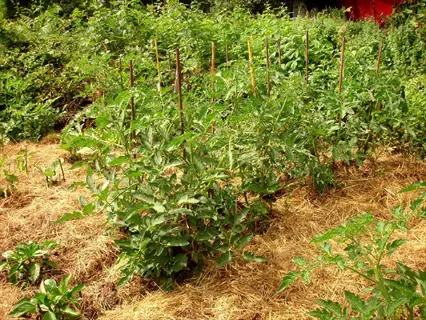
- Examples: Peppers, tomatoes, cucumbers, and eggplants all grow strongly in coir-amended beds and containers.
- Why it works: Coir's even moisture and high water-holding support the steady watering these heavy feeders need.
- Evidence: A peer-reviewed trial found coir-grown sweet peppers had higher fruit counts and much higher Vitamin C.
- Feeding: These crops are hungry, so pair coir with a complete fertilizer since the medium is inert.
- Watering: Coir reduces drought stress, but check moisture so roots stay damp rather than waterlogged.
- Best form: Use fine pith blended with perlite for drainage in containers and raised beds.
Berries
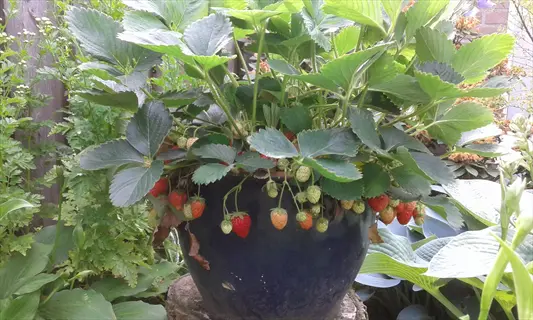
- Examples: Strawberries and blueberries do well in coir blends with controlled moisture and good aeration.
- Why it works: Coir holds steady moisture that berries like without the soggy roots that cause rot.
- pH note: Coir's near-neutral 5.5 to 6.8 range suits strawberries, while blueberries still need extra acidity added.
- Feeding: Add a complete fertilizer because the inert coir supplies no nutrients to fruiting plants.
- Watering: Even moisture supports fruit set, so avoid letting coir dry into a hard, water-repelling state.
- Best form: Blend pith with chips so containers drain freely while still holding moisture.
Herbs and Seedlings
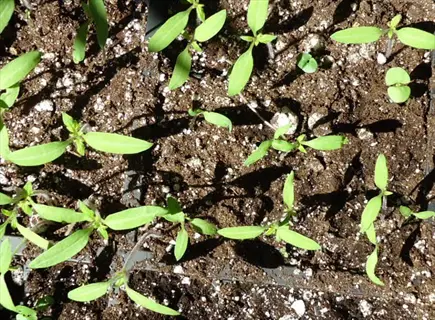
- Examples: Basil, cilantro, and mint germinate and grow well, and coir is a popular seed-starting medium.
- Why it works: Fine coir holds the even moisture that small seeds need to sprout quickly and uniformly.
- Speed: Gardeners often see fast germination in coir because it stays evenly damp rather than crusting over.
- Feeding: Once seedlings have true leaves, begin light feeding since coir offers no nutrients itself.
- Watering: Keep the surface damp but not saturated to avoid damping off in young seedlings.
- Best form: Use fine pith, often mixed with a little perlite, for trays and small starter pots.
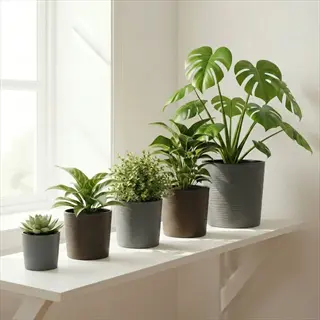
Tropical Houseplants
- Examples: Monstera, orchids, and other tropicals thrive in chunky coir blends that mimic their airy native soil.
- Why it works: Coir holds moisture while chips keep the mix open, balancing water and air around roots.
- Blend: Mix coir with bark and perlite so the medium drains fast yet never dries into a hard block.
- Feeding: Tropicals need regular balanced feeding because the coir base provides no nutrients on its own.
- Watering: The airy blend resists the soggy conditions that cause root rot in indoor pots.
- Best form: Lean on coco chips and coarse coir for the chunky structure these roots prefer.
Fruiting vegetables earn their top spot with hard data. A peer-reviewed trial found coir-grown sweet peppers produced higher fruit counts than peppers in loamy soil. The same coir peppers packed far more Vitamin C, reaching 524.4 mg per 100g of dry weight against 189.6 in the soil controls. So coir does more than keep these heavy feeders watered. It can improve the nutritional quality of what you harvest.
Now the plants to avoid putting in straight coir. Cactuses, succulents, and lavender want dry, fast-draining roots and hate sitting in steady moisture. They sit at the cautious end of the list, not off it. If you love these plants, cut the coir hard with grit or coarse sand so water drains right through. Match the medium to the plant, and your coir will pay you back across the whole garden.
5 Common Myths
All coconut coir holds the same amount of water, so any product works the same for moisture-loving plants in your garden.
Water-holding depends heavily on particle size. Fine coir dust holds over 72 percent water by volume, while coarse 2 millimeter chips hold only 16 to 20 percent.
Coconut coir comes loaded with nutrients, so plants grown in it will not need any added fertilizer to thrive.
Coir is essentially inert and provides almost no nutrients. Plants need a complete fertilizer program because the medium itself does not feed them.
Coconut coir is ready to use straight from the bag, so you can plant in it without any rinsing or preparation first.
Coir often contains sodium, chloride, and potassium salts that should be rinsed out first, and unbuffered coir can bind calcium and magnesium away from plants.
Coconut coir is always the better choice over peat moss because it outperforms peat in every growing situation.
It is crop and context dependent. Coir improved pepper nutrition and oak drought resistance, but peat produced larger oak seedlings before any drought stress.
Coconut coir breaks down within a single season, so you have to replace it completely with every new planting.
Coir resists compaction and decomposition, holding its structure across several seasons, and it can often be rinsed and reused before it finally breaks down.
Conclusion
Coconut coir soil earns its spot as a renewable peat moss alternative with real data behind it. University extension research puts it at a near-neutral pH around 5.5 to 6.8. It holds water like a sponge and grips nutrients far better than plain sand. As a soil amendment, it keeps your beds loose and your roots fed.
The numbers are worth keeping in mind when you shop. Fine coir pith holds over 72% water by volume, which is why it shines for seed starting and thirsty containers. Its strong water retention does half the work for you. The cation exchange capacity runs 10 to 20 times higher than sandy soil. So the nutrients you add stick around for the plant instead of washing out the pot.
Here is the honest part. Coir is inert, so it brings no nutrients of its own. Feed it like finished dirt and it can lock out calcium and magnesium. Your success rests on a few simple habits. Rinse the salts out, buffer the block, and feed your plants a balanced mix with extra Cal-Mag. Treat coir as a clean base you build on, not a soil that does the work for you.
The peat comparison stays nuanced, and the right pick depends on your crop and your conditions rather than one blanket rule. Match the coir to the job. Reach for fast-draining coco chips when you grow orchids and other tropicals that hate wet feet. Reach for fine pith when you start seedlings or fill small pots that dry out fast. Do that, and this medium rewards your sustainable gardening. You get steadier moisture, fewer surprises, and healthy roots season after season.
Glossary
- Buffered coir
- Coir pre-soaked in a calcium and magnesium solution so it stops pulling those nutrients away from plants.
- Cal-Mag deficiency
- A shortage of calcium and magnesium in plants, common in unbuffered coir whose exchange sites bind those nutrients.
- cation exchange capacity
- A measure of how well a growing medium holds onto nutrients and releases them back to plant roots.
- Cation exchange capacity (CEC)
- A measure of how well a growing medium holds onto nutrients so they stay available near plant roots.
- Coco pith
- The fine, soil-like dust form of coconut coir that holds the most water.
- Electrical conductivity (EC)
- A reading of how many dissolved salts are in a solution, used to manage feeding and salt levels.
- Inert medium
- A growing material that contains no nutrients of its own, so plants must be fed separately.
- Leaching
- Rinsing a medium with plenty of fresh water to wash out built-up salts before planting.
External Sources
Frequently Asked Questions
What are the disadvantages of coconut coir?
Coir is inert with no nutrients, often carries sodium and chloride salts that need rinsing, and can cause calcium and magnesium deficiency when unbuffered.
Should I add coconut coir to soil?
Yes, coir improves water retention and structure in most soils. Mix it into the top 6 to 8 inches at roughly a 1:6 to 1:8 coir to soil ratio.
Which plants like coconut coir?
Moisture-loving plants do best:
- Peppers, tomatoes, and cucumbers
- Strawberries and blueberries
- Basil, cilantro, and mint
- Many tropical houseplants and orchids
What plants don't like coconut coir?
Plants that need fast-draining, dry conditions struggle in straight coir. Cactuses, succulents, lavender, and other drought-loving plants need it heavily amended with grit or perlite.
How long does coco coir last in soil?
Coir resists compaction and decomposition, so it holds its structure across multiple growing seasons before it slowly breaks down into the soil.
Is coco coir cheaper than soil?
Compressed coir bricks are inexpensive by weight because they expand five to six times when soaked, though the inert medium needs added nutrients that affect the true cost.
Is coconut coir bad for the environment?
Coir is a renewable byproduct of coconut processing and is widely positioned as a more sustainable alternative to mined peat moss, though shipping and processing carry a footprint.
Do you put soil directly in a coco coir liner?
Yes, you fill a coco coir basket liner with potting mix or a coir blend. The liner itself holds the soil in place while improving aeration and moisture around the roots.
Can I use coconut coir for monstera?
Yes, monstera grows well in coir blended with chunky bark and perlite. The mix holds moisture without staying soggy, which suits this tropical plant's roots.
Is coco coir like sphagnum moss?
Both hold water well, but coir is near-neutral, renewable, and resists compaction, while sphagnum peat moss is more acidic and is mined from slow-forming bogs.