
Introduction
The winter garden looks dead. Bare stems, gray skies, brown beds, and not a petal in sight. Then one cold morning a flower opens against the frost, and the whole yard wakes up. That small shock is what winter blooming plants give you, and once you grow a few you stop dreading the dark months. This guide names the best winter flowering plants for your garden, and it explains the science most lists leave out.
Here is the part that surprised me as a gardener. Cold does not just survive the bloom. For many plants, cold is what triggers it. One peer-reviewed study followed a winter orchid and gave it about 40 days of cold nights. The flowering rate jumped from under 20% to 85%, and the blooms even arrived a month early. That is one species, not a rule for every plant, but it shows how a hard chill can flip a switch that warm weather never touches.
Most plant lists stop at the names. They tell you the flower, the color, and maybe a zone number, then move on. They almost never explain why flowers that bloom in winter open at all, or how a fragile-looking petal lives through a freeze. I think that gap is the whole point. So this guide covers both sides. You get the plants, and you get the reasons they work, which helps you pick the right cold hardy plants for your own beds.
More gardeners want a yard that earns its space in every season, not just May and June. Winter interest used to feel like a niche idea, but now it is what people ask for first. Below I walk you through the full arc of winter color. It runs from the first blooms of December, through the deep cold of January and February, and on to the early signs of March. Let's start with what actually opens when the snow is still on the ground.
18 Best Winter Blooming Plants
I noticed the yellow through the kitchen window one frozen January morning. Eight years before, I planted an 'Arnold Promise' witch hazel in the damp back border by the fence line. Now spidery flowers crowded every bare twig. I opened the door and the spiced scent met me before I cleared the step. Frost still lay on the grass. That one shrub lit the whole gray corner.
These are the best winter flowering plants to carry a garden through the cold. The strongest winter blooming plants peak across the winter arc of December to March, when most beds sit bare. Each plant below lists the common name, the Latin name, the rough bloom window, and a general USDA range. So the list works for you whether you garden in the US or the UK.
About ten species show up on nearly every trusted list, so they lead here. The core group runs hellebore, witch hazel, snowdrops, winter jasmine, and mahonia. A few more round it out, like sweet box, cyclamen, and winter pansies. Treat the zone numbers as a guide, not a hard rule. Shelter, snow cover, and your own yard all change what lives. For fragrant winter plants, check the scent notes below and plant those near a path or door.
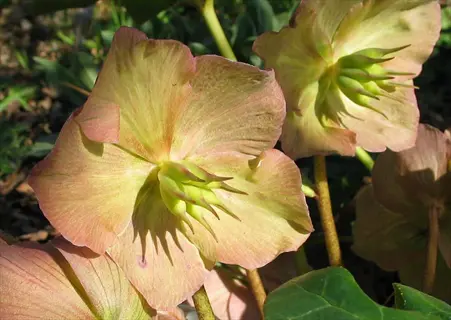
Hellebore (Helleborus niger)
- Bloom window: Opens in late winter, often from December to February, with nodding cup-shaped flowers that hold for weeks.
- Hardiness: Generally hardy in roughly USDA zones 3 to 8, tolerating frost and brief snow cover without losing flowers.
- Conditions: Prefers partial shade and rich, well-drained soil where roots stay cool and evenly moist through winter.
- Color: Ranges from pure white through pink, plum, and near-black, brightening shaded corners when little else flowers.
- Value: Long-lasting blooms and evergreen leaves make it one of the most dependable winter perennials for borders.
- Consider: Plants resent disturbance, so site them once and leave them to settle and bulk up over several seasons.
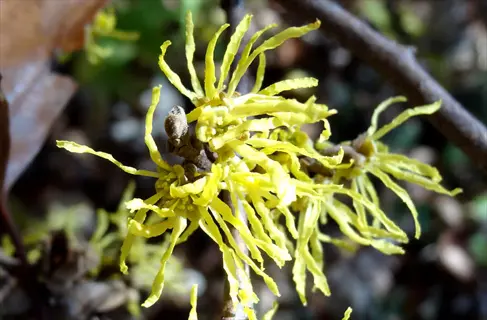
Witch Hazel (Hamamelis)
- Bloom window: Spidery, ribbon-like flowers appear on bare branches from January to March in many regions.
- Hardiness: A deciduous shrub hardy in roughly USDA zones 3 to 8 depending on the species and selection.
- Conditions: Grows best in full sun to partial shade in moist, well-drained, slightly acidic soil with room to spread.
- Scent: Many forms carry a sweet, spicy fragrance that drifts surprisingly far on cold, still winter days.
- Color: Flowers glow yellow, orange, or coppery red, lighting up otherwise bare stems against a gray sky.
- Value: Structure, scent, and winter color make it a centerpiece shrub for a four-season garden design.
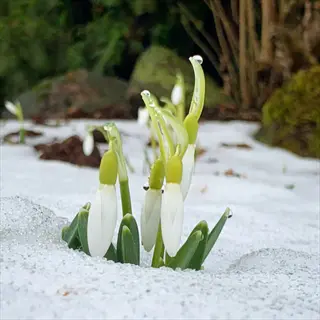
Snowdrops (Galanthus)
- Bloom window: Among the earliest bulbs, pushing white nodding flowers up through frozen ground in January and February.
- Hardiness: Very cold tolerant, generally suited to roughly USDA zones 3 to 7 and naturalizing over time.
- Conditions: Thrives in partial shade and humus-rich, moist soil beneath deciduous trees and shrubs.
- Habit: Spreads into drifts year after year, creating sweeps of white that signal the turning of the season.
- Planting: Establishes best when moved in the green, just after flowering, rather than as dry summer bulbs.
- Value: Few plants match the impact of snowdrops emerging through a light dusting of late snow.
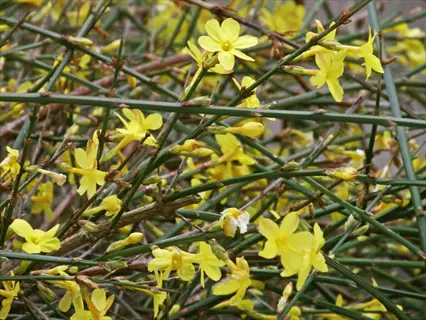
Winter Jasmine (Jasminum nudiflorum)
- Bloom window: Bright yellow flowers stud bare green stems from late fall into early spring, peaking in winter.
- Hardiness: A hardy deciduous climber or sprawling shrub suited to roughly USDA zones 6 to 10.
- Conditions: Flowers most freely in full sun but tolerates partial shade and a wide range of soils.
- Habit: Can be trained against a wall or fence, or left to cascade over a bank as groundcover.
- Look-alike: Often confused with forsythia, but winter jasmine flowers far earlier and lacks any noticeable scent.
- Value: Reliable cheerful color through the bleakest weeks makes it a workhorse winter climber.
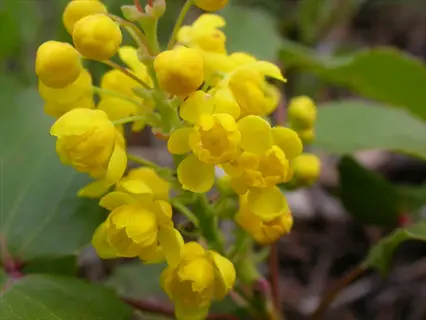
Mahonia (Oregon Grape)
- Bloom window: Upright spikes of yellow flowers open from late fall through winter, followed by blue-black berries.
- Hardiness: An evergreen shrub generally hardy in roughly USDA zones 5 to 9 with good cold tolerance.
- Conditions: Tolerates shade and a range of soils, making it useful in difficult, low-light corners.
- Scent: Many selections carry a sweet, lily-of-the-valley fragrance that draws early foraging pollinators.
- Wildlife: Berries feed birds and the winter flowers offer nectar when few other sources exist.
- Value: Bold evergreen foliage plus winter bloom and wildlife value make it a strong structural shrub.
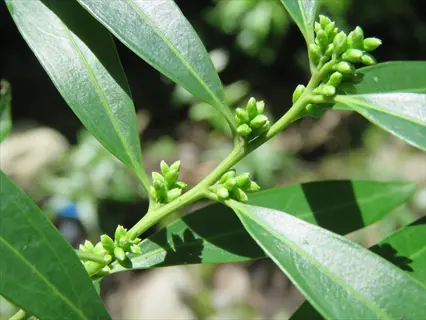
Sarcococca (Sweet Box)
- Bloom window: Tiny, easily missed white flowers open in mid to late winter and release a powerful sweet scent.
- Hardiness: A compact evergreen shrub generally hardy in roughly USDA zones 6 to 9.
- Conditions: Thrives in deep shade and moist, well-drained soil, ideal under trees or beside a north wall.
- Scent: The fragrance is its main draw, carrying far enough to perfume a path or doorway on still days.
- Habit: Slow growing and tidy, it forms a glossy evergreen mound that needs little pruning or care.
- Value: Best planted near a path or entrance where the winter perfume is enjoyed daily in passing.
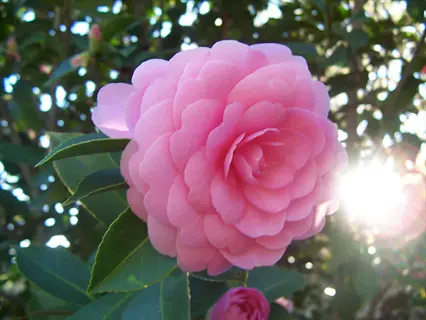
Camellia (Camellia japonica)
- Bloom window: Many camellias flower from late winter into early spring with large, rose-like blooms.
- Hardiness: Evergreen shrubs generally suited to roughly USDA zones 7 to 9, with some hardier selections.
- Conditions: Prefers partial shade, acidic, well-drained soil, and shelter from harsh, drying winter winds.
- Color: Flowers come in white, pink, and red, often fully double and long lasting on the plant.
- Habit: Glossy evergreen leaves provide structure and screening throughout the entire year.
- Value: Few winter shrubs offer such large, showy blooms, making camellia a milder-climate favorite.
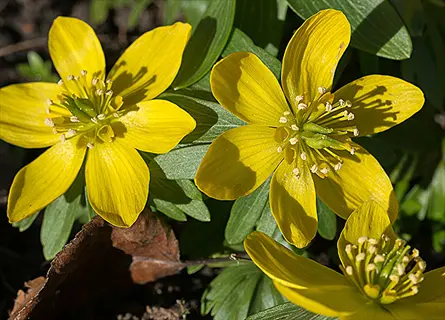
Winter Aconite (Eranthis hyemalis)
- Bloom window: Buttercup-yellow flowers open very early, often in January, ringed by a green leafy collar.
- Hardiness: A hardy tuber generally suited to roughly USDA zones 3 to 7 and excellent for naturalizing.
- Conditions: Prefers partial shade and moist, humus-rich soil beneath deciduous trees and shrubs.
- Habit: Carpets the ground in early spring drifts, often flowering alongside or just before snowdrops.
- Planting: Like snowdrops, it establishes best when moved in the green rather than as dry tubers.
- Value: Cheerful early yellow color that pairs beautifully with white snowdrops in shaded woodland beds.
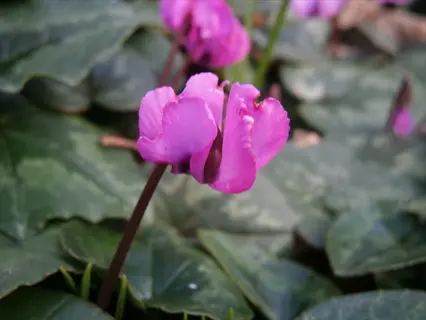
Cyclamen (Cyclamen coum)
- Bloom window: Small swept-back flowers appear from midwinter, holding for weeks above marbled heart-shaped leaves.
- Hardiness: A hardy tuber generally suited to roughly USDA zones 5 to 9 for outdoor winter color.
- Conditions: Thrives in partial shade and free-draining soil, often naturalizing under trees over time.
- Color: Flowers range from white through pink to deep magenta, lighting up the ground in dim winter light.
- Foliage: Patterned silver-marbled leaves add interest even when the plant is not in flower.
- Value: Long bloom time and weatherproof flowers make it one of the most reliable winter ground plants.
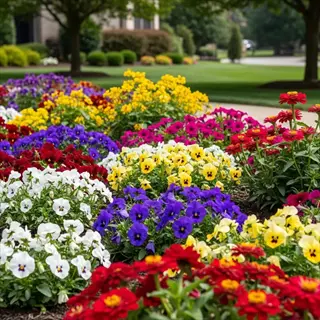
Pansies and Violas
- Bloom window: Cold-hardy bedding plants that flower through mild spells from fall into early spring.
- Hardiness: Treated as cool-season annuals, they tolerate frost and bounce back after light freezes.
- Conditions: Prefer full sun to partial shade and moist, well-drained soil in beds or containers.
- Color: Available in nearly every color, offering the broadest palette of any winter bedding plant.
- Use: Ideal for pots, window boxes, and the front of borders where instant color is wanted.
- Value: Inexpensive and widely available, they are the easiest way to add winter color to containers.
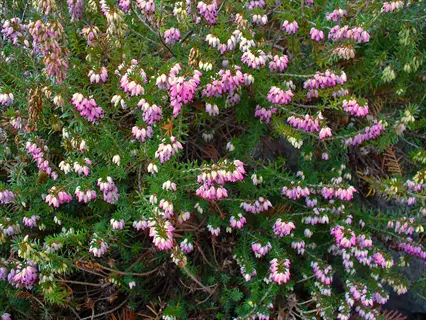
Winter Heath (Erica carnea)
- Bloom window: Carpets of tiny bell-shaped flowers open from midwinter into spring over needle-like foliage.
- Hardiness: A low evergreen shrub generally hardy in roughly USDA zones 5 to 7.
- Conditions: Unlike most heaths, it tolerates neutral to slightly alkaline soil and prefers full sun.
- Color: Flowers in white, pink, and red shades, often blanketing the plant for many weeks.
- Habit: Spreads into low evergreen mats useful as groundcover or at the front of a border.
- Value: Long bloom season and pollinator value make it a strong choice for sunny winter beds.
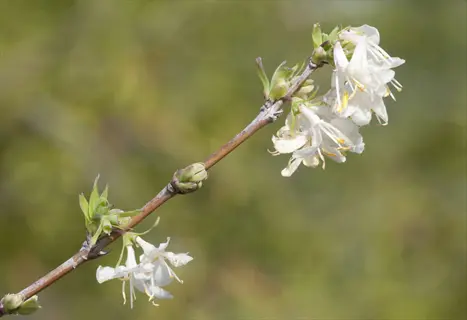
Winter Honeysuckle (Lonicera fragrantissima)
- Bloom window: Small creamy flowers open along bare stems in midwinter, releasing a strong lemony scent.
- Hardiness: A hardy deciduous shrub generally suited to roughly USDA zones 4 to 8.
- Conditions: Grows in full sun to partial shade in most well-drained soils with little fuss.
- Scent: The fragrance is the main reason to grow it, carrying far on cold, still winter days.
- Habit: Forms a large twiggy shrub best sited at the back of a border or near a path.
- Value: An easy, tough shrub that rewards a sheltered, often-passed spot with weeks of winter perfume.
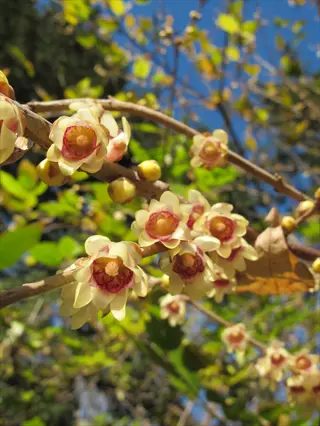
Wintersweet (Chimonanthus praecox)
- Bloom window: Waxy, translucent yellow flowers open on bare branches in the depths of winter.
- Hardiness: A deciduous shrub generally suited to roughly USDA zones 7 to 9.
- Conditions: Prefers a sheltered spot in full sun with fertile, well-drained soil to flower freely.
- Scent: Powerfully fragrant blooms perfume the cold air, making it a prized specimen shrub.
- Habit: Slow to establish and flower, but long lived and increasingly rewarding once mature.
- Value: Worth patience for the unmatched winter fragrance of its curious waxy flowers.
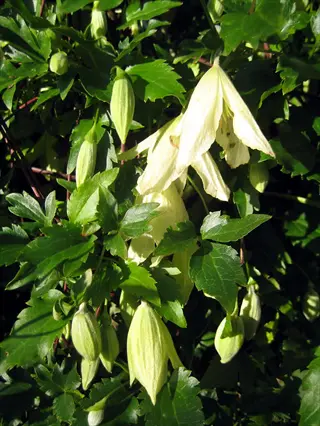
Winter Clematis (Clematis cirrhosa)
- Bloom window: Nodding bell-shaped flowers, often freckled inside, open through winter on an evergreen climber.
- Hardiness: An evergreen climber generally suited to roughly USDA zones 7 to 9.
- Conditions: Needs a sheltered, sunny wall or fence with well-drained soil and protection from cold wind.
- Color: Creamy flowers are frequently speckled maroon inside, with some selections lightly scented.
- Habit: Evergreen foliage and a climbing habit make it useful for clothing a sheltered winter wall.
- Value: One of the few true winter-flowering climbers, adding vertical interest in mild gardens.
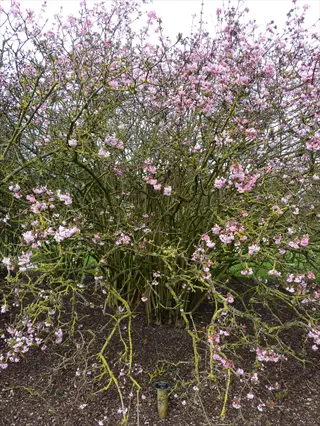
Viburnum (Viburnum x bodnantense)
- Bloom window: Clusters of pink-tinged flowers open in flushes on bare stems through fall and winter.
- Hardiness: A deciduous shrub generally suited to roughly USDA zones 4 to 8.
- Conditions: Grows in full sun to partial shade in most fertile, well-drained soils.
- Scent: The flower clusters are sweetly fragrant, scenting the air around the shrub on mild days.
- Habit: Forms a large upright shrub, best placed where its winter flowers and scent can be appreciated.
- Value: Long succession of fragrant blooms across the coldest months makes it a dependable backbone shrub.
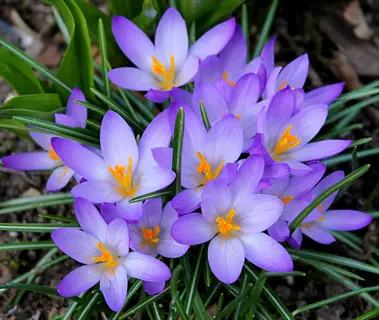
Crocus
- Bloom window: Goblet-shaped flowers open in late winter and very early spring on sunny days.
- Hardiness: Hardy corms generally suited to roughly USDA zones 3 to 8 and excellent for naturalizing.
- Conditions: Prefer full sun and well-drained soil, thriving in lawns, borders, and containers alike.
- Color: Available in purple, white, yellow, and striped forms for an early splash of color.
- Wildlife: Early flowers provide vital nectar for emerging bees on the first warm winter days.
- Value: Inexpensive and easy, crocus drifts signal the approaching end of winter underfoot.
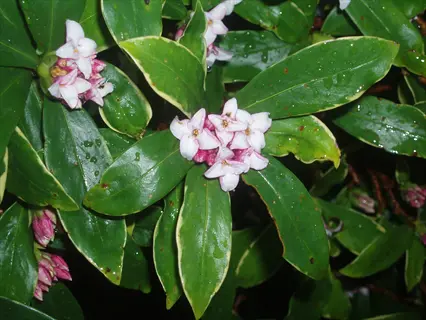
Daphne (Daphne odora)
- Bloom window: Clusters of pink-and-white flowers open in late winter, carrying an intense sweet perfume.
- Hardiness: An evergreen shrub generally suited to roughly USDA zones 7 to 9.
- Conditions: Needs sheltered partial shade and moist, well-drained soil, and dislikes being moved.
- Scent: Among the most fragrant of all winter shrubs, perfuming a wide area on still days.
- Habit: Compact and slow growing with glossy evergreen leaves, suiting small gardens and entrances.
- Value: Site it once near a doorway or path to enjoy the powerful late-winter scent at close range.
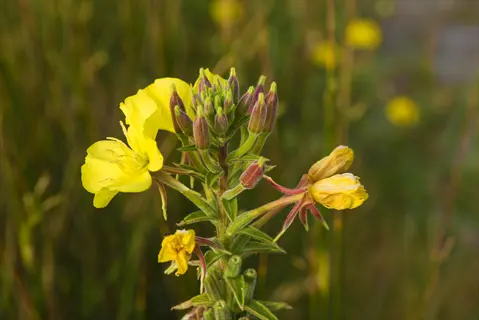
Primrose (Primula vulgaris)
- Bloom window: Cheerful flat-faced flowers open from late winter into spring in low rosettes of leaves.
- Hardiness: A hardy perennial generally suited to roughly USDA zones 4 to 8.
- Conditions: Prefers partial shade and moist, humus-rich soil, naturalizing in cool, damp spots.
- Color: Classic pale yellow plus a wide range of bred colors for pots and the front of borders.
- Nickname: Sometimes called the poor man's rose for its rose-like charm at a very low cost.
- Value: Inexpensive, long flowering, and easy, primroses brighten shaded ground as winter ends.
Mix a few of these and you get color from December right through March. Pair early bulbs like snowdrops and crocus with shrubs such as witch hazel and mahonia, and you spread the show across the whole season. Start with two or three that suit your space, then add more once you see how each one performs in your own cold corners.
Winter Bloomers by Plant Type
The simplest way to plan your winter garden is to sort plants by what they do, not by their names. Group them into five types and you can build flower across the whole season. Winter flowering shrubs give you height and structure, while bulbs add color right down at ground level.
Think of your winter border like a room you furnish in layers. The shrubs are your walls at the back, and winter flowering climbers hang on those walls like art. Your perennials fill the middle of the floor. Winter flowering bulbs act as the rug, spreading low and wide across the ground.
Each type pulls its weight in a different spot. Winter flowering perennials come back for you year after year down at ground level. Winter bedding plants bring instant color to the pots by your door. Mix all five and your garden carries flower from December through March without a gap. Zone needs vary, so match each plant to your own conditions and you can fill every layer.
Winter Flowering Shrubs
- Backbone plants: Witch hazel, mahonia, sarcococca, viburnum, winter honeysuckle, and wintersweet give a border structure and height in winter.
- Strengths: Many combine flowers with strong fragrance and evergreen or architectural form, anchoring the garden when perennials have died back.
- Best use: Site fragrant shrubs near paths, doorways, and seating so their winter scent is enjoyed in daily passing.
- Care note: Most flower on established wood, so prune after flowering rather than in fall to avoid removing winter buds.
Winter Flowering Climbers
- Vertical color: Winter jasmine and winter clematis clothe walls and fences with flowers when most climbers are bare.
- Strengths: They add height and cover vertical surfaces, making small gardens feel fuller during the leanest season.
- Best use: Train them against a sheltered, sunny wall where reflected warmth encourages freer flowering.
- Care note: Winter jasmine is deciduous and unscented, while winter clematis is evergreen and sometimes lightly fragrant.
Winter Flowering Perennials
- Ground-level color: Hellebores, primroses, and bergenia return year after year with flowers low in the border.
- Strengths: Many hold evergreen or semi-evergreen leaves, so they earn their space even between flowering periods.
- Best use: Plant in drifts beneath deciduous shrubs and trees where they get winter light before the canopy returns.
- Care note: Hellebores resent disturbance, so site them once and let them bulk up slowly over several seasons.
Winter Flowering Bulbs
- Early risers: Snowdrops, winter aconite, crocus, and hardy cyclamen push up through cold ground to flower first.
- Strengths: They naturalize into spreading drifts over the years, giving more impact for very little ongoing effort.
- Best use: Plant under deciduous trees and through lawns where their early flowers get full winter sun.
- Care note: Snowdrops and winter aconite establish best when moved in the green just after flowering, not as dry bulbs.
Winter Bedding and Containers
- Instant color: Pansies, violas, cyclamen, winter heath, and ornamental cabbage fill pots and window boxes fast.
- Strengths: They tolerate frost and provide reliable color at eye level by doors and on patios all season.
- Best use: Combine upright and trailing forms in containers and refresh as needed for continuous winter display.
- Care note: Keep containers from waterlogging in winter by raising pots on feet and using free-draining compost.
Why Plants Bloom in Winter
So why do plants bloom in winter at all, when most of the garden is asleep? The short answer is that cold is the trigger, not the enemy. These plants read the cold as a signal that their season has arrived, and they open their flowers on purpose.
The science behind this is called vernalization. In plain terms, it means cold itself prepares or speeds a plant's ability to flower. Your plant senses a long stretch of low temperatures, and only then does it switch on its bloom. This cold requirement for flowering is why so many of the species you grow wait until the chill sets in before they show you any color.
Think of your plant as keeping a memory of winter. It quietly counts cold days, and once it has banked enough of them, it lets itself flower. That counted-up chill is the plant's chilling requirement. The bloom you see is the payoff for a job your plant did weeks earlier.
One study makes this cold-induced flowering easy to picture. Researchers gave the orchid Cymbidium goeringii at least 40 days of cool nights at 10°C (50°F). That cold pushed the flowering rate from under 20% up to 85%. The blooms also showed up 30 days earlier. Treat it as one study example, not a rule for every plant you grow. The warning still matters for you, though. Without enough cold, the flower buds can abort and no bloom appears.
The textbook definition of vernalization is 'the acquisition or acceleration of the ability to flower following a chilling treatment.'
Not every plant treats cold the same way, and that matters when you choose what to grow. Some have an obligate need, which means they will not flower at all without a real cold spell. Others have a facultative need, so cold speeds them up but they can still bloom without it. Knowing which type you have tells you whether your winter weather is a help or a hard rule.
This cold trigger is well studied, not a fringe idea. One large project tracked nearly 500 perennial species and found a common effective chill of about 41°F (5°C) for roughly 15 weeks. That scale shows you how reliable cold is at timing flowers. It also explains why your best winter bloomers earn their color by waiting through the chill first.
Cold Hardiness and Survival
One January morning the Helleborus niger in my damp back border by the fence line lay flat and limp after a hard freeze. The leaves drooped to the soil and the stems looked like wet string. I had planted it that same first fall, eight years ago, and I was sure the cold had killed it. By afternoon the air warmed a few degrees and the whole plant stood back up, stems firm, blooms open, like nothing had happened.
So how do winter flowers survive cold that would flatten a summer plant overnight? The short answer is that they prepare for months and then mostly switch themselves off. A winter bloomer in deep plant dormancy can shrug off a freeze that looks fatal to the eye.
It starts in fall with acclimation, the slow process that builds cold hardiness into the plant. As nights lengthen, the plant moves sugars into its cells and pauses growth. Below you can see how each piece fits together, from that fall hardening to the quiet power of snow insulation.
Hardening Off in Fall
- What happens: As nights lengthen, plants slow growth and move sugars and other compounds into cells to resist freezing.
- Trigger: Night length, or photoperiod, helps drive this hardening, not temperature alone, according to extension research.
- Catch: Warm autumn weather can actually slow hardening even as days shorten, leaving plants less prepared for early cold.
- Result: A properly hardened plant tolerates far colder temperatures than the same plant would survive in summer.
Dormancy and Reserves
- What happens: Many winter plants enter dormancy, pausing active growth while living on stored energy reserves.
- Cost: Maintaining cold hardiness uses energy, so reserves steadily decline across the winter months.
- Risk: A midwinter or early-spring thaw followed by a sudden hard freeze can be devastating to plants.
- Why it matters: This is why an unusually warm spell that breaks dormancy early can leave plants vulnerable to later cold.
Snow as Insulation
- What happens: A blanket of snow traps soil heat and shields roots and low plants from the coldest air.
- Evidence: Good snow cover kept soil above 29 degrees Fahrenheit (minus 1.7 degrees Celsius) over four winters at one site.
- Contrast: A wind-stripped site about 28 miles away regularly fell to 0 to 10 degrees Fahrenheit (minus 18 to minus 12 degrees Celsius).
- Caution: Good snow cover can mask poor hardiness, so a plant that survives under snow may fail in a bare, exposed winter.
Timing of Cold Damage
- What happens: Cold damage depends on more than the low temperature reached on any given night.
- Factors: Time of year, the plant's developmental stage, and how long it stays cold all affect the outcome.
- Implication: An early freeze before hardening, or a late freeze after a thaw, does far more harm than midwinter cold.
- Takeaway: Choosing plants suited to your conditions matters as much as the raw minimum temperature they can survive.
Hardiness is not free. Holding that cold-tolerant state burns stored energy, so a plant's reserves drop steadily through winter. That is why a midwinter or early-spring thaw followed by a sudden hard freeze hits so hard. A warm spell can coax a plant out of dormancy too soon, and then the next cold snap catches it wide open and unprepared.
Match a plant to your real conditions and most winters take care of themselves. The lowest temperature on the map is only part of the story, since timing, snow, and the plant's own fall prep often matter just as much.
Hardiness Zones and Bloom Time
USDA hardiness zones sound technical, but the idea is simple. Each zone shows the average annual minimum winter temperature for a place, split into bands of 10°F. The 2023 plant hardiness zone map uses weather data from 1991 to 2020. It is the go-to tool for picking plants that can take your winters.
The full map runs from Zone 1 to Zone 13, and each zone splits again into an a and a b half. Those halves sit 5°F apart, so they give you a finer read on your typical winter low. Once you know your number, you can shop for winter plants by zone with real confidence instead of guesswork.
Your zone tells you about cold tolerance, not flowers. A plant can sail through your worst cold and still refuse to put on a show. Blooming leans on other triggers too, like a stretch of chill and the length of the days. So survival and flowering are two separate questions.
Think of a hardiness zone like the rating on a winter coat. The label tells you the coldest weather the coat can handle. It says nothing about whether you will feel like dressing up that day. Your zone works the same way, marking the cold a plant can withstand without promising a single bloom.
Use this calendar to plan bloom time across the season rather than betting on one plant. Pair an early bulb like snowdrops with a long-running shrub like mahonia, and you get color from late fall into March. The dates shift a bit each year, so treat them as a rhythm, not a fixed schedule.
The 2023 USDA Plant Hardiness Zone Map is the standard by which gardeners and growers can determine which plants are most likely to thrive at a location. The map is based on the average annual minimum winter temperature, divided into 10-degree Fahrenheit zones.
Planting and Winter Protection
I dug in the bare-root hellebores and the witch hazel one October, out in the damp back border by the fence line. The soil was cold and dark. I firmed each crown by hand and watered them in before the ground froze. By March the hellebores nodded white over the mud. The witch hazel held thin yellow ribbons on bare wood. Every one had come through that first winter.
That timing is the whole trick to when to plant winter flowers. Most winter bloomers settle best when you set them out in fall, so their roots take hold before the deep cold arrives. Plants you put in during spring spend the season just catching up. The autumn ones are already anchored and ready to flower.
Snowdrops and winter aconite work a bit differently. You move them best in the green, lifting and replanting right after they flower while the leaves are still up. Planting in the green gives you far better odds than dry summer bulbs. Those dry bulbs often sulk and skip a year before they settle, so you wait longer for your first flowers.
Knowing how to grow winter flowering plants comes down to the soil and the spot more than anything fancy. Loosen the bed and work in compost so water drains away fast, because soggy ground rots roots in cold weather. Put fragrant shrubs near a path or door where you will brush past them, and tuck bulbs and perennials under bare trees that let winter light through.
Staying cold-hardy costs a plant real energy. Its reserves drop bit by bit as winter drags on. A mid-winter thaw and then a hard freeze can wreck a plant that ran low on fuel. This is why frost protection matters so much. When you mulch perennial roots and shelter the tender ones, you cut that stress. You help each plant hold its condition until spring.
On a hard-frost night, drape a breathable fabric cover that reaches all the way to the ground. That traps the soil heat rising up and holds a warmer pocket of air around the leaves. A thick layer of mulch over the root zone does the same job below ground, guarding the roots through the worst freezes.
Set most winter bloomers in the ground in autumn so roots establish and settle before the coldest weather arrives.
Loosen the planting area and mix in compost so the soil drains freely, since waterlogged ground harms roots in winter.
Place fragrant shrubs near paths and doors, and bulbs and perennials under deciduous trees where they get winter light.
Water plants in after planting, then mulch over the root zone to trap soil heat and protect roots from hard freezes.
On hard-frost nights, drape fabric covers that reach the ground over tender plants to hold warmth around the foliage.
Never wrap plants in plastic. When plastic touches foliage it can pull heat away from the plant and make cold damage worse, so use breathable fabric covers instead.
5 Common Myths
Nothing flowers in winter, so the garden simply goes blank and lifeless until the warmth of spring returns.
Many plants such as hellebores, witch hazel, snowdrops, and mahonia bloom through winter, some pushing flowers up through frozen, snow-covered ground.
A plant that survives a hard winter in your zone will automatically flower well there every single cold season.
Survival and flowering are different. Hardiness zones predict cold survival, but blooming also depends on cold periods, photoperiod, and timing.
The toughest, most cold-hardy plants are always the ones that need cold weather in order to bloom each year.
Vernalization need does not track cold hardiness. Some zone 3 plants flower without cold, while less hardy plants may strictly require it.
Wrapping plants tightly in plastic sheeting is the best way to shield tender winter foliage from frost damage.
Plastic touching foliage can move heat away and worsen cold damage. Use fabric covers that reach the ground and mulch the roots.
Snow is purely harmful to plants, so a thick winter blanket of it always damages anything growing beneath it.
Snow is a strong insulator. Good cover can keep soil above freezing, protecting roots and low winter flowers from harsh cold.
Conclusion
A strong winter garden rarely leans on one star plant. You build it by layering a few dependable winter blooming plants. That way something is always in flower. Hellebores carry the shade beds. Witch hazel lights up bare branches, and snowdrops push through frozen ground when little else dares. Add winter jasmine for trailing yellow. Add mahonia for spiky evergreen color. Now you cover shrubs, bulbs, and perennials all at once.
The most surprising part is what cold actually does. For many of these plants, cold is not just something they put up with. It is the trigger that switches flowering on. Research on vernalization shows that a stretch of chilling can be exactly what a plant needs before it will bloom. So the season that feels harshest to you is often the very thing your best winter flowering plants were waiting for.
Getting reliable results comes down to a few plain steps. Choose cold hardy plants that suit your zone, then plant most of them in fall so the roots settle in before the freeze. Mulch those roots to hold soil warmth, and keep a fabric frost cover on hand for the sharpest nights. Pair the right plants with this simple care and you get steady winter color in your own conditions, year after year.
More gardeners now want a yard that earns its keep across all 12 months, not just the warm ones. A winter garden answers that wish in the quietest, most rewarding way. Once a handful of these bloomers settle in, the coldest months turn into one of the best times to step outside. The flowers are out there. You just have to give them the chance to show up.
Glossary
- Cold hardiness
- A plant's ability to survive low temperatures without suffering serious damage.
- Dormancy
- A resting state in which a plant pauses active growth and lives on stored energy through winter.
- Facultative vernalization
- A cold period that helps a plant flower faster but is not strictly required for it to bloom.
- Hardening off
- The gradual process by which plants toughen up in fall to withstand freezing winter temperatures.
- Hardiness zone
- A region defined by its average annual minimum winter temperature, used to choose plants likely to survive there.
- Obligate vernalization
- A strict need for cold, meaning the plant will not flower at all without a chilling period.
- Photoperiod
- The length of night a plant experiences, which helps trigger seasonal changes like hardening for winter.
- Vernalization
- The way a period of cold prepares or speeds up a plant's ability to flower.
External Sources
Frequently Asked Questions
What flowers stay in bloom all winter?
Several plants hold flowers through the season, including:
- Hellebores (Christmas rose)
- Pansies and violas
- Winter heath (Erica carnea)
- Cyclamen coum
- Mahonia
What are the best winter flowering plants?
The most reliable choices are:
- Hellebores
- Witch hazel
- Snowdrops
- Winter jasmine
- Mahonia
What is the first flower to bloom in winter?
Snowdrops and winter aconite are usually first, often appearing in January.
Which winter flowers last the longest?
Hellebores and cyclamen hold their flowers longest, often for several weeks.
What flowers are still blooming in October?
October still offers color from:
- Asters
- Chrysanthemums
- Pansies
- Late roses
- Ornamental kale
What can I plant in pots for winter color?
Good container choices include:
- Pansies and violas
- Cyclamen
- Winter heath
- Small hellebores
- Ornamental cabbage
Why do some plants bloom in winter?
Many winter bloomers use cold itself as a trigger to start flowering, a process called vernalization.
How do winter flowers survive freezing cold?
They gradually harden off in fall, store energy reserves, and rely on snow cover and dormancy to survive.
When should you plant winter flowering plants?
Plant most winter bloomers in fall so roots establish before deep cold.
What flower is called the poor man's rose?
The primrose is often called the poor man's rose for its low cost and rose-like charm.