
Introduction
An elderberry plant sits at a rare crossroads. The shrub, a Sambucus, is one of the easiest natives you can drop in a backyard. It is also a berry that real clinical research has put to the test. Most people land here for one of two reasons. They want a fast-growing native shrub for the yard, or they want the cooked berry that gets talked up for cold support. The good news is you can have both from the same plant.
Most home growers want the American elderberry. Plant tags may list it as Sambucus canadensis. NC State Extension puts its full size at 6 to 12 feet (1.8 to 3.7 m) tall and wide. It does well across USDA zones 4a to 8b. It blooms in big creamy clusters in June. Then it drops heavy bunches of dark fruit in late summer. For one plant, that is a lot of payoff.
Here is where most guides fall short. Thin garden pages tell you to plant it and walk away. Health pages talk up the berry but skip the growing part. This guide does both, and it leans on university-extension research instead of guesswork. You will get real cultivar yield numbers from field trials, plus an honest read of the one clinical trial people keep citing, caveats and all.
Interest in growing elderberries is climbing too. One Missouri Extension report calls the plant a fast-rising new crop for the Midwest. That tells you home growers are catching on. So want a hardy shrub, a berry for the kitchen, or both? The sections ahead walk you through it all, from planting to harvest.
How to Plant Elderberry Bushes
Planting elderberry is simple, but a few numbers decide whether you get a thin hedge or a full berry crop. You set bareroot plants in spring once the final frost has passed. Use one-year-old stock. The roots go down quick, and the plant pays you back for getting the spacing and the pollination partner right from day one.
For elderberry spacing in a backyard, set plants 5 to 7 feet (1.5 to 2.1 m) apart. That home-garden number gives the shallow, wide roots room to spread. Commercial growers pack rows tighter at 4 to 5 feet on center. They also leave 10 to 12 feet between rows for machines. Skip those tighter numbers if you only want a few bushes.
Elderberry needs a pollination partner to fruit well. Plant at least two compatible cultivars within 60 feet (18 m) of each other. The flowers lean on wind for cross-pollination, so a lone bush sets a thin, patchy crop. One more plant nearby fixes that. There is one more first-year move that throws people off, and it feels wrong while you do it.
Two bareroot Adams and York whips sat there looking dead for weeks. I had dropped them into the damp back corner where the lawn meets the wood line, and they stayed stick-like and bare while everything around them leafed out. I checked them every few days, half sure I had killed two plants before they ever started. Then green buds broke along both whips almost overnight, and they have not stopped pushing since.
That slow start is normal. Elderberry builds roots before it shows you any top growth, so give it time. In the first season, pinch off the flower cymes as they form. Snipping away berries you waited for feels wrong. But the young plant pours that energy into roots, and you get a stronger crop later. Here are the five steps from site to that first-year flower cut.
Pick a spot in full sun to partial shade with rich, moist, slightly acidic soil, where roots have room to spread.
Set bareroot one-year-old plants 5 to 7 feet (1.5 to 2.1 m) apart in spring after the final frost has passed.
Plant at least two compatible cultivars within 60 feet (18 m) so wind pollination sets a full berry crop.
Soak the new plants and apply mulch to hold moisture, giving 1 to 2 inches (2.5 to 5 cm) of water per week.
Pinch off the first season's flower cymes so the young plant channels energy into building strong roots.
Elderberries are wind-pollinated and should be planted no more than 60 feet from each other.
Best Elderberry Varieties
An Adams bush in the damp back corner of my yard sagged so low one August that its berry clusters brushed the mulch. The York planted right beside it stood up straight and carried fewer clusters, but each berry sat noticeably plumper on the stem. I had set both in as bareroot whips the same spring, in the same wet soil, with the same care all season.
That gap is the whole point of picking your variety with care. The best elderberry varieties are not all the same. The one you plant drives how many pounds you pick and how big each berry grows.
Ohio State University South Centers proved this with hard numbers in their 2016 trials. Adams topped the field at 2.99 pounds (1.36 kg) per plant, followed by Nova at 2.68, Johns at 2.44, and Wyldewood at 2.37. York came in last by weight at just 1.25 pounds (0.57 kg) per plant, though it grew the largest berries and ripened early.
Look at that spread for a second. The right cultivar choice changes your harvest size by more than twofold, since Adams pulls in well over double what York does from the same patch of ground. So when you compare elderberry cultivars, weigh both total yield and berry size against what you plan to make.
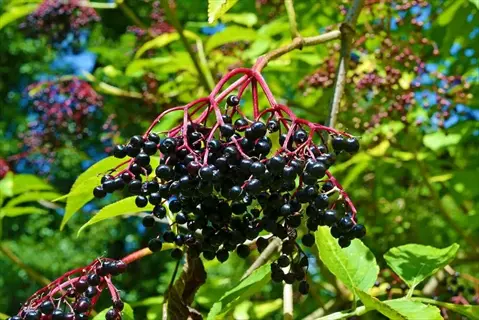
Adams
- Yield: Topped Ohio State University South Centers 2016 trials at 2.99 pounds (1.36 kg) of fruit per plant, the strongest measured performer in that study.
- Berries: Produces reliable, heavy clusters that make it a dependable choice for fresh use, syrup, and other cooked preparations.
- Vigor: Grows as a robust, productive American elderberry well suited to home gardens across its hardiness range.
- Use: Favored where total harvest weight matters most, since it delivers more pounds per plant than older varieties.
- Pairing: Works well planted alongside a second cultivar within 60 feet (18 m) to improve cross-pollination and fruit set.
- Region: Long-grown American cultivar that performs broadly across USDA zones 4a to 8b.
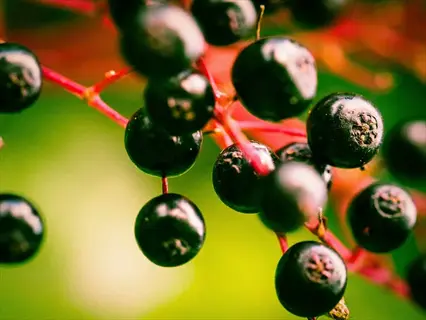
York
- Berries: Bears the largest berries among common American cultivars, which makes harvesting and processing faster per pound.
- Timing: Ripens early in the season, a useful trait for gardeners who want fruit before peak pest pressure builds.
- Yield: Measured at 1.25 pounds (0.57 kg) per plant in the 2016 Ohio State trials, lower in weight but larger in individual berry size.
- Pollination: Pairs effectively with Adams or another cultivar to boost the crop on both bushes.
- Use: A good pick for fresh-looking clusters and quicker destemming thanks to its berry size.
- Adaptability: Grows well across the standard American elderberry range in full sun to partial shade.
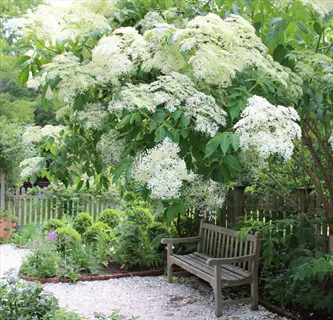
Bob Gordon
- Reputation: Recommended by University of Missouri's Patrick Byers as one of the two top cultivars for the Midwest.
- Habit: Known for fruit clusters that often droop downward, which can help reduce bird damage to the crop.
- Productivity: A newer, research-favored selection valued for strong, consistent yields in regional trials.
- Use: Popular with both home growers and small commercial producers focused on syrup and value-added products.
- Pairing: Plant with Wyldewood or another compatible variety within 60 feet (18 m) for the best fruit set.
- Region: Especially well suited to Midwest growing conditions where it has been widely tested.
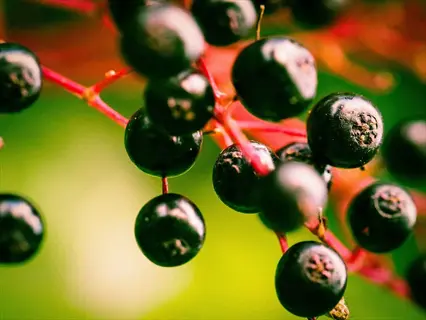
Wyldewood
- Reputation: Named alongside Bob Gordon by University of Missouri as a top Midwest cultivar for production.
- Yield: Measured at 2.37 pounds (1.08 kg) per plant in the 2016 Ohio State South Centers trials.
- Timing: Tends to bloom and ripen later, which can spread out the harvest window across the season.
- Use: Widely planted for juice and syrup thanks to its dependable cropping and berry quality.
- Pairing: Combine with Bob Gordon or another cultivar within 60 feet (18 m) to improve pollination.
- Adaptability: A vigorous American elderberry that performs well across much of its hardiness range.
If you garden in the Midwest, lean toward the newer picks. Patrick Byers at the University of Missouri rates two as his top choices. They are Bob Gordon and Wyldewood, and both have held up well across years of trials. Plant one of those next to a proven classic like Adams. That mix gives you yield, berry size, and a strong regional fit in one go.
Choose two different cultivars rather than two of the same, since cross-pollination between varieties sets a noticeably fuller berry crop on both bushes.
Soil, Sun, and Spacing Needs
Good news for backyard growers. The elderberry soil requirements are loose, not fussy. NC State Extension reports the plant handles clay, loam, sand, and everything from wet ground to dry slopes. So you do not need perfect dirt to get a thriving bush.
The plant grows best in full sun to partial shade, and it survives winters across USDA zones 4a to 8b. More sun means more flowers, which means more berries by late summer. A spot with at least 6 hours of direct light gives you the heaviest crop.
The soil pH numbers look messy at first because extension offices do not all agree. Michigan State and Ohio State aim for a slightly acidic range of 5.5 to 6.5. Penn State lists a higher ideal of 6.8 to 7.2. The simple takeaway is that elderberry tolerates a wide pH band. Aim for slightly acidic if you can, but the bush still fruits well close to neutral, so do not stress over a single test number.
Picture the root system as a dinner plate. The roots stay shallow but spread wide near the surface instead of digging deep. That flat, broad shape is why the plant resents drought and needs steady moisture all summer. Let the top few inches of soil dry out for too long and you will see wilted leaves fast.
For elderberry spacing, give each plant 5 to 7 ft (1.5 to 2.1 m) in a home garden so the wide roots and arching canes have room. Pack them tighter and the bushes crowd each other out. The quick-reference grid below sums up the light, soil, and spacing targets at a glance.
American elderberry tolerates a wide variety of wet to dry soils but prefers rich, moist, slightly acidic soil in sun to partial shade.
Pruning and Seasonal Care
Your elderberry rewards you on a clear yearly clock, so good care means doing the right job in the right month. White flower cymes open in June, and the berries ripen deep purple from late August into September. Once you map your tasks to that bloom-to-harvest window, the rest of the year falls into place.
Pruning elderberry is the one job that shapes next year's crop most. The plant fruits on current-year and one-year-old canes. So you want plenty of fresh new wood each season. Utah State University Extension says to prune in February to March while the bush sleeps. Then cut out every cane that is three years or older.
Those old canes are the problem. They stop carrying much fruit after their second year, yet they keep stealing light and crowding the center of the bush. Leave them in and your yield drops while the plant grows into a tangled mess. Pull the three-year-old wood out each winter and the bush keeps cropping hard year after year.
Think of dormant pruning as hitting a reset button on the whole plant each winter. You clear out the tired old growth and hand the next crop to the vigorous young canes that actually produce. Knowing when to prune elderberry is simple once you tie it to the calendar below.
Late Winter
Prune in February to March while dormant, removing canes three years and older to keep the bush productive.
Spring
Plant bareroot whips after the final frost and water new plants to settle their shallow roots.
Early Summer
Watch white flower cymes open in June, and give 1 to 2 inches (2.5 to 5 cm) of water per week.
Late Summer
Harvest deep purple berries from late August into September, picking first thing in the morning.
Prune while the plant is fully dormant in late winter, since cutting during active growth removes the very canes that would have carried this season's fruit.
Pests, Diseases, and Wildlife
Good news first. Most elderberry pests are easy to spot once you know what to look for, and a healthy bush shrugs off the worst of them. The trick is matching each symptom to the right fix instead of reaching for a spray bottle every time a leaf looks off.
The two big troublemakers are bugs that bore into canes and a fly that ruins ripe fruit. The elder shoot borer has no spray that kills it. So you cut out the canes it tunnels into, and you keep the bush strong. For spotted wing drosophila, the fix is just as plain. Pick berries the moment they turn deep purple, and clear away any fruit that drops.
Elderberry diseases work the same way. You break the cycle by pulling the source, not by dousing the plant. Elderberry rust is a good example. The fungus needs Carex sedges close by to spread, so pull those sedges out near a rust-prone bush and you starve it. Verticillium wilt and chewing beetles hit stressed plants the hardest. Steady water and a yearly prune do most of the work for you.
Elder Shoot Borer
- Symptom: Wilting or dying young shoots signal larvae tunneling inside the canes, weakening the plant from within.
- Control: Utah State University Extension notes there is no chemical control, so remove and destroy infested canes when you spot them.
- Prevention: Keeping the bush vigorous through annual pruning helps it outgrow and tolerate borer damage over time.
Spotted Wing Drosophila
- Symptom: This small fly lays eggs in ripening fruit, leading to soft, collapsing berries near harvest time.
- Control: Harvest promptly when berries turn deep purple and remove any overripe fruit that draws the flies.
- Region: Michigan State University Extension lists it among the key insect pests for home elderberry plantings.
Elderberry Rust
- Symptom: Bright orange or yellow swellings appear on stems and leaves, distorting affected growth.
- Source: Carex sedges act as the alternate host, so removing nearby sedges helps break the disease cycle.
- Management: Prune out and dispose of badly infected shoots to limit spread within the planting.
Verticillium Wilt And Beetles
- Wilt: Verticillium wilt, noted by Utah State University Extension, causes branches to yellow and die back from a soilborne fungus.
- Beetles: Japanese beetles and the elderberry borer chew foliage and bore into stems, especially on stressed plants.
- Response: Keep plants well watered and pruned, since healthy, vigorous bushes shrug off these problems more easily.
Not every visitor is a pest. The plant feeds songbirds, butterflies, and hummingbirds all season long. It draws in bees and other pollinators too. That alone is reason enough to grow it, even if you never make a drop of syrup. Birds love the ripe berries as much as you do. So drape bird netting over the bush a week before harvest if you want a real share of the crop.
Cut dead stems back to 12 to 24 inches (30 to 60 cm) and leave them standing, since native bees nest in the hollow stems until they disintegrate on their own.
Harvesting and Health Benefits
The payoff for all your work comes in late August through September, when the clusters turn a deep purplish-black. Pick the whole cluster once most berries on it have ripened to that dark color. Wait too long and the birds will beat you to the best fruit.
I do my harvesting elderberries first thing in the morning, before the sun warms the canes. The berries are firmer then and the cool air makes the work easier on you. Cut the entire cluster off with shears, then strip the berries from the stems back in the kitchen. A dinner fork pulls them off fast.
Now for the part that trips up new growers. You can't eat these berries raw, and elderberry toxicity is the reason. The leaves, stems, and seeds hold a compound called sambunigrin. It is a cyanogenic glycoside, which means your body turns it into cyanide. Penn State Extension says it plain: never eat the leaves, and strip off as many stems as you can. Cooking the berries destroys the toxins in the seeds.
So the rule is simple. Raw means risk of nausea, cramping, and vomiting. Cooked means safe to use in syrup, jam, juice, and wine. Heat is the line between the two, and you should always cook before eating. The table below breaks down which parts are risky and what changes once you cook them.
Once you've cooked your harvest, you get to the elderberry benefits people ask about most. A 2016 trial in the journal Nutrients followed 312 air travelers. The ones taking elderberry extract had colds that ran about 2 days shorter and felt less severe. So the cold lasted less time. But here is the catch: the extract did not cut how many people caught a cold at all.
Read that result with a clear head. The study was funded by the company that made the extract, so it pays to weigh the evidence rather than take it as the final word. Shorter, milder colds are a real finding here. Fewer colds are not what the data showed.
These data suggest a significant reduction of cold duration and severity in air travelers.
5 Common Myths
All elderberries are poisonous and should never be eaten, even after cooking them thoroughly first.
Ripe American elderberries are safe once cooked, because heat breaks down the cyanogenic glycosides in the seeds and skins.
You only need one elderberry bush to get a big crop, since the plant pollinates itself completely on its own.
Elderberries are only partially self-fruitful, so planting two cultivars within 60 feet greatly increases fruit set and harvest size.
Elderberry prevents you from catching colds, so taking it means you will simply never get sick all winter.
A clinical trial found elderberry shortened cold duration and severity by about two days but did not reduce how often colds occurred.
Drying elderberries fully removes their toxins, so dried raw berries are perfectly safe to snack on straight away.
Drying alone is not reliable for removing toxins; cooking is the step that destroys the cyanogenic compounds in the berries.
Elderberries are difficult, fussy plants that demand perfect soil and constant attention to survive in a home garden.
Elderberries are hardy and adaptable across USDA zones 4a to 8b, tolerating clay, wet to dry soils, and partial shade.
Conclusion
Let me recap what this guide covered. An elderberry plant asks very little and gives back a lot. It grows across USDA zones 4a to 8b, shrugs off wet or dry soil, and takes a wide pH range from about 5.5 to 7.0. Plant two cultivars within 60 feet of each other and the wind does the rest. That sets you up for a real crop of dark berries by late summer.
The work of growing elderberries stays simple once the shrub takes hold. You water it through dry spells, prune out the old canes in late winter, and net the fruit before the birds clear it. A mature plant gives you about 2 to 3 pounds of berries each year. It earns its spot long before that, though, with June blooms that pull in pollinators and native bees.
One thing you cannot skip is the cooking. The raw berries, leaves, stems, and seeds carry cyanogenic glycosides, so you always cook the fruit first. Heat breaks those compounds down and turns the harvest into safe syrup, jam, or wine. The honest elderberry benefits are also smaller than the hype. The final takeaway here is plain. One trial found cooked elderberry cut a cold short by about 2 days in air travelers. As a matter of fact, it did not stop people from catching one, so treat it as a small edge, not a cure.
That balance is the real appeal here, and it ties the whole plant together. Good elderberry care comes down to patience, a second bush, and a pot on the stove. You get a forgiving, wildlife-friendly shrub that anchors an edible yard, plus a berry you can carry from the garden to the kitchen. Few plants give a beginner this much fruit and pollinator value for so little fuss. That makes elderberry one of the easiest ways into native, edible gardening.
Glossary
- anthocyanins
- Anthocyanins are the dark purple pigments in elderberries that also act as antioxidants in the body.
- cross-pollination
- Cross-pollination is when pollen moves between two different plants, which helps elderberries set a fuller fruit crop.
- cultivar
- A cultivar is a plant variety produced and named through deliberate selection, such as the Adams or York elderberry.
- cyanogenic glycosides
- Cyanogenic glycosides are natural compounds in raw elderberry parts that can release cyanide unless the berries are cooked.
- cyme
- A cyme is the flat, branching flower cluster that elderberries produce in early summer before fruiting.
- Sambucus
- Sambucus is the plant genus that all elderberries belong to, including the edible American elderberry.
- Sambucus canadensis
- Sambucus canadensis is the scientific name for American elderberry, the common edible shrub grown across much of the United States.
- sambunigrin
- Sambunigrin is the specific cyanogenic glycoside found in elderberry leaves, stems, and seeds that cooking breaks down.
External Sources
Frequently Asked Questions
Are elderberries safe to eat?
Cooked ripe elderberries are safe, but raw berries, leaves, stems, and seeds contain cyanogenic glycosides.
Can you eat elderberries raw off the bush?
Eating raw elderberries off the bush is not advised because they can cause nausea, vomiting, and diarrhea.
Do you need two elderberry bushes to get fruit?
Elderberries are partially self-fruitful, but two cultivars within 60 feet greatly improve fruit set.
How long does it take an elderberry bush to produce fruit?
Expect to remove year-one flowers, a light crop in year two, and a full crop by years three to four.
Are elderberry plants easy to grow at home?
Elderberries are hardy, adaptable, and forgiving, making them a good choice for beginner gardeners.
Which elderberry is not edible?
Red elderberry, Sambucus racemosa, produces berries that are considered poisonous and should not be eaten.
Does drying elderberries remove the cyanide?
Drying alone is not a reliable way to remove the toxins; cooking destroys the cyanogenic compounds.
Who should avoid elderberries?
People who are pregnant, breastfeeding, or on certain medications should be cautious and check first.
What is elderberry good for?
Elderberry is used for cold support, food and drink, antioxidants, and high wildlife value in the garden.
Are elderberries healthier than blueberries?
Both are antioxidant rich; elderberries are higher in some nutrients but must always be cooked first.