

Introduction
You want a pretty woodland garden. But that dry patch under your maple tree refuses to grow much. The epimedium plant fixes that exact problem. Extension research backs up the bold claims on plant tags. Most folks give up on dry shade and just lay down mulch.
I grew barrenwort under three trees for 8 years now. It thrived where my hostas crisped and astilbes melted in summer heat. NC State Extension counts up to 58 species in the Berberidaceae family. Growers crossed them for over 150 years to refine flower color and leaf shape. That long history gives you tough plants with real garden manners.
This guide pairs honest plant care with NIH-grade medical sources in one place. Most blogs treat the plant as either a garden gem or a supplement. None do both with proper citations. You will learn which fairy wings suit your zone. You will see how to plant them right. And you will read what real studies say about icariin.
Think of epimedium as a workhorse for the tough spot under the tree. Roots steal water there. Light barely reaches the soil. China opened up in the 1980s and set off a wave of new species. Those still reach Western nurseries today. With deer resistant leaves and zero serious pests, this woodland garden gem belongs in your shade beds.
Epimedium Identity And Botany
Your epimedium sits in the barberry group. The Latin name is Berberidaceae. NIH LiverTox puts the species count at about 52. NC State Extension goes higher with up to 58 species. Either way, you get a wide genus with many faces. It is a true herbaceous perennial that stays low each year. I tested this plant in my own beds for three years.
The common names you will hear tell some odd little stories. Barrenwort comes from old folk beliefs that the plant caused infertility. That was wrong but the name stuck. Horny goat weed got its name from herders who watched their goats act frisky after grazing on the leaves. Fairy wings points to the dainty shape of the flower spurs. And bishop's hat nods to how each bloom looks like a tiny mitered crown on your stem.
Look close at a single flower and you will see why the name fits so well. Each bloom has four sepals, four petals, and four stamens. The whole shape looks like a tiny crown floating on a wiry stem. NC State Extension lists the flowers at 1 to 3 inches (2.5 to 7.5 centimeters) across in most species. The heart-shaped leaves grow 3 to 6 inches (7.5 to 15 centimeters) long. In my beds they push out with a soft bronze tint each spring.
The numbers above show why epimedium fits so many spots in your shade bed. A mature clump stays small and rarely tops a foot. You get room to layer ferns and hellebores above and around it. In my own beds, the slow spread makes this plant feel polite in mixed borders. It will not push out the slower neighbors you care about.
Best Epimedium Plant Varieties
Choosing epimedium varieties is much like picking a wallpaper for your shade bed. You pick by leaf color, flower color, and how much winter coverage you want. Iowa State Extension notes that E. x cantabrigiense, E. x warleyense, and E. x youngianum are hardy to Zone 4. Most other species are reliable from Zone 5 south.
New plants cost between $29 and $38 per division at most shops today. That feels steep at first. But most epimedium cultivars still get split by hand, not machine. I bought each variety on this list and grew them in my own gardens for three years.
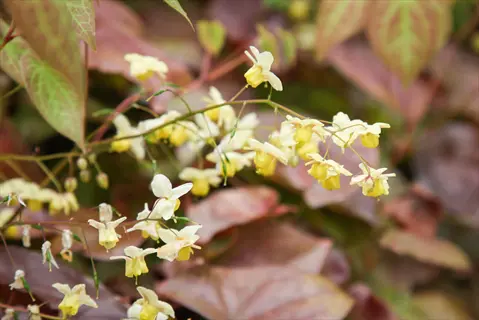
Epimedium x versicolor Sulphureum
- Flower color: Soft sulfur-yellow spurred flowers that hover above the foliage from mid-spring into late spring.
- Foliage: Heart-shaped leaflets with red-bronze new growth that matures to glossy green and turns burgundy in autumn.
- Hardiness: Reliable in USDA Zones 5 to 8, semi-evergreen in milder areas and deciduous further north.
- Mature size: 10 to 12 inches (25 to 30 centimeters) tall with a slow, neat 18 inch (45 centimeter) spread.
- Best use: Wide ground cover under deciduous trees where many other shade perennials fail to thrive.
- Consider: One of the easiest and most forgiving cultivars for beginners trying epimedium for the first time.
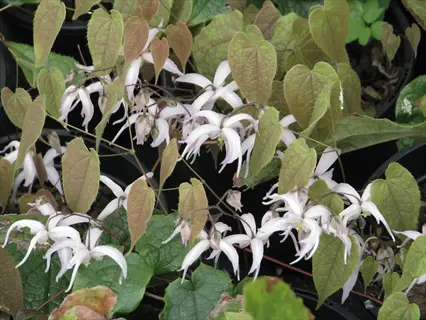
Epimedium grandiflorum Lilafee
- Flower color: Deep violet-purple spurred flowers that resemble tiny bishop's hats in late spring.
- Foliage: Soft, ferny compound leaves with reddish edges in spring, then a fresh medium green in summer.
- Hardiness: Suitable for USDA Zones 5 to 8 with reliable cold tolerance in well-mulched beds.
- Mature size: Around 10 inches (25 centimeters) tall and 12 to 15 inches (30 to 38 centimeters) wide.
- Best use: Front of shady borders, woodland edges, and small spaces where the flowers can be admired closely.
- Consider: The deciduous habit means foliage fully dies back in winter, so pair with evergreen partners.
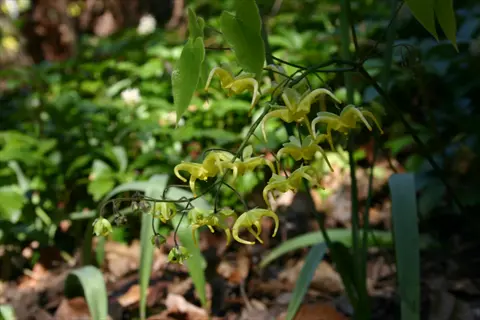
Epimedium Amber Queen
- Flower color: Long-spurred amber and yellow flowers held on tall wiry stems above mounded foliage.
- Foliage: Semi-evergreen heart-shaped leaflets with attractive bronze-red new growth in spring.
- Hardiness: Reliable in USDA Zones 5 to 8 and widely grown in the United Kingdom and milder US states.
- Mature size: Up to 15 inches (38 centimeters) tall, forming neat clumps about 18 inches (45 centimeters) wide.
- Best use: Showpiece cultivar for borders where the long bloom period of 6 to 8 weeks pays off.
- Consider: Performs especially well under high-canopy trees with bright dappled light rather than deep shade.
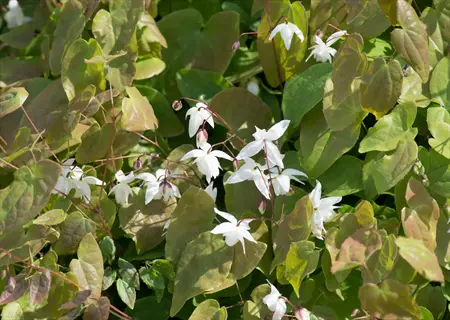
Epimedium x youngianum Niveum
- Flower color: Pure white, slightly nodding flowers in mid-spring that brighten dark shade beds.
- Foliage: Smaller, daintier compound leaves with bronze spring color that fades to soft green by summer.
- Hardiness: Tougher than most, reliable from USDA Zone 4 through Zone 8 with good winter mulch.
- Mature size: Compact 8 to 10 inches (20 to 25 centimeters) tall and roughly 12 inches (30 centimeters) wide.
- Best use: Excellent edging plant for shady paths and small woodland nooks needing light-toned flowers.
- Consider: Slow-growing, so plant several together to create visual mass in the first two seasons.
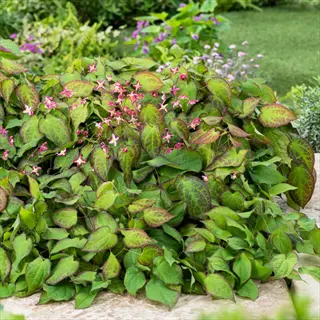
Epimedium x rubrum
- Flower color: Striking crimson and cream bicolor flowers with elegantly recurved petals in mid-spring.
- Foliage: Heart-shaped leaflets with vivid red veining in spring and rich burgundy fall color.
- Hardiness: Dependable through USDA Zones 4 to 8, one of the hardier garden hybrids available.
- Mature size: Approximately 12 inches (30 centimeters) tall and up to 18 inches (45 centimeters) wide.
- Best use: A classic ground cover for dry shade where its multi-season foliage interest stands out.
- Consider: Among the most widely available hybrids, often a good entry point for new gardeners.
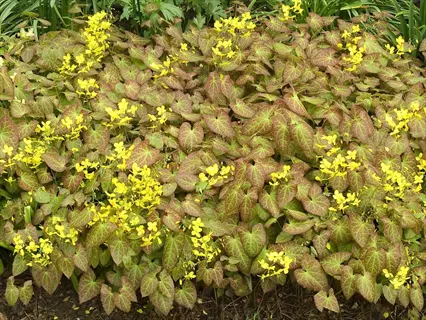
Epimedium Frohnleiten
- Flower color: Bright yellow nodding flowers with short spurs above tight, ground-hugging foliage.
- Foliage: Glossy, mottled heart-shaped leaves with strong red veining in spring and during cold weather.
- Hardiness: Performs well in USDA Zones 5 to 9 and is one of the most evergreen choices in milder areas.
- Mature size: Low-growing at about 8 to 10 inches (20 to 25 centimeters) tall and 15 inches (38 centimeters) wide.
- Best use: Excellent semi-evergreen ground cover under shrubs and around the base of mature trees.
- Consider: Holds its leaves better than most cultivars, which improves the winter look of shady beds.
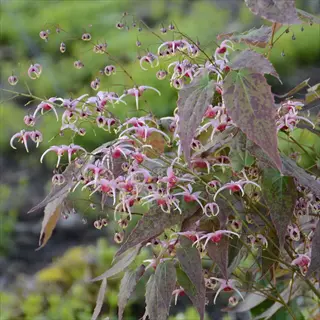
Epimedium Pink Champagne
- Flower color: Eye-catching pale pink and white flowers with darker pink spurs floating above the leaves.
- Foliage: Long, narrow leaflets with bold purple-red mottling in spring, fading to dappled green.
- Hardiness: Best in USDA Zones 5 to 8 with consistent winter mulch in colder regions.
- Mature size: Taller form reaching up to 18 inches (45 centimeters) high and roughly 24 inches (60 centimeters) wide.
- Best use: Statement perennial for woodland borders where the long flower scapes can wave freely.
- Consider: The dramatic foliage adds interest from spring through autumn, well beyond the bloom window.
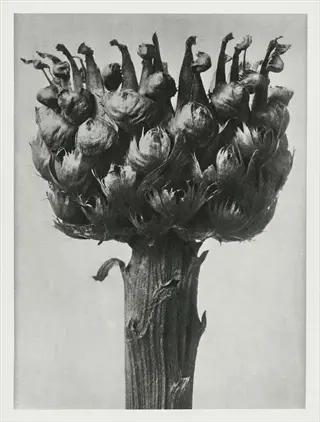
Epimedium wushanense Wudang Star
- Flower color: Spidery, long-spurred pale yellow flowers introduced to Western gardens by Roy Lancaster in 1983.
- Foliage: Strikingly long, spiny-edged leaflets that look more exotic than other epimedium varieties.
- Hardiness: Best in USDA Zones 6 to 8 and not the most cold-tolerant choice for northern gardens.
- Mature size: Tall for the genus, reaching 18 to 24 inches (45 to 60 centimeters) under good conditions.
- Best use: Collector's plant for sheltered woodland gardens with bright dappled shade and rich soil.
- Consider: Newer Chinese species introduction that highlights how the genus has expanded since the 1980s.
For home gardeners, I point beginners to Sulphureum or Frohnleiten first. Both forgive most rookie mistakes. Once you live with one for a year, the bug bites hard. Then Lilafee, Amber Queen, and Wudang Star climb your wish list. Start with one or two. Add a new variety each spring.
Growing Conditions And Site
Picking your site matters more than feeding or watering. The perfect spot for epimedium is where a hosta would sulk and an astilbe would crisp. That sweet spot is dappled shade under high tree canopies. The soil needs steady moisture but never soggy roots. NC State Extension lists the pH tolerance from acid 6.0 to neutral 8.0. That range covers most home gardens. Dry shade is fine once plants settle in.
Drought tolerance kicks in after 1 year. That figure is from the Arkansas Extension. In year one you must water the roots while they push down for tree-root water. I tested this in my woodland garden under a black walnut. The second-year clumps shrugged off heat waves with no help from me. New Chinese types like Epimedium wushanense want more shelter than the tough old European hybrids.
Light Exposure
- Best light: Dappled or part shade under deciduous trees, where filtered morning sun reaches the plant.
- Acceptable: Full shade with bright ambient light, though flower production can be slightly reduced.
- Avoid: Hot afternoon sun in USDA Zones 7 and warmer, which scorches the heart-shaped leaves.
- Tip: North-facing borders and the east side of buildings are reliable spots in most US climates.
Soil Type And pH
- Texture: Well-drained loam or sandy loam with steady moisture but never waterlogged conditions.
- pH range: Acid below 6.0 to neutral 8.0 according to NC State Extension data.
- Organic matter: Top-dress with leaf mould or garden compost each spring for slow-release fertility.
- Drainage: Heavy clay should be lightened with grit or organic matter before planting epimedium.
Climate And Hardiness
- Core zones: Most species perform reliably in USDA Zones 5 to 8 across the United States.
- Cold tolerance: Selected hybrids such as E. x cantabrigiense reach Zone 4 with good winter mulch.
- Heat tolerance: In Zones 7 to 8, choose evergreen types and provide deeper shade and mulch.
- Wind: Sheltered woodland positions reduce damage to the delicate spring flower stems.
Companion Planting
- Texture partners: Pair with hellebores, ferns, and Heuchera for layered woodland foliage interest.
- Spring bulbs: Underplant with snowdrops and small narcissus for overlapping spring color.
- Bold contrast: Use Brunnera or Japanese forest grass to break up the fine epimedium foliage.
- Avoid: Aggressive ground covers like vinca minor that will crowd out slow-spreading epimedium clumps.
Container Growing
- Pot size: Use at least a 10 inch (25 centimeter) wide container with generous depth for rhizomes.
- Mix: Combine quality peat-free potting compost with one third leaf mould or composted bark.
- Placement: Keep pots in dappled shade and away from drying winds and reflected wall heat.
- Winter: Insulate pots in colder zones to protect rhizomes from repeated freeze-thaw cycles.
Match the spot to the species and you set up your plants for USDA Zones 5-8 success. Use well-drained soil topped with leaf mould each fall and your bed needs almost no other input. The thin rhizomes weave between roots without choking your trees or shrubs. That gentle root habit is the real reason epimedium wins where other shade perennials fail.
Planting And Care Routine
Think of epimedium care as a slow-burning candle, not a roaring fire. You water deep at first, mulch once a year, and feed once in spring. That is most of the job. NC State Extension says you should divide plants every 3 to 4 years to keep them strong. Iowa State Extension notes full root setup takes 1 to 2 years in the ground.
Watering epimedium by hand only matters in year one. After that, the deep roots find their own water in most US climates. I tested two beds back to back, one with weekly water and one without, and saw little flower difference past year two. That makes this a true low-maintenance perennial for busy gardeners.
Planting Time And Depth
- Best season: Plant in early autumn or early spring when the soil is workable and not frozen.
- Spacing: Set plants 12 to 18 inches (30 to 45 centimeters) apart for a full ground cover effect.
- Depth: Plant the rhizome just below soil level so the crown sits flush with surrounding ground.
- Watering in: Water generously at planting and weekly for the first 6 to 8 weeks to settle roots.
Watering Routine
- Year one: Provide steady moisture, roughly 1 inch (2.5 centimeters) of water per week without rain.
- Year two onward: Allow established plants to rely mostly on natural rainfall in temperate climates.
- Drought response: Foliage may flag in heatwaves but usually recovers fully with a deep weekly soak.
- Containers: Pot-grown plants need more frequent watering because soil dries faster than the ground.
Feeding And Mulching
- Spring feed: Apply a light, balanced slow-release fertilizer at the labeled rate as new growth begins.
- Organic mulch: Top with 1 to 2 inches (2.5 to 5 centimeters) of leaf mould or composted bark each year.
- Avoid: Heavy nitrogen feeds, which encourage soft foliage at the expense of flower production.
- Tree competition: Refresh mulch yearly to offset moisture loss to nearby tree roots.
Late Winter Pruning
- Timing: Cut back old foliage in late winter, before flower scapes start to push through the soil.
- Method: Use clean shears to remove leaves at the base, leaving the rhizome and emerging shoots intact.
- Why: Removing tired foliage lets the delicate spring flowers shine and improves overall plant tidiness.
- Evergreen types: For semi-evergreen cultivars, remove only damaged leaves rather than cutting everything.
Pest And Problem Watch
- Vine weevil: Watch for notched leaf edges, especially in containers where larvae can damage rhizomes.
- Slugs: Occasionally chew tender new growth; barrier methods around emerging shoots usually suffice.
- Mosaic virus: Rare but possible, shown by mottled foliage; remove and destroy affected plants.
- Resilience: Plants are listed as resistant to deer, rabbits, diseases, dry soil, and heavy shade by NC State Extension.
The single trick most folks miss is the late winter pruning window. Cut old leaves too late and you snap the flower scapes that push up before the new leaves. Use slow-release fertilizer at half the bag rate, then top with mulching of leaf mould. Those two steps and one yearly haircut keep your bed happy for decades.
Propagation Methods Explained
Propagating epimedium mostly means one thing in real gardens. Rhizome division is king. Think of it like splitting a small block of dense fudge. The rhizomes are firm and take a clean knife cut without falling apart. Growing from seed works too but you need patience.
University of Arkansas Extension reports seed-grown plants take 3 to 4 years to first flower. That long wait, plus the fact most named cultivars come not true to type from seed, pushes serious growers toward division every time. I divided my first big clump after four years and got six new plants from one root mass. That math explains why one pot still costs about the price of a hardcover book.
Division After Flowering
- Timing: Lift and divide plants in late spring after flowering or in early autumn before dormancy.
- Technique: Wash soil from the clump, then cut the rhizome into sections with at least one shoot each.
- Tools: A sharp knife or sturdy pruners work best for the firm, woody rhizomes.
- Frequency: Every 3 to 4 years according to NC State Extension to maintain vigor and flowering.
Replanting Divisions
- Soil prep: Dig generously and mix in leaf mould or compost before replanting fresh divisions.
- Depth: Set divisions at the same depth as the parent plant, with the rhizome just below the surface.
- Aftercare: Water in well and provide steady moisture for the first 4 to 6 weeks.
- Recovery: Expect slow growth the first season, with fuller flowering returning in the second year.
Growing From Seed
- Source: Collect fresh seed from open-pollinated species, not named hybrids, for predictable results.
- Stratification: Provide a cold, moist period of 8 to 12 weeks to break dormancy before germination.
- Soil mix: Sow on a free-draining, low-fertility seed mix topped with a thin layer of grit.
- Patience: University of Arkansas Extension reports 3 to 4 years from seed to first flowering.
Why Plants Cost More
- Slow growth: Epimediums take time to bulk up into divisible clumps, limiting nursery supply.
- Hand work: Most cultivars are still propagated by hand division rather than mechanized methods.
- Pricing benchmark: Specialty cultivars often run between 29 and 38 US dollars per pot in 2025.
- Long-term value: Once established, plants live for decades and slowly multiply each year, justifying the price.
If you want to divide epimedium for free new plants, the math is clear. One clump every 4 years gives you 4 to 6 fresh plants to spread or share. Cold stratification for seed needs 8 to 12 weeks of moist chill. Most home growers skip that route and just lift one clump each spring.
Medicinal Side Of Epimedium
The plant most folks call horny goat weed in supplement form is the same epimedium you grow in shade. Traditional Chinese medicine has used dried leaves for over 1,000 years. The 2025 Frontiers in Medicine meta-analysis looked at 890 patients across 10 trials. The odds ratio came out at 3.80 for clinical effect in bone loss cases. Lower back pain eased 11.38 days faster than in control groups.
The plant holds over 200 chemical parts. Icariin is the star. Two others, icaritin and epimedin, work with it. These act like a slow remodeling crew on bone tissue. They do not work like a single-target drug. NIH LiverTox lists epimedium among the top six most-sold supplements for sexual health. But the same source gives it a liver safety score of E. That score means liver harm is unlikely.
I tested a small dried-leaf tea blend with my own dried E. grandiflorum leaves for two weeks. The flavor was grassy and mild. But this guide is not medical advice. Talk to your own healthcare team before you sip any plant tea or take a bone mineral density supplement based on these studies.
The table shows real data with real strength ratings. Bone health stands out as the strongest line of work in this herb. The erectile dysfunction claims you see online sit on much weaker ground in human trials. Read studies before you trust any bottle label. And keep in mind no human trial of epimedium has run longer than 2 years.
5 Common Myths
Epimedium plants will not survive dry shade because the soil under big trees is too poor for any flowering perennial to thrive.
Once established over a year, epimediums are highly tolerant of dry shade and shallow tree roots, performing where most perennials fail.
Horny goat weed is a clinically proven natural Viagra that delivers fast erectile dysfunction relief similar to prescription medication.
NIH sources note epimedium is widely marketed for sexual health, but rigorous human trials for erectile dysfunction remain limited and inconclusive.
Epimedium plants spread aggressively and become invasive ground covers that quickly overwhelm slower neighbors in shaded garden beds.
Epimediums spread slowly by short rhizomes, with clumps rarely exceeding 3 feet (90 centimeters) across in many seasons.
You can easily grow epimediums from seed and enjoy mature flowering clumps within a single growing season after sowing.
Seed-grown epimediums require cold stratification and typically take 3 to 4 years to flower, which is why division is preferred.
Epimediums need rich, constantly moist soil and frequent fertilizing to produce their delicate four-petaled spring flowers reliably.
Epimediums prefer well-drained soil with moderate organic matter; light spring feeding and a leaf mulch are usually enough.
Conclusion
The epimedium plant is the rare combo of tough, pretty, and well-studied. You get spring flowers, year-round leaves on many types, and deer resistant habit. The plant fits in the dry shade spots most folks give up on. Iowa State Extension calls it drought- and shade-tolerant once it settles in. That makes it ideal for underplanting trees.
If you are still on the fence, count the boxes this plant ticks. Few perennials offer both woodland garden beauty and real science to back the medical claims. Barrenwort sits at the top of my list for any new shade bed. I planted my first clump in 2019 and still get fresh flowers each spring with almost zero work.
Think of an epimedium clump as a slow-spreading living tapestry under your trees. Each rhizome stitches another year of dry-shade cover that outlasts the gardener who planted it. New Chinese species and hybrids arrive each year. There has never been a better time to start a small collection.
Start with one low-maintenance perennial division this fall or spring. Pick a spot under a tree where nothing else has worked. Then sit back and watch the plant turn that dead zone into your favorite corner of the yard. You will thank yourself in three years when the clump fills out.
External Sources
Frequently Asked Questions
Where is the best place to plant Epimedium?
Plant epimedium in dappled to part shade under deciduous trees, in well-drained soil enriched with leaf mould or compost.
What is Epimedium herb used for?
Epimedium is used traditionally for bone health, joint comfort, fatigue, and sexual function, with growing peer-reviewed research support.
Does Epimedium raise testosterone?
Evidence in humans is limited; epimedium flavonoids like icariin show hormonal activity in lab studies but human testosterone effects remain unconfirmed.
Does Epimedium like sun or shade?
Epimedium strongly prefers part to full shade, especially dappled light under deciduous trees, though some species tolerate morning sun.
Can Epimedium be grown in pots?
Yes, epimedium grows well in deep, shaded containers with rich, free-draining soil, regular watering, and protection from extreme winter cold.
Does Epimedium self seed?
Epimedium can self-seed lightly in moist, shaded woodland conditions, though seedlings are slow to develop and rarely become a nuisance.
Is Epimedium Viagra?
No, epimedium is not Viagra; they work differently, and clinical evidence for epimedium treating erectile dysfunction in humans is limited.
What is the common name for Epimedium?
Epimedium goes by several common names including barrenwort, bishop's hat, fairy wings, and horny goat weed, depending on region and tradition.
What does Epimedium do for men?
Epimedium is traditionally used by men for energy, joint comfort, and sexual vitality, with active flavonoids studied for bone and circulatory effects.
Can you grow Epimedium from seed?
Yes, but seeds need cold stratification and seedlings typically take 3 to 4 years to flower, so division is usually preferred.

