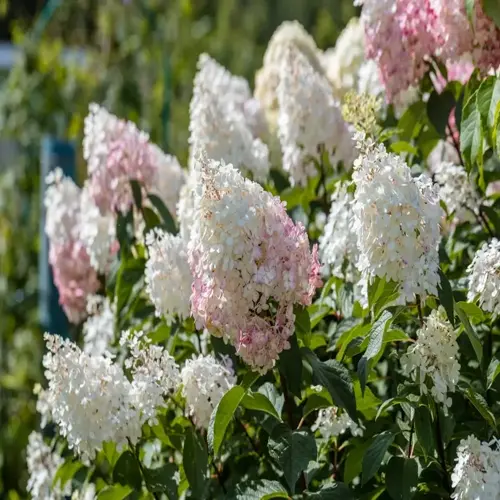

Two tea shrubs set too close grow straight into each other within a couple of seasons. Their lower leaves fall into shade and drop off. What you are left with is bare, leggy stems and a tangle that is hard to pick from. Plants set the right distance apart do the opposite. They stay round and full, with leaves you can reach from every side of the bush.
Good tea plant spacing sits at about 3 to 5 feet (0.9 to 1.5 meters) apart for a home garden. Go to the wider end for shrubs you want to grow as standalone plants. Spacing tea plants this way gives each one steady airflow, full light, and room to fill out. None of them end up fighting a neighbor for the same patch of sun. That space is also what keeps the center of each shrub dry and healthy.
The reason comes down to how big these shrubs get. People picture a small herb, but tea is a true shrub. Left unpruned, a single plant reaches a tea plant size of 6 to 15 feet (1.8 to 4.6 meters) tall. It spreads 4 to 8 feet (1.2 to 2.4 meters) wide, going by NC State Extension figures. Crowd plants that size together and the inner branches sit in dark, damp air. That is exactly where leaf drop and mildew start.
You do not have to let a plant reach its full wild size, though. For tea, most growers keep each shrub pruned to about 4 to 5 feet (1.2 to 1.5 meters) tall and round. That height keeps the tender new leaves you actually pick within easy arm's reach. A short, wide shrub also puts out more of those young shoots than a tall, woody one does. Pruning lets you plant a touch closer than you would for an open shrub, since you are holding the size down by hand each season.
A hedge for tea is the spot where closer spacing makes sense. Plant the shrubs about 3 feet (0.9 meters) apart and the branches knit into one continuous wall as they grow. Regular pruning keeps that wall dense and flush with new growth. That dense, even surface is exactly what you want for picking by hand. A clipped hedge can take the tighter end of the range because you are cutting it back on purpose, so it never gets the chance to crowd itself out.
Roots matter as much as the top of the plant. A tea shrub sends roots out roughly as far as its branches reach, so a crowded planting fights underground too. Tight roots compete for the same water and feed, and the plants grow slower for it. Giving each shrub its full spacing means the roots get their own block of soil. Healthy roots feed steady new leaf growth, which is the whole point of a tea plant.
Here is the simple rule. Use the wider end of the range for standalone shrubs you plan to leave full and round. Use the closer end for a clipped tea hedge you will prune often. Either way, leave a clear path of at least 2 feet (0.6 meters) on one side of every plant. Picking by hand goes far faster when you can step in and work both sides of a shrub. You also avoid trampling the next plant in the row every time you reach in.
When in doubt, give them more room rather than less. You can always fill a gap later, but you cannot move a 6-foot shrub once its roots dig in. Mark your spacing with a tape measure before you dig and set each hole to plan. Do that, and your plants will reward the patience with full, even, easy-to-harvest growth for years.
Read the full article: Tea Garden Plants: A Complete Grow Guide