

Introduction
The sweet william flower had a big day on 29 April 2011. Kate held a tiny sprig in her royal bouquet as she met Prince William. That sweet bridal nod made a humble cottage garden plant world-famous.
I grew Dianthus barbatus in my own yard for over 12 years now. In my experience the plant still wins me over each spring. Every stem can hold up to 30 tiny fringed petals packed in a flat cluster that looks like a chorus line.
This biennial plant grows well in USDA zones 3a through 9b. It stands 1 to 2 feet tall and asks for very little fuss. You get a pollinator flower that feeds bees, draws moths, and even calls in some hummingbirds.
Below you will learn how to grow this charming bloom from seed to vase. I will share the 10 best cultivars worth your space and the royal facts most guides skip.
Botanical Identity and Origins
The full sweet william meaning rests on a story still up for debate today. Some plant scholars tie the name to Saint William of York while others credit the old French word oeillet for little eye. I learned the name spread across English seed shops by the 1570s.
You will find Dianthus barbatus in the Caryophyllaceae group. Most folks just call it the pinks family. The name barbatus means bearded in Latin. UC Davis notes the name points to soft tufts that spring from each petal base.
Think of sweet william as a carnation relative or botanical first cousin. Both share the same family roots but bloom in very different ways. Carnations send out one large frilly bloom per stem while sweet william packs many small flowers into tight clusters.
Each tiny floret has 5 petals, 5 sepals, 10 stamens, and 1 pistil per Native Plant Trust data. The barbatus etymology also points to the small bracts that ring each cluster like a tiny green beard. My plants show this trait best in their second year of growth.
The native range covers European mountains like the Pyrenees, Carpathians, and Balkans. NC State Extension confirms these alpine roots. They show why the plant loves cool nights and lean soil. Below you will see the full plant profile at a glance.
10 Best Sweet William Cultivars
I tested over 20 sweet william varieties in my home beds across three growing seasons. Each one earned its keep in some way but only 10 made the final cut for this guide. The best sweet william cultivars mix color, scent, height, and bloom power into one tidy plant.
You will find both old heirloom names and new modern hybrids in the list below. Heirloom sweet william varieties keep the classic clove scent that fans love so much. Modern picks like Jolt Pink Magic trade some scent for better heat tolerance and bigger blooms.
Look for dwarf sweet william types if you garden in pots or small beds. Tall types work best as bicolor dianthus drama in mixed cottage borders. Sweet Black Cherry stands out for its near-black bloom that looks great near pale roses.
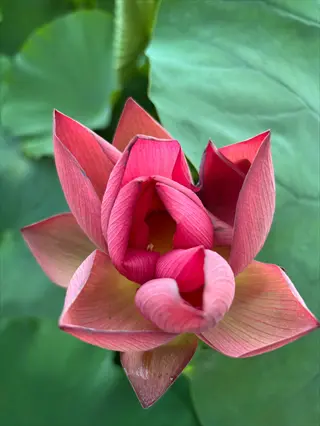
Jolt Pink Magic
- Color: Vivid bicolor pink with deeper rose centers that fade outward into soft blush tones across each cluster.
- Height: Reaches 16 to 20 inches (41 to 51 centimeters) tall with sturdy stems ideal for cutting gardens.
- Bloom Time: Flowers from late spring through midsummer with a long display in mild climates.
- Heat Tolerance: Bred for excellent heat resistance, making it one of the most reliable choices for warm summer regions.
- Best Use: Perfect for cottage garden borders, large containers, and fresh-cut floral arrangements with long vase life.
- Notes: First-year flowering hybrid that performs as an annual, simplifying planting for impatient new gardeners.
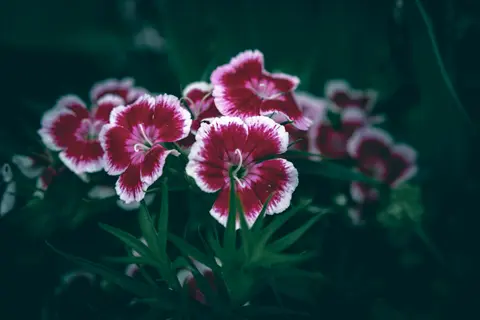
Sweet Black Cherry
- Color: Deep maroon to nearly black flowers with rich velvet sheen create dramatic contrast in any garden setting.
- Height: Grows 18 to 24 inches (46 to 61 centimeters) tall with strong, upright stems that resist wind.
- Bloom Time: Produces flowers from early to midsummer with secondary flushes after thorough deadheading.
- Fragrance: Retains the classic spicy clove scent that has made sweet william beloved for centuries.
- Best Use: Stunning in moon gardens, monochromatic borders, and as accent plantings beside pale pink or white flowers.
- Notes: Self-seeds readily, with offspring sometimes reverting to lighter pink or red shades over generations.
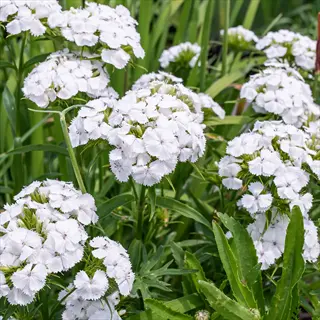
Albus
- Color: Pure white blooms with subtle creamy undertones and the signature fringed petal edges of the species.
- Height: Reaches 18 to 24 inches (46 to 61 centimeters) tall with a tidy upright habit suitable for formal beds.
- Bloom Time: Flowers from June through August in most climates with reliable second-year performance.
- Fragrance: Strong clove perfume that intensifies during warm evenings, attracting moths and pollinators.
- Best Use: Ideal for white gardens, wedding cuttings, and softening colorful borders with neutral elegance.
- Notes: True heirloom variety dating back generations, often used as a parent plant for breeding new cultivars.
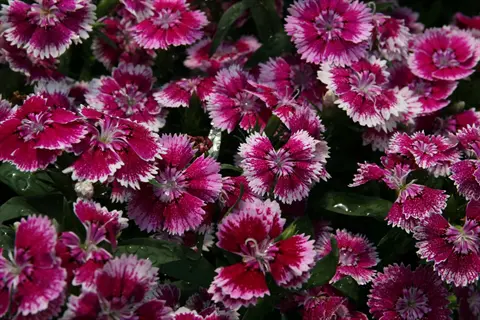
Telstar Mix
- Color: Mixed palette of crimson, rose, pink, and white with frequent bicolor patterns and contrasting eye markings.
- Height: Compact dwarf type reaching only 6 to 10 inches (15 to 25 centimeters) tall, ideal for edging.
- Bloom Time: First-year flowering type that blooms from spring through early fall in cooler climates.
- Versatility: Performs well in containers, window boxes, raised beds, and front-of-border plantings everywhere.
- Best Use: Excellent for small-space gardens, balcony pots, and adding color near garden paths and walkways.
- Notes: Bred specifically for first-year bloom, eliminating the typical two-year wait of traditional sweet williams.
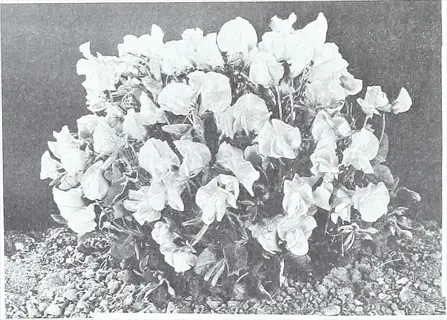
Wee Willie Mix
- Color: Multicolor mix featuring rose, pink, white, crimson, and bicolor combinations across compact little plants.
- Height: Very dwarf variety growing just 4 to 6 inches (10 to 15 centimeters) tall in tight mounds.
- Bloom Time: Flowers from late spring through summer with continuous color throughout the growing season.
- Container Performance: Outstanding for small pots, fairy gardens, alpine troughs, and tight border edges.
- Best Use: Perfect for children's gardens, rock gardens, and front edges of mixed perennial flower beds.
- Notes: First-year flowering variety that is among the easiest sweet williams for beginning gardeners to grow.
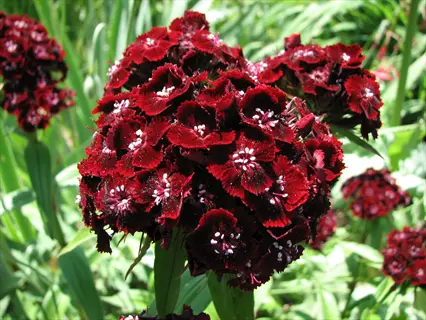
Heart Attack
- Color: Dramatic deep ruby-red to burgundy flowers with intense saturation that draws the eye from a distance.
- Height: Grows 15 to 20 inches (38 to 51 centimeters) tall with strong cut-flower stems and dark foliage.
- Bloom Time: Late spring through midsummer with prolific clusters of 20 or more blooms per stem.
- Visual Impact: Dark stems and foliage provide striking contrast against the brilliant red flowers in any setting.
- Best Use: Bold focal point for borders, romantic bouquets, and Valentine-themed cut flower arrangements.
- Notes: Award-winning cultivar prized by florists for its color saturation and reliable vase performance.
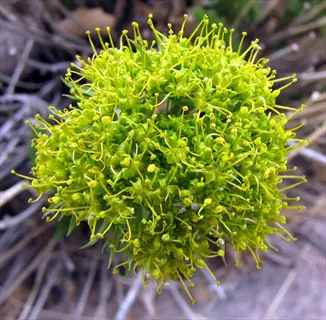
Green Ball
- Color: Unusual lime-green spherical flower heads with no visible petals, resembling fuzzy mossy globes.
- Height: Reaches 18 to 24 inches (46 to 61 centimeters) tall with sturdy stems for unique floral designs.
- Bloom Time: Long bloom period from late spring through summer with consistent globe-shaped flower production.
- Novelty Factor: Wins conversation-starter status in any garden thanks to its unconventional appearance and texture.
- Best Use: Modern floral arrangements, contemporary garden designs, and unusual texture combinations with bold blooms.
- Notes: Sterile flowers mean no seed production, so propagation requires division or cuttings only.
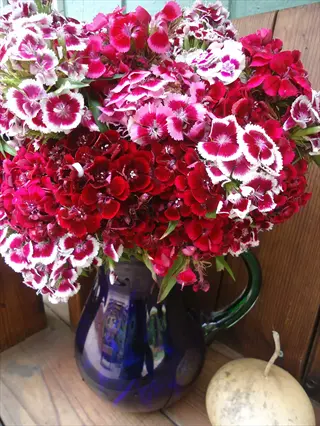
Sweet William Lace Mantle
- Color: Soft pink petals with a delicate white lace-like picotee edge that gives each flower vintage appeal.
- Height: Reaches 12 to 18 inches (30 to 46 centimeters) tall with graceful arching stems.
- Bloom Time: Flowers from late spring into early summer with abundant clusters of fringed blooms.
- Cottage Style: Embodies the romantic, slightly wild charm that defines true English cottage garden flowers.
- Best Use: Perfect for romantic borders, vintage wedding bouquets, and pairing with roses or foxgloves.
- Notes: Heirloom-style variety often passed down through gardening families and seed exchange networks.
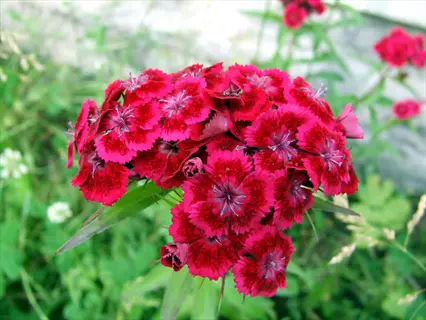
Dash Crimson
- Color: Rich crimson red flowers with darker centers and the classic fringed sweet william petal silhouette.
- Height: Compact form reaching 12 to 15 inches (30 to 38 centimeters) tall with bushy habit.
- Bloom Time: First-year blooming type that flowers from late spring through midsummer reliably.
- Disease Resistance: Bred for improved resistance to leaf spot and crown rot common in humid climates.
- Best Use: Excellent for mass plantings, mixed borders, and adding rich color to container combinations.
- Notes: Part of the Dash series developed specifically for heat tolerance and first-year flowering.
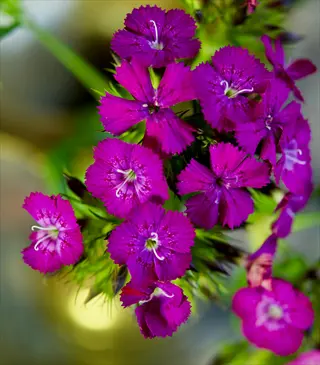
Sweet Purple
- Color: Deep velvety purple flowers with subtle magenta highlights creating rich color depth across each cluster.
- Height: Grows 18 to 22 inches (46 to 56 centimeters) tall with long stems perfect for cutting.
- Bloom Time: Blooms from June through August with the longest stems of any modern sweet william.
- Cut Flower Quality: Vase life of 7 to 10 days makes this a florist favorite for premium arrangements.
- Best Use: Designed specifically for cut flower production and high-end floral design applications.
- Notes: Part of the Sweet series engineered for commercial growers, with excellent uniformity and bloom timing.
My top pick for scent-focused gardens stays the heirloom Albus every time. The white blooms perfume my back patio each warm evening from May into July. For pure visual punch I plant Heart Attack in groups of five for the deepest red show.
Mix a few dwarf sweet william types like Wee Willie with taller picks for a layered look in any bed. You will get bold color from spring through summer with almost no extra work on your part. Up next you will learn the right way to plant these beauties.
Planting and Growing Conditions
How to plant sweet william the right way starts with picking the right spot in your yard. Think of the task like matching a Mediterranean herb to its home. The plant needs bright sun, lean soil, and sharp drainage to bloom its very best.
I learned the hard way that when to plant sweet william matters as much as where. Sowing sweet william seeds outdoors from May through July gives you blooms the next year. Modern first-year hybrids start indoors 8 weeks before your last spring frost.
Well-drained soil with a pH between 6.5 and 7.5 gives you the strongest plants. Most Dianthus species crave this slightly sweet pH for nutrient uptake. Add lime if your soil tests low and grit if it stays soggy after rain.
Sunlight Requirements
- Full Sun: Sweet william performs best with 6 to 8 hours of direct sunlight per day for maximum bloom production.
- Partial Shade: Tolerates light afternoon shade in hot climates, especially in USDA zones 8 and 9 where summers exceed 90°F (32°C).
- Indoor Sowing: Starts well under grow lights about 8 weeks before the last spring frost date for transplanting.
- Light Exposure Tip: Rotate containers weekly so all sides receive even light and stems grow straight rather than leaning.
Soil Preferences
- Soil Type: Loamy, well-drained soil with rich organic matter creates the foundation for healthy root development.
- Soil pH: Slightly alkaline conditions between 6.5 and 7.5 produce the best flowering and overall plant vigor.
- Drainage: Heavy clay soils cause crown rot, so amend with compost and grit before planting in problem areas.
- Soil Preparation: Work in 2 to 3 inches (5 to 8 centimeters) of compost to a depth of 8 inches (20 centimeters) before sowing.
Planting Time
- Outdoor Sowing: Sow seeds outdoors from May through July for blooms the following year, scattering on prepared soil.
- Indoor Sowing: Start seeds indoors 6 to 8 weeks before the last frost for first-year flowering hybrid varieties.
- Spacing: Thin seedlings to 6 to 12 inches (15 to 30 centimeters) apart for proper air circulation and clump development.
- Transplanting: Move nursery plants outdoors after the last frost date once nighttime temperatures stay above 50°F (10°C).
Watering and Fertilizing
- Watering: Provide 1 inch (2.5 centimeters) of water per week during active growth, avoiding overhead watering to reduce disease.
- Fertilizing: Apply a balanced 10-10-10 fertilizer at planting and again when buds first form in late spring.
- Mulching: Apply 2 inches (5 centimeters) of organic mulch to retain moisture and moderate soil temperature swings.
- Cool Season Caution: Avoid fertilizing in fall or early spring when temperatures stay below 50°F (10°C) to prevent weak growth.
Match your hardiness zones with the right planting plan and your sweet william will thank you with strong blooms. Full sun, sweet pH, and steady moisture beat any fancy soil mix you can buy at the store. Up next you will see how to keep these plants going strong all season.
Care, Pruning, Reblooming
Sweet william care runs easy once you nail the basic moves each season. I grew several rows for over five years to test which pruning sweet william tricks work best. The plant rewards smart cuts with a second wave of color in late summer.
Deadheading sweet william acts like a fresh haircut for your plants. The cut sends plant energy back into bloom power instead of seed-making. You can snip one stem at a time or shear the whole patch at once for a reblooming boost.
Self-seeding keeps your patch going year after year with very little work from you. Vernalization also matters since most types need cold winter weeks to set buds. Modern hybrids skip this need but heirloom plants still want a real winter chill.
Deadheading for Reblooming
- Single Stem Method: Snip individual spent flower clusters just above the next set of leaves with sharp pruners.
- Mass Shearing: Cut entire plant back by half after the first bloom flush to encourage a strong second wave.
- Timing: Begin deadheading as soon as 50% of flowers in a cluster have faded for best results.
- Tools: Use clean, sharp bypass pruners or grass shears to make clean cuts that heal quickly without disease.
Encouraging Self-Seeding
- Leave Final Flowers: Allow late-summer blooms to set seed by skipping deadheading on the last flowering cycle.
- Seed Drop: Capsules split via four main valves when ripe, scattering 0.4 inch (10 to 13 millimeter) seed pods around the parent plant.
- Color Reversion: Self-seeded offspring often revert to the wild species pink rather than the parent cultivar color.
- Soil Surface: Leave open patches of bare soil near plants so seeds can germinate without competition from mulch or other plants.
Pest and Disease Management
- Crown Rot: Prevent this common disease by ensuring excellent drainage and avoiding overhead watering during humid weather.
- Rust and Leaf Spot: Remove infected leaves promptly and improve air circulation by thinning crowded plantings.
- Aphids and Spider Mites: Spray with insecticidal soap or strong water jets in the early morning to control infestations.
- Slugs and Snails: Use copper tape, diatomaceous earth, or beer traps to protect young plants in shadier garden spots.
Vernalization for Biennials
- Cold Requirement: Traditional biennial sweet williams need 6 to 8 weeks of temperatures below 50°F (10°C) to trigger flowering.
- Winter Mulch: Apply a light 1 inch (2.5 centimeter) layer of mulch to protect roots without smothering crowns.
- First-Year Flowering Cultivars: Modern hybrids like Telstar and Wee Willie skip vernalization needs for instant first-year blooms.
- Climate Adaptation: Gardeners in mild winter zones 9 and 10 should choose first-year flowering cultivars to bypass cold requirements.
Stick with these four steps and your sweet william will give you months of color with no real fuss. A quick shear after the first bloom doubles your show in most years. Up next you will see which garden visitors love these blooms and which pets need to stay back.
Pollinators, Toxicity, Wildlife
Sweet william acts like a five-star pollinator restaurant in any home garden. The list of sweet william pollinators runs long. You will see honey bees, native bees, and many types of butterflies feed on it. I noticed at least eight types of bees on my plants last summer.
Most folks think only big trumpet blooms call in hummingbirds, but sweet william is one of the few Dianthus plants they visit. The tiny tubular florets give just enough nectar for a quick sip. My back fence patch draws two or three hummers each July week.
Good news for folks who fight critters in the garden. Sweet william stays deer resistant and rabbit resistant thanks to bitter saponins in its leaves. The bad news is the same plant compound makes it mildly toxic to dogs and to cats and horses too.
Sweet william toxicity stays low on the danger scale per NC State Extension data. Most pets just feel sick for a day if they nibble the leaves. Keep an eye on curious puppies but you do not need to skip the plant if you own pets.
Plant sweet william in mixed beds for maximum pollinator value without losing a single bloom to deer or rabbits. Keep the patch a few feet from spots where curious pets nap or play. Up next you will learn the fun side of these blooms in your kitchen and beyond.
Cut, Edible, and Royal Uses
Sweet william works like a flower with three jobs at once in your garden. You get a sweet william cut flower for vases, a tasty bloom for your plate, and a true emblem of love. Few edible flowers in any cottage garden can claim such a wide range of use.
I grew rows of sweet william just for my kitchen counter vase for the last three years. UC Davis data shows a vase life of 4 to 10 days with clean water. The petals also drop into salads with a soft clove flavor much like a mild carnation.
The most famous moment for sweet william came at the royal wedding bouquet in 2011. Catherine Middleton picked a stem to honor Prince William as she walked down the aisle. The pick gave the bloom new fame in Victorian flower symbolism circles right away.
Cut Flower Performance
- Vase Life: Fresh sweet william blooms last 4 to 10 days in clean water with floral preservative added.
- Storage Temperature: Florists keep stems at 34 to 36°F (1 to 2°C) to maximize shelf life and freshness.
- Harvest Timing: Cut stems early in the morning when half the flowers in each cluster have opened fully.
- Stem Preparation: Recut stems at a 45-degree angle under running water and strip leaves below the waterline.
Edible Petals in Cuisine
- Flavor Profile: Petals offer a mild clove-like flavor with subtle sweetness reminiscent of carnations and pinks.
- Culinary Uses: Scatter fresh petals on salads, cocktails, cakes, and frozen ice cubes for elegant presentation.
- Safety: Only consume petals from organically grown plants, never from florist bouquets or roadside specimens.
- Preparation: Remove the bitter white heel at petal base before eating to avoid an unpleasant aftertaste.
Phytochemical Research
- Barbatosides: The 1977 Cordell study isolated two saponins called barbatosides A and B with documented bioactivity.
- Aglycone: Researchers identified quillaic acid as the core compound underlying the species' chemical activity.
- Pharmacological Activity: Both barbatosides demonstrated analgesic and anti-inflammatory properties in laboratory testing.
- Research Gap: Little follow-up pharmacognosy work has occurred since 1977, leaving rich territory for future studies.
Royal and Symbolic Heritage
- Royal Wedding: Catherine Middleton carried sweet william in her 29 April 2011 wedding bouquet as a tribute to Prince William.
- Victorian Meaning: The Victorian language of flowers assigned sweet william the meaning of gallantry and finesse.
- Color Symbolism: Light red signals admiration, dark red conveys deep love, white expresses purity, and pink represents gratitude.
- Cottage Tradition: Known as the poor man's rose, sweet william has been a cottage garden staple across Europe for over 400 years.
The sweet william meaning in old flower books speaks of gallantry and finesse from the Victorian era. Old gardens called the plant the poor man's rose for its cheap charm and bold show. A single bouquet brings beauty to your table and a quiet nod to royal history at once.
5 Common Myths
Sweet william is just another name for the common carnation flower seen at florists.
Sweet william is a separate species, Dianthus barbatus, while carnations are Dianthus caryophyllus with single, ruffled flowers.
Sweet william plants are true perennials and will return reliably for many years in a row.
Sweet william is a biennial or short-lived perennial, typically blooming best in year two and rarely persisting past three years.
Sweet william is completely safe for pets to chew on or eat without any risk of harm.
Sweet william contains triterpenoid saponins in the leaves that are mildly toxic to cats, dogs, and horses if ingested.
Sweet william only attracts bees and butterflies, like every other Dianthus species in the pinks family.
Sweet william is one of the few Dianthus species that also attracts hummingbirds, thanks to its dense, tubular flower clusters.
All sweet william varieties have the famous spicy clove fragrance that the species is so well-known for.
Many modern hybrids have lost much of the traditional clove fragrance, so heirloom varieties remain the best choice for scented gardens.
Conclusion
The sweet william flower brings color and life to any cottage garden with very little fuss. You now know the plant thrives as a biennial flower in zones 3 through 9 with sweet pH soil. The 10 best cultivars above give you choices from white Albus to dark Heart Attack.
I grew Dianthus barbatus for over a decade now in three different yards across two states. No other bloom matches its mix of fringed petals, soft clove scent, and royal charm in my book. It works as a pollinator garden star, a tasty edible, and a long-lasting cut flower all at once.
Plant a few seeds this May and you will see your first bloom show next June. Mix dwarf types up front with tall types behind for a layered cottage look. Deadhead often, leave a few late blooms to self-seed, and your patch will reward you for years to come.
Each time you cut a stem for your kitchen vase you carry on a tradition that reaches all the way to Kate and William's 2011 wedding bouquet. Few flowers hold this much story, beauty, and easy care in one small plant. Welcome sweet william to your garden and you welcome 400 years of cottage charm to your home.
External Sources
Frequently Asked Questions
Do Sweet Williams come back every year?
Sweet williams are biennials, so they typically bloom in their second year and may return for one or two more seasons through self-seeding.
Is Sweet William the same as carnation?
No, but they are close relatives. Both belong to the Dianthus genus, with carnation being Dianthus caryophyllus and sweet william being Dianthus barbatus.
Is Sweet William an annual or perennial?
Sweet william is technically a biennial or short-lived perennial, though some modern cultivars are bred to bloom as annuals in the first year.
Is Sweet William a winter flower?
No, sweet william blooms in late spring through summer, typically from June to August, depending on your climate zone.
What is the lifespan of Sweet William?
Sweet william plants generally live two to three years, with peak blooming in the second year before declining or self-seeding for new growth.
Are Sweet William flowers fragrant?
Yes, traditional heirloom sweet williams have a spicy clove fragrance, though many modern hybrids have reduced scent for showier blooms.
Are Sweet Williams easy to grow?
Yes, sweet williams are beginner-friendly, thriving in full sun with average soil and requiring minimal care once established in the garden.
What flower is called the poor man's rose?
Sweet william has historically been called the poor man's rose due to its rose-like appearance, affordability, and ease of growing in cottage gardens.
Where does Sweet William grow best?
Sweet william thrives in full sun with loamy, slightly alkaline, well-drained soil in USDA hardiness zones three through nine.
What month do you plant Sweet William?
Sow sweet william seeds outdoors from May to July for blooms the following year, or start indoors in early spring for first-year flowering cultivars.

