
The best low maintenance ground cover is the one that fits your exact spot. A plant matched to its light, soil, and moisture from day one will mostly take care of itself. Fight your conditions instead, and even a tough plant turns into a chore. So the real answer is not one species. It is the right species for your yard. The lowest-care beds are always the ones suited to their site from the start, not the ones forced into a spot they hate.
This is why a good match beats a lawn for upkeep. Grass needs mowing every week, plus feeding, edging, and watering through the whole season. A well-placed evergreen ground cover asks for almost none of that once it settles in. It also keeps color through winter, so the bed never looks bare or dead. You trade a weekly mow for a quick weed check a few times a year. Over a single summer that gap adds up to dozens of hours you get back.
There is one catch worth knowing before you dig. Low care does not start on planting day. It shows up later. You should plan on up to two years of weeding and watering before the work drops off. During that window the roots spread and the plants knit together into a thick layer that blocks weeds on their own. A young bed still has bare gaps, and weeds rush in to fill them, so you have to stay on top of it early. Push through the first two seasons and the bed mostly runs itself after that. The reward for that patience is years of near-zero effort.
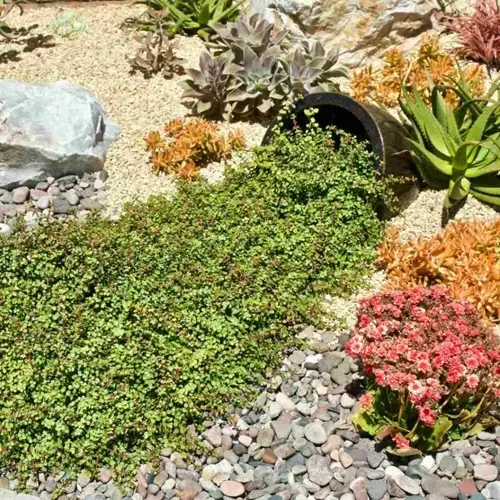
Pick by your light and soil, since that match drives everything else. For full sun, creeping juniper spreads into a dense low mat that shrugs off heat and poor ground. For shade under trees, Japanese spurge stays glossy and green where grass refuses to grow. For hot, dry, lean soil where little else grows, try Angelina stonecrop. It holds on with very little water and even turns orange in cold weather. Each one is easy only because it sits in the spot it actually wants. Put juniper in deep shade or spurge in baking sun, and both will sulk and need constant fussing.
Good prep is what makes a planting carefree later, so do not skip it. Clear out every weed and root first, since leftover roots come back fast and choke young plants. Then loosen the soil 8 to 10 inches (20 to 25 cm) deep so new roots can dig in and reach water on their own. Mix in some compost while you are down there to give the plants a strong first year. This one step does more for long term ease than any plant choice you make. Skip it and you will fight weeds for years, no matter how tough the plant is.
Spacing matters too once the soil is ready. Set plants close enough that they fill in within a season or two, and the dense cover will shade out most weeds for you. A thin layer of mulch between young plants buys you time while the roots spread and saves you weeding in the meantime.
If your site bakes in the sun and dries out, lean toward a drought tolerant ground cover like stonecrop or juniper. These shrug off dry spells once their roots reach down, so you can stop watering after the first year. For damp shade, spurge handles the moisture without rotting. Match the plant to the spot, prep the soil deep, space it well, and give it two seasons. After that, the bed earns its keep and you barely touch it again.
Read the full article: Best Evergreen Ground Cover Plants