Tree · Sapindaceae
Bloodgood Japanese Maple
Acer palmatum
The poised centerpiece that gives a garden its sense of place.
Partial shade
Every 5–10 days
USDA 5–8
15–20 ft · 4.6–6.1 m
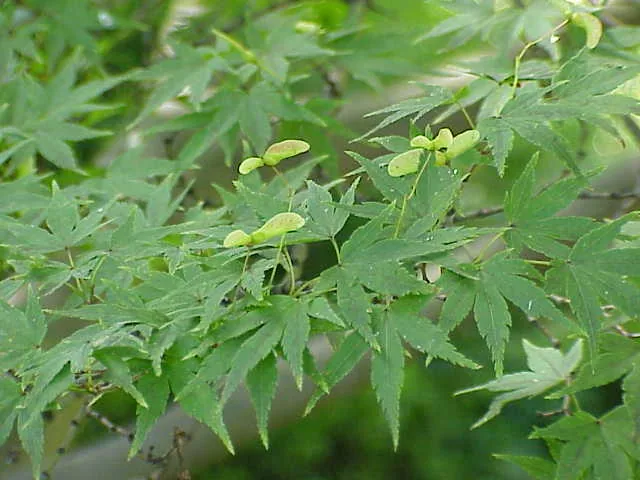
Overview
Few trees set the mood of a space the way the Bloodgood Japanese Maple does. It works like a piece of living architecture, the kind of focal point a courtyard, entry, or small back garden quietly organizes itself around. Plant one and the whole layout suddenly has a center of gravity.
What makes it such a designer's favorite is restraint. This is a slow grower that settles to a graceful 15 to 20 feet (180 to 240 inches) tall with a spread of 12 to 20 feet (144 to 240 inches), so it reads as refined rather than overwhelming. Give it a sheltered, part-shade corner in USDA zones 5 to 8 and it rewards the spot with a presence that shifts beautifully through the seasons, from the soft reddish-purple flowers in April to the scarlet of fall.
It is an outdoor tree, suited to patios, framed views, and the edges of a seating area rather than a windowsill. Care asks little once the rhythm is set: even moisture, a cool root run under mulch, and a light hand with the pruning saw. Treat it as the calm anchor of an outdoor room and it pays that attention back for decades.
Care
The short version: Give the Bloodgood Japanese Maple a sheltered, part-shade corner with rich, slightly acidic, well-drained soil, then keep the soil evenly moist with a drink every 5 to 10 days. It thrives outdoors across USDA zones 5 to 8, asks for only light seasonal feeding and minimal pruning, and rewards a well-chosen spot with a graceful, year-round focal point.
Light
Think of light as the first design decision. A spot of part shade, ideally with protection from the harshest afternoon sun, keeps this tree looking its composed best and the red coloring rich. It will take full sun or partial sun, but in warmer regions an afternoon-sheltered corner spares the canopy and lets the tree hold the eye for the right reasons.
Water
Treat watering as a steady habit rather than a chore. This maple is not drought tolerant, so keep the soil consistently moist but never waterlogged, which usually means a deep drink every 5 to 10 days depending on weather. A layer of mulch over the root zone holds that moisture and keeps roots cool, and a generous watering through dry spells keeps the foliage clean and unscorched.
Soil
Set the tree up well from the start with the right ground. It wants moist, organically rich, slightly acidic, well-drained loam, ideally in the pH 5.5 to 6.5 range. Good drainage matters as much as richness here, so a bed that holds moisture yet never stays soggy gives you the healthy, settled look that makes the tree a reliable centerpiece.
Temperature
This is a tree that takes the seasons in stride, which is part of why it suits a permanent spot in the garden. It is comfortable across a wide swing, roughly -20°F to 95°F (-29°C to 35°C), so it holds its place through cold winters and warm summers alike. That broad tolerance is what lets you design around it as a year-round fixture.
Humidity
There is nothing fussy here on the moisture-in-the-air front. Average outdoor humidity suits this tree perfectly, so it slots into most garden settings without special handling. Keep your attention on the soil and the siting instead, and the ambient air will look after itself.
Feeding
Feeding is best kept light and well timed, in keeping with a tree that values restraint. A single spring feeding with a balanced slow-release fertilizer or a top-dressing of compost is plenty, applied seasonally. Go easy and avoid excess nitrogen, which pushes soft, fast growth that undermines the poised shape you want.
Pruning
Less is more with the saw, and that suits its naturally graceful habit. Keep pruning to a minimum, stepping in only to remove dead, damaged, or crossing branches. Do that work in late fall to mid winter while the tree is dormant, and let its own elegant structure do the rest.
Repotting
For a container specimen on a patio or terrace, plan to refresh it every 2 to 3 years to keep it thriving. Watch for the usual tells that the pot has been outgrown, such as roots circling or escaping the drainage holes, water draining straight through, and slowed growth between waterings. Landscape trees in the ground need no repotting, settling in for the long haul instead.
Size & spacing
Plan the space generously and the tree repays you with proportion. At maturity it reaches 15 to 20 feet (180 to 240 inches) tall with a spread of 12 to 20 feet (144 to 240 inches), so give it room to spread without crowding a path or wall. Its slow, measured growth makes it easy to place with confidence as the anchor of a courtyard, entry, or framed view.
When to plant
Timing is part of getting the placement right. Set this tree out in spring or fall, once the danger of hard frost has passed, so it can settle before the demands of summer or deep cold. The calendar below maps the moments worth planning around, from the April bloom to the red samaras that ripen September to October.
Northern hemisphere
Southern hemisphere
Typical months for a temperate climate: start earlier in warm zones, later where spring frosts linger.
- Plant: Spring or fall, after danger of hard frost has passed
- Harvest: Reddish-purple flowers in April; red samaras ripen September-October
Hardiness
USDA hardiness zones: 5–8
Temperature: down to -29°C
Troubleshooting
A focal tree only earns its keep when it looks the part, so it helps to read the early signals before they spoil the view. Most issues here trace back to the site you chose rather than anything dramatic, and a few thoughtful adjustments usually bring the canopy back to its composed best.
The One-Sided Decline
When half the tree falters while the rest looks fine, the trouble runs below ground. This is the serious one, so act with intent, lift the drainage, and keep the specimen unstressed so it stays the quiet anchor of the space.
Fix:
- Prune out and destroy affected branches
- Keep the tree vigorous with proper watering and avoid overfertilizing
- Improve drainage; there is no chemical cure for verticillium
Uninvited Guests on the Branches
A sticky sheen and small clusters along the stems mean tiny visitors have settled in. A quick rinse, a gentle treatment, and a friendlier balance of garden allies keep this from spoiling the look of a favorite corner.
Fix:
- Dislodge aphids with a strong spray of water
- Treat with horticultural oil or insecticidal soap
- Encourage natural predators such as lady beetles
When Summer Sun Starts to Show
A tree that has gone crispy at the edges is usually telling you it sits in too harsh a spot. Move the planting plan toward a sheltered, part-shade corner and keep the soil steady, and the canopy reads calm again.
Fix:
- Water deeply and consistently to keep soil evenly moist
- Apply mulch over the root zone to retain moisture and cool roots
- Provide afternoon shade in hot climates
- Shelter the tree from strong drying winds
Toxicity
One of the quiet pleasures of designing around this maple is that it lets pets and people share the space without a second thought. It is not listed on ASPCA toxic-plant lists, so you can plant it along a path the dog patrols or beside a patio where the cat suns itself and keep the layout open and relaxed.
Safe for
People · Cats · Dogs · Horses · Rabbits · Livestock · Birds
Cats Safe
A curious house cat can share the patio with this tree and come to no harm, though a splinter-prone twig is best kept out of paws.
Dogs Safe
Dogs that lounge near the canopy stay safe; the only watch point is a chewed branch, so steer that habit elsewhere.
Horses Safe
Horses grazing near a planting face no toxic risk from this maple, leaving the tree a calm fixture of the property.
Rabbits Safe
Rabbits roaming the garden are in no danger from the foliage, so the tree fits an open, pet-friendly layout.
Livestock Safe
Livestock sharing the grounds can do so without concern, keeping the maple an easy choice for a working landscape.
Birds Safe
Birds drawn to the branches add a welcome bit of life, and the tree poses no hazard to them.
People Safe
People can plant, prune, and gather beneath it freely, making it a relaxed centerpiece for family spaces.
Although foliage is non-toxic, chewed twigs can splinter and cause choking or digestive upset, so discourage pets from chewing branches.
Varieties
The Bloodgood name covers a small family of looks, and the one you choose sets the tone of a planting. Some stand tall as upright statements while others cascade low and soft, so it pays to match the form to the feeling you want a corner of the garden to have.
Bloodgood
The classic choice for a refined upright statement, this one holds its deep burgundy to blackish-red through summer better than most red cultivars, then turns scarlet in fall and sets red samaras.
Atropurpureum
A seed-grown red-leaf form with a looser, less predictable personality, it varies more in color and shape than the grafted true-to-type Bloodgood, which gives a garden a softer, less uniform look.
var. dissectum (Tamukeyama)
A weeping laceleaf form with finely cut foliage, it stays low and mounding rather than growing upright, making it the one to choose for a cascading accent beside steps or water.
How to propagate
This is a tree to buy rather than make, and there is elegance in knowing why. Keeping the true Bloodgood look depends on skilled grafting, the kind of work that lives in a nursery rather than a home garden, so most people simply choose a well-grown specimen and put their energy into placing it well.
GraftingDemanding
Late winter to early spring (bench grafting) onto seedling rootstock · Several months for the graft union to take; one or more seasons to establish
The reason every Bloodgood you bring home looks the part is that grafting is the only way to keep it true to type, joined onto Acer palmatum seedling rootstock. Nurseries do this bench grafting from late winter into early spring; the union takes several months to knit, and the young tree then spends a season or more settling into its place. This is demanding work best admired rather than attempted at home.
Stem cuttingsDemanding
Early summer from softwood growth · Several weeks to months to root, with low success rates
You can try softwood cuttings in early summer if the experiment appeals, but expect disappointment. They take several weeks to months to root and most simply fail, which is why grafting stays the reliable route for this cultivar and the surer path to the look you are after.
Myths
This is a shade-only tree that will sulk if it ever sees the sun.
The truth sits in the middle. This maple handles full sun to part shade, and a few hours of sun actually keep the red color rich and worth the room you give it. The real consideration is climate; in hot regions it wants afternoon shade to spare its leaves from scorch, which is why a part-shade corner so often becomes its happiest home.
A red Japanese maple is a worry to keep around cats and dogs.
You can set this tree at the heart of a pet-friendly garden with confidence. Acer palmatum is not on any ASPCA toxic-plant list, and maples across genus Acer are treated as non-toxic to cats and dogs. The only practical caution is a chewed twig that splinters, not the leaves, so the styling freedom here is genuine.