Tree · Sapindaceae
Red Maple
Acer rubrum
A four-season centerpiece for the yard, red maple builds toward an autumn of red and orange.
Full sun
Every 7–14 days
USDA 3–9
39–89 ft · 12–27 m
Overview
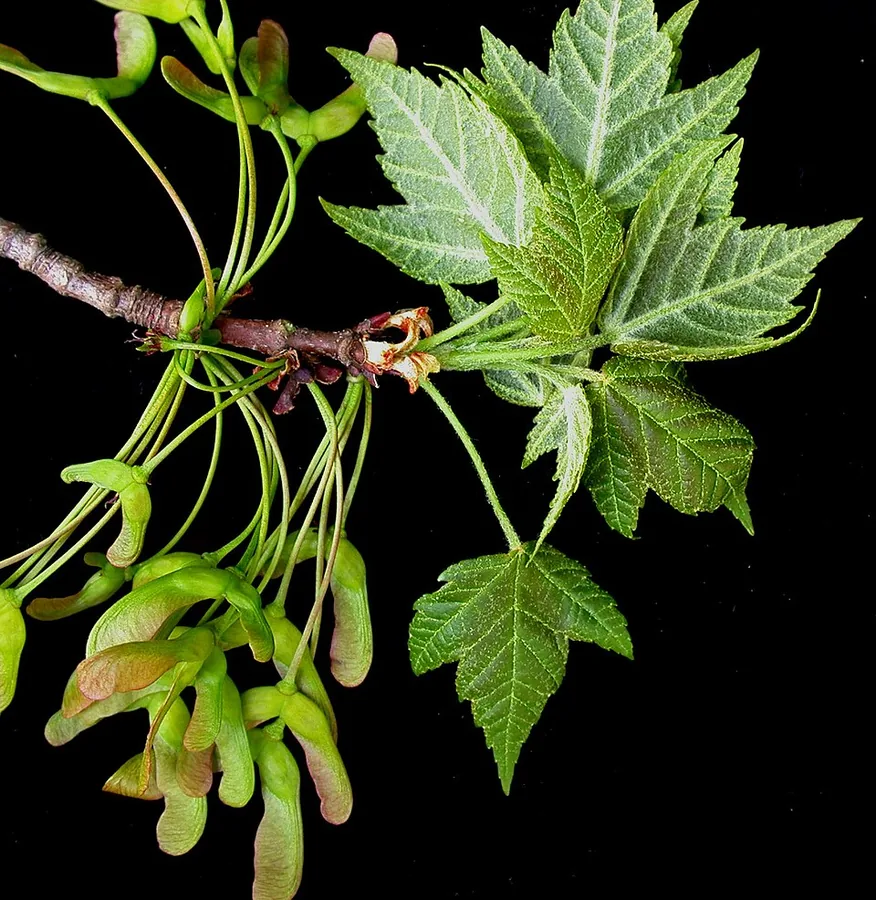
Few trees shape the character of a property the way red maple does, which is part of why it appears in so many yards across eastern North America. It grows fast enough to reward the impatient, adapts to most soils from clay to sand, and stands up to winters as harsh as -40°F (-40°C). Best of all, it keeps the calendar interesting, with red flowers in late winter, red samaras in spring, red leaf stems through summer, and a crescendo of red and orange in fall.
It suits the wilder, wetter corners of a landscape as gracefully as the front lawn, thriving in low, damp ground and along water where few shade trees will settle. There is a practical caveat to weigh before planting. As a soft maple, its quick growth comes with brittle limbs, so it belongs where a storm-dropped branch is an inconvenience rather than a hazard.
Think of it as a long-term investment in shade and curb appeal, and give it the room such a tree deserves. A mature red maple rises past 40 feet (12 m) with a generous crown and roots that spread wide and shallow, enough to unsettle a nearby walk or driveway. Sited well back from paving, it rewards a household with decades of easy, season-turning beauty.
Care
The short version: place it in full sun to part shade on moist, slightly acidic soil, and keep it watered through its early years. Feeding is rarely part of the routine, though a little early structural pruning keeps its brittle frame sound against storms.
Light
Give it full sun for the fullest effect, though partial shade suits it as well. An open, sunlit position tends to deepen the fall color and build a denser crown, making the most of the tree's yearly display.
Water
The tree favors moist ground and takes wet sites and the occasional flood in stride, an easy fit for a low or damp part of the yard. Water young and street trees through dry spells, and once established it settles into medium-to-wet soil with little fuss.
Soil
Ordinary, well-drained soil serves it well, and it adapts across clay, loam, and sand. Its preference, though, is moist and slightly acidic ground at pH 4.5 to 6.5. Let the soil climb past about pH 6.5 and the foliage begins to pale as manganese and iron slip out of reach.
Temperature
This is a tree at home in a demanding climate, at ease across a broad -40°F to 100°F (-40°C to 38°C) and steady through USDA zones 3 through 9. Winter, in other words, is seldom the limiting factor.
Humidity
Ambient humidity never enters the equation here, and everyday outdoor air is entirely enough. What matters to the tree is steady moisture at the roots, not the moods of the air around it.
Feeding
In reasonable soil an established red maple asks for no feeding at all. Should a boost be wanted, a balanced or low-nitrogen, higher-potassium blend in spring will do. Where the ground runs alkaline, the answer is less about fertilizer and more about easing manganese chlorosis through soil acidification or a micronutrient treatment.
Pruning
Prune in late summer or fall to spare the tree the heavy spring sap bleeding common to maples, clearing away dead, weak, and crossing limbs. Because the wood is brittle, the early years are the time to remove narrow, weak branch angles that a storm might claim.
Repotting
none
Size & spacing
This is a tree of real presence, commonly 40 to 70 feet (12 to 21 m) tall with a crown reaching 30 to 50 feet (9 to 15 m) across. Plan for that scale and keep it well back from sidewalks and driveways, since its shallow roots will unsettle paving in time.
When to plant
A tree meant to outlast its planters keeps a short, unfussy planting season. Set young trees in place during the mild stretches of spring or fall, then let time do the work. The reward arrives on schedule, from red flowers in late winter to samaras in spring and the celebrated color of fall.
Northern hemisphere
Southern hemisphere
Typical months for a temperate climate: start earlier in warm zones, later where spring frosts linger.
- Plant: Spring or fall
- Harvest: Red flowers late winter to early spring (roughly January-April); red to yellow samaras mature in spring; brilliant red-orange-yellow foliage in fall.
Hardiness
USDA hardiness zones: 3–9
Temperature: down to -40°C
Troubleshooting
A well-placed red maple asks for little, yet a few issues deserve a knowing eye. Nearly all of them come back to overly alkaline soil, a fungus in the ground, or the soft wood the tree is known for. Read the symptom, then respond before a small flaw dims the display.
One-sided wilt claiming whole branches
This is verticillium wilt, a soil fungus that invades the tree's water channels and shuts down branch after branch. Lift the bark on a failing limb and green-to-black streaking usually shows in the sapwood, alongside undersized leaves and a heavy crop of seed. There is no cure, so remove and destroy the affected wood, disinfect tools between cuts, and keep the tree watered to help it endure.
Fix:
- Prune out and destroy (burn or landfill) dead branches; do not compost
- Disinfect tools with 10 percent bleach or 70 percent alcohol between cuts
- Water and fertilize with low-nitrogen, higher-potassium fertilizer to support recovery
Pale, yellowing leaves against green veins
The trouble is manganese chlorosis, which surfaces when soil pH edges above pH 6.5 to 7.0 and puts the tree's iron and manganese out of reach. Limestone, concrete, and over-liming near foundations and paving are the common offenders. A soil test tells the story, and a shift back toward acidic with elemental sulfur, plus chelated manganese or iron for stubborn cases, restores the color.
Fix:
- Test and lower soil pH toward slightly acidic with elemental sulfur
- Apply chelated manganese or iron as a soil or foliar treatment
- Mulch and improve drainage to reduce nutrient stress
Limbs lost to ice, snow, and wind
As a soft maple, red maple carries brittle wood and, from its quick growth, a frame full of narrow, weak crotches that storms pull apart. Clear broken and hanging limbs promptly with clean cuts, and bring in an arborist for anything large or overhead. The lasting safeguard is structural pruning in the early years, guiding one strong leader and wide branch angles so future storms find little purchase.
Fix:
- Remove broken and hanging limbs promptly with clean cuts
- Structurally prune young trees to favor strong, wide branch angles
- Consult an arborist for large or hazardous limbs
Toxicity
In a home shared with cats and dogs, red maple sits comfortably and safely. The genuine concern is reserved for horses, and it is grave: wilted or dried red maple leaves destroy a horse's red blood cells and can kill within days. Keep horses well clear of fallen branches, raked leaves, and prunings.
Toxic to
Horses · Rabbits · Livestock · Birds
Safe for
People · Cats · Dogs
Horses Severe
This is the grave exception. Wilted or dried red maple leaves destroy a horse's red blood cells, and the first signs are weakness, a poor appetite, and a dull, listless mood. Watch too for brown or bluish gums, red-brown urine, colic, and laminitis, and summon a vet at once, since death can follow within 18 hours to 10 days and pregnant mares may abort.
Rabbits Caution
No safe-feeding data exists for rabbits, and the same blood-cell toxin could well affect them, so keep red maple leaves and prunings away from the hutch.
Livestock Caution
Cattle, sheep, goats, and other grazers are best kept off wilted maple leaves and fallen branches, since the toxin that fells horses may reach related animals too.
Birds Caution
How birds respond remains largely unknown, so treat the wilted leaves as a risk and keep poultry and pet birds from foraging on raked clippings.
Cats None
The ASPCA lists red maple as non-toxic to cats, so a curious nibble is nothing to give a second thought.
Dogs None
Dogs share the tree without issue. It holds no toxicity for them, and a mouthful of fallen leaf or samara will not make a dog ill.
People None
Red maple poses no genuine danger to people. It is not a food plant, yet handling the tree, its leaves, and its seeds is entirely harmless.
Horse owners must keep horses away from red maples and, critically, from fallen branches and raked or wilted leaves, which are the deadly form. Do not dump maple prunings or leaves where horses can reach them. The tree poses essentially no toxicity risk to cats or dogs.
Helpline numbers

United States
ASPCA Animal Poison Control: (888) 426-4435 (fee applies)

United Kingdom
Animal PoisonLine: 01202 509000 (fee applies)

Australia
Animal Poisons Helpline: 1300 869 738
Varieties
The red maples worth seeking out for a designed landscape are named cultivars, chosen for reliable autumn color and a refined, dependable silhouette. These are the names to know.
October Glory
A landscape staple for its dependable red-to-orange fall color, which arrives late and holds for weeks.
Red Sunset (Franksred)
One of the most widely planted maples, prized for a strong orange-red autumn on a vigorous, gracefully upright frame.
Brandywine
A seedless male selection that turns brilliant scarlet in fall before settling into a rich reddish purple.
Red Rocket
A slim, columnar tree of about 40 feet (12 m) tall and only some 15 feet (5 m) wide, made for narrow, awkward spaces.
How to propagate
Red maple takes to seed with ease, though a seedling's fall color is anyone's guess. For a cultivar's exact character, growers turn instead to cuttings or grafting.
SeedEasy
Sow fresh samaras in late spring to early summer as they ripen; some seed lots benefit from cold stratification. · 1 to 2 growing seasons
Seed is the effortless path to more trees. Sow the winged samaras fresh in late spring to early summer as they fall, chill any reluctant lots with cold stratification, and allow one to two growing seasons for them to establish. Bear in mind that seedlings vary, fall color most of all, so a named cultivar will not come true this way.
Stem cuttingsModerate
Take softwood cuttings in early summer. · Several weeks to root, then a season or more to establish.
Softwood cuttings are an option, if an unreliable one. Take them in early summer, expect several weeks for roots to appear, and count on a season or more before the young tree is properly established.
GraftingDemanding
Bench graft or bud in the dormant or growing season onto seedling rootstock. · 1 or more seasons
Grafting is the nursery's method for holding a cultivar true, since it never comes true from seed. Bench graft or bud onto seedling rootstock in the dormant or growing season, then allow a season or more for the union to knit and grow on. It is demanding work, best entrusted to experienced hands.
Myths
Red maple is unsafe to plant around cats and dogs.
The ASPCA lists it as non-toxic to both. The serious, sometimes fatal danger belongs to horses that eat wilted or dried leaves, which means a household of cats or dogs has nothing to fear from the tree.
Only red maple's seeds or bark are a threat to horses.
The toxin gathers in the leaves, not the seeds or bark. Wilted or dried fallen leaves are the most dangerous form of all, while the fresh green leaves on the tree carry far less risk.