Ornamental · Poaceae
Buffalo Grass
Bouteloua dactyloides
The quietly elegant native lawn that stays green on a fraction of the water.
Full sun
Every 14–28 days
28–120 days
USDA 3–9
Overview
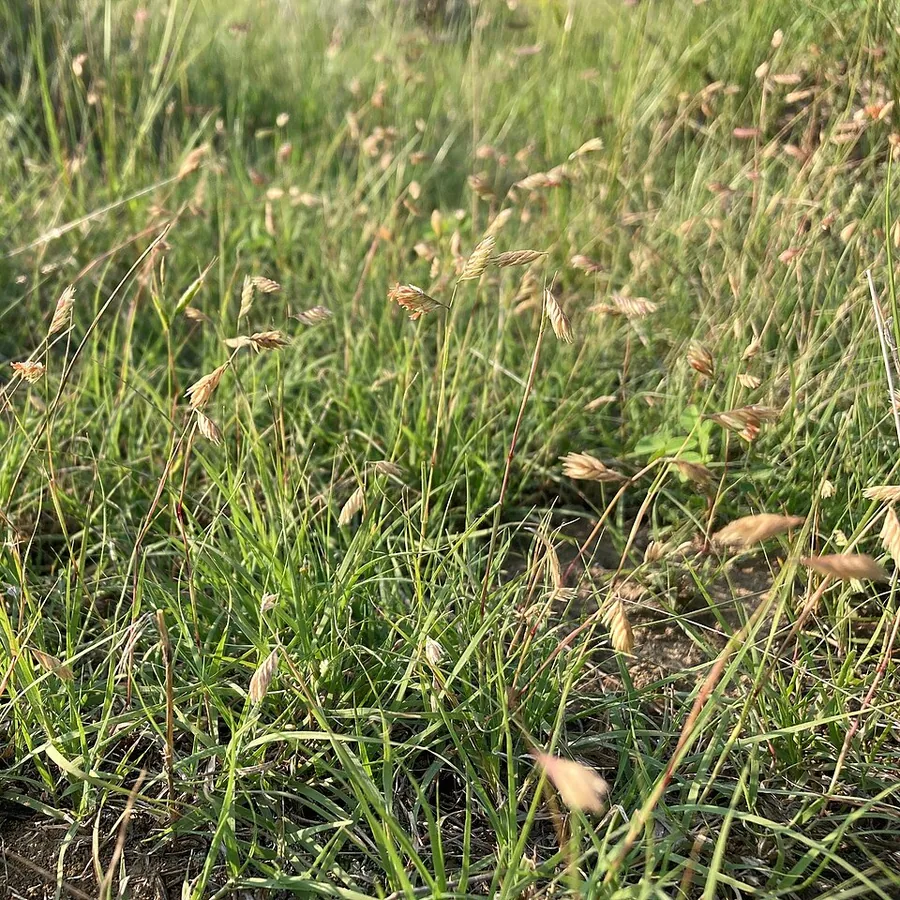
Buffalo grass makes the case for a softer, slower kind of yard. A warm-season native of the shortgrass prairie, with roots from central Canada to Mexico, it settles into a low, blue-green to gray-green carpet that reads more open meadow than manicured lawn. For a home that leans natural and unfussy, set in dry country on heavier soil, it sets the whole tone of the place.
Its appeal is the ease it brings to daily life. Running on 50 to 75 percent less water than a Kentucky bluegrass lawn, with barely any feeding, it frees up the weekend that a conventional lawn quietly claims. Mow it on occasion for a tidy look, or let it grow into a relaxed meadow that sways at the edges of a path. The honest trade-off is that it browns in winter and deep drought, and it prefers sun and calm corners over shade and busy thoroughfares.
Let it be the lean prairie grass it is and the look takes care of itself. A full-sun spot on well-drained ground, a light hand with the hose and the feed, and the lawn stays even and uncluttered. Over-tend it the way you might a formal lawn, though, and you trade that effortless look for the weeds and disease it was meant to keep at bay.
Care
The short version: full sun and well-drained, heavier soil, very little water once it has settled, a light feeding at most, and mowing kept optional for the look you want.
Light
Buffalo grass wants an open, sunny spot, drinking in at least 6 to 8 hours of direct light a day. Shade is its weak point, so it thins under trees and along the north side of the house while the bright, open stretches stay full, which is worth keeping in mind when you place it in the yard.
Water
This is the heart of its low-key charm: once settled, it lives on 1 to 2 inches of rain or water every 2 to 4 weeks in summer. More water does it no favors and invites weeds and disease instead, so reserve generous watering for the early days while a new planting takes hold.
Soil
It is most at ease in well-drained, heavier clay or clay-loam soils of dry country and looks tired in sand. High-pH ground can bring on iron chlorosis, a yellowing of the blades, though it accepts a wide pH range from 6.0 to 8.5 and rarely makes a fuss about it.
Temperature
Few lawns are this unbothered by the seasons, holding from about -29°F to 104°F (-34°C to 40°C) across USDA zones 3 to 9. It greens up later in spring and browns earlier in fall than cool-season lawns, settling into dormancy as part of its natural cycle rather than failing.
Humidity
Its home is low-humidity, low-rainfall country, and it loses its composure where the air stays wet. Damp, muggy settings let cool-season weeds intrude, so it suits dry climates far better than humid ones and looks its best there.
Feeding
A light touch keeps it elegant: 0 to 2 lbs of nitrogen per 1000 sq ft a year is plenty, split between late May to mid-June and late July. Over-feeding is the quickest way to trade an even lawn for a weedy one.
Pruning
Mowing is a matter of taste here. For a neat lawn, cut it to about 2 to 3 inches every 7 to 14 days; for a relaxed meadow, leave it at 4 to 8 inches or mow just once or twice a year. Once established it asks for no mowing at all.
Repotting
none
Size & spacing
The turf keeps a low, calm profile at 2 to 8 inches (5 to 20 cm) tall, spreading by stolons to 6 to 12 inches (15 to 30 cm) per plant so it gradually closes into a single, continuous carpet across the space.
When to plant
Buffalo grass keeps a warm-season rhythm, so the calendar follows the heat and folds easily into the year. Sow it from spring through late July, or dormant-seed in late fall for a spring debut, and lay plugs or sod after the last frost, with June the ideal moment. Its understated flowers pass quietly from June to August, never asking for attention.
Northern hemisphere
Southern hemisphere
Typical months for a temperate climate: start earlier in warm zones, later where spring frosts linger.
- Plant: Seed treated burrs in spring through late July, or dormant-seed October to December for spring germination; set plugs or sod after the last spring frost and at least 6 weeks before the first fall frost (June is ideal).
- Harvest: Inconspicuous green flowers June to August; dioecious, with male plants holding small comb-like spikes above the turf.
Hardiness
USDA hardiness zones: 3–9
Temperature: down to -40°C
Troubleshooting
Most of what goes wrong with buffalo grass traces back to caring for it like a thirsty formal lawn, or planting it where the setting works against it. Read the lawn before reaching for the hose, since brown is usually a season, not a loss. Find the look you are seeing below, then adjust either the routine or the placement.
Thinning turf taken over by weeds
A buffalo grass lawn that turns lush and weedy is usually being kept like a formal one. Too much water and nitrogen hand cool-season weeds the foothold they want, and a damp, high-rainfall setting only encourages it. Ease the watering back to 1 to 2 inches every 2 to 4 weeks in summer, lighten the feed, and lift weeds by hand while the stand quietly closes back over.
Fix:
- Cut back irrigation to only what is needed (about 1 to 2 inches every 2 to 4 weeks in summer)
- Reduce nitrogen to 0 to 2 lbs per 1000 sq ft per year
- Remove weeds by hand or spot-treat, especially in the first one to two years
- Avoid scalping; mow at 2 to 3 inches or leave unmowed
Shady ground where the stand thins
Buffalo grass is a sun plant with poor shade tolerance, so it thins wherever the light drops below about 6 hours of direct sun a day. The open, sunny reaches of the same lawn stay full, which tells you where it wants to be. Keep it for the bright parts of the yard and let a shade-tolerant groundcover carry the look under trees and on the north side of the house.
Fix:
- Relocate buffalo grass to full-sun areas
- Use a shade-tolerant grass or groundcover under trees and on the north sides of structures
Worn trails across a well-used lawn
Buffalo grass has poor wear and traffic tolerance, so thin patches appear right along the routes feet and tires take. Paths and play areas wear while the rest of the lawn keeps its even surface. Reroute the daily traffic, or place a tougher grass where the wear concentrates, and look to another grass entirely for small, well-used yards and sports fields.
Fix:
- Limit concentrated traffic on buffalo grass
- Reroute paths or use a more wear-tolerant grass in high-traffic zones
A brown lawn lingering into spring
A brown buffalo grass lawn is nearly always just normal dormancy, part of its seasonal character rather than a decline. As a warm-season grass it fades after the first hard frost and can also rest through a long summer drought, then returns with warmth or water. The crowns stay alive beneath the surface, so the graceful response is to wait for mid- to late spring, or offer a light watering if you would like the color back sooner.
Fix:
- Wait for warm temperatures in mid- to late spring for green-up
- Apply light irrigation to break drought dormancy if green color is desired
- Accept brown dormancy as normal for this species
Toxicity
For a home shared with animals, buffalo grass is an easy choice: it is non-toxic and absent from the ASPCA's list of poisonous plants. Out on the range it is grazing forage, which makes it safe company for cats, dogs, and livestock. The only note for sensitive households is that grass pollen can stir up allergies in some people or pets.
Safe for
People · Cats · Dogs · Horses · Rabbits · Livestock · Birds
Cats Safe
Cats can share the space with it freely. It stays completely safe for cats, and a nibbled blade that comes back up later is only the texture at work, the way grass everywhere can unsettle a stomach, with no real harm done.
Dogs Safe
Dogs can run, roll, and graze on it without worry. The only thing to watch is the odd bout of grass-eating that ends in a little vomit, which comes down to texture, not any poison.
Horses Safe
It is good pasture grass, and horses graze it freely with no toxic risk.
Rabbits Safe
Rabbits can browse buffalo grass as part of a normal forage diet, since it holds nothing that would upset them.
Livestock Safe
Out on open range, goats, sheep, and cattle have long made a meal of buffalo grass. It stands as wholesome pasture forage, posing no threat.
Birds Safe
Birds are safe around it and feed on the seed, with nothing in the plant to pose a threat.
People Safe
The grass is harmless to people. The one caveat is that grass pollen can set off hay fever in those who are sensitive, an allergy rather than poisoning.
Like any grass, pets may nibble it and occasionally vomit, and grass pollen can trigger allergies in sensitive people or animals, but the plant itself is not poisonous.
Varieties
Buffalo grass comes in named cultivars that split between plug-planted female types prized for fine, even turf and seeded types you can sow yourself. These are the selections you will come across most.
Legacy
Legacy is a plug-planted female cultivar that delivers a dark green, dense, low lawn of top turf quality with almost none of the scratchy male flower stalks, the choice for a polished, even surface.
Prestige
Prestige, another plug-planted female, offers bright green color, better chinch bug resistance, an earlier spring green-up, and color that lingers longer into fall.
UC Verde
UC Verde is a fine, dense, low female cultivar the University of California bred for the warm low desert and California heat.
Cody
Cody is a widely adapted seeded cultivar with good density and drought tolerance that breeders often measure newer types against.
Bowie
Bowie is a medium green seeded cultivar with fine texture, good density, quick establishment, and solid winter hardiness.
Texoka
Texoka is an older seeded cultivar still easy to find for both lawns and range plantings.
How to propagate
There are two ways to begin: seed, for the patient who do not mind the work, or plugs and sod, for a quicker, more even result that settles the look sooner.
SeedModerate
Spring through late July, or dormant-seed October to December for spring germination · Full coverage in one season at higher seeding rates; can be labor intensive
Sow treated seed burrs from spring through late July, or dormant-seed them October to December so they rise the following spring. At the higher end of a 1 to 3 lbs per 1000 sq ft rate the stand can close in a single season, though it does call for some labor. Drought tolerant as the grass is, water it freely while it finds its footing.
DivisionEasy
After last spring frost, at least 6 weeks before first fall frost (June ideal) · Plugs can fill in within about 4 to 6 weeks when set closely
Set plugs at least 2 inches across and 2.5 inches deep, spaced anywhere from 6 to 24 inches apart, after the last spring frost and at least 6 weeks before the first fall frost, with June the ideal window. Closer spacing lets the stolons knit together faster, and tight plantings can fill in within about 4 to 6 weeks. Sod is there too when you want the look complete from day one.
Myths
For a polished look, buffalo grass has to be watered and fed just as often as any Kentucky bluegrass or fescue turf.
It is a low-input native, and the polish you might lavish on a formal lawn works against it. Generous water and fertilizer open the stand to weeds and disease, the very opposite of the easy look you were after. Once established it gets by on 50 to 75 percent less water than Kentucky bluegrass and only 0 to 2 lbs of nitrogen per 1000 sq ft a year, so restraint is what keeps it looking effortless.