Ornamental · Poaceae
Centipede Grass
Eremochloa ophiuroides
Feed it sparingly, never lime it, and centipede grass holds an effortless lawn green all season.
Full sun
Every 5–7 days
42–56 days
USDA 7–9
Overview
Some lawns demand a schedule. Centipede grass offers a mood instead. It is the grass for a yard meant to be lived in rather than fussed over, the kind of soft, apple-green ground that invites bare feet on a slow Sunday. Earning its nickname lazy man's grass, it spreads quietly on runners called stolons and settles into a calm, unbroken carpet across the warm Southeast.
Its slow growth sets the whole tone of the yard. Fewer mowings mean more weekends left for the porch and the shade, and a lawn that stays composed with little intervention. The one boundary to design around is climate: it weathers winter lows only to about 10°F (-12°C), which makes it a natural fit for USDA zones 7 to 9 and an awkward guest where the season turns severe.
The secret to that ease lies underfoot. Centipede grass prefers poor, acidic soil and very little nitrogen, so the heavy-handed routine other lawns expect works against the relaxed look you are after. Honor its modest appetite and the yard keeps its unhurried, put-together character on its own.
Care
The short version: full sun, deep and infrequent watering, acidic soil, and a restrained approach to feeding. Mow it low, leave the lime aside, and let the lawn keep its slow, easy pace.
Light
Centipede grass looks its best in full sun, the open, light-filled yard where it reads as a clean expanse, though it accepts light or partial shade better than most warm-season lawns. A heavily shaded corner thins over time, so reserve the dimmest spots for beds and give the lawn the open sky.
Water
Water deeply but seldom rather than chasing a daily routine. A settled lawn wants about 1 inch (2.5 cm) a week, soaking the soil 5 to 7 inches down, and a slight wilt between waterings draws the roots lower and keeps the surface looking even. An early start before sunrise lets the blades dry off and the yard stay crisp.
Soil
This grass favors infertile, acidic, sandy ground that drains freely, with a pH of 5.0 to 6.0 as its preferred footing. Skip heavy clay and soggy, poorly drained spots, since wet ground invites the disease that breaks the smooth look of a lawn.
Temperature
Centipede grass carries summer heat to about 95°F (35°C) with ease and holds through winter lows near 10°F (-12°C), the edge of its range. Past that point cold does real damage, which is why it belongs to the warmer southern yards where it keeps its composure.
Humidity
Everyday outdoor humidity suits it, so there is no figure to manage. What shapes the lawn far more is good drainage and steady airflow, since muggy, slow-drying turf is where large patch and dollar spot first mar the surface.
Feeding
A light hand keeps the look refined. Centipede grass asks only about 1 pound of actual nitrogen per 1,000 square feet a year, parceled into small feedings from spring green-up through fall. Should the color cool on higher-pH soil, turn to iron, not lime, since added lime works against the lawn rather than for it.
Pruning
Mow at 1 to 2 inches (2.5 to 5 cm) for that low, tailored finish, never taking more than a third of the blade in a single pass. When heat or drought sets in, lift the deck a notch so the lawn keeps more leaf and holds its color through the stress.
Repotting
none
Size & spacing
The lawn stays low and even, around 1 to 2 inches (3 to 5 cm) tall, while each plant reaches outward on stolons to cover 1 to 3 feet (30 to 100 cm). That slow, deliberate spread is how a scattering of plugs and sprigs eventually reads as one unbroken ground across the yard.
When to plant
Centipede grass is a warm-season grass, so the calendar follows the warmth rather than the wish. Plant from April through July to give a new lawn a full, generous season to settle, and pass on fall planting, since young turf carries winter cold poorly and the look suffers for it.
Northern hemisphere
Southern hemisphere
Typical months for a temperate climate: start earlier in warm zones, later where spring frosts linger.
- Plant: Seed, sod, plug, or sprig from April to July so the grass establishes over a full warm season; avoid fall seeding due to winter cold injury risk.
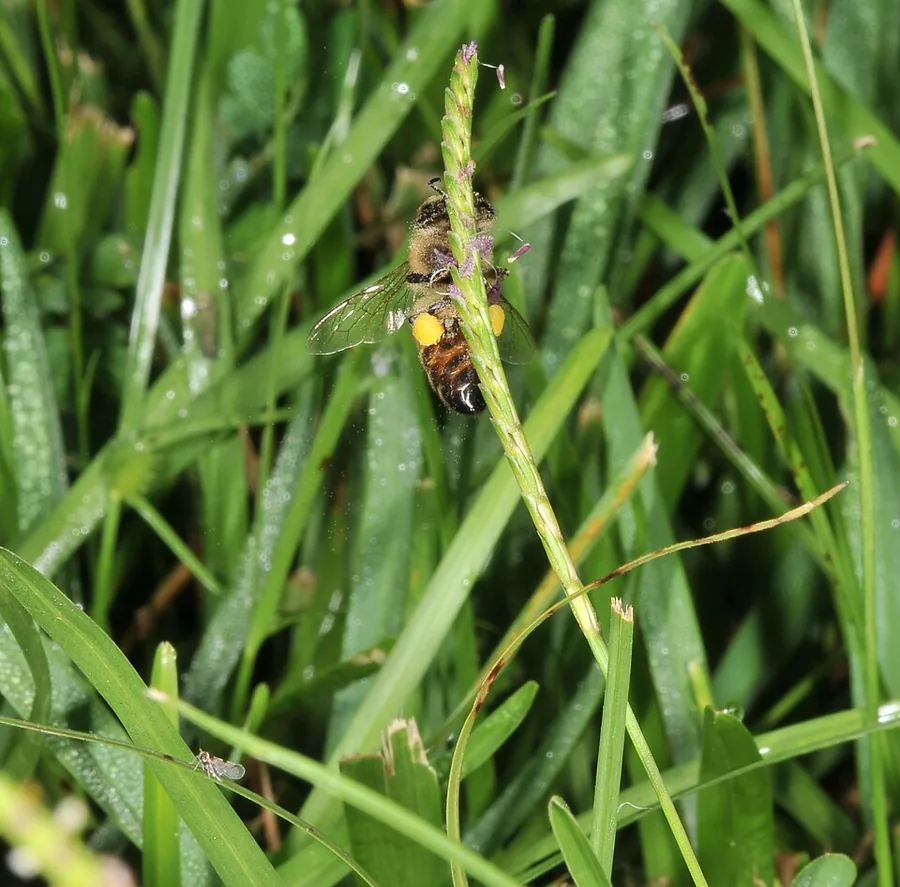
- Harvest: Inconspicuous seedheads on slender spikes in summer; grown for turf, not bloom.
Hardiness
USDA hardiness zones: 7–9
Temperature: down to -18°C
Troubleshooting
Most trouble in a centipede lawn comes from caring too eagerly. Overfeeding, liming, and a daily run of the sprinkler undo more lawns than any pest ever could. Match what the yard is showing below, then step back and let the lawn settle rather than intervene harder.
Uneven spring color and turf that lifts at a touch
A lawn that wakes unevenly in spring and then yellows in patches that lift away is showing centipedegrass decline, the slow unraveling that follows years of over-attentive feeding. Heavy nitrogen builds thatch, high soil pH locks up iron, and the roots stay shallow until sections give out and the smooth look breaks. Ease the fertilizer back to about 1 pound of nitrogen per 1,000 square feet a year, keep the soil acidic near a pH of 5.5, and dethatch lightly so the roots can settle in again.
Fix:
- Stop heavy feeding; apply no more than about 1 lb nitrogen per 1,000 sq. ft. per year in small splits
- Correct soil pH toward 5.0-6.0 and base phosphorus and lime only on a soil test
- Reduce thatch with light vertical mowing and core aeration, and raise mowing height during stress
An all-over yellow cast that peaks early in spring
When the whole lawn cools to a pale cast while still standing thick, the cause is usually iron chlorosis rather than hunger. Once soil pH climbs above about 6.5 the grass can no longer draw iron from the ground, and cold spring soils deepen the washed-out look. A foliar spray of ferrous sulfate restores the green within days, but the lasting answer is to keep the soil acidic and leave the lime out of the routine.
Fix:
- Apply ferrous sulfate at about 1 tablespoon per 3 gallons of water per 1,000 sq. ft., repeating every 2-4 weeks as needed
- Lower soil pH over time with sulfur per soil-test guidance
- Avoid lime and high-phosphorus fertilizers
Sparse patches of turf that come away in the hand
When turf pulls up like a loose mat and recovers slowly, the trouble sits below the surface. Ring nematodes and ground pearls both feed on the roots, and neither answers to anything sprayed on a lawn. Send a soil and root sample for a nematode assay to confirm it, then keep the stand composed with the right light feeding, steady moisture, and core aeration to ease compaction.
Fix:
- Improve overall vigor with proper low fertility, correct pH, and good watering since no rescue treatment cures nematodes or ground pearls in lawns
- Relieve compaction with core aeration
- Reduce thatch to encourage deeper roots
Circles of browned turf appearing through muggy stretches
Circular dead spots that widen through humid spells are the mark of large patch, a Rhizoctonia fungus, sometimes with dollar spot in the mix. The disease thrives on excess nitrogen and on blades that stay wet overnight. Water before sunrise so the lawn dries quickly, keep the feeding light through spring and fall, and turn to a labeled fungicide only when the damage threatens the look of the whole yard.
Fix:
- Water early in the day so foliage dries quickly
- Avoid excess nitrogen, especially in spring and fall
- Apply a labeled turf fungicide only if the problem is severe
Toxicity
Centipede grass is safe, which is part of why it suits a relaxed household yard. It sits on no toxic-plant list, so pets, livestock, and people share it freely. The only note for the calendar is grass pollen, which can stir hay fever in anyone already sensitive to it.
Safe for
People · Cats · Dogs · Horses · Rabbits · Livestock · Birds
Cats Safe
A cat can nibble centipede grass without harm. The most a household might notice is the occasional hairball, or a little vomiting after a long blade goes down, which is simply the grass coming back up rather than anything poisonous.
Dogs Safe
Dogs graze on lawn grass all the time, and centipede grass is one of the safe ones to share a yard with. A dog that gulps a big mouthful may bring it back up, but the blades themselves carry nothing toxic.
Horses Safe
Horses can graze it freely, with no risk of poisoning.
Rabbits Safe
Rabbits can crop it as part of their forage without trouble. Introduce any new green slowly, as with any fresh grass, so a sensitive gut has time to adjust.
Livestock Safe
A centipede lawn poses no hazard where larger animals roam. Cattle, sheep, and goats may browse it freely without any risk of poisoning.
Birds Safe
Birds fit easily into the picture. Hens and other backyard flocks can sample both blades and seedheads without any ill effect.
People Safe
The lawn poses no danger to people. The one thing to keep in mind is that grass pollen can set off hay fever in someone already sensitive to it.
Pets may nibble grass and occasionally vomit, and grass pollen can trigger allergies in sensitive people or animals, but the plant itself is not toxic.
Varieties
Only a couple of types really shape the look of a lawn, and they cover most yards. Here is how they set themselves apart.
TifBlair
An improved selection that carries cold and freezes more gracefully than the rest, fills in faster, and keeps its green well into fall for a longer good-looking season.
Common centipede
The familiar apple-green standard that creeps low and slow, and the one most homeowners choose when they simply want a relaxed, hands-off lawn.
How to propagate
A centipede lawn can begin modestly from seed or arrive sooner with sod, plugs, or sprigs, depending on the budget and the timeline. Either way, the project rewards patience, because this is a grass that keeps its own unhurried schedule.
SeedModerate
April to July · Slow; full coverage from seed can take 2 to 3 years
Seeding is the gentlest start on the budget, and also the most patient. Sow from April through July, watch for sprouts in about 2 to 3 weeks, and settle in for the long view, since a full, knit-together lawn can take 2 to 3 years to fill in.
DivisionEasy
Late spring to summer · One season for sod; longer for plugs or sprigs
Sod, plugs, or sprigs arrive at the finished look faster and more reliably than seed. Lay them from late spring through summer, with sod knitting into a single season while plugs and sprigs take a bit longer to close. Worth remembering for the layout: centipede grass spreads only by above-ground stolons, with no underground rhizomes to hurry the coverage along.
Myths
A centipede lawn keeps its lush green only when it enjoys the same generous feeding and liming routine as every other lawn.
Its style is built on restraint, the opposite of the usual lawn routine. Centipede grass thrives on low nitrogen and acidic soil, so the heavy feeding and liming that suit other turf are exactly what bring on iron chlorosis and the slow collapse known as centipedegrass decline. The effortless look comes from doing less, not more.