Ornamental · Convolvulaceae
Cardinal Climber
Ipomoea × multifida
Set it in full sun and lean soil, and this quick vine drapes a screen of scarlet trumpets that hummingbirds work all summer.
Full sun
Every 3–7 days
50–95°F · 10–35°C
60–75 days
Overview
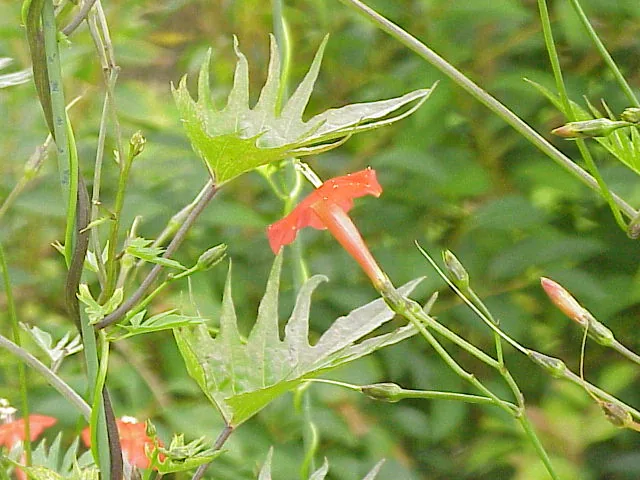
Cardinal climber is the fast, easy way to turn a bare trellis or fence into a living screen in one season. A member of the morning-glory family, it comes from crossing cypress vine with red morning glory, and the pairing gives you small scarlet trumpets against deeply cut green cover that softens a hard line by the patio or arbor. The hummingbirds that come for those blooms are part of the appeal.
It climbs with real pace and reaches 6 to 15 feet (1.8 to 4.5 m) in a warm summer, so give it a support to grip from day one and let it frame a view from the kitchen window or fill a sunny corner. Only the warmest zones hold it over as a perennial; nearly everywhere else it plays the part of a fresh annual, sown again each spring once the frost has gone.
The look comes cheap in effort. A bright, open spot and ordinary, well-drained soil are all it asks, and over-tending only repays you with leaves where you wanted flowers. The single habit to keep an eye on is its eagerness to self-seed, which can leave volunteers in next year's bed.
Care
The short version: full sun, average to lean well-drained soil, and about an inch of water a week. Skip the feeding, give it a support to dress, and snip the green seed pods if you would rather it stayed put.
Light
Give cardinal climber full sun and it rewards you with the fullest flush of bloom for a screen or fence. It tolerates partial sun or light shade, but every shaded hour trades flowers for leaf, so a bright, open spot earns its keep in the display.
Water
Aim for about 1 inch of water a week and keep the soil evenly moist while the vine settles into its spot. It rides out short dry spells once established, though steady moisture keeps the most flowers on show across the season.
Soil
Plant it in average to lean, well-drained loam or sandy soil, anywhere from pH 6.0 to 8.0. Rich ground works against the look you want, pushing leafy vine and few flowers, so resist the urge to load the bed with compost.
Temperature
This is a warm-season vine that performs between 50°F and 95°F (10°C to 35°C). It wants warm soil to get moving and frost closes the season, so there is nothing to gain by setting it out early.
Humidity
Ordinary outdoor air suits it, with no humidity figure to chase. What counts is good airflow through the spot you choose, which keeps the dense cover from turning into a refuge for pests.
Feeding
It needs next to no feeding to look its best. Skip the fertilizer in decent ground, and in very poor soil offer only a light balanced feed, since high nitrogen brings leaves where you wanted flowers.
Pruning
Pinch the young tips to coax a fuller, branching vine, and train or trim it along its support as it climbs to keep the screen neat. Snip off the green seed pods when you would rather it did not self-seed into next year's bed.
Repotting
Grown as an annual, it runs a single season and is not carried over, so there is no repotting in the usual sense. In a container by the patio, start fresh each spring in new soil instead of reusing a rootbound pot.
Size & spacing
Plan for a vine that climbs 6 to 15 feet (1.8 to 4.5 m) tall yet stays only 6 to 12 inches (15 to 30 cm) wide, which makes it ideal for a narrow fence line. Give it a tall, sturdy support and a little breathing room so air moves through the foliage.
When to plant
Cardinal climber lives for warmth and has no patience for frost. Sow the seeds indoors a few weeks ahead of your last frost, move the plants out once the soil has warmed, and you can count on the display from midsummer through to the first cold snap.
Northern hemisphere
Southern hemisphere
Typical months for a temperate climate: start earlier in warm zones, later where spring frosts linger.
- Sow: 4-6 weeks before last frost; nick and soak hard seeds first
- Plant: After last frost when soil is warm
- Harvest: Summer to frost
Hardiness
USDA hardiness zones: 10–12
Temperature: down to -1°C
Troubleshooting
Cardinal climber is a forgiving guest in the garden, and the few things that go sideways tend to show in the flowers, the foliage, or as stray seedlings near where it grew. Catch the early signs and you can put the look right before it sulks or strays. Match what you see below, then act.
A tired, sticky screen losing its clean look
A few uninvited guests can take the polish off a vine you see every day. Aphids and spider mites draw sap while Japanese beetles and leaf miners chew through the cover. Look under the leaves and along the new growth, then rinse pests off with a strong jet of water or reach for insecticidal soap or horticultural oil. Pick beetles by hand and pull any mined or badly hit leaves to keep the screen presentable.
Fix:
- Spray off aphids and mites with a strong jet of water
- Apply insecticidal soap or horticultural oil
- Hand-pick Japanese beetles
- Remove and destroy mined or heavily infested leaves
A wall of green with hardly a bloom in sight
When a cardinal climber dressing up your fence stays all foliage, the setting is usually too generous. Too much nitrogen in the bed, or a spot that loses the afternoon sun, steers the vine toward leaf and away from flower. Move it to a bright, open position and ease off the feeding, and the scarlet trumpets return to the view.
Fix:
- Stop high-nitrogen feeding
- Move or train the vine into full sun
- Grow in leaner, well-drained soil
Surprise seedlings turning up the next year
A vine this easy comes with one catch for a tidy garden: it self-seeds freely, more so where summers run warm, and fresh shoots appear right where last year's display stood. Lift the ones that don't fit your plan. To keep the look you want, clip the green seed pods before they ripen and let go.
Fix:
- Pull unwanted seedlings
- Remove developing seed pods before they mature and drop
Toxicity
This is a toxic plant, and the hazard sits squarely in the seeds. They hold indole alkaloids of the LSA type that can cause stomach upset and, in larger amounts, agitation and hallucinogenic effects in pets, livestock, and people. The foliage rates as a milder caution, but plan the planting so the seeds and seed pods stay well clear of animals and children.
Toxic to
Cats · Dogs · Horses · Rabbits · Livestock · Birds · People
Cats Mild
A curious cat brushing the foliage on the patio tends to come away with little more than a queasy stomach and some vomiting. The seeds are where the real risk sits, and a mouthful can bring on agitation, tremors, and a disoriented look.
Dogs Mild
A dog that nibbles a few leaves usually just drools and brings them back up. Let it reach the seeds, though, and you may see a restless, unsteady animal that is plainly off its game.
Horses Mild
Horses sit on the toxic list as well, with the seeds carrying the alkaloids that upset the gut and, in quantity, the nervous system. Keep a grazing horse clear of the vine and any seed pods near the paddock.
Rabbits Caution
The seed alkaloids that bother cats and dogs would land hard on a small grazer, so treat this vine as out of bounds for a rabbit rather than safe browse around the yard.
Livestock Caution
Goats, sheep, and cattle can take in the LSA-type alkaloids if they graze the seeds or seed pods, which risks stomach and nervous-system trouble. Site the vine well away from pasture and fence lines.
Birds Caution
The hazardous compounds live in the seeds, so keep poultry and pet birds from pecking the pods, even though the foliage itself is a lesser worry.
People Caution
Nothing on this vine is grown for the table. The seeds carry indole alkaloids that can bring on stomach upset and hallucinogenic effects, so keep them well out of a child's reach.
Keep seeds and seed pods away from pets and children; the seeds are the hazardous part.
Helpline numbers

United States
ASPCA Animal Poison Control: (888) 426-4435 (fee applies)
Poison Control: (800) 222-1222



Canada
Poison Centres: 1-844-764-7669
Varieties
Cardinal climber is a hybrid, so the names worth knowing belong to its two parents. Both show up in gardens of their own and explain the look this vine brings to a fence or arbor.
Ipomoea quamoclit (cypress vine)
One half of the cross, a vine prized for the soft, feathery screen it casts, with thread-fine foliage that reads more fern than cardinal climber across a trellis.
Ipomoea coccinea (red morning glory)
The other parent, a red-flowered morning glory that drapes a fuller, heart-leaved curtain over a fence rather than the finely cut look of its hybrid.
How to propagate
Cardinal climber comes up easily from seed, and seed is the only route to a new vine. The one step that matters is getting past its tough coat.
SeedEasy
Start indoors 4-6 weeks before last frost or sow outdoors after frost in warm soil · 5-10 days to germinate; weeks to begin climbing
Raising your own cover for the season starts from seed, sown indoors 4 to 6 weeks before the last frost or set outside once the ground has warmed. The seed coat is hard, so nick it and soak the seeds overnight before sowing for an even, reliable stand. Shoots show in 5 to 10 days and need a few more weeks before they begin to climb their support.
Myths
Cardinal climber, cypress vine, and cardinal flower are all the same plant.
Cardinal climber is a cross between cypress vine and red morning glory, and its lobed, palmate leaves land between the two parents in style. Cypress vine gives a finer, feathery screen, while red morning glory drapes broader heart-shaped cover. Cardinal flower (Lobelia cardinalis) is a different plant entirely, an unrelated perennial in another family rather than a climbing annual for an arbor or fence.