Ornamental · Asteraceae
Ageratum
Ageratum houstonianum
Floss flower drifts soft blue from late spring to frost, asking only for full sun and steady moisture.
Full sun
Every 2–4 days
50–86°F · 10–30°C
55–70 days
Overview
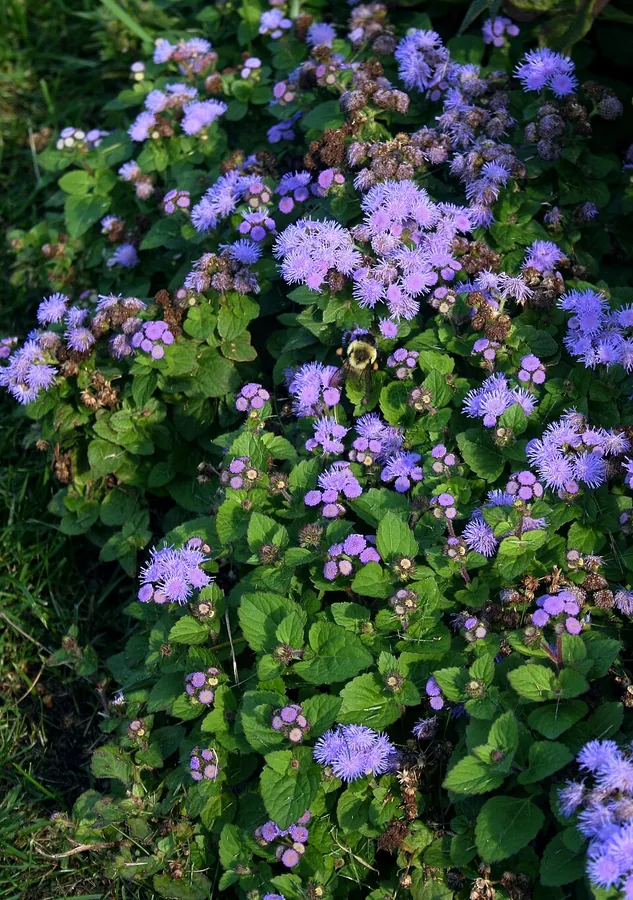
Few annuals offer color quite so cool and quiet as ageratum, the floss flower. A low member of the daisy family, it gathers its soft blue, lavender, and purple into fuzzy clusters that read like small powder puffs, and they keep arriving from late spring until frost. Placed at the front of a border, drawn along an edge, or set in a pot where the color can break over the rim, it lends a planting an unhurried, finished look.
The plants hold a tidy, mounded shape, the bedding forms settling low while the cutting forms rise toward the height of a vase. It keeps company with asters and sunflowers, yet where those open into bold faces, ageratum prefers a soft haze of cool color. A true blue is a rare note in the summer palette, and that scarcity is much of its appeal.
Once established it lives easily, asking for little beyond even moisture and warmth. Allow the soil to dry to the bone and the plant wilts at once, a quick and visible protest. Offer it sun, steady water, and a little air around the foliage, and it returns months of bloom for the lightest attention.
Care
The short version: full sun softened by light afternoon shade in hot summers, rich well-drained soil kept evenly moist, and a monthly feeding through the growing season to hold the blue in steady supply.
Light
Ageratum flowers most freely in full sun, though it accepts partial shade and welcomes a measure of afternoon shade where summers run hot. Too much shade thins the bloom and draws the plants into loose, leggy lines that lose their poise.
Water
Keep the soil evenly moist, watering about every 2 to 4 days, since the plant wilts the moment the ground dries. It asks for consistent moisture rather than wet feet, so drainage counts every bit as much as a regular hand at the hose.
Soil
Set it in rich, well-drained soil worked with organic matter, which holds moisture without lingering in waterlogged pockets. A pH between 6.0 and 7.5 suits it, a range most garden ground reaches with a little compost folded in.
Temperature
The plant thrives in warmth, content from about 50°F to 86°F (10°C to 30°C). Frost it cannot survive, so let spring weather settle before the plants go out into the garden.
Humidity
Ordinary outdoor humidity serves well, and there is no figure to chase. Air movement matters more, for still, humid air pooling around crowded leaves is precisely what powdery mildew favors.
Feeding
A balanced general-purpose fertilizer about once a month through the growing season is all it asks. That light, regular feeding keeps the foliage green and the flowers in steady supply without forcing soft, floppy growth.
Pruning
No real pruning is called for. Deadheading is optional, not required, yet lifting away the spent flower clusters keeps the planting trim and coaxes a fuller, more even show.
Size & spacing
Plants stand between 6 to 30 inches (15 to 76 cm) by type, the dwarf bedding forms low and the cutting forms taller. Allow each one 6 to 18 inches (15 to 46 cm) of room so air moves freely and mildew finds no foothold.
When to plant
Ageratum is a frost-tender annual that bides its time until the weather turns kind. Sow indoors in late winter, about 6 to 8 weeks before your last frost, move the plants out only once frost has passed, and the bloom will carry from late spring through the first hard frost.
Northern hemisphere
Southern hemisphere
Typical months for a temperate climate: start earlier in warm zones, later where spring frosts linger.
- Sow: Late winter, about 6 to 8 weeks before last frost
- Plant: After all danger of frost has passed in spring
- Harvest: Late spring or June through frost
Hardiness
USDA hardiness zones: 2–11
Temperature: down to -46°C
Troubleshooting
Most of what troubles ageratum traces to one of two things: air too still around the leaves, or water too generous at the roots. Read the early signs and the remedy stays simple. Match what you see below, then act before it travels through the planting.
Wilting, yellowed plants slumping out of shape
When a plant yellows, wilts, and gives way despite watering, the cause is most often root rot born of soggy, poorly drained soil. A look at the base turns up soft, brown, mushy roots. A plant this far gone cannot be recovered, so remove it and set the drainage right before anything new takes the spot.
Fix:
- Improve soil drainage before or at planting
- Reduce watering frequency and avoid waterlogging
- Remove severely affected plants
A dusty pale bloom settling over foliage and stems
A dusty white film is the work of powdery mildew, a fungus that settles in during hot, humid spells when air sits still among crowded plants. Open the planting to better airflow, water at the base rather than over the foliage, and lift away the worst-marked leaves. Full sun and steady moisture discourage its return.
Fix:
- Improve air circulation by spacing plants properly
- Avoid overhead watering and water at the base
- Remove and discard heavily infected foliage
Sticky, distorted growth crowded with tiny insects
A sticky sheen and distorted new growth point to aphids or whiteflies at work on the leaves and flower buds. Turn the foliage over and look for soft-bodied aphids or minute white flies that scatter when stirred. A firm jet of water clears most of them, and insecticidal soap settles the stubborn remainder.
Fix:
- Rinse pests off with a strong spray of water
- Apply insecticidal soap if infestations persist
- Encourage natural predators
Mottled, dull-toned leaves veiled in fine webbing
Fine yellow stippling and a thread of webbing reveal twospotted spider mites, which flourish on dry, drought-stressed plants in the heat. Tap a leaf above white paper and the specks begin to move. Water the plant well to ease its stress, rinse the mites clear, and reach for a miticide only should they persist.
Fix:
- Keep plants adequately watered to reduce stress
- Rinse mites off leaves with water
- Apply miticide or insecticidal soap if needed
Toxicity
Lovely as it is, this is not a plant for animals to graze. Ageratum holds pyrrolizidine alkaloids, natural compounds that injure the liver and gather with repeated feeding rather than passing through. A pet that tastes a leaf rarely suffers worse than an upset stomach, but horses, rabbits, and grazing livestock should be kept from it entirely, and no part of the plant belongs on a plate.
Toxic to
Cats · Dogs · Horses · Rabbits · Livestock · Birds · People
Cats Mild
A curious cat that chews a leaf seldom shows more than drooling, vomiting, diarrhea, or a dip in energy. Even so, discourage larger nibbles, since the liver-injuring alkaloids accumulate over time.
Dogs Mild
Most dogs that sample the plant come away with a mild stomach upset, perhaps some vomiting, loose stools, or a flat mood. The true concern is repeated or heavy ingestion, which slowly tells on the liver.
Horses Toxic
Horses are acutely sensitive grazers, and the pyrrolizidine alkaloids gather to scar the liver across weeks of feeding. Watch for weight loss, jaundice, and dull, altered behavior, and keep the plant well beyond their reach.
Rabbits Toxic
Steady foragers by nature, rabbits stand at real risk from the same liver toxins. Offer them no ageratum trimmings, and keep it clear of any run or hutch where one might browse.
Livestock Severe
Cattle, sheep, and goats bear the worst of it. Chronic alkaloid poisoning brings poor appetite, depression, jaundice, swelling, fluid in the belly, and lasting liver damage, so grazing animals must be kept off it entirely.
Birds Toxic
The hepatotoxic alkaloids that harm grazing animals are no safer for birds. Treat the plant as off-limits for poultry and pet birds rather than risk repeated exposure.
People Caution
No part of ageratum is food. The pyrrolizidine alkaloids it holds are known to injure the human liver, so keep children from mouthing it and brew or eat none of it.
Keep grazing animals away; contains liver-damaging pyrrolizidine alkaloids.
Helpline numbers

United States
ASPCA Animal Poison Control: (888) 426-4435 (fee applies)
Poison Control: (800) 222-1222



Canada
Poison Centres: 1-844-764-7669
Varieties
Ageratum sorts into tall stems cut for the vase and low mounds laid down for bedding, and the named selections settle along that divide. The few below are the ones you will meet most often.
Blue Horizon
A tall cutting form rising to about 30 inches, its medium-blue flowers carried high enough to gather for the vase.
Blue Danube
A compact dwarf bedding cultivar that keeps low and trim beneath a veil of lavender-blue flowers.
Hawaii series (e.g. Leilani Blue)
Low mounding bedding ageratums prized for the dense, even blanket of blue they spread across a planting.
How to propagate
Ageratum comes from seed, and that seed is obliging once its single habit is understood. A tray started indoors before the season yields all the plants a bed could want.
SeedEasy
Start indoors in late winter, about 6 to 8 weeks before the last frost; transplant or direct sow outdoors after frost danger passes. · Roughly 1 to 2 weeks to germinate; flowering in about 8 to 10 weeks from sowing.
Begin ageratum indoors in late winter, about 6 to 8 weeks before your last frost, then transplant or direct sow once frost danger has passed. The seed is fine and needs light to germinate, so rest it on the surface and leave it uncovered. Sprouts appear in 1 to 2 weeks, with the first flowers about 8 to 10 weeks after sowing.
Myths
Ageratum is a wholly innocent bloom, safe around both pets and people.
It is not. The plant carries pyrrolizidine alkaloids that injure the liver, so a pet that chews it may take an upset stomach and grazing livestock may suffer lasting harm. Regard ageratum as toxic and keep animals from feeding on it.
Neglect the faded flowerheads and ageratum will simply cease to bloom.
Not so. The plant flowers through the season of its own accord, whether or not the spent heads are trimmed. Deadheading is optional, a refinement that lends a fuller, more even bloom rather than a duty the plant depends upon.