Herb · Apiaceae
Cilantro
Coriandrum sativum
Offer it cool weather and steady moisture, and cilantro returns fresh leaves to your kitchen within weeks.
Full sun
Every 2–4 days
50–75°F · 10–24°C
45–70 days
Overview
Cilantro is the quick, cool-weather herb that lifts a salsa, a curry, or a steaming noodle bowl. A member of the carrot family, it earns its keep twice from one plant: the fresh leaves come to the table as cilantro, and the dried seeds become the spice coriander. Seed to first cutting spans only 4 to 6 weeks, placing it among the speediest herbs a kitchen garden can offer.
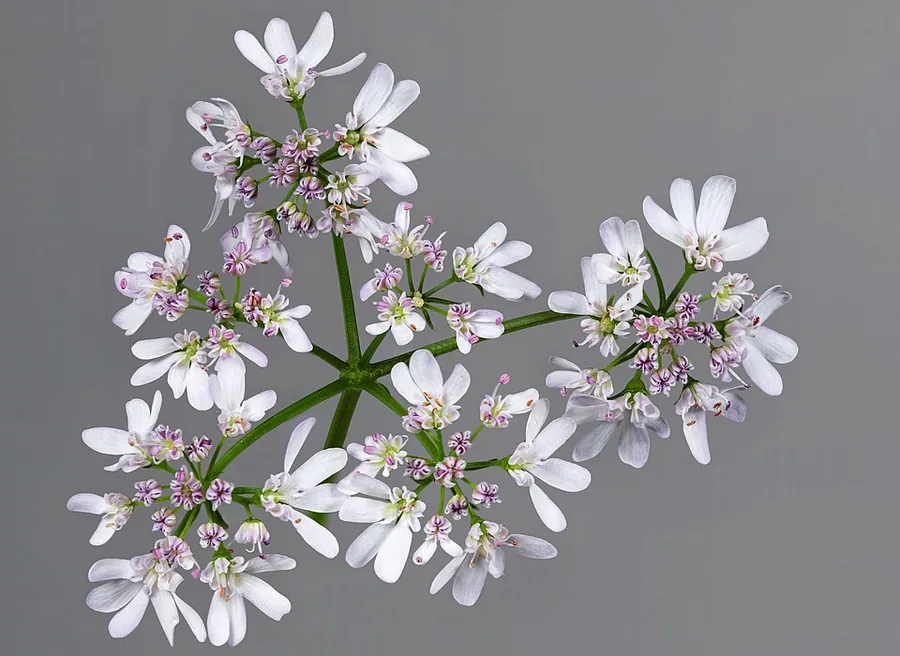
Its temperament is the part to plan around. As a cool-season annual, cilantro responds to summer heat and lengthening days by bolting, throwing up a flower stalk while the leaves go thin and bitter. Good timing settles the matter. Set seed in the cool of spring and again come fall, then keep the look and the supply fresh with a new sowing every few weeks.
It feels at home in a garden bed or in a pot on a sunlit windowsill, rising to 8 to 35 inches (20 to 90 cm) by flowering time. Cool soil, reliable water, and a little afternoon shade in the heat turn a quick-bolting plant into a long, easy run of leaves for everyday cooking.
Care
The short version: full sun with a touch of afternoon shade, soil held evenly moist and on the cool side, and a fresh sowing every few weeks so a bolting plant always has a successor waiting.
Light
Cilantro is at its best in full sun, yet across hot regions a stretch of afternoon shade truly earns its place, keeping the plant cooler and easing its rush to bolt. Set indoors, give it the brightest window in the home.
Water
Hold the soil evenly moist while the plant settles in and builds its leaves, watering every 2 to 4 days as the surface dries. Reliable moisture and cool soil are what keep bolting at bay. Never leave it sitting soggy, though, since cilantro has no love for waterlogged, humid ground.
Soil
Set it in rich, well-drained loam at a pH between 6.0 and 7.0. Drainage is the thing that counts most here, because the taproot rots where the ground stays cold and wet.
Temperature
A cool-season herb at heart, it flourishes between 50°F and 75°F (10°C to 24°C). Push past the upper end of that range and the plant takes it as a cue to flower, drawing the leaf harvest to a close.
Humidity
Average humidity of 40% to 60% suits it well. Still, damp air is the condition to steer clear of, since crowded, humid surroundings are what usher in leaf spot.
Feeding
Cilantro asks for very little at the table. A light hand with nitrogen through the growing season is all it wants, and going heavier only flattens the flavor of the leaves.
Pruning
Begin cutting the outer leaves once plants stand 4 to 6 inches (10 to 15 cm) tall, which keeps them full and giving. Pinch away any flower stalks as they rise to draw out the leaf harvest, or let them remain if you would rather the plant set coriander seed.
Repotting
not_typically_repotted
Size & spacing
Plants reach from 8 to 35 inches (20 to 90 cm) tall, low and leafy early on and taller once the flower stalk climbs. Give each one space and a clear flow of air, set 12 to 24 inches (30 to 60 cm) apart, so the foliage dries fast and leaf spot keeps its distance.
When to plant
Cilantro lives by cool weather, with only a short window before heat pushes it into flower. Set seed in early spring once the frost has gone, sow once more in early fall, and keep the kitchen stocked by starting a fresh patch every few weeks rather than leaning on a single planting to carry the season.
Northern hemisphere
Southern hemisphere
Typical months for a temperate climate: start earlier in warm zones, later where spring frosts linger.
- Sow: Late winter to early spring, 4-6 weeks before last frost (transplants carefully due to taproot)
- Plant: Early spring after danger of frost and again in early fall; it is a cool-season crop that bolts in summer heat
- Harvest: Cut leaves young and often for cilantro; for coriander seed, allow plants to flower and set seed, harvesting when seed heads turn brown
Hardiness
USDA hardiness zones: 3–11
Temperature: down to -40°C
Troubleshooting
Nearly every cilantro setback comes down to one of two causes: heat that prompts bolting, or wet conditions that welcome rot and leaf spot. Spot the early cues and the harvest usually keeps coming. Find the match below, then step in while it can still do some good.
Tiny seedlings keel over at the soil line, or never arrive at all
The trouble here is damping-off, a fungal rot that settles into cold, sodden ground. Seedlings nip off at a water-soaked base of the stem and tip over, frequently before they have even broken the surface. Lift the casualties, dial back the watering, and re-sow into well-drained soil after it has warmed through and dried out.
Fix:
- Remove affected seedlings
- Improve drainage and reduce watering frequency
- Re-sow in well-drained soil once conditions allow
The harvest stalls as a flower stalk climbs skyward
Call it bolting, the single most familiar disappointment in any cook's cilantro patch. As warmth gathers and the days stretch out, the plant trades leaf-making for flowering, the foliage thins to a feathery wisp, and the flavor slips away. Gather whatever leaves remain, or let it bloom and carry on to seed for coriander, then start a fresh batch in cooler weather or a shadier corner of the bed.
Fix:
- Harvest remaining leaves promptly before flavor declines
- Allow plant to flower and set seed for coriander harvest
- Sow a fresh succession of seed in a cooler period or shaded spot
Sharp-edged dark marks settle on the very leaves bound for the kitchen
What you are seeing is bacterial leaf spot, quick to travel across damp foliage and tightly packed plants. Little dark lesions surface on the leaves and merge together when the air turns humid. Pinch away the blemished foliage, deliver water at the soil line rather than from above, and loosen the planting so a breeze can pass through.
Fix:
- Remove and discard affected foliage
- Avoid overhead watering and wetting leaves
- Improve spacing and air movement
Speckled, yellowing leaves with insects working the fresh growth
Leafhoppers and aphids tend to be behind it, gathering on the tender shoots and leaving leaves yellowed or twisted. Because leafhoppers can carry aster yellows, lift out any plant that looks stunted and off-color. Send the rest packing with a sharp jet of water, and let cilantro's own blooms invite the beneficial insects that prey on them.
Fix:
- Dislodge pests with a strong spray of water
- Remove heavily infested foliage
- Encourage beneficial insects, which cilantro flowers attract
Toxicity
Few plants are as easy to live with as cilantro. The ASPCA lists it as non-toxic to cats, dogs, and horses, and it is a culinary herb people eat by the handful. A pet that samples the foliage is in no danger, though a very large mouthful of any greenery can upset a stomach for a day.
Safe for
People · Cats · Dogs · Horses · Rabbits · Livestock · Birds
Cats None
A relaxed pick for a home with cats. The ASPCA classes cilantro as non-toxic, so an inquisitive nibble does no damage.
Dogs None
Dogs are in the clear as well. A few chewed leaves are harmless, though a hefty mouthful of any greenery can unsettle the stomach for a day.
Horses Safe
Horses may graze on it freely. It holds no toxin that troubles them.
Rabbits Safe
Rabbits welcome the fresh leaves with enthusiasm, and a small handful is a lovely treat to set beside their hay.
Livestock Safe
Goats, sheep, and cattle may browse the foliage with nothing to worry about.
Birds Safe
Pet birds and backyard hens can enjoy the leaves and the seeds with no risk at all.
People Safe
A kitchen herb to its core. Both the leaves and the seeds make fine eating, whether raw or cooked.
Generally regarded as safe; as with any plant, ingesting large amounts of foliage may cause mild, transient gastrointestinal upset in pets.
Varieties
Most named cilantro varieties are shaped around a single aim: putting off the bolt that closes the leaf harvest. A handful worth recognizing by name follow.
Santo
A popular slow-bolting choice that keeps its leaves coming a touch longer before it turns to flower.
Caribe
Said to hold off bolting a little better than the ordinary types when the weather warms.
Leisure
A slow-to-bolt selection valued for drawing the leaf harvest out further.
Delfino
A fern-leaf form with finely cut, feathery foliage that marks it out from the everyday flat leaves.
How to propagate
Cilantro takes to one method only, sown straight from seed, and it has no patience for being moved. Happily, the seed is cheap and fast, so keeping a steady supply is mostly a habit of sowing often.
SeedEasy
Early spring and early fall; succession-sow every few weeks because it bolts quickly · Germinates in about 7-21 days; leaves ready to harvest in roughly 4-6 weeks
Sow cilantro from seed right in its permanent spot, as the long taproot objects to any move. Seedlings appear in 7 to 21 days, and leaf cutting can begin in 4 to 6 weeks. Since it bolts in such a hurry, set down a fresh patch every few weeks to keep the kitchen supplied. Thin the seedlings when you want leaves, or leave them wider apart if the plants are headed for coriander seed.
Myths
Cilantro and coriander are harvested from two separate plants.
Both belong to a single plant, Coriandrum sativum. The fresh leaves answer to cilantro, or coriander leaf, while the dried seeds reach the shelf as coriander. One herb, two parts, two names.