Herb · Apiaceae
Chervil
Anthriscus cerefolium
Cool weather, a shaded corner, and steady water coax out the fine lacy leaves that define this quiet kitchen herb.
Partial shade
Every 2–4 days
39–75°F · 4–24°C
40–60 days
Overview
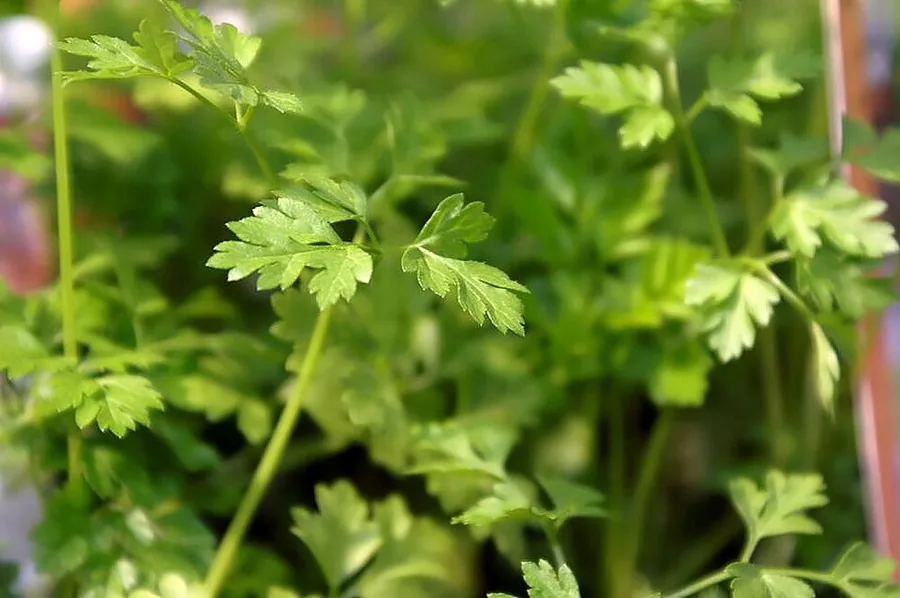
Chervil (Anthriscus cerefolium) is a refined cooking herb in the carrot and parsley family, Apiaceae, carrying a gentle taste that hints at parsley with a whisper of anise. It sits at the heart of French cooking and the classic fines herbes blend, and its flavor is fragile enough that cooks fold it in only at the very end. Also known as French parsley, garden chervil, or cerfeuil, it brings a quiet French-table elegance to a kitchen.
This is a fast-growing cool-season annual that lives out a single season before it is done. Heat is its undoing, sending up flower stalks and turning the leaves bitter, so it belongs to spring and fall rather than high summer. Where sun-loving herbs sulk, chervil settles in, making it an easy fit for a pot on a cool windowsill or a partly shaded bed.
Caring for it is a matter of rhythm: steady moisture and a series of small, staggered sowings keep fresh leaves coming. Compact and unfussy, it slips into a cook's daily routine, suited to shaded corners and tucked-away spots that suit slow cooking and quiet kitchens alike. The difficulty is moderate, mostly a question of timing rather than fuss.
Care
The short version: chervil asks for a cool, lightly shaded spot, soil that never dries out, and a fresh scatter of seed every few weeks. Treat it as a spring and fall companion to your cooking rather than a summer fixture, and it will reward a daily routine with tender leaves for the table.
Light
Among herbs, chervil is the rare one that prefers partial shade, which makes it the answer for that cool, dim corner most kitchen herbs refuse. It will take partial sun and even full sun while the weather stays cool, but shade slows bolting and keeps the leaves soft. In spring, a spot with afternoon shade is the elegant choice.
Water
Keep the soil evenly moist and never let it dry out, because thirst is what pushes chervil to bolt and run to seed. A drink every 2 to 4 days suits most situations, with more during warm or dry spells. Steady watering folds neatly into a daily routine and keeps the leaves sweet for the table.
Soil
Chervil is content in moist, well-drained loam and relaxed about fertility, taking even poor ground in stride. Aim for a pH of 6.0 to 8.0. Most garden soil will do, provided it holds moisture without turning soggy underfoot.
Temperature
This is a cool-weather plant at heart, most at ease between 39°F and 75°F (4°C to 24°C). It shrugs off a light frost but bolts the moment real heat arrives, which is why it suits the gentler stretches of spring and fall rather than the peak of summer.
Humidity
An average 40% to 60% humidity suits it well, though the number matters less than the conditions around it. Moist soil and a little gentle air movement, which keeps the lacy foliage clean, do far more for the plant than chasing any particular reading.
Feeding
Chervil wants very little at the table. A light, balanced organic feed when it goes in during spring is plenty, and it does perfectly well in lean soil. Heavy feeding does it no favors and tends to invite aphids.
Pruning
Pinch out flower stalks as soon as they appear to delay bolting and keep tender new leaves coming. Harvesting the outer leaves often nudges fresh growth from the center, which keeps the plant productive and looking its best for longer.
Repotting
not_applicable
Size & spacing
Chervil stays neatly small, reaching 12 to 24 inches (30 to 60 cm) tall with a spread of about 12 to 18 inches (30 to 45 cm). Leave room for air to drift through the fine foliage so the leaves stay dry. Its compact habit makes it an easy guest on a windowsill or in a small pot.
When to plant
Chervil takes its cues from cool air, not heat. Sow it straight into its place in early spring and again in fall, leave the hottest weeks of summer alone, and start a new patch every 3 to 4 weeks so the kitchen is never without a supply.
Northern hemisphere
Southern hemisphere
Typical months for a temperate climate: start earlier in warm zones, later where spring frosts linger.
- Plant: Direct-sow in early spring and again in fall; cool-season herb that bolts in summer heat, so provide shade and succession-sow every 3-4 weeks.
- Harvest: Cut tender young leaves before flowering; small white five-petaled flowers form in umbels 1-2 inches across, followed by seed.
Hardiness
USDA hardiness zones: 3–10
Temperature: down to -40°C
Troubleshooting
Nearly every chervil setback comes back to warmth or thirst, and the leaves tell the story first. A glance during your daily check is usually enough to catch trouble while there is still time to steer the plant back.
Bolting In The Heat
When chervil starts bolting, it throws up flower stalks in a hurry and stops offering tender leaves. Heat and lengthening days flip it from leaf to seed, and dry soil only speeds the change. Pinch off the flower stalks, move the plant somewhere cooler and shadier, keep the soil moist, and sow fresh seed every 3 to 4 weeks.
Fix:
- Pinch off emerging flower stalks
- Move to a cooler, shadier location
- Maintain consistently moist soil
- Succession-sow fresh seed every 3-4 weeks for a continuous supply
Aphids On New Growth
Aphids announce themselves with sticky, distorted new growth and tiny clustered insects on the undersides of the lacy leaves, leaving a sticky honeydew behind. A firm spray of water knocks them loose, repeated every few days, and going easy on nitrogen feeding keeps them from returning.
Fix:
- Rinse aphids off with a strong spray of water
- Repeat as needed
Slugs And Snails At Soil Level
Slugs and snails chew ragged holes in the leaves and hit seedlings hardest, leaving silvery slime trails in their wake, with the worst damage after rain or overnight. Pick them off by hand and clear away damp debris and shady hiding spots near the plant.
Fix:
- Remove slugs and snails by hand
- Reduce moist hiding spots near plants
Toxicity
The chervil you grow for cooking is gentle and safe, an herb a household can live alongside without a second thought. The real risk lives outdoors, where careless foraging invites confusion with deadly relatives.
Safe for
People · Cats · Dogs · Horses · Rabbits · Livestock · Birds
Cats None
Not toxic to cats; a nibble of the foliage will do no harm.
Dogs None
Safe for dogs, with no poisons at play if one chews on a leaf.
Horses None
Horses can graze near it without any risk from the herb itself.
Rabbits Safe
Rabbits can eat the leaves, and the soft lacy foliage makes a fine occasional green.
Livestock Safe
Cattle, goats, and sheep all handle cultivated chervil without trouble.
Birds Safe
Backyard birds and poultry can peck at it safely.
People Safe
This is a kitchen herb meant to be eaten, prized in French cooking for its delicate flavor, and the only real caution lies in the wild, where toxic lookalikes make sure identification essential.
Chervil closely resembles toxic Apiaceae lookalikes such as poison hemlock; foragers and gardeners must be absolutely certain of plant identity before harvesting wild plants.
Varieties
Only a small handful of named chervil types make it into seed catalogs, and they part ways more in the shape of the leaf than in what they bring to the plate.
Crispum
Crispum is the curled-leaf type, with tightly ruffled foliage and a subtle, mild flavor that suits a refined hand.
Vertissimo
Vertissimo is a compact, productive selection with dark green flat leaves that crops heavily in a small space, a good match for pots and windowsills.
Plain chervil
Plain chervil is the standard flat-leaf form, the one most grown for the kitchen.
Companions
Chervil grows well beside cool-season crops that share its taste for shade and steady moisture.
How to propagate
Chervil arrives from seed and seed alone, and it has firm opinions about how that seed should be handled.
SeedModerate
Early spring and fall, in cool weather; succession-sow every 3-4 weeks · Seeds germinate in about 10 days at 60°F soil temperature; tender leaves ready to harvest in roughly 6-8 weeks
Chervil grows from seed only, at a moderate pace, and the one rule that matters is to direct-sow it where it will stay, since it forms a taproot and resents being moved. Scatter the seed in cool weather, in early spring and again in fall, with a fresh batch every 3 to 4 weeks. The seeds need light to sprout, so barely cover them or leave them on the surface and keep everything evenly moist. Expect germination in about 10 days at 60°F (16°C), with tender leaves ready in roughly 6 to 8 weeks.
Myths
Any lacy, fern-leaved wild plant is safe to use the way you would use chervil.
The family is crowded with dangerous lookalikes, and poison hemlock can pass for chervil at a glance, where a mistake can be fatal. Only ever use a plant whose identity is beyond doubt, and growing your own from known seed is the safest path.