Herb · Apiaceae
Dill
Anethum graveolens
Soft blue-green plumes that give a kitchen garden its quiet character.
Full sun
Every 3–7 days
50–77°F · 10–25°C
40–90 days
Overview
Dill suits a relaxed, productive corner more than a manicured one. Set against a sunny fence or at the edge of a vegetable patch, its tall, airy silhouette softens hard lines and lends height where a planting needs lift. Because it grows quickly and finishes its season in a single year, it works beautifully as a seasonal accent you can refresh, rather than a permanent fixture.
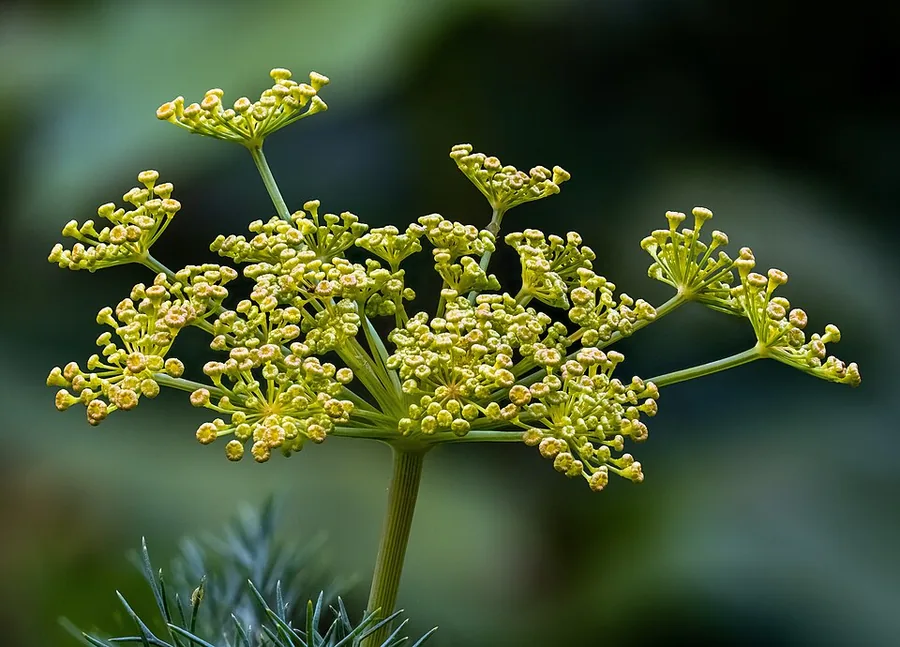
This is a cool-season plant at heart, and the look it creates shifts with the calendar. Spring and early fall give you the fullest, most generous foliage, the stage where dill feels lushest in the garden and most useful in the kitchen. Summer heat turns its energy toward flowering, a stage called bolting, so the styling trick is to sow a fresh sweep every couple of weeks and keep young plants coming.
One detail shapes where dill belongs from day one: a deep taproot that resents being moved. It dislikes transplanting, so sow it directly where it will grow and let it settle in place. Think of its position as a decision made once, choosing a spot that flatters both the plant and the room it faces, then leaving it undisturbed to do the rest.
Care
The short version: Give dill full sun and even moisture, sow it straight into well-drained, fertile soil, and keep the season cool. Pinch the foliage often to hold its bushy shape, feed it lightly, and let a few plants flower at the end so it comes back next year.
Light
Site dill where the sun lands generously, six or more hours of it across the day, and it will hold a full, upright form. In a hot summer it accepts a little afternoon shade without complaint, which can take the edge off the heat. Tuck it somewhere too shadowy, though, and you get thin, floppy plants that bolt early and give you far less leaf to work with.
Water
Steady moisture keeps dill looking its best, so aim for an inch of water a week and let the soil stay evenly damp rather than swinging dry. This matters most during germination and the seedling stage, when a young stand is finding its feet. Let it run dry and you invite early flowering, which cuts the leafy season short.
Soil
Plant into well-drained, fertile loam worked through with organic matter, the kind of soil that drains freely yet holds enough life to feed a quick crop. Keep the pH in the 5.5 to 6.5 range, and loosen the bed deeply so that long taproot can run straight down and settle the plant for the season.
Temperature
Dill is at its most graceful in cool, mild conditions, happiest between 50°F to 77°F (10°C to 25°C). That is the window where it pours its energy into foliage and keeps a generous, leafy presence. Push past it and the plant turns its attention to flowering, bolting as the warmth climbs.
Humidity
Outdoor humidity in the usual 40% to 70% band suits dill perfectly, and it asks for nothing special on that front. What matters far more is airflow: give the plants room to breathe so a breeze can move through them. Crowd them together and the air stays damp, which is the kind of stagnant pocket that invites trouble.
Feeding
Dill is a light feeder with modest tastes. One balanced feed or a little compost worked in at planting carries it comfortably through the season. Resist the urge to overdo it, because excess nitrogen pushes soft, leggy stems that flop and lose the tidy shape you want.
Pruning
Regular pinching keeps dill bushy and well-mannered and quietly delays bolting, so cut the foliage often and let the plant branch in response. From there the choice is yours: strip the flower heads when you want more leaf, or leave the umbels to mature if seed is the goal.
Repotting
There is no repotting in dill's life. It is a direct-sown annual with a taproot that hates being moved, so it lives out its season exactly where it sprouts. Confining it to a pot invites stunting and fast bolting, which is why a spot in the open ground almost always serves it better.
Size & spacing
Give dill room to reach its full, airy height of 2 to 4 feet (60 to 120 cm), with a spread of 12 to 18 inches (30 to 45 cm) at the base. Those tall, hollow stems look graceful but catch the wind, so plant a stand fairly close together and let the group lean on itself for mutual support.
When to plant
Timing is everything with dill, and it rewards a little planning. Working with the cool season rather than against it keeps your plants leafy and handsome for longer, and a steady rhythm of sowing means there is always a fresh, young stand ready to step in.
Northern hemisphere
Southern hemisphere
Typical months for a temperate climate: start earlier in warm zones, later where spring frosts linger.
- Plant: Direct-sow in early spring after danger of hard frost; cool-season crop that bolts quickly in summer heat. Succession-sow every 2-3 weeks for continuous leaf harvest.
- Harvest: Cut leaves anytime once plants are established; yellow flower umbels form in summer, followed by seeds harvested as they ripen and turn brown.
Hardiness
USDA hardiness zones: 2–11
Temperature: down to -46°C
Troubleshooting
Dill is forgiving, and most of what goes wrong comes down to heat, wind, or a stressed root. The fixes below are simple to fold into a normal week, and reading the early signs keeps a planting looking its best rather than tired and overgrown.
Bolting in summer heat
When heat and long days arrive, dill shifts from leaf to flower: the central stalk stretches up, forms its umbels, and leaf growth slows, with drought and root stress hurrying it along. To hold the leafy stage longer, harvest early, sow in succession, and keep moisture steady with a little afternoon shade in the heat.
Fix:
- Harvest leaves promptly before flowering
- Succession-sow new plantings
- Provide consistent moisture and light afternoon shade in heat
Swallowtail caterpillars on the foliage
Plump green caterpillars banded in black with yellow spots are the larvae of the black swallowtail (Papilio polyxenes), and dill is a favorite host. The nibbling can look dramatic, yet it rarely sets a healthy plant back. Relocate them or simply plant a little extra, knowing they finish as butterflies.
Fix:
- Hand-pick and relocate caterpillars if foliage loss is a concern
- Plant extra dill to share with larvae as a pollinator host
Aphids clustering on the shoots
Small green or gray, soft-bodied insects gather on tender shoots and leave a sticky honeydew behind. Knock them off with a strong jet of water, reach for insecticidal soap only if things turn severe, ease off the nitrogen, and welcome ladybugs and other beneficials to keep the balance.
Fix:
- Spray with a strong jet of water
- Apply insecticidal soap if severe
Tall stems lodging in the wind
A tall plant on hollow stems in an open, windy spot will bend or snap near the base, and overly rich soil only makes the soft, leggy growth worse. Stake the tallest plants, choose a sheltered position, and space the stand close so the group braces itself against gusts.
Fix:
- Stake taller plants
- Plant in a sheltered location
Toxicity
As a kitchen herb, dill earns its place around the whole household. It is regarded as safe for people and pets, which makes it an easy choice for a garden shared with curious animals and children. The ASPCA does not list it as a pet toxin, with one small caveat noted below.
Safe for
People · Cats · Dogs · Horses · Rabbits · Livestock · Birds
Cats None
Cats are safe around dill, since the ASPCA does not list it as a toxin and a casual nibble does no harm.
Dogs None
Dogs are safe too, taking the soft leaves in stride, and some owners even fold a little into homemade treats.
Horses Safe
Horses are safe with dill, which sometimes turns up as an ingredient in herbal feed blends.
Rabbits Safe
Rabbits are safe and tend to relish fresh dill as a treat, drawn to those feathery leaves.
Livestock Mild
Livestock face only a mild caveat: the foliage is safe to eat, though very heavy grazing of its furanocoumarin-rich leaves may bring on mild photosensitivity.
Birds Safe
Birds are safe around it, with pet birds and backyard hens happy to peck at the leaves and ripe seeds.
People Safe
People are safe to enjoy it freely as a kitchen herb, using both leaves and seeds, with a quick rinse before they reach the plate.
Edible herb safe to handle and consume; wash before use. Sap and furanocoumarins can rarely cause mild skin photosensitivity in sensitive individuals.
Varieties
Choosing a variety is partly a question of scale and where the plant will live. Some stay compact enough for a container, others rise tall enough to anchor the back of a border, and a few are prized simply for how their leaves taste fresh from the garden.
Bouquet
Bouquet is the popular, compact choice, carrying a heavy crop of seed heads with a strong, classic flavor that suits a tidy, productive bed.
Fernleaf
Fernleaf is a dwarf that fits a container with ease, slow to bolt and content to keep producing leaves longer than most.
Mammoth (Long Island Mammoth)
Mammoth, also known as Long Island Mammoth, is the tall heirloom to reach for when you want the biggest yields of both foliage and seed.
Dukat
Dukat is the slow-bolting pick prized for sweet, aromatic leaves, a favorite where fresh use is the whole point.
Companions
Dill earns its keep near other crops by drawing in pollinators and the predatory insects that hunt garden pests.
How to propagate
Dill keeps propagation refreshingly simple: it grows from seed and seed alone. There are no cuttings or divisions to fuss over, just a shallow sowing where the plant will live and the patience to let a few heads ripen so the garden reseeds itself.
SeedEasy
Direct-sow in early spring and succession-sow through the cool season · 7 to 21 days to germinate; harvestable leaves in about 40 to 60 days
Sow seed straight into the garden where it will grow, pressing it shallowly since the taproot resents transplanting, then expect germination in 7 to 21 days and harvestable leaves in roughly 40 to 60 days. Sow a fresh row every couple of weeks through the cool season, and let a few plants flower to self-seed for next year.
Myths
Dill transplants easily like any other seedling.
Its deep taproot resents being moved, and the disturbance often shocks the plant into bolting. Direct-sow where it will grow rather than starting it in cells, and you sidestep the problem entirely.
Dill is toxic to cats and dogs.
This culinary herb is regarded as safe, and the ASPCA does not list it among plants that poison cats or dogs. A curious nibble is nothing to worry about.