Ornamental · Ranunculaceae
Columbine
Aquilegia canadensis
Give it dappled shade and moist, free-draining soil, and columbine sets a spring scene of spurred flowers with hummingbirds in attendance.
Partial shade
Every 5–10 days
USDA 3–8
1–3 ft · 0.3–0.9 m
Overview
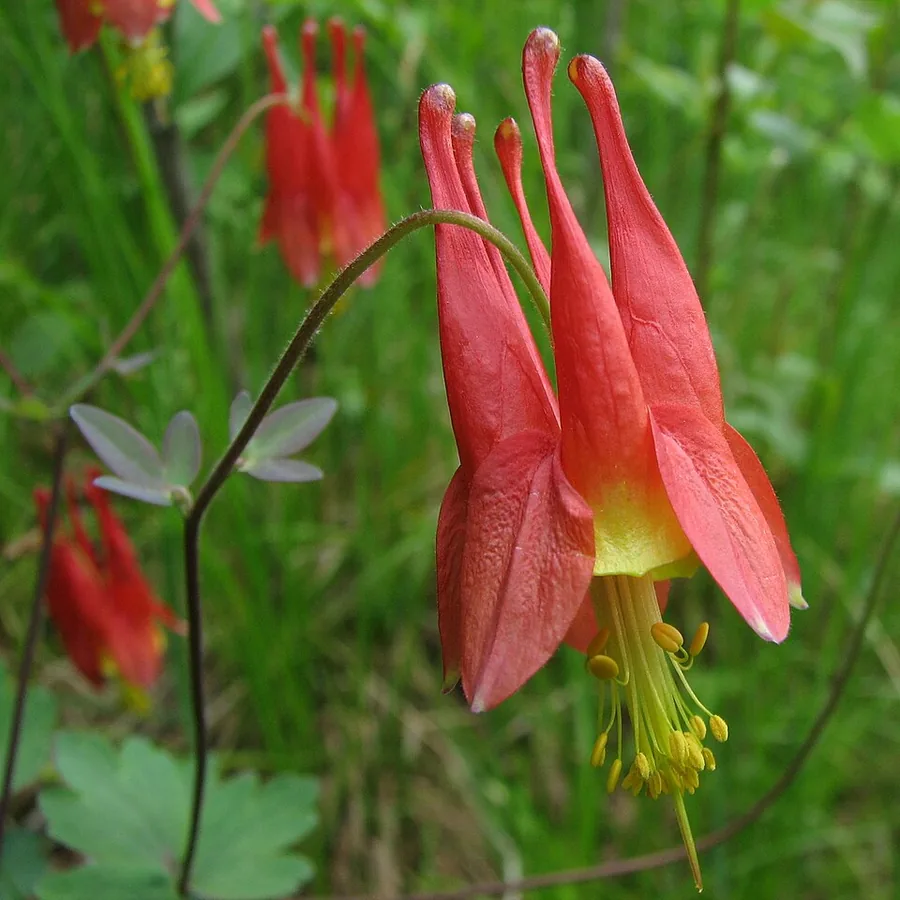
Columbine is a woodland perennial in the buttercup family, and the native Eastern red kind, Aquilegia canadensis, grows wild across much of eastern North America. Its nodding, spurred flowers ride on slender stems above soft, blue-green foliage, lending a light, informal air to a spring border and drawing hummingbirds as the season warms. It reads as delicate, the kind of plant that softens a planting without ever demanding the spotlight.
This is a natural fit for the shaded edges of a garden, at home in partial shade along a border or threaded through a woodland corner where taller plants set the backdrop. It carries on through hard winters down to USDA zone 3 and warm summers up to zone 8. Short-lived as perennials go, columbine renews itself so freely that a planting keeps its place from year to year and drifts into loose, unforced colonies that suit a relaxed garden style.
Set it in ground that stays moist while draining freely, and the look largely takes care of itself. Across the genus the colors range widely, from the red and yellow of the native species to the blues, whites, and pinks of the old European types, which makes it easy to fold into almost any palette. Leave a few seedheads to ripen and new plants arrive nearby each season, keeping a planting effortlessly full.
Care
The short version: partial shade with rich, moist, well-drained soil. Water to keep the ground evenly damp without letting it turn soggy, feed lightly in spring, and trim back tired foliage after bloom to keep the planting neat and hold its self-seeding in check.
Light
Columbine settles best in partial shade, the soft, dappled light of a woodland edge that suits its informal look. It takes full sun in cooler regions and handles partial sun, though in hot summers a deeper shade keeps the planting fresh and free of scorch.
Water
Keep the soil evenly moist but never waterlogged, watering roughly every 5 to 10 days once rain is in the picture. An established planting rides out the odd dry spell with ease, yet soggy ground through a hot summer invites crown rot, so let the surface dry a touch between waterings.
Soil
Set it in rich, well-drained loam worked with organic matter, though columbine takes to sand or clay as long as water moves through. It is easy across a wide pH band from 6.0 to 8.0, so most garden soil welcomes it without fuss.
Temperature
A cold-hardy perennial through and through, it is at ease across USDA zones 3 to 8 and weathers temperatures from -40°F to 90°F (-40°C to 32°C). The deep winter chill is part of its rhythm, since the seeds want a cold spell before they will sprout.
Humidity
Ordinary outdoor humidity is all it asks, so there is no figure to chase. Air movement counts for more, because still, crowded settings are what let powdery mildew dull the foliage.
Feeding
Columbine is a light feeder, which keeps the routine simple. A single balanced feed or a topdress of compost in spring carries it through, while heavier feeding only draws aphids onto the soft new growth.
Pruning
Cut the spent flower stems after bloom to coax a second flush and keep the heavy self-seeding in hand. If the foliage tires by mid-summer, shear it to the ground and a fresh, clean mound returns to fill the spot.
Size & spacing
Plants reach 1 to 3 feet (30 to 91 cm) tall with a spread of 12 to 18 inches (30 to 46 cm). Give each that much room so air moves through the planting and mildew stays away, which keeps the grouping looking its best.
When to plant
Columbine belongs to spring. Sow seed indoors in late winter after a cold spell to break dormancy, or set it straight into the ground in spring or fall. The spurred flowers open from March into May and hold the scene for four to six weeks before the planting eases into summer.
Northern hemisphere
Southern hemisphere
Typical months for a temperate climate: start earlier in warm zones, later where spring frosts linger.
- Sow: Late winter, 6 to 8 weeks before last frost; seeds benefit from cold stratification.
- Plant: Spring after last frost, or sow seed outdoors in fall.
- Harvest: Spring (March to May), with bloom lasting about four to six weeks.
Hardiness
USDA hardiness zones: 3–8
Temperature: down to -40°C
Troubleshooting
Columbine asks little, and the rare misstep tends to show on the leaves or at the base. Notice it early and a quick trim or a change of watering keeps the planting looking its best. Match what you are seeing below, then make the small fix.
Summer collapse and softening at the base
A plant that slumps in summer heat with a soft, browning base has succumbed to crown rot, brought on by soil that holds water and shuts out air. There is no rescue once it takes hold, so clear the affected plant away to keep the bed looking its best. Open the drainage before you replant, and let the watering ease through the height of summer so the next planting holds its place.
Fix:
- Remove affected plants
- Improve soil drainage before replanting
Pale wandering trails marking the foliage
When pale trails wander across the leaves, the cause is leaf miner larvae feeding between the two leaf surfaces, and while it dulls the planting's polish it stops at the cosmetic and never sets the plant back. Lift out the marked leaves to keep the display crisp. Once the flowering window closes, cut the foliage back so a clean sweep of new growth restores the look.
Fix:
- Remove and destroy mined leaves
- Cut affected foliage to the ground after bloom to flush fresh growth
- Choose resistant species such as Aquilegia canadensis
Soft colonies gathering at the buds and tips
Clusters of green or black aphids settle on the freshest tips and buds, sip the sap, and leave the new growth twisted and tacky, which is the last thing you want as a planting comes into its spring moment. A firm jet of water clears most of them in a pass, with insecticidal soap held in reserve for a heavier showing. Keeping the spring feed light spares them the soft growth that draws them in.
Fix:
- Spray plants with a strong jet of water
- Apply insecticidal soap if populations are heavy
A dusty white veil over the planting
A soft white veil over the foliage signals powdery mildew, a fungus that takes hold where the air goes still and plants sit shoulder to shoulder. Set your columbines with enough room for air to drift between them, which keeps the planting fresh and the fungus at bay. Take out the affected leaves, and direct the water to the soil rather than over the top so the foliage stays dry and uninviting.
Fix:
- Improve air circulation by spacing plants
- Remove and destroy infected foliage
Toxicity
Columbine is only mildly toxic, and the spring flowers that carry the display are low-risk. The caution sits with the seeds and roots, which hold cardiogenic toxins and cyanogenic glycosides that can upset the stomach if eaten in quantity. Everyday gardening calls for no special handling, but keep pets and children from making a meal of the seedpods.
Toxic to
Cats · Dogs · Horses · Rabbits · Livestock · Birds · People
Cats Mild
A cat that helps itself to the seeds or roots may drool, vomit, or run an unsettled stomach. The flowers and leaves stay low-risk, and the bother turns up only after a fair amount is eaten.
Dogs Mild
Most dogs come through untouched. It takes a real serving of the seeds or roots to bring on drooling and a passing spell of vomiting or diarrhea.
Horses Mild
Horses generally pass columbine by, and a chance mouthful amounts to little. Only a large feed of the seed-bearing or root parts is apt to disturb the gut.
Rabbits Mild
Keep rabbits clear of the seedpods and roots, where the cyanogenic compounds gather. A light graze on the foliage seldom brings more than a brief tummy ache.
Livestock Mild
Cattle, goats, and sheep usually leave the plant be, and poisoning is rare. Even so, heavy grazing on the seeds or roots can leave the digestion a touch off.
Birds Mild
The flowers welcome hummingbirds to the nectar with no harm at all. The seeds hold the cyanogenic glycosides, so keep poultry from feasting on the ripe pods.
People Caution
Columbine is no part of the table. The flowers are low-risk, but the seeds and roots carry cardiogenic toxins, so eating them in quantity can upset the stomach and is best avoided, above all by children.
No special handling is needed for routine gardening; wash hands after extended contact and supervise pets and children around the seeds.
Helpline numbers

United States
ASPCA Animal Poison Control: (888) 426-4435 (fee applies)
Poison Control: (800) 222-1222



Canada
Poison Centres: 1-844-764-7669
Varieties
Columbine spans a wild native and a range of polished garden hybrids, an easy plant to style across very different beds. These are the ones you are most likely to meet.
Aquilegia canadensis (Eastern red columbine)
The native species lends an effortless wild grace with nodding red and yellow spurred flowers on wiry stems, and it sidesteps the leaf miner that troubles its relatives.
Aquilegia vulgaris (Granny's bonnet)
This heritage European columbine brings cottage-garden charm in blue, violet, white, pink, or red, though it wears leaf miner damage more visibly than the native plant.
Aquilegia chrysantha (Golden columbine)
A sun-loving southwestern species offering long-spurred yellow flowers that hold up through heat, best placed where drainage is sharp since it gives way to crown rot in heavy ground.
Aquilegia × hybrida (Hybrid columbine)
The garden hybrids are the showpieces, carrying the largest, often bicolor long-spurred flowers in the broadest palette and opening from mid-spring into early summer.
How to propagate
Columbine all but propagates itself, and you can shape where it goes with saved seed or a careful division of an established clump.
SeedEasy
Sow indoors in late winter with cold stratification, or direct sow outdoors in spring or fall. · Seedlings typically flower in their second year.
Seed is the surest path to more columbine, and the plant carries much of the effort on its own, self-seeding into loose, naturalistic colonies wherever the setting suits. Sow indoors in late winter after a cold spell to release dormancy, or scatter it outdoors in spring or fall. The reward arrives in the seedling's second year, since the first season goes quietly toward building a crown.
DivisionModerate
Early spring or fall. · One growing season; columbine has a deep taproot and resents disturbance, so divide carefully.
Division is an option in early spring or fall, though it asks for a steadier hand. Columbine anchors a deep taproot and resents being moved, so ease the clump apart and settle the pieces back in without delay. A single growing season usually sees a careful division established, yet seed remains the more dependable route to a fuller planting.
Myths
Columbine is deadly poisonous and should never be grown around pets or children.
The reputation outpaces the reality, since the genus is only mildly toxic and extension sources note no serious poisoning concerns. The seeds and roots do carry cyanogenic compounds, and a large mouthful of those can bring mild stomach upset, but the plant is safe to grow with normal supervision and the flowers are low-risk.
Every columbine gets chewed to ribbons by leaf miner.
The outcome rests on the variety you bring home. The native Aquilegia canadensis carries itself well against leaf miner while hybrids and other species often show heavier damage, so picking a resistant species is the simplest fix.