Ornamental · Ranunculaceae
Hellebore
Helleborus orientalis
The quiet luxury of the winter garden, hellebore opens its cups over shade and snow when the borders lie still.
Partial shade
USDA 4–9
12–18 in · 30–46 cm
Overview
The hellebore is the plant that carries a garden through its emptiest weeks, flowering while the rest of the borders sleep. A member of the buttercup family, it blooms in deep winter, often from late winter into spring for an 8 to 10 week run, with flowers that open while snow still sits on the ground. The names Lenten rose and Christmas rose set its season squarely in the coldest months, though it is no relation to a true rose.
Two names anchor most plantings and shape the mood a garden strikes in winter. The Lenten rose, Helleborus orientalis, hangs its cups in white, pink, and rose-purple, while the Christmas rose, Helleborus niger, opens earliest in broad, calm white. Most plants a nursery offers are dependable hybrids bred from these, chosen for a wider palette and a cleaner flower form that reads well from a path.
This is a plant of understated presence rather than spectacle, holding to a neat 12 to 18 inches (30 to 46 cm) in cool shade so it slips into a border without crowding it. It prefers to be planted once and left to settle, which makes it a fixture rather than a project. One note frames every interaction with it: every part is poisonous, and the sap can sting bare skin.
Care
The short version: part to full shade in rich, humusy, well-drained soil. Keep it evenly moist while it settles in, feed it lightly in late winter, and clear away the tattered old leaves before the flowers open.
Light
Hellebores belong in part to full shade, and the dappled light beneath deciduous trees suits both the plant and the calm, woodland mood it lends a garden. A little winter sun while they flower is welcome, but harsh summer sun scorches the leaves and dulls the display.
Water
Keep the soil evenly moist while a plant settles into its spot, and never let it dry out hard through that first year or two. Once established it takes a stretch of dry shade in stride, so good drainage in the chosen position matters far more than constant watering.
Soil
Plant into organically rich, humusy, well-drained loam worked through with leaf mold, the kind of soil a good shade border already offers. Hellebores accept a wide pH, from 6.0 to 8.0, so most settled beds suit them without adjustment.
Humidity
Ordinary outdoor humidity is all it asks, so there is no figure to manage. Airflow through the planting matters more, since damp, crowded leaves are where leaf spot and crown rot take hold and spoil the look.
Feeding
A light feed in late winter or early spring keeps it content, whether a balanced fertilizer or a simple top dressing of compost or leaf mold. Rich, organic soil carries most of the season, so there is no call to force growth.
Pruning
Cut back the old, tattered, or winter-damaged leaves in late winter before the flowers open, which tidies the clump and lets the blooms take center stage. After flowering, clear the spent stems so fresh foliage can fill the space.
Size & spacing
Plants keep to a composed 12 to 18 inches (30 to 46 cm) tall and about as wide, an easy scale for the front or middle of a shaded border. Allow each that much room so air moves through and the planting stays healthy and clean-looking.
When to plant
The hellebore keeps a season all its own, set apart from the summer border. Container-grown crowns go in through spring or fall, and from late winter into spring the flowers open and hold for weeks, sometimes before the last snow has melted.
Northern hemisphere
Southern hemisphere
Typical months for a temperate climate: start earlier in warm zones, later where spring frosts linger.
- Sow: Seed is slow and erratic; fresh seed sown outdoors or self-seeding is more reliable than indoor sowing.
- Plant: Plant container-grown crowns in spring or fall into shaded, well-drained soil.
- Harvest: Blooms late winter into spring, often for an 8 to 10 week period; flowers may open while snow is still present.
Hardiness
USDA hardiness zones: 4–9
Temperature: down to -34°C
Troubleshooting
Most of what troubles a hellebore shows on the leaves or at the crown, and damp, crowded corners of the garden are usually the reason. Catch the early signs and a small intervention keeps the planting looking its best. Match what you see below, then step in while it still counts.
A sudden slump and a browning crown
A clump that suddenly slumps and browns at the base has fallen to crown rot, the price of a spot where water lingers. The crown turns soft and discolored, sometimes with a sour note, once the ground stays saturated. Lift the failed plant, choose a better-drained position, and set it back at the correct depth, keeping mulch clear of the crown so it never sits damp again.
Fix:
- Remove affected plants or rot-damaged tissue
- Improve drainage and avoid planting too deeply
- Do not mulch directly over the crown
Inky streaks and contorted growth throughout
The gravest problem in the bed is hellebore black death, a virus that streaks the leaves, stems, and flowers black and warps the new growth beyond saving. No spray will rescue an infected plant, since aphids ferry the virus from one to the next as they feed. Remove and destroy any affected clump without delay, keep the aphids in check, and never carry divisions or seed forward from a plant that shows it.
Fix:
- Remove and destroy infected plants promptly
- Control aphids that spread the virus
- Do not propagate from affected plants
Blotched, spotted foliage marring the display
When dark blotches settle across the foliage and spoil the display, the culprit is fungal leaf spot, and it thrives in beds left wet and overgrown. Clear away the marked leaves to their proper place in the bin, then take the tired old foliage right back in late winter before the new season starts. Give the planting room to breathe, and the leaves stay clean enough to earn their place in the border.
Fix:
- Remove and destroy affected leaves
- Cut back old foliage in late winter before new growth
- Improve air circulation by thinning crowded plantings
Meandering trails and ragged leaf margins
Pale tunnels wandering through the leaves are the work of leaf miners, while ragged edges and slime trails betray slugs and snails, and tidy notches around the margins mark weevils. It is a matter of appearance rather than survival, so the border is never really at risk. Take off the shabbiest leaves, gather the slugs and snails by hand or set traps, and glance over the new growth for aphids as it comes.
Fix:
- Pick off and destroy affected leaves
- Hand-pick slugs and snails or use traps
- Monitor for aphids and rinse or remove as needed
Toxicity
For all its winter grace, this is a plant to respect: every part is poisonous. Hellebore holds cardiac glycosides and an irritant called protoanemonin through the leaves, stems, and roots, and a large dose can affect the heart. The bitter sap stings skin and mouths alike, so wear gloves to handle it and keep pets, livestock, and children well away from the border.
Toxic to
Cats · Dogs · Horses · Rabbits · Livestock · Birds · People
Cats Toxic
A cat that samples any part of the plant is left drooling and unwell, with vomiting, diarrhea, and a sore belly, and a larger helping leaves it flat and listless. The bufadienolides that unsettle the stomach reach the heart as well, so a serious mouthful calls for the vet at once.
Dogs Toxic
Should a dog chew the leaves or roots, drooling, retching, and a queasy stomach follow, often with diarrhea and low spirits. Beyond the point where the bitter taste puts it off, the cardiac glycosides can begin to trouble the heart.
Horses Toxic
A horse that grazes hellebore turns drooly and off its feed, with colic and loose droppings to follow. Because the heart toxins make a real meal dangerous, the plant belongs well away from paddocks and hay stores.
Rabbits Toxic
For a rabbit, no part of the plant is safe to touch. Even a small nibble irritates the mouth and gut and brings on drooling and a refusal to eat, while the cardiac glycosides make a larger amount worse still.
Livestock Toxic
Cattle, goats, and sheep that eat hellebore suffer a sore mouth and stomach, drooling, and diarrhea, and a heavy feed can reach the heart. The acrid flavor usually keeps them at arm's length, yet trimmings dropped in a pasture undo that safeguard.
Birds Toxic
Hellebore has no place around birds. The bufadienolides and protoanemonin that harm mammals treat a bird no more kindly, so keep poultry and pet birds clear of the foliage and any cuttings.
People Caution
Nothing on the plant belongs on a plate, and eating it brings burning in the mouth, drooling, vomiting, and stomach cramps, with a heart risk in quantity. Even the sap irritates skin, so reach for gloves before cutting or dividing and keep children clear of the flowers and leaves.
The cell sap can cause skin irritation and contact dermatitis, so wear gloves and protective clothing when cutting or dividing plants. Hellebore contains bufadienolide cardiac glycosides (such as hellebrin) plus protoanemonin, and large ingestions can affect the heart, so keep cut foliage and trimmings away from pets and children.
Helpline numbers

United States
ASPCA Animal Poison Control: (888) 426-4435 (fee applies)
Poison Control: (800) 222-1222



Canada
Poison Centres: 1-844-764-7669
Varieties
Most garden hellebores descend from a few species and their hybrids, and each brings a slightly different note to the winter scene. These are the ones worth knowing by name.
Helleborus orientalis (Lenten rose)
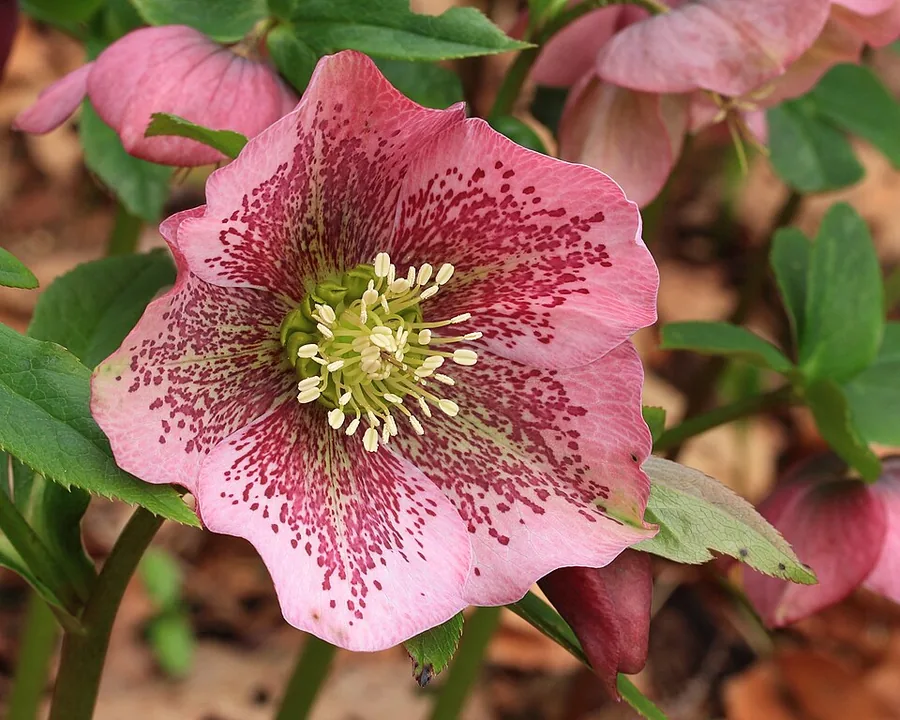
A clump-forming species that hangs its cup-shaped flowers in white, pink, and rose-purple, often lightly spotted, and blooms from late winter into spring, it is the quiet parent standing behind a great many of the garden hybrids.
Helleborus niger (Christmas rose)
Shorter at around 9 to 12 inches and crowned with broad white bowl-shaped flowers, it is hardier down to zone 3 and the first of all to open, sometimes gracing the garden around Christmas where winters stay gentle.
Helleborus × hybridus (hybrid Lenten rose)
Drawn largely from H. orientalis, these dependable garden hybrids offer a wider palette and a more polished flower form, and they are usually the very plants a nursery labels simply as Lenten rose.
How to propagate
Hellebores extend themselves slowly and on their own terms, whether you divide a clump in spring or simply let the plant scatter its own seed across the bed.
DivisionModerate
Spring · One to two seasons; divisions are slow to reestablish and may bloom poorly the first year.
To increase a favorite planting, divide in spring: lift a mature clump, part the crown, and settle each piece back at its original depth in rich, well-drained shade. Grant it time, because a division needs one to two seasons to feel at home in its new corner and often flowers only lightly through that first year.
SeedModerate
Sow fresh seed in late spring to summer, or allow self-seeding. · Seedlings take 2 to 3 years to reach blooming size
Sow fresh seed in late spring to summer, or leave the plant to self-seed, which it does willingly in a spot that suits it. Germination comes slow and uneven, and a seedling needs 2 to 3 years to reach blooming size. Hybrid seedlings seldom echo the parent, so a colony gathers its own quiet variety over time.
Myths
With its rose name and lovely blooms, hellebore must be safe to have around.
The pretty name flatters a plant that is no true rose at all. Every part is poisonous, it is listed as toxic to cats, dogs, horses, and people, and the sap can leave a rash on bare skin. Treat it as a poisonous plant and wear gloves, and it earns its place with no worry.
Since hellebores are hardy, they can be moved and divided in any season.
They settle back slowly and take real offense at being moved. Divide only in spring if the border demands it, and even then temper your hopes for that first season. Many gardeners simply leave them in place and let self-sown seedlings extend the planting on their own.