Ornamental · Ranunculaceae
Monkshood
Aconitum napellus
Tall blue hooded spikes that earned the name queen of poisons, an architectural note for the late-summer border, and one to site with care.
Full sun
Every 3–7 days
USDA 3–7
3–4 ft · 0.9–1.2 m
Overview
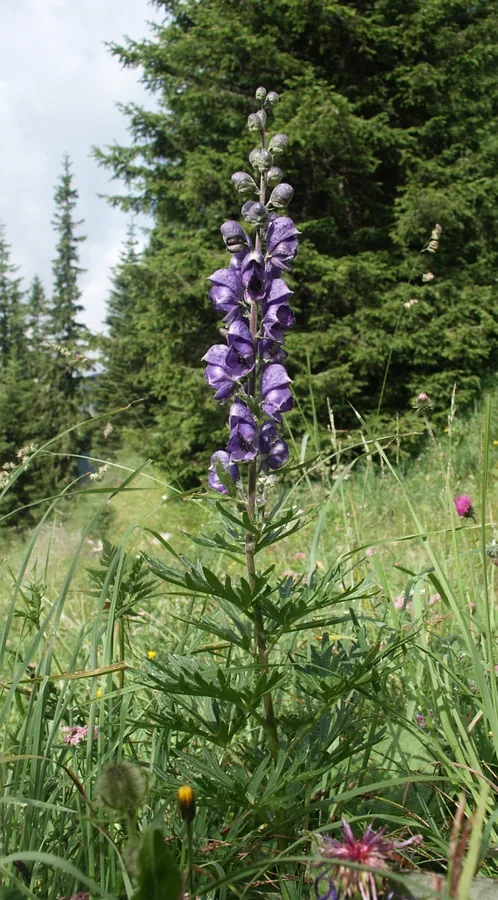
Monkshood arrives at the height of the season with a certain drama, its tall stems raising hooded flowers of deep purplish-blue just as the late-summer garden asks for depth. Each bloom folds like a cowl drawn over a face, the detail that named it. A member of the buttercup family, it belongs to the cool, moist borders of the colder USDA zones, where it reads as a quiet piece of architecture among softer companions.
That poise comes with a caveat worth keeping in mind: this is one of the most poisonous plants a garden can hold. Every part contains aconitine, the fast-acting toxin behind old names such as wolfsbane and queen of poisons. Where a garden is shared with children, pets, or grazing animals, its place in the scheme deserves real thought before a spade goes in.
In habit it is a slow, long-lived perennial, content to hold its corner and disinclined to be moved. Give it rich, damp, well-drained ground and a spot sheltered enough to keep those tall stems upright, and wear gloves whenever you tend it. Handled with that respect, it returns as a dependable fixture of the border, season after season.
Care
The short version: full sun to part shade in cool climates, soil kept evenly moist yet never waterlogged, rich ground enriched with compost, and gloves worn every single time you tend the plant.
Light
Monkshood settles best in full sun in cool climates, while welcoming a little afternoon shade where summers turn hot. Deep shade leaves the stems weak and inclined to flop, so pair generous light with a sheltered corner.
Water
Keep the soil evenly moist and never allow it to dry out, which in a dry spell means watering roughly every 3 to 7 days. It resists standing water just as firmly, so drainage counts. Through a hot summer, steady moisture and a little afternoon shade keep it composed.
Soil
Plant into rich, moist, well-drained ground full of organic matter. It accepts a broad pH span from 5.5 to 7.5, so most garden soil serves once you work in plenty of compost.
Temperature
This is a plant of cold places, hardy to about -35°F (-37°C) and reaching only near 84°F (29°C). Because heat is its undoing, a little afternoon shade earns its keep where summers run high.
Humidity
Ordinary outdoor air suits it, so there is no figure to meet. Air movement matters more, since still, humid corners invite powdery mildew onto the foliage and dull the display.
Feeding
Feed in spring as growth resumes, working in a balanced fertilizer or a layer of compost. One seasonal feed answers the needs of so measured a grower.
Pruning
Cut spent flower stalks as they fade to keep the clump trim and sometimes draw a second flush, then cut the foliage back after it dies down in fall. Always wear gloves, and keep cut stems and sap clear of the skin.
Repotting
A settled clump prefers to be left in place, divided only every 4 to 5 years and only when overcrowded. Sparser flowering, smaller crowded leaves, or a hollow, dying center are the signs that the time has come.
Size & spacing
Plants rise 3 to 4 feet (91 to 122 cm) on slender clumps spreading just 12 to 18 inches (30 to 46 cm) across, a tall, narrow form that slips between wider neighbours. Allow each a little room so air moves through and mildew keeps its distance.
When to plant
Monkshood keeps to a cool-season rhythm that suits the unhurried gardener. Sow the cold-treated seed in late winter, or divide settled clumps in early spring or fall, then look to July and August, when the tall blue hoods open at the border's high point.
Northern hemisphere
Southern hemisphere
Typical months for a temperate climate: start earlier in warm zones, later where spring frosts linger.
- Sow: Late winter; seed needs cold stratification and germination is slow and erratic
- Plant: Spring after frost, or divide established clumps in early spring or fall
- Harvest: July to August
Hardiness
USDA hardiness zones: 3–7
Temperature: down to -40°C
Troubleshooting
Most of what troubles monkshood begins underground, in soil left too wet, or above it, among stems set too close for air to move. Read the early signs and you can act before a planting is lost. Match what you see to the notes below, and reach for gloves before you handle an ailing plant.
Crown discoloring to brown mush and slumping at ground level
A soft, browning base at the soil line is the mark of crown rot, which arrives when a bed drains poorly or a planting has grown too dense to air out. Lift the failing plants in gloves and remove them from the border. Put the drainage right, then return sound divisions to looser, richer ground and the display recovers.
Fix:
- Remove and discard affected plants (wear gloves)
- Improve drainage and avoid overhead watering
- Replant healthy divisions in better-drained, amended soil
Wilting foliage that stays flat despite regular watering
Foliage that keeps wilting whatever you do points to verticillium wilt, a soilborne fungus that closes off the stem from within, and watering never revives it. No treatment brings a plant back once it is struck. Lift and destroy the affected plants, and reserve that patch of border for something unsusceptible from then on.
Fix:
- Remove and destroy affected plants
- Avoid replanting susceptible plants in the same soil
- Maintain plant vigor with proper moisture and nutrition
Dusty white film coating the leaves
A pale, floury cast over the foliage signals powdery mildew, which settles in late in the season as humidity rises and the air stalls. Open the planting so a breeze can pass, clear away the shabbiest leaves, and water at the base rather than overhead. The look suffers for a while, yet the border comes through with little lasting harm.
Fix:
- Improve air circulation by thinning or spacing plants
- Remove and discard badly affected foliage
- Avoid wetting foliage when watering
Lofty flower stems leaning and sprawling once a downpour or breeze passes
The tall spires that give the border its vertical line grow top-heavy, so a passing storm or an exposed corner tips them, and a shaded or overfed site only softens them further. Set discreet supports early, before the stems begin to lean. A sheltered position in the planting scheme keeps that upright silhouette intact.
Fix:
- Stake or support taller stems
- Site in a spot with some shelter from strong wind
Toxicity
This plant is genuinely dangerous, and it belongs in a garden only with that understood. All parts hold aconitine, a poison that can kill cats, dogs, horses, livestock, and people, at times within hours of swallowing a small amount. The sap crosses skin as well, so wear gloves whenever you tend it and keep it well clear of animals and children.
Toxic to
Cats · Dogs · Horses · Rabbits · Livestock · Birds · People
Cats Severe
For a cat, a few mouthfuls can be enough to kill. The warning signs run to heavy drooling, vomiting, an unsteady weakness, and laboured breathing, with the heart racing or stuttering toward sudden collapse. Any contact calls for the vet, right away.
Dogs Severe
A dog that chews any part drools, bloats, and vomits quickly, then weakens and labours to breathe. The gravest threat is to the heart, where the toxin throws the rhythm into disarray and can stop it altogether.
Horses Severe
A horse that grazes on it soon salivates, colics, and trembles through the muscles. Breathing grows difficult and the heartbeat loses its rhythm, and a fatal cardiopulmonary failure can follow.
Rabbits Severe
The aconitine that fells larger animals is just as lethal in a body as small as a rabbit's. A single nibble may bring on drooling, weakness, and a failing heartbeat, so keep them well away from every part.
Livestock Severe
Cattle, sheep, and goats are poisoned by the foliage and roots, and losses among grazing stock are well recorded. Look for staggering, a slowed heartbeat, and breathing difficulty, an outcome that often ends in death before help arrives.
Birds Severe
Aconitine works through the whole body with no dose that can be called safe, and birds have no exemption. Pecking at leaves, seeds, or roots risks swift weakness and a fatal disruption of the heart.
People Caution
Nothing on this plant belongs on a table. Swallowing even a small amount causes tingling, numbness, vomiting, and dangerous heart rhythms, and the sap crosses the skin, so gloves are essential and bare hands never are.
Wear gloves whenever handling this plant, avoid skin or oral contact with plant juices and cut stems, cover any open cuts or abrasions, and wash hands thoroughly afterward. Keep away from pets, livestock, and children.
Helpline numbers

United States
ASPCA Animal Poison Control: (888) 426-4435 (fee applies)
Poison Control: (800) 222-1222



Canada
Poison Centres: 1-844-764-7669
Varieties
Most monkshood offered is the wild blue species, though a handful of named forms shift the palette for a particular scheme. The following are the ones most likely to reach you.
Album
A white-flowered form, it lends the border clean white spires in place of the customary deep purplish-blue.
Carneum
This selection brings a softer register with pale pink to pinkish flowers, gentler than the wild species.
Bicolor
Its blooms pair blue and white on one flower, and it reaches the trade under Aconitum x cammarum.
How to propagate
Monkshood increases either by dividing a clump or by sowing seed, and both routes ask for patience and a pair of gloves from beginning to end.
DivisionModerate
Early spring or fall · Often slow to establish; may take a year or more to settle and bloom well
An established clump can be lifted and split in early spring or fall, always in gloves, since the sap is dangerous against bare skin. These plants dislike disturbance and tend to sulk, so allow a year or more before the divisions settle and flower well again.
SeedDemanding
Sow in late winter; seed benefits from cold stratification · Slow and erratic germination over many weeks
Sow in late winter after a spell of cold that breaks the seed's dormancy, and expect a slow, uneven rise over many weeks even so. Both the seed and the young seedlings call for gloves, as every part already holds the toxin.
Myths
This plant is harmful only when eaten, so there is no need for gloves when arranging it.
The aconitine held in the sap crosses intact skin, so a brush with cut stems or juices is a hazard on its own, quite apart from eating any of it. Garden and poison authorities are unanimous: wear gloves and avoid all contact, and take special care over an open cut.
Only roots and seeds carry the poison, so the leafy tops and flowers stay safe to touch.
Every part of the plant is toxic, the bark and leaves along with the flowers, fruit, seeds, roots, and stems. The roots, seeds, and young shoots simply carry the greatest load of poison, which leaves the rest no safer to touch or to taste.