Bulb · Amaryllidaceae
Daffodil
Narcissus pseudonarcissus
Set the bulbs in fall and they return with the first real color of spring, year after year.
Full sun
Every 7–14 days
USDA 4–8
12–18 in · 30–46 cm
Overview
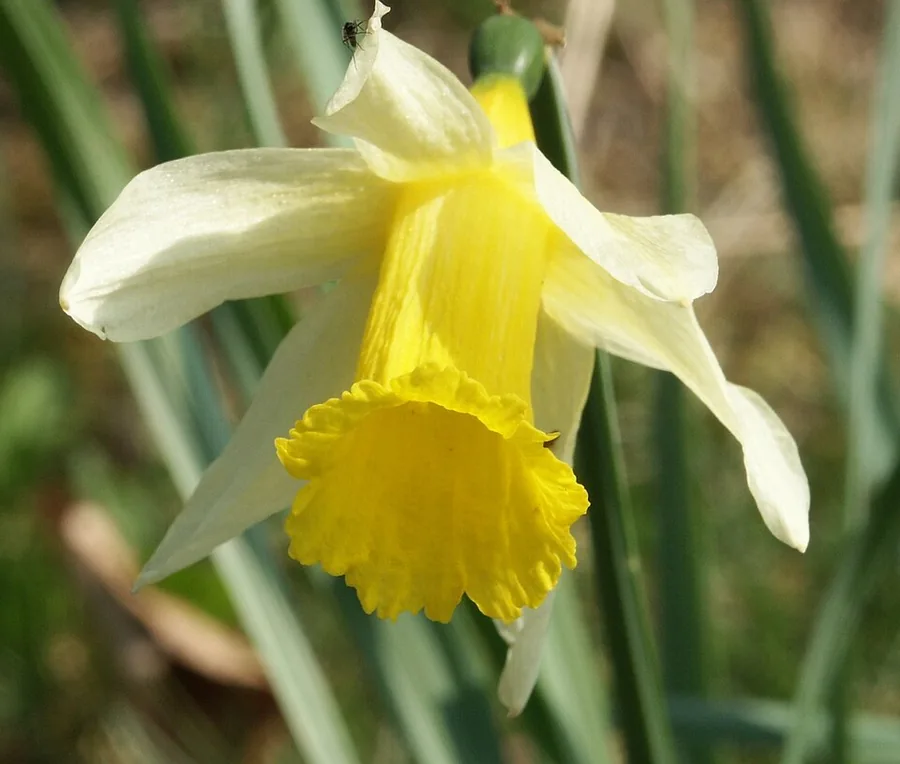
Daffodils are the bulb a garden tends to start with, and they earn the place. Planted once in autumn, they lift their trumpet flowers in early spring while the borders are still bare, giving a property its first real sign of life after winter. They belong to the genus Narcissus, return on their own each year, and widen into generous clumps that read beautifully along a path or beneath a window.
Their charm is matched by how little they ask of a household. They take cold to -29°F (-34°C), suit almost any well-drained ground, and turn away the deer and rodents that spoil other bulbs, since every part of the plant is poisonous. Give them a sunny, free-draining spot and they carry a corner of the garden with no further attention.
The range runs well past the plain yellow trumpet, which makes them easy to style. Some carry several blooms to a stem for a relaxed, gathered look, some set white petals around a colored cup for something more tailored, and some open ruffled and double for full effect. Whatever the choice, one habit holds: let the leaves yellow and fade on their own, because that quiet decline is how the bulb feeds next year's flowers.
Care
The short version: a sunny to part-shaded spot, well-drained ground that never sits soggy, a light low-nitrogen feed in fall and again in spring, and the patience to let the foliage fade before you tidy the bed.
Light
Daffodils flower best in full sun, yet they take partial shade in stride, which makes them a natural fit beneath trees that leaf out after the bulbs have bloomed and a graceful way to dress a part-shaded border. More sun gives stronger stems and fuller flowers for a more striking display.
Water
Keep the soil moist but never soggy while the plants are growing, and offer a little extra through a hot or dry spring to stretch the show. Once the foliage dies back the bulb goes dormant and wants almost nothing, since wet summer ground is the quickest way to lose it to rot.
Soil
Plant in well-drained loam, clay, or rich soil, with drainage the one thing a good spot cannot do without. A pH of 6.0 to 7.0 suits them, but it is standing water at the bulb, more than anything, that undoes daffodils.
Temperature
These are tough, cold-hardy bulbs that take everything from -29°F to 86°F (-34°C to 30°C). A cold winter spell is part of how they set their flowers, so the chill works in the garden's favor rather than against it.
Humidity
Air moisture is nothing to manage with daffodils, so there is no figure to aim for. What counts is air moving freely around the leaves, since crowded, damp foliage invites the fungal troubles they can be prone to.
Feeding
Use a low-nitrogen complete fertilizer such as 10-10-10 with a little bone meal, worked in during fall and again as the shoots break ground in spring. Stop feeding once flowering starts, because extra nitrogen at that point only encourages bulb rot.
Pruning
Deadhead the spent flowers, but leave the foliage standing for at least six weeks after bloom, until it yellows and browns on its own. Resist cutting or tying the green leaves early, since that slow fade is exactly how the bulb refuels for next year's display.
Repotting
Daffodils look their best left undisturbed and only want lifting every 5 years, or when a clump grows too crowded to flower well. Packed bulbs, smaller blooms, and plenty of leaves with few flowers are the cue that it is time to divide.
Size & spacing
Plants reach 12 to 18 inches (30 to 46 cm) tall and spread 9 to 12 inches (23 to 30 cm) wide, an easy scale for the front of a border. Set the bulbs 6 to 8 inches (15 to 20 cm) deep, about two to three times their height, and 4 to 8 inches (10 to 20 cm) apart.
When to plant
Daffodils keep a fall-to-spring rhythm that fits neatly into the gardening year. Settle the bulbs in mid-autumn, around six weeks before the first frost and once the soil cools below 60°F (16°C), and they spend the winter rooting quietly before opening in early spring.
Northern hemisphere
Southern hemisphere
Typical months for a temperate climate: start earlier in warm zones, later where spring frosts linger.
- Plant: Mid-autumn, about 6 weeks before first frost, once soil temperature stays below 60 degrees F
- Harvest: Early spring
Hardiness
USDA hardiness zones: 4–8
Temperature: down to -34°C
Troubleshooting
A well-sited daffodil seldom causes concern, and when it does the trouble usually begins underground in the bulb. It shows as rot, scorched leaves, or a clump that quietly stops flowering. Match what you see below and act early, before it carries to the bulbs alongside.
Stunted plants and bulbs that have softened and rotted
Behind a display that fades early sits basal rot, a Fusarium fungus that settles into the base of the bulb wherever the ground stays wet and the feeding has run heavy. Lift one for a look and the tell is a soft brown base with white or pink mold threading between the scales. Clear out the spoiled bulbs, give a fresh, free-draining bed only to firm, healthy ones, and let the feeding lighten so next spring's show holds.
Fix:
- Discard infected bulbs
- Plant only firm, healthy or hot-water-treated bulbs
- Improve drainage and replant in a new site
Twisted leaves, soft bulbs, and a display that fails to fill in
When a planting refuses to fill in, two pests are the usual reason, and both hollow the bulb from within. Stem and bulb nematodes leave brown rings on a bulb cut across, while narcissus bulb fly larvae leave a hollow center holding a single plump grub. The bulb feels light and soft either way, so dig and destroy whatever is infested and begin again with certified clean stock for a planting that comes back true.
Fix:
- Dig and destroy infested bulbs
- Plant only treated, healthy bulbs
Tan marks on the flowers that widen in damp weather
A spring display can lose its polish to fire disease, named for the scorched look it leaves, which opens as tan flecks and spreads until the blooms brown and the leaves streak yellow. A close, damp planting only speeds it along. Take out and destroy what is marked, open the grouping so air moves through it, and tidy spent flowers before the spores carry on to the rest.
Fix:
- Remove and destroy infected plants and flowers
- Apply a protective fungicide
New leaf tips that read as spotted and singed
The reddish-brown spots ringed in yellow along the tips of new leaves are leaf scorch, and they undercut the fresh look of an emerging clump. Trim away the marked foliage, set out hot-water-treated bulbs the next season, and keep water off the leaves so the fungus finds no place to settle and the display stays clean.
Fix:
- Remove affected foliage
- Plant hot-water-treated bulbs
- Apply a labeled fungicide
Toxicity
Every part of a daffodil is poisonous, and the bulb most of all, which is worth bearing in mind in a household with pets or children. It holds lycorine and other alkaloids along with sharp calcium oxalate crystals, and it resembles an onion closely enough that people have been poisoned by mistake. Keep bulbs and plants away from pets, livestock, and children, and wear gloves when you handle them.
Toxic to
Cats · Dogs · Horses · Rabbits · Livestock · Birds · People
Cats Severe
A houseplant-curious cat that bites a daffodil tends to drool and vomit within the hour, with diarrhea following soon after. The bulb is the part that does real harm, since a large mouthful can lower blood pressure and bring on tremors or an irregular heartbeat, so seek help without delay.
Dogs Severe
A dog that unearths and chews a bulb feels it the most, with heavy drooling, vomiting, and a sore stomach. A larger amount carries past the gut into convulsions, low blood pressure, and a racing or skipping heart, so call the vet rather than wait it out.
Horses Severe
Horses on pasture rarely choose daffodils, yet the alkaloids strike hard if one does, prompting salivation, retching, and colic. A large dose can set off tremors and dangerous shifts in heart rhythm, which makes keeping them away the simplest course.
Rabbits Severe
Every part holds the same lycorine that troubles other animals, so a rabbit that nibbles can be left drooling, with digestive upset and tremors. Keep daffodils well out of reach and never pass along the trimmings as forage.
Livestock Severe
Cattle, goats, and sheep can be poisoned by the foliage or by bulbs surfaced in a pasture. Watch for drooling, diarrhea, an unsteady walk, and in heavier cases a faltering heartbeat, and move the animals to clean ground.
Birds Severe
The alkaloids reach birds as well, and even a small fragment of bulb is far too much for a small body. Keep daffodils and their bulbs clear of any pet bird or backyard flock.
People Caution
No part of the daffodil belongs on a table, and the bulb is the genuine hazard because it passes so easily for an onion. Swallowing any part brings vomiting and drooling, and handling cut stems can leave the skin itchy, so reach for gloves before arranging them.
Bulbs can be mistaken for onions but are poisonous; keep bulbs away from pets and children. Wear gloves when handling, since the sap can cause skin irritation known as daffodil itch.
Helpline numbers

United States
ASPCA Animal Poison Control: (888) 426-4435 (fee applies)
Poison Control: (800) 222-1222



Canada
Poison Centres: 1-844-764-7669
Varieties
Daffodils come in thousands of named forms, sorted into divisions by flower shape. A few classics turn up again and again, and they map out the range nicely when you are choosing for a scheme.
King Alfred
The classic large daffodil in solid golden yellow with a bold trumpet, it is the form most people picture at the name and the easy anchor for a spring scheme.
Thalia
A triandrus type that hangs several nodding, pure white flowers on each stem, it brings a softer, woodland mood to a planting.
Actaea
A poeticus daffodil that frames a small, red-rimmed yellow cup with crisp white petals for a refined, understated note.
Tahiti
A double-flowered variety packed with ruffled yellow and orange segments in place of a single trumpet, it reads as the showy, full-bodied choice.
How to propagate
Daffodils multiply on their own, so widening a planting is mostly a matter of dividing what is already there. Seed is an option too, though only for those with years to spare.
Offsets & pupsEasy
After foliage yellows and dies back, in late spring or early summer · 1-2 years to reach flowering size
Widening a planting costs almost nothing, because the bulbs do the increasing themselves. Once the foliage has yellowed and died back in late spring or early summer, lift a crowded clump and ease apart the small offset bulbs gathered around each mother. Replant them at proper depth right away, or hold them cool and dry until fall, and most reach flowering size in 1 to 2 years.
DivisionEasy
Every 5 years when clumps become crowded, after foliage dies back · 1-2 years
When the bloom thins and a clump looks congested, usually about every 5 years, dig and divide once the foliage has died back. Splitting the crowded bulbs relieves the crush and restores the display, and replanted divisions settle into their new spots over 1 to 2 years.
SeedDemanding
Sow ripe seed in autumn · 5 years or more to flowering
Raising daffodils from seed is the long game. Sow ripe seed in autumn and the seedlings need 5 years or more to reach blooming size, which is why this route is mostly the province of breeders working toward new varieties.
Myths
Daffodil bulbs are safe to eat because they look like onions.
That very likeness is what makes them dangerous, and people have been poisoned after cooking a daffodil bulb in place of an onion. The bulb is the most toxic part of the plant, carrying lycorine and other alkaloids. No part of a daffodil is food, so keep the bulbs well away from the kitchen.