Bulb · Amaryllidaceae
Surprise Lily
Lycoris squamigera
Set it in the ground and step away, then let bare pink stalks make a late-summer entrance in the border.
Full sun
Every 7–14 days
USDA 5–9
18–24 in · 46–61 cm
Overview
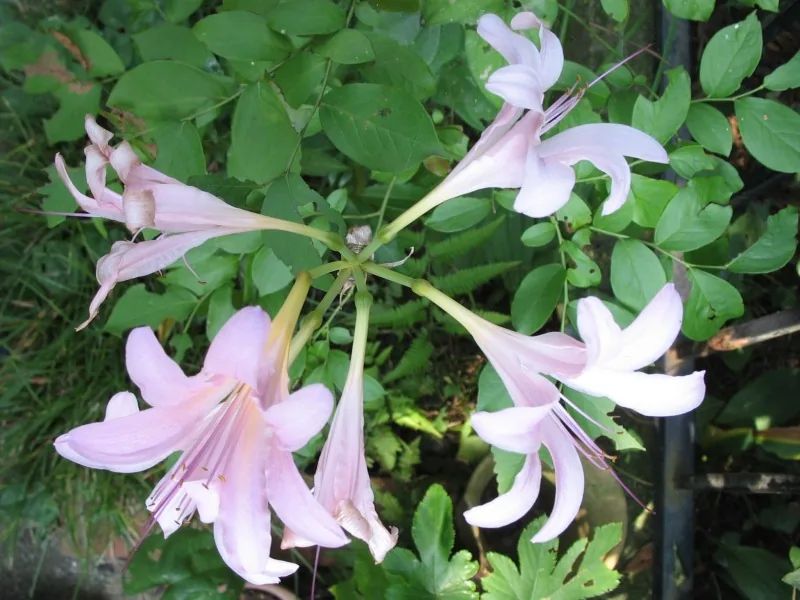
Few bulbs know how to make an entrance like this one. Its strappy leaves arrive quietly in spring, then slip away by early summer, leaving the bed looking unremarkable. After weeks of empty ground, naked stalks rise in August and open rose-pink almost overnight, a piece of theater that gives the late-summer garden its second act. That reappearing habit is what earned it the names resurrection lily, magic lily, and naked ladies.
It belongs to the amaryllis family and settles in as a long-lived perennial bulb across zones 5 to 9, an easy anchor for a border that has to earn its keep year after year. Once established it takes heat, cold to -20°F (-29°C), and most pests and diseases in stride, asking for very little in return. The one caveat is that every part is poisonous, the bulb most of all, so it belongs in ornamental beds and borders well away from where pets or children play and dig.
This is a plant that rewards a hands-off gardener. Tuck the bulbs in at the right depth in fall, let the spring foliage fade on its own, and the clumps build into a lasting fixture that blooms for decades. It fits the rhythm of a garden meant to be lived in rather than fussed over.
Care
The short version: give it full sun to part shade and rich, free-draining soil. Water it through the spring leaves and again as the stalks rise, let the bulb rest dry through summer, and lift crowded clumps every few years to keep the display fresh.
Light
It flowers most generously in full sun, though it accepts partial shade with grace. Place it where light is strong and the spring leaves will gather the energy that later fills the border with late-summer color.
Water
Water it through spring while the foliage is at work, then again when the stalks emerge in late summer. Once the leaves fade in early summer, let the bulb rest on the dry side through its quiet season. During active growth the natural rhythm falls around every 7 to 14 days.
Soil
It asks only for rich, free-draining soil, whether the bed leans to loam, silt, or sand. pH is no obstacle, since it settles happily anywhere from 6.0 to 8.0, which makes it an easy fit for most established borders as long as water drains away.
Temperature
Its toughness is quietly remarkable. It carries a border through winters as cold as -20°F (-29°C) and summer heat to 100°F (38°C), which is what makes it dependable across zones 5 to 9.
Humidity
There is no humidity to manage here, since ordinary outdoor air suits it well. What the planting really wants is good drainage, far more than anything in the surrounding air.
Feeding
Feed it in spring as the leaves emerge, offering a balanced bulb fertilizer while the foliage is green. That short green window is when the bulb lays in the reserves that pay off months later in bloom.
Pruning
Cut the spent flower stalks once they fade to keep the bed tidy, but leave the spring foliage in place until it yellows and falls on its own. Trimming green leaves too early starves the bulb and costs the next season's display.
Repotting
This is a bulb that likes to stay put. Lift and divide a clump only every 4 to 5 years, or a little sooner if crowding begins to thin the flowering and dull the effect.
Size & spacing
Each plant rises to about 18 to 24 inches (46 to 61 cm) in height and spread, an easy mid-border scale. Set the bulbs 6 to 8 inches apart so the clumps knit into a full stand over the years.
When to plant
The appeal of this bulb lies in its timing. Set the bulbs in early fall, let the leaves come and go through spring, and the flowers make their entrance in late summer, arriving just as the rest of the border begins to tire.
Northern hemisphere
Southern hemisphere
Typical months for a temperate climate: start earlier in warm zones, later where spring frosts linger.
- Plant: Plant bulbs in early fall, 5 to 6 inches deep and 6 to 8 inches apart.
- Harvest: August to September
Hardiness
USDA hardiness zones: 5–9
Temperature: down to -29°C
Troubleshooting
Trouble is rare with this bulb, which is part of its charm in a low-maintenance border. Concerns tend to gather around two moments: stalks that never arrive, and foliage that fades ahead of schedule. One deserves a small correction, the other is simply the plant keeping its own calendar, so read the display below before you reach for the trowel.
Handsome spring leaves but no late-summer display
When the foliage looks the part yet no stalks arrive, the usual culprit is bulbs set too deep or a clump grown too tight to perform. Lift a clump after the leaves fade to check, then divide and reset the offsets 5 to 6 inches deep and 6 to 8 inches apart. Bulbs moved recently may simply need a season or two to settle before they put on a show.
Fix:
- Divide and replant offsets at 5 to 6 inches deep and 6 to 8 inches apart
- Allow recently moved bulbs a season or two to settle before expecting bloom
Spring foliage fading away as summer arrives
There is nothing to fix here, only the plant following its own script. The strap leaves rise in spring, yellow and fade by early summer, and weeks later the bare stalks take the stage on their own. Let the fading foliage remain until it withers fully, since that is how the bulb banks the energy for its next appearance.
Fix:
- Leave the dying foliage in place until it withers completely so the bulb can store energy
Toxicity
For all its elegance, the whole plant should be treated as poisonous to animals and people alike. The leaves, stalks, and above all the bulb hold lycorine and related alkaloids that bring on drooling, vomiting, and diarrhea if eaten. Nothing here is edible, so give it a place in the garden out of reach of pets and children, and wash your hands after handling the bulbs.
Toxic to
Cats · Dogs · Horses · Rabbits · Livestock · Birds · People
Cats Toxic
A cat that chews any part will drool heavily and then be sick, often with diarrhea and a tender stomach. The bulb carries the most lycorine, so a bulb turned up from the bed is the real concern.
Dogs Toxic
Dogs that dig up and bite a bulb come off worst of all. Watch for drooling, repeated vomiting, loose stools, and a dog that grows quiet and loses its appetite.
Horses Toxic
The same alkaloids affect horses just as strongly. A grazing horse that takes in foliage or a bulb may drool, colic, and scour, so keep any planting well clear of pasture.
Rabbits Toxic
Rabbits should never be left to nibble the leaves or stalks. Even a small taste sets off drooling and a painful, upset gut, and the bulb is far more poisonous still.
Livestock Toxic
Cattle, goats, and sheep all react to the lycorine in the plant. Expect drooling, vomiting where the animal is able, and diarrhea, with bulbs turned up by tilling posing the greatest risk.
Birds Toxic
Treat the whole plant as off limits for birds. The bulb and foliage hold the same toxic alkaloids that sicken every other animal, so pecking at it is never safe.
People Caution
Nothing about this plant belongs on a plate, and the bulb is its most poisonous part. A person who swallows any of it may face drooling, vomiting, and diarrhea, so it should sit well beyond the reach of children.
Store bulbs out of reach of pets and children and wash hands after handling.
Helpline numbers

United States
ASPCA Animal Poison Control: (888) 426-4435 (fee applies)
Poison Control: (800) 222-1222



Canada
Poison Centres: 1-844-764-7669
Varieties
The plant that graces most gardens is the straight species, set apart from its red-flowered relative by a single detail worth knowing.
Lycoris squamigera (species)
The garden favorite is the straight species, marked by rose-pink blooms touched with lilac on bare stalks in late summer, which keeps it distinct from the red-flowered red spider lily, Lycoris radiata.
How to propagate
Building a fuller display costs nothing but patience. Seed is almost never used, since the bulbs multiply on their own, and dividing a generous clump is all it takes to carry the look further down the border.
Offsets & pupsEasy
After foliage dies back in early summer or after flowering in late summer · 1 to 2 years to bloom after transplanting
The bulbs offset quickly into daughter bulbs, so extending the planting is as simple as lifting a clump and easing the offsets apart. Do this after the foliage fades in early summer or once flowering finishes in late summer, and divide crowded clumps every 4 to 5 years. Replanted offsets take 1 to 2 years to settle before they bloom and join the display.
DivisionEasy
When bulbs are dormant after foliage dies in early summer · 1 to 2 years to bloom
Lift and divide a crowded clump while the bulbs are dormant, after the foliage dies in early summer. Reset the offsets 5 to 6 inches deep and give them a year or two before flowers return to fill the space.
SeedDemanding
Rarely used · Several years
Starting from seed is rarely worth the effort and takes several years to produce a flowering bulb. Dividing offset bulbs is the practical route and brings the border into bloom far sooner.
Myths
Surprise lily makes a dependable potted houseplant you can force to bloom indoors.
In truth it is a hardy garden bulb built for zones 5 to 9, not a plant for the windowsill. Its roots reach deep and wide, so container life rarely suits it unless the pot is unusually large and deep. Give it a place in the ground and let the seasons set the stage.