Bulb · Amaryllidaceae
Common Snowdrop
Galanthus nivalis
Set the bulbs in autumn and let snowdrops open through the last of the winter snow, the garden's first quiet flourish of the year.
Partial shade
Every 7–14 days
32–64°F · 0–18°C
USDA 3–7
Overview
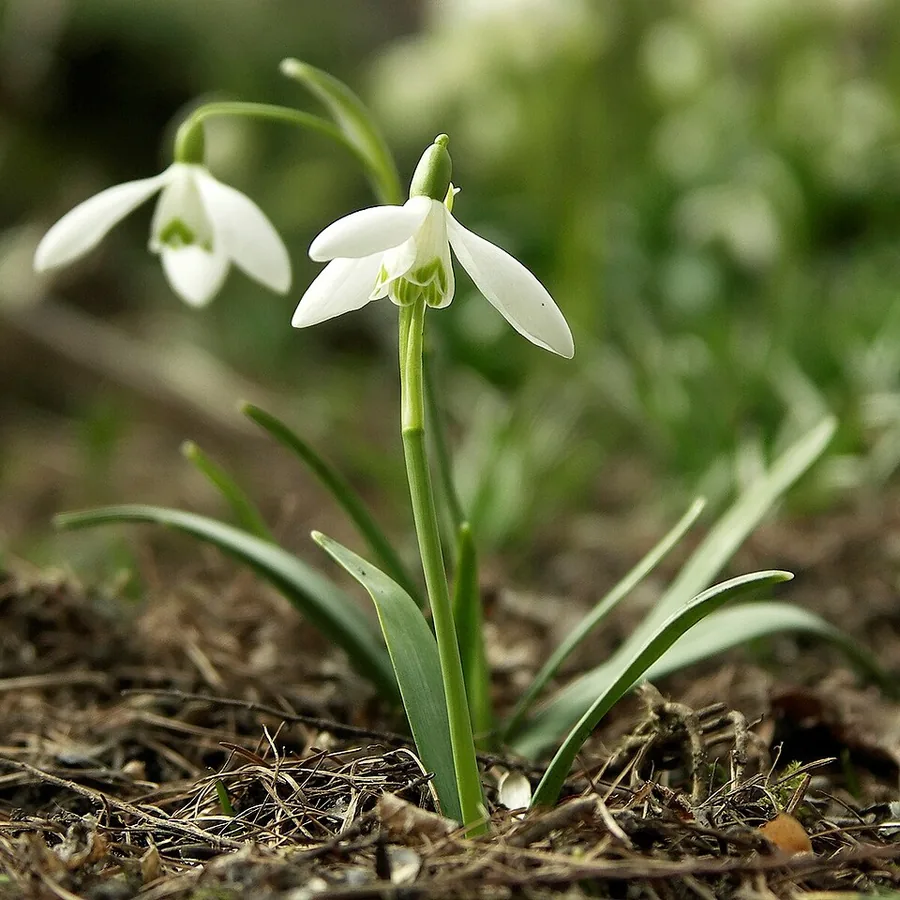
Few sights lift a winter garden like snowdrops, the first flowers of the year in most plots, their nodding white bells opening in late winter while the ground still lies cold. Grown from small bulbs, they return of their own accord each spring and drift by degrees beneath trees and along quiet paths. Leave a planting to its own devices for a few years and it settles into a sweep of white, a scene of calm at the moment the garden feels most bare.
Belonging to the amaryllis family, snowdrops suit the cool, damp half-shade beneath deciduous trees, the kind of understory corner that asks for a little winter interest. They are short-lived where summers run hot, so they reward cold-winter gardens far more than warm ones. Give them a setting they favor and they carry a season with almost no attention.
One point of etiquette shapes where they belong. Every part of a snowdrop is toxic, the bulb most of all. The plant is elegant and hardy, yet it is best placed away from borders where pets or small children might dig up and eat the bulbs.
Care
The short version: plant the bulbs in fall beneath deciduous trees in cool, part shade, keep the soil moist and humus-rich through the spring flush, then step back and let them naturalize into the setting.
Light
Snowdrops read best in partial shade, and the shifting light beneath deciduous trees flatters them, since they finish flowering before the canopy fills in. Full sun suits them too, so long as the soil stays cool and moist through the spring flush.
Water
Keep the soil evenly moist while the plants are in spring growth, on the moist side in humus-rich ground yet never waterlogged. Once the foliage fades for summer the bulbs settle into dormancy and want little to no water until they stir again.
Soil
Ordinary well-drained ground serves, though snowdrops truly favor moist, humus-rich loam and will even accept clay. Fold in plenty of organic matter so the soil holds its spring moisture without turning heavy.
Temperature
This is a plant of the cold season, at ease roughly between 32°F and 64°F (0°C to 18°C). It flowers in late winter and shrinks from real summer heat, which is why it keeps a short life in warm regions.
Humidity
There is no humidity figure to chase, since ordinary outdoor air suits a snowdrop entirely. Cool, moist soil counts for far more to the plant than the air around it.
Feeding
Feed with a light touch, either in early spring as the shoots appear or just after the flowers fade. A balanced bulb fertilizer or a thin topdressing of compost once a season keeps these undemanding plants content.
Pruning
Nothing here needs cutting. Let the leaves die back on their own after flowering so they can feed the bulb, and clear them only once they have fully withered.
Repotting
Snowdrops seldom need lifting. Divide congested clumps every few years, in the green just after flowering, once the blooming thins or the bulbs crowd and lose their vigor.
Size & spacing
These are small-scale plants, standing only 4 to 10 inches (10 to 25 cm) tall with a spread of 3 to 6 inches (8 to 15 cm), ideal for edging a path or carpeting beneath a tree. Set the bulbs about 2 to 3 inches apart and the same depth, then let the clumps knit together over time.
When to plant
Snowdrops keep the winter garden's calendar. Settle the dry bulbs in fall once the soil has cooled, let them rest through the cold, and they rise to bloom in late winter, often through the snow, before retreating to rest across summer.
Northern hemisphere
Southern hemisphere
Typical months for a temperate climate: start earlier in warm zones, later where spring frosts linger.
- Plant: Plant dry bulbs in fall when soil has cooled and night temperatures are about 40 to 50 degrees F, 2-3 inches deep and 2-3 inches apart.
- Harvest: Blooms late winter to early spring (February to March), often through snow.
Hardiness
USDA hardiness zones: 3–7
Temperature: down to -40°C
Troubleshooting
Snowdrops rarely disturb the peace of a planting, and when trouble does appear it shows either in the bulb or as a slow fade across the whole clump. Weigh the two signs below against the scene in front of you, then act while the display can still recover.
Plants wilt and the bulbs feel soft and hollow
The trouble is the narcissus bulb fly, whose larvae work into the bulb and hollow it from within. Lift a failing plant and look for a plump cream maggot resting in the empty center. Dig out and destroy any infested bulbs, then give the planting fresh ground rather than the same spot.
Fix:
- Dig and destroy infested bulbs to stop the larvae spreading
- Avoid replanting susceptible bulbs in the same spot
Clumps fade and flower less season after season
Heat is usually behind it, since snowdrops turn short-lived once planted south of zone 7, and dry or poorly drained ground works against them as well. Move the planting to a cool, part-shaded corner under deciduous trees and fold in organic matter so the soil holds its spring moisture.
Fix:
- Site in cool, part-shade spots such as under deciduous trees
- Improve soil with organic matter to retain spring moisture
Toxicity
For all their poise, snowdrops are toxic and ask for thoughtful placement. Every part holds the alkaloids lycorine and galantamine, and the bulb carries the most. Eating any of it brings drooling, vomiting, and diarrhea, and a large dose, above all a bulb, can lead to tremors and heart trouble. No part is safe to eat, so keep the bulbs well away from pets, livestock, and children.
Toxic to
Cats · Dogs · Horses · Rabbits · Livestock · Birds · People
Cats Toxic
A cat that nibbles the foliage tends to drool and vomit within a few hours. The bulb is the true hazard, and a cat that digs one up and eats it can go on to tremble and run an unsteady heartbeat.
Dogs Toxic
Dogs are the most likely to dig up and chew a bulb, which brings heavy drooling, vomiting, and diarrhea. A large mouthful pushes further into shaking and a racing or irregular pulse.
Horses Toxic
The same alkaloids weigh heavily on horses. Grazing the leaves or bulbs leads to drooling, colicky belly pain, and loose manure, and a large dose can leave a horse weak and trembling.
Rabbits Toxic
Rabbits should be offered no part of a snowdrop. Even a small taste of the leaves or bulb unsettles the gut and can leave a rabbit drooling, off its food, and lethargic.
Livestock Toxic
Cattle, sheep, and goats that stray into a patch of snowdrops may drool, scour, and go off their feed. Heavier grazing risks tremors and an unsteady heart, so keep the bulbs fenced from pasture.
Birds Toxic
Backyard hens and other birds fare no better near snowdrops. The lycorine in every part can leave a bird quiet, off its food, and bringing up its crop, with the bulb the worst of it.
People Caution
No part of a snowdrop is food. Children now and then take the bulbs for onions, and eating one brings drooling, vomiting, and diarrhea, so keep the bulbs out of reach and wash your hands after planting.
Wear gloves when handling bulbs to avoid skin irritation, and keep bulbs away from pets and children.
Helpline numbers

United States
ASPCA Animal Poison Control: (888) 426-4435 (fee applies)
Poison Control: (800) 222-1222



Canada
Poison Centres: 1-844-764-7669
Varieties
Most snowdrops that grace a garden are the common species, yet a few named forms and one larger relative bring a note of variety worth seeking out.
Flore Pleno
A double-flowered form whose extra inner tepals gather the bloom into a fuller, ruffled white skirt.
Viridi-apice
A form that adds green tips to the outer tepals alongside the usual inner green marks, giving the flower a greener cast overall.
Galanthus elwesii (giant snowdrop)
A larger relative that rises taller than the common snowdrop, carrying bigger flowers above broad gray-green leaves.
Companions
Snowdrops naturalize best alongside other early bulbs that wake at the same time and share the same cool, woodland ground.
Plant near
Winter aconite (Eranthis hyemalis): Blooms at the same early-spring time for a complementary naturalized display.
Siberian squill (Scilla siberica): Another early bulb that naturalizes well alongside snowdrops under deciduous trees.
Glory-of-the-snow (Chionodoxa): Early-blooming companion bulb suited to the same woodland and lawn settings.
How to propagate
Snowdrops multiply with grace, and a settled clump all but invites division once it crowds. You might split them, ease apart their offset bulblets, or leave them to seed themselves through the border.
DivisionEasy
Just after flowering while foliage is still green (in the green) · Re-establishes the same season; clumps build up over a few years.
Division is the surest route to more snowdrops. Lift a crowded clump right after flowering while the leaves stay green, part it into smaller groups, and replant at once before the bulbs dry out. The divisions settle back that same season and build into full clumps over a few years.
Offsets & pupsEasy
Lift with clumps after flowering · A few years to form large colonies
Each bulb offers up small offset bulblets around its base. Lift them with the clump after flowering, ease the bulblets free to grow on, and over a few years they fill in to form large colonies.
SeedModerate
Self-sows in fall after natural ripening · About 4 years to reach flowering size
Where the conditions please them, snowdrops also sow themselves, casting seed in fall once it ripens to reach into new ground. It is a patient path, since a seedling needs about 4 years to reach flowering size.
Myths
Snowdrops are harmless because they are such dainty early flowers.
The delicate look belies a genuine toxicity. Every part holds lycorine and galantamine, and the bulbs in particular bring on vomiting and diarrhea if eaten. Treat the whole plant, and the bulbs most of all, as poisonous to pets and people.