Herb · Amaryllidaceae
Chives
Allium schoenoprasum
Set chives where the light is good and the watering is regular, and one quiet clump dresses the kitchen for years.
Full sun
Every 3–7 days
59–77°F · 15–25°C
80–90 days
Overview
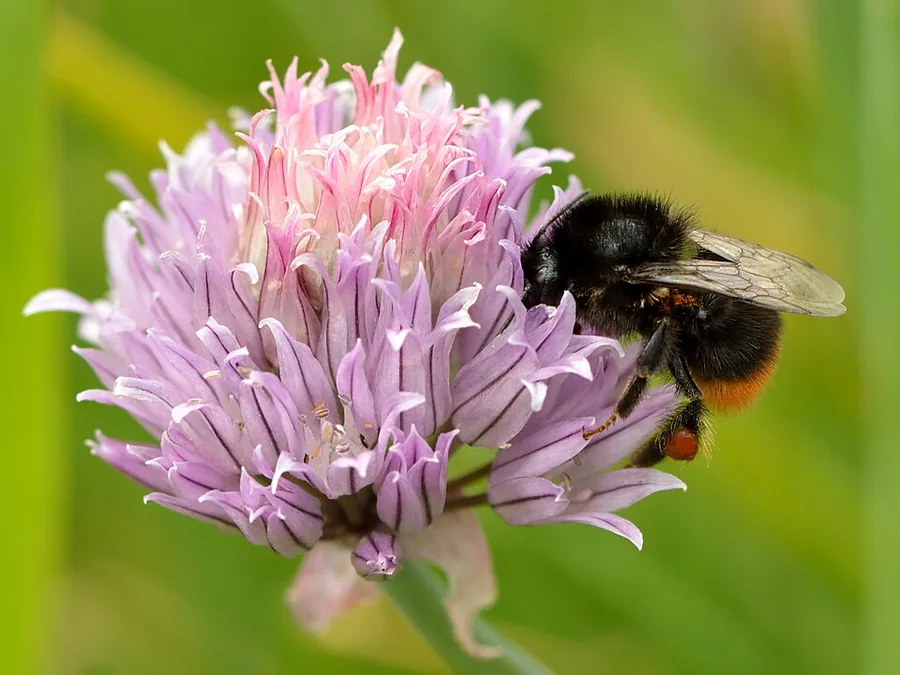
Chives are the softest voice in the onion family, kept for their slim, hollow leaves and a mild oniony note that flatters a kitchen rather than overwhelming it. They settle into tidy clumps of grass-like foliage that return each year, and by late spring they lift pink-purple pompom flowers that look as at home in a border as they do beside the stove. Leaves and blooms alike are edible, which makes them as practical as they are pretty.
Few plants ask less while giving more to a space. This hardy perennial suits a kitchen-garden bed, a path edge, or a small pot on a sunny sill, and it weathers cold winters down to USDA zone 3 without complaint. Cut what a meal needs and the clump quietly refills, keeping the corner it occupies looking lived-in and useful.
One consideration shapes where chives belong in a home with animals. The plant sits in the genus Allium beside onion and garlic, which makes the whole of it dangerous to cats, dogs, horses, and livestock, even as it stays perfectly safe for the people who cook with it. The styling answer is simply placement, a high sill or a shelf out of reach.
Care
The short version: chives reward a bright spot, soil kept moist and fertile, and a first cutting once the clump stands about 6 inches tall. Lift and split it every few years, and it stays part of the household almost indefinitely.
Light
Chives look and grow their best in full sun, the bright sill or open bed that keeps the foliage stout and the flavor sharp. A spot in partial shade still works, though too little light leaves the clump thin and leaning toward the window, a less handsome shape for a kitchen display.
Water
Keep the soil evenly moist and the clump stays full and lush, the look you want from a pot on show, and this matters most while a new plant settles into a space. An established clump forgives a missed watering or two, but let it dry out repeatedly and both the flavor and the fullness fade.
Soil
Pot or plant chives in average, fertile, well-drained soil worked through with organic matter, the easy growing medium of any kitchen garden. A pH between 6.0 and 7.0 suits them, and free-draining ground keeps the bulblets sound rather than soggy in a container.
Temperature
Chives favor the cool of 59°F to 77°F (15°C to 25°C), the temperate range of a bright kitchen or a spring garden. In cold climates an outdoor clump simply rests through winter, dying back and returning when the ground warms, a tidy seasonal rhythm rather than a loss.
Humidity
Ordinary household air, somewhere around 40% to 60%, suits chives without any special effort, so there is nothing to manage on a sill. Airflow does the quiet work, since still, crowded conditions around damp leaves are what invite rust.
Feeding
A balanced fertilizer or a little compost in spring carries chives gracefully through the season. A restrained hand serves the cook best, because too much feed waters down the flavor rather than improving the plant on the plate.
Pruning
Begin cutting leaves near the base once the clump reaches about 6 inches (15 cm), and shear the whole thing back occasionally to coax fresh, tender growth and keep it looking neat. Clipping off the spent flower heads stops self-seeding and tidies the planting in a border.
Repotting
Chives ask less for a new pot than for dividing every 2 to 3 years. When the clump grows congested, the leaves thin, or the center begins to die back, lift and split it, and you gain fresh pieces to place elsewhere around the home.
Size & spacing
A mature clump keeps to a modest 8 to 16 inches (20 to 40 cm) tall and about 8 to 12 inches (20 to 30 cm) across, an easy scale for a sill or a border edge. Allow each one that room so air moves freely and the planting stays handsome and rust-free.
When to plant
Chives belong to the slower, cooler mood of spring, and they slip into the calendar without ceremony. Start seed indoors while winter lingers, or settle divisions outdoors once the frost lifts, then let the leaves become part of the daily cutting and the late-spring flowers earn their moment.
Northern hemisphere
Southern hemisphere
Typical months for a temperate climate: start earlier in warm zones, later where spring frosts linger.
- Sow: 8-10 weeks before the last spring frost
- Plant: Spring, after the last frost
- Harvest: Snip leaves once plants are about 15 cm (6 in) tall and established; pink-purple pompom flowers appear late spring to early summer
Hardiness
USDA hardiness zones: 3–9
Temperature: down to -40°C
Troubleshooting
Chives keep a low profile and rarely interrupt the routine. When they do, the trouble usually surfaces on the leaves or signals a clump that has filled its corner. Notice it, place it among the cases below, and adjust early while the remedy is still light work.
Orange blistering marring the leaves and fading tips
Raised orange-brown spots are rust, a fungus that settles in when a crowded clump traps damp, stagnant air around the foliage. Trim away the affected leaves, open the clump by dividing it, and water at the base so the leaves dry quickly, and the planting soon returns to its tidy self.
Fix:
- Cut back and remove affected foliage
- Improve spacing and air circulation by dividing crowded clumps
- Water at the base to keep leaves dry
A congested clump fading and hollowing at the middle
A clump that thins and hollows at the center has become an overcrowded clump, simply outgrowing its place as the bulblets compete for food and water. Lift it in spring or early fall, ease it apart, and replant the strong outer divisions into fresh, fertile soil. A thorough soak settles them, and the corner looks renewed.
Fix:
- Lift and divide the clump in spring or early fall
- Replant healthy divisions in refreshed, fertile soil
- Water in well after dividing
Silvered streaking dulling the leaf blades
A silvery sheen and pale stippling across the leaves are the mark of thrips, tiny insects that scrape the surface and dull a once-glossy clump. Onion fly maggots or plain heat and drought stress can brown the tips in much the same way. Rinse the thrips off with a firm jet of water, clip away the worst leaves to restore the look, and hold the soil evenly moist through the hot stretch.
Fix:
- Rinse plants with a strong jet of water to dislodge thrips
- Remove and discard badly damaged leaves
- Maintain even soil moisture during hot weather
Toxicity
This is where the herb's place at the table and its place in the home need to be told apart. Chives are a safe, familiar herb for people, yet as an Allium they are toxic to cats, dogs, horses, and livestock, where the organosulfur compounds damage red blood cells and bring on hemolytic anemia. Cats are the most sensitive, so the pot and its trimmings want a spot well beyond a curious animal's reach.
Toxic to
Cats · Dogs · Horses · Rabbits · Livestock · Birds
Safe for
People
Cats Severe
Cats take the hardest hit from this plant, so a sill within their reach is the wrong choice. Look for vomiting, weakness, and pale gums, then red or brown urine as their red blood cells break down. A racing heart and heavy panting point to the hemolytic anemia that makes even a small nibble dangerous.
Dogs Moderate
A dog that chews the leaves may vomit, drift around listless, and show pale gums or bloody urine. The more it eats, the higher the chance of full-blown hemolytic anemia.
Horses Severe
Horses suffer badly from Allium exposure. Look for a weak, dull animal with pale gums and darkened urine as the toxin breaks apart its red blood cells.
Rabbits Toxic
Rabbits have no place near chives. Those organosulfur compounds strike red blood cells much like they would in a dog or cat, and a rabbit's slight frame leaves scant margin.
Livestock Toxic
Sheep, goats, and cattle that feed on chives can develop the familiar Allium toxicosis, showing weakness, anemia, and off-color urine. The harm accumulates slowly across repeated grazing.
Birds Toxic
A bird's system cannot cope with these compounds at all, and the smallest morsel can injure its blood. Store chives and kitchen scraps far out of reach of caged birds and backyard poultry.
People Safe
For the people who cook with it, chives are a kitchen herb, and the leaves and flowers are good to eat raw or cooked. The same compounds that harm animals are no threat to people in normal amounts.
All parts are toxic to pets whether fresh, dried, or cooked; even small or cumulative amounts can be dangerous, particularly to cats. Wash hands after handling and keep trimmings and harvested leaves out of reach.
Helpline numbers

United States
ASPCA Animal Poison Control: (888) 426-4435 (fee applies)

United Kingdom
Animal PoisonLine: 01202 509000 (fee applies)

Australia
Animal Poisons Helpline: 1300 869 738
Varieties
The plain species carries most kitchens beautifully, but a couple of named selections are worth knowing for the way they flower and the manners they keep in a planting.
'Forescate'
Forescate brings vivid rose-pink flowers and strong, vigorous foliage, a standout choice where the planting is meant to be seen.
'Profusion'
Profusion is a sterile cultivar that flowers heavily without setting seed, so it stays put and never self-sows across a tidy bed.
Common chives (species)
Common chives are the everyday culinary form, with hollow, grass-like leaves, a mild onion flavor, and the familiar pink-purple pompom flowers.
Companions
The strong onion scent of chives can steer some pests away from neighbors like carrots, but the same plant chemistry sets back legumes, so keep it clear of beans and peas.
Plant near
Carrots: Strongly scented alliums like chives are reputed to help deter pests such as carrot fly, and onions/alliums are commonly paired with carrots in extension companion guidance.
Keep apart
Beans: Alliums (onion, garlic, chives) stunt the growth of beans and should not be interplanted with them.
Peas: Like beans, peas are legumes whose growth is inhibited by nearby alliums such as chives.
How to propagate
Chives are generous about becoming more of themselves. Divide an established clump for instant new pots to place around the home, or raise a fresh batch from seed when the season allows.
DivisionEasy
Spring or early fall · A few weeks to reestablish; divisions are productive the same or following season
Division is the quickest way to turn one clump into several pots for the home. Every 2 to 3 years, lift an established plant, ease it into smaller bunches of bulblets, and replant them at once. They settle within a few weeks and crop the same or the following season, so the new placements earn their keep fast.
SeedModerate
Start indoors 8-10 weeks before the last frost, or direct sow after the last frost · About 80-90 days to a usable harvest from seed
Seed asks for a little patience, germinating and growing slowly at the start. Sow indoors 8 to 10 weeks before the last frost, or scatter it into warm, moist soil afterward, thinning the seedlings as they fill in. Allow roughly 80 to 90 days before there is a clump worth cutting for the kitchen.
Myths
A delicate kitchen herb like chives is perfectly harmless for the household pets.
It is a tempting assumption, but chives are an Allium, the same family as onion and garlic, and the ASPCA lists them as toxic to cats and dogs. Even a mild-tasting herb can trigger Heinz-body hemolytic anemia in animals, so keep it off the menu for pets and out of their reach in the home.
Any danger from chives lives in the bulb alone.
The danger is not confined to the bulb, since the toxic organosulfur compounds run through the whole plant, the hollow leaves and the flowers included. Every part can poison a pet, so the entire plant, display and all, stays beyond an animal's reach.