Vegetable · Asteraceae
Endive
Cichorium endivia
Kept cool, steady, and given space, endive earns its place in a spring and fall kitchen garden.
Full sun
Every 3–5 days
39–75°F · 4–24°C
85–100 days
Overview
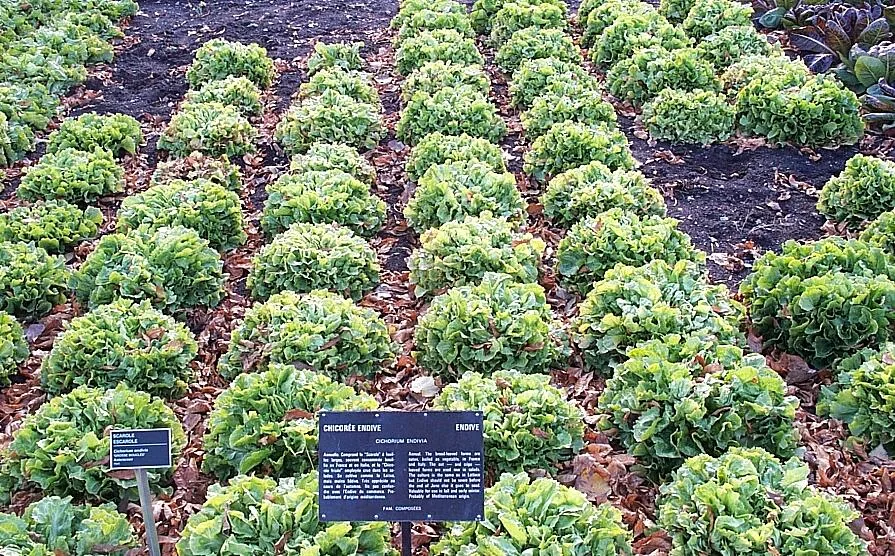
Endive is the leafy salad green that gives a kitchen garden its cool-weather poise, a member of the daisy family and a near relation of chicory grown for its leaves rather than any bloom. It arrives in two well-loved guises: the curly, frilled frisee and the broad, open escarole, each one a natural anchor for a seasonal table. A gentle bitter note runs through both, the kind that softens the moment the leaves are gathered for a meal.
Treat it, above all, as a cool-season crop that suits the rhythm of spring and fall, those mild, unhurried stretches when the days stay temperate and the soil holds its moisture. It loses its composure once summer heat settles in, drawn into bolting before its time. Plan the bed around the cooler months and it slips easily into the quietest, most rewarding part of the gardening year.
The craft worth learning is blanching, a finishing touch as much as a technique. Drawing the outer leaves up over the heart, or covering the plant for a couple of weeks, shuts out the light and turns the flavor pale, sweet, and refined. Leave it to grow in the open and the result is no less welcome at the table, only a little sharper in character.
Care
The short version: set endive in full sun to light shade, keep the soil steadily moist so the leaves stay fresh, plant into rich ground through the cool season, feed it in balance, and give each one room so bolting and tipburn never spoil the bed.
Light
Endive shows best in full sun, though it settles happily into partial shade, and a little afternoon cover is a kindness in warmer spells. Sited where light is scarce, the leaves come in thin and loose, losing the fullness that makes them worth growing.
Water
Keep the soil evenly moist at all times, watering every 3 to 5 days and more often through dry heat. Allowing it to dry is precisely what turns the leaves bitter and brings on tipburn and early bolting, so a steady hand at the watering can decides the quality of the crop.
Soil
Give it fertile, moisture-holding loam that still drains cleanly, enriched with plenty of organic matter. A pH of 5.5 to 7.0 suits it, and ground that holds its water is what keeps the leaves crisp and sweet for the table.
Temperature
A cool-season green at heart, endive is content between 39°F and 75°F (4°C to 24°C) and takes a light frost in stride. Once the warmth pushes past that range it bolts, and the leaves lose their gentle character to a sharper edge.
Humidity
Average humidity of 50% to 70% suits it well, and grown outdoors it is rarely worth a second thought. Steady moisture at the roots matters far more to the crop than the mood of the air around it.
Feeding
Work a balanced N-P-K into the bed at planting, then side-dress with nitrogen as the leaves fill out. A light touch serves best, since an excess of nitrogen invites tipburn and the soft, aphid-prone growth that unsettles an otherwise tidy bed.
Pruning
Little pruning is called for beyond lifting away any damaged outer leaves. The one ritual worth keeping is blanching: drawing the outer leaves up over the heart, or covering the plant for 2 to 3 weeks before harvest, to mellow the bitterness.
Size & spacing
Plants stand 10 to 24 inches (25 to 61 cm) tall and reach 10 to 18 inches (25 to 46 cm) across. Allow each its full breadth, since a crowded bed only hurries bolting, rot, and the stale air that dulls a planting.
When to plant
Endive keeps to the cool seasons and turns the moment heat arrives, so the calendar shapes the whole crop. Sow in early spring once hard frost has passed, then again in midsummer toward a fall harvest, and gather the leaves while the days hold their chill. The autumn planting tends to taste sweetest of all, drawn out by the first soft cold of the season.
Northern hemisphere
Southern hemisphere
Typical months for a temperate climate: start earlier in warm zones, later where spring frosts linger.
- Sow: 4-6 weeks before the last spring frost, or in midsummer for a fall crop
- Plant: Early spring after hard-frost danger passes, or late summer for fall harvest
- Harvest: Harvest leaves/heads in cool weather before heat triggers bolting
Hardiness
USDA hardiness zones: 4–9
Temperature: down to -34°C
Troubleshooting
Most of what unsettles endive shows on the leaves, whether a passing pest or a spell of weather that hurries the plant toward bolting. Read the signs early and the crop usually comes through intact. Match what the bed is showing below, then step in before it spreads.
A rising stalk and a harsher edge to the leaves
When a stalk lifts above the rosette and the flavor sharpens past pleasant, the plant has begun bolting, hurried into flowering by heat, longer days, or a crowded bed. The shift is final, the leaves stop filling, so the graceful move is to gather what remains while it still earns a place on the table. A spring or fall planting, generous spacing, and a wide berth from high summer keep the bed from turning early.
Fix:
- Harvest promptly once bolting begins
- Plant cool-season-timed successions instead
Scorched edges spoiling the look of the inner leaves
Brown, scorched edges appearing on the inner leaves are tipburn, a calcium shortfall in the fast-growing heart that heat and a heavy feed only deepen. The outer leaves and roots stay sound, so the trouble sits where it shows most, on the tender new growth. Even soil moisture, a restrained hand with the nitrogen, and a harvest taken while the weather stays cool keep the heads presentable.
Fix:
- Maintain even soil moisture
- Avoid over-fertilizing with nitrogen
- Harvest during cooler conditions
Curled leaves and a sticky film betraying small insects
A sticky sheen and a scatter of tiny soft specks across the bed point to aphids, with that gloss being the honeydew they leave behind. A firm jet of water sends most of them on their way, and lifting out the worst leaves keeps the patch looking tidy. Should they return, insecticidal soap restores order, and a lighter hand with the nitrogen settles the soft growth that draws them.
Fix:
- Hose aphids off with a strong water spray
- Pinch out and discard heavily infested foliage
- Use insecticidal soap if populations persist
Ragged holes and faint shining trails through the bed
Ragged gaps in the leaves and a faint shimmer winding between plants are the signature of slugs and snails, which work after dark and prefer cool, damp evenings. A shallow dish of stale beer, set level with the soil, draws them in quietly, and an evening pass through the bed clears any that linger. Keeping the planting free of loose mulch and debris removes the shaded corners they retreat to by day.
Fix:
- Trap with a shallow saucer of stale beer set flush to the soil
- Hand-pick at night
- Remove mulch and debris that shelter slugs
Toxicity
A welcome note for a home shared with pets or children: endive is completely safe. It is a salad green raised for the table, and nothing in the plant threatens a person or an animal. Let it grow wherever curious company tends to gather.
Safe for
People · Cats · Dogs · Horses · Rabbits · Livestock · Birds
Cats None
A household cat poses no worry here. The most a curious nibble brings is a brief, mild stomach upset, no different from any unfamiliar green.
Dogs None
Endive sits easily with dogs, and a leaf or two makes a harmless treat. A generous helping of any vegetable can loosen the stomach, but the plant carries nothing toxic.
Horses Safe
Horses may graze the leaves with nothing to fear. The plant holds no compounds that trouble them.
Rabbits Safe
Endive suits rabbits well within a varied spread of leafy greens. Bring it in gradually, as with any new forage, and it agrees with them.
Livestock Safe
Cattle, goats, and sheep take the foliage safely, since no part of the plant carries a toxin.
Birds Safe
Backyard chickens and pet birds take to the leaves gladly, with nothing to caution against. It makes a wholesome green for them.
People Safe
Grown for the table and served raw or cooked, endive is safe for everyone gathered around it, children included.
No special handling precautions; leaves are eaten raw or cooked by people.
Varieties
Endive comes in a handful of recognized types, and the choice quietly sets the tone of the salads it will fill, from sharp to mellow. These are the names worth carrying into the garden.
Curly endive (frisee, var. crispum)
Its narrow, finely cut, curled dark-green outer leaves bring the boldest bitter note of the group to a plate.
Escarole (Batavian, var. latifolium)
Broad, flat, smoother leaves give this type a softer, far milder character than curly endive.
'Clodia'
A compact, self-blanching escarole that turns out tender, pale, mild hearts entirely on its own.
How to propagate
Endive starts from seed alone, yet it rises quickly and grows at pace, so a fresh sowing keeps the kitchen garden in easy reach of the next harvest.
SeedEasy
Sow in early spring or late summer for fall harvest, in cool soil · 7-14 days to germinate, with transplants set out 4-6 weeks after sowing
Endive begins with seed and nothing else, which keeps the routine refreshingly simple. Sow straight into cool soil in early spring or late summer, or raise it indoors and move the young plants out 4 to 6 weeks on. Seeds rise in 7 to 14 days, and an early thinning to easy spacing keeps the bed from crowding, bolting, or rotting later.
Myths
Belgian endive and curly endive or escarole are the same plant.
The two belong to altogether different species. Belgian endive, sometimes listed as witloof, is forced chicory, Cichorium intybus, while curly endive and escarole are Cichorium endivia. A shared name is all that links them, and it accounts for most of the mix-ups at the market counter.
Blanching turns endive into a different, sweeter variety.
Blanching leaves the variety untouched. Drawing a cover over the heart simply withholds light and slows the chlorophyll the plant produces, and that quieting of the green is what softens the bitterness. The very same plant left in full light arrives at the table with a sharper edge.