Houseplant · Arecaceae
Fishtail Palm
Caryota mitis
A bold indoor palm with leaflets shaped like a fish's tail that anchors a bright room, easy to live with once you respect its prickly fruit.
Bright indirect
Every 7–14 days
55–84°F · 13–29°C
USDA 9–11
Overview
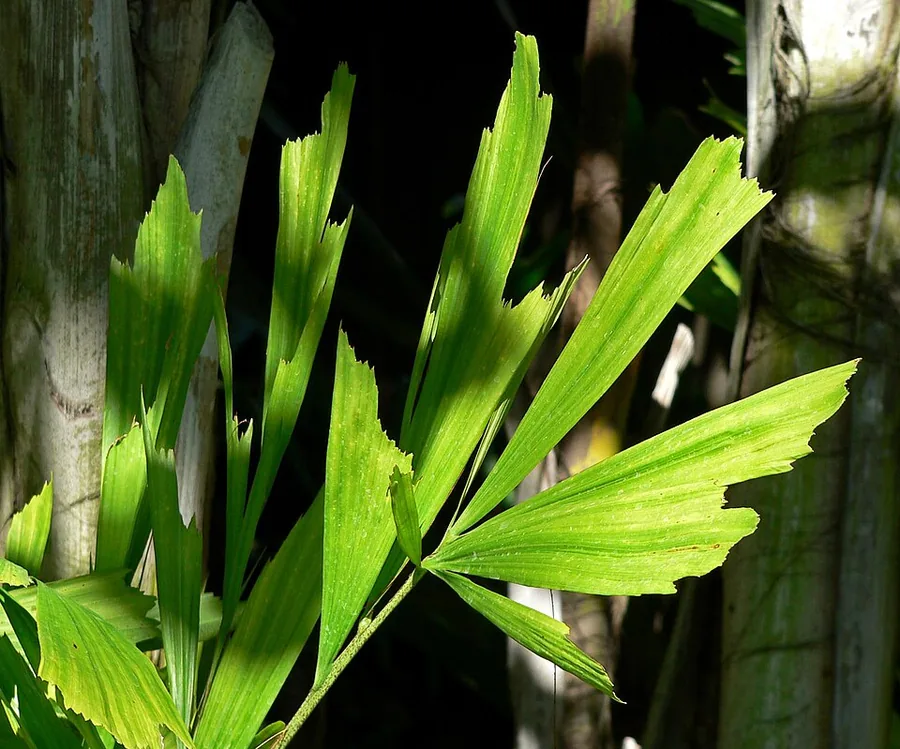
The fishtail palm earns its name from leaflets that finish in a ragged, fanned-out edge, set along twice-divided fronds that read as soft and full from across a room. The effect is leafy and relaxed rather than stiff, which is part of why it works so well as a living piece of decor. Placed in the right spot, it brings a calm, green presence without demanding the kind of fuss many statement plants do.
This is a clumping, multi-stemmed palm, so new shoots rise from the base over time and the plant builds out as a leafy column instead of a single bare trunk. That growing habit gives it real fullness near the floor, which suits a corner that needs grounding. As the clump matures it holds its shape and keeps that gathered, sculptural look.
Indoors it tends to settle between 6 to 10 feet (1.8 to 3 m) tall, making it a natural choice for a bright corner with ceiling height to spare. It anchors a light-filled room, drawing the eye upward and softening the lines of a space. Give it the floor it needs and it becomes the quiet centerpiece a room is built around.
Care
The short version: give it bright indirect light, water once the top half of the soil dries, keep it warm, and feed monthly through the growing season. The one habit to remember is to wear gloves whenever you handle the fruit.
Light
Choose a spot near a window where the light is bright but filtered, never direct sun on the fronds. It will get by in medium light and even a little shade, so a slightly dimmer corner is workable, but the palm grows fuller and faster in a brighter room. Think of light placement as choosing the right corner for the look you want.
Water
Build a calm, unhurried routine: water well while the plant is actively growing, then wait until the top half of the soil dries before the next round, which usually lands every 7 to 14 days. Ease off in the cooler months and water sparingly in winter. Aim for soil that stays evenly moist but never waterlogged, so good drainage matters more than frequency.
Soil
Pot it in a rich, loam-based mix that drains freely, the kind that holds a little moisture without staying soggy. It is forgiving about texture and handles clay, loam, and sand. Keep the pH in the 6.0 to 8.0 range and it will be content.
Temperature
Comfortable room warmth suits it best, anywhere from 55°F to 84°F (13°C to 29°C). It has no patience for cold drafts or frost, so keep it clear of chilly windowsills through winter. A steady, draft-free spot keeps it looking its best year-round.
Humidity
Ordinary room humidity is fine, though the palm is happier with a little more moisture in the air. Dry indoor air invites spider mites, which is the main reason to pay attention here. A light misting or a humidity tray helps carry it through the drier winter months.
Feeding
Feed monthly through spring and summer with a balanced palm fertilizer while the plant is actively growing. As the season cools and growth slows, stop feeding entirely. Letting it rest in the off-season keeps the routine simple and the plant balanced.
Pruning
Pruning is light work here. Trim away dead or damaged fronds as they appear, and when a stem finishes flowering and dies, cut it out at the base to clear room for the suckers coming up behind it. That small bit of tidying is most of what the palm asks.
Repotting
Move it into a larger pot every 2 to 3 years, or sooner if the clump feels crowded. Watch for roots circling or pushing out the drainage holes, soil that dries out very quickly, and stalled growth as the stems fill the pot. Those are the cues that it has outgrown its home.
Size & spacing
Indoors it reaches 6 to 10 feet (1.8 to 3 m) tall with a spread of 3 to 5 feet (90 to 150 cm), so plan its place with that footprint in mind. Give it open floor space and enough room for the fronds to arch out into the room. Treated as the anchor of a corner, it earns the space it takes.
Troubleshooting
Two things account for most of the worry around this palm: a stem that dies back after flowering, which is completely normal, and pests that show up when the air dries out, which is fixable. Match what you are actually seeing before you reach for a treatment.
Webbing and speckled leaflets in dry indoor air
Warm, dry indoor air is an open invitation for spider mites, one of the worst pests this palm faces inside. Check the undersides of the leaflets for tiny moving dots and fine webbing. Rinse or wipe the foliage, raise the humidity, and treat with insecticidal soap or horticultural oil if they persist.
Fix:
- Rinse or wipe foliage to dislodge mites
- Raise humidity around the plant
- Treat with insecticidal soap or horticultural oil as needed
A whole trunk yellows and dies after it flowers
When a full trunk yellows and collapses after blooming, it is not disease at work but monocarpic flowering. Each stem blooms once from the top down, sets reddish-black berries, and dies on schedule. Cut the spent trunk out at the base and the basal suckers will carry the clump forward.
Fix:
- Cut the spent stem out at the base once it has fully died
- Allow the surviving suckers to take over the clump
Toxicity
The leaves are generally safe to handle, so day-to-day living with this palm is easy. The hazard sits in the fruit and the sap, which carry sharp calcium oxalate crystals that sting the skin, mouth, and throat of people and pets alike. No part of the plant is safe to eat, so keep ripe berries away from children and animals, and wear gloves when cleaning them off.
Toxic to
Cats · Dogs · Horses · Rabbits · Livestock · Birds · People
Cats Toxic
A cat that bites into the fruit or sap gets a burning mouth, with drooling, pawing at the face, swelling of the lips or tongue, and a sudden disinterest in food.
Dogs Toxic
Dogs that chew the berries tend to drool heavily and show mouth pain and retching, and some will vomit or skip their meals afterward.
Horses Caution
Horses rarely encounter it, but the oxalate fruit burns the mouth and lips, brings on drooling and reluctance to graze; keep any fallen fruit well out of reach.
Rabbits Toxic
For rabbits the result is stinging pain, drooling, and a flat refusal to eat, so no part of the plant should ever be offered to them.
Livestock Caution
Livestock that mouth the fruit feel a painful sting and swelling and are usually put off after a single taste; fence the palm away from browse to be safe.
Birds Caution
The irritant crystals make the fruit a poor and risky snack for birds, and pecking at broken berries irritates the beak and mouth, so treat it as off-limits.
People Caution
No part is safe to eat, and handling crushed fruit can burn and itch the skin for hours; wear gloves when cleaning berries off seeds and keep the fruit away from children.
Wear gloves when handling the ripe fruit / cleaning seeds, as the calcium oxalate causes painful skin irritation and itching.
Helpline numbers

United States
ASPCA Animal Poison Control: (888) 426-4435 (fee applies)
Poison Control: (800) 222-1222



Canada
Poison Centres: 1-844-764-7669
Varieties
There is really just one plant to know here, since the fishtail palm is grown as the straight species rather than a lineup of cultivars.
Caryota mitis (species)
This is the clumping, multi-stemmed fishtail palm whose ragged, twice-divided leaflets read like a fish's tail and that quietly renews itself from basal suckers as older stems retire.
How to propagate
There are two ways to make more of this palm, and one is far quicker than the other. Dividing the clump is fast, while growing from seed is a long game.
DivisionModerate
Spring to summer during active growth · Several weeks to a few months for divided suckers to root and resume growth
Thanks to its clumping habit, the easiest way to make new plants is to lift the palm in spring or summer and split the suckers from around the base. Each division takes several weeks to a few months to root and resume growing.
SeedModerate
When ripe fruit is available; sow fresh seed · Germination can take several weeks to months, then years to reach size
Sow fresh seed whenever ripe fruit is on hand, and wear gloves while cleaning the pulp since the calcium oxalate burns and itches. This is the slower route: germination can take several weeks to months, and then years to reach a meaningful size.
Myths
A yellowing, collapsing trunk means the whole palm is dying or diseased.
Each stem flowers just once, fruits, and then dies, while the clump carries on through fresh basal suckers. This is normal monocarpic behavior, not a problem to fix: cut the spent trunk out and let the new growth take over.
Like the parlor and areca palms, the fishtail palm is harmless to touch.
The fruit is packed with needle-like calcium oxalate crystals that sting the skin and cause itching the moment you handle a broken berry. Wear gloves around the ripe fruit, because this palm does not keep the same safe company as those two.