Houseplant · Arecaceae
Pygmy Date Palm
Phoenix roebelenii
Set in bright, indirect light, this slow, sculptural palm brings quiet elegance to a room for years.
Bright indirect
61–81°F · 16–27°C
USDA 10–11
5–7 ft · 1.5–2 m
Overview
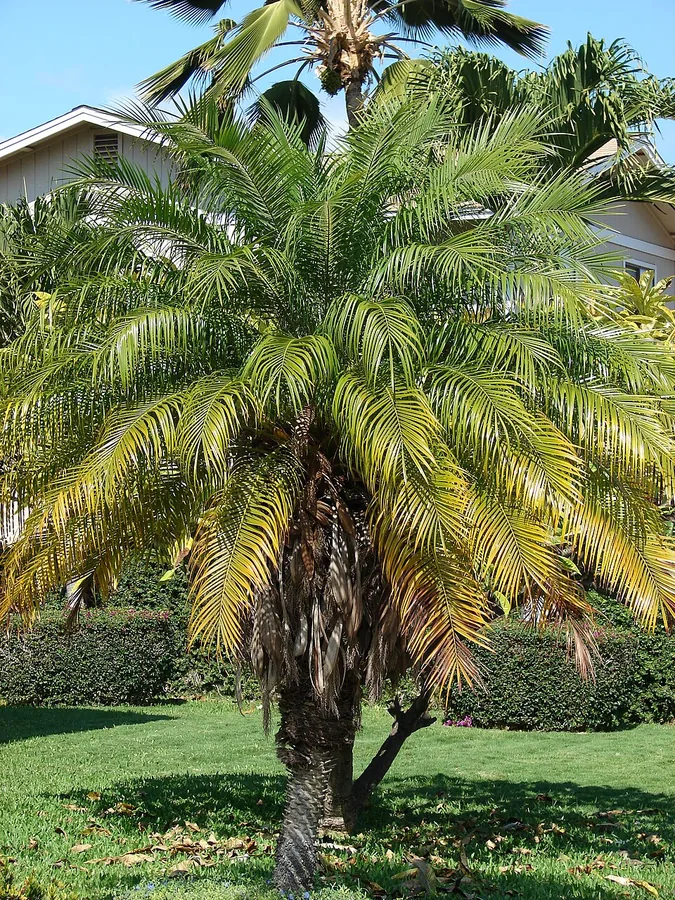
Few houseplants carry the poise of the pygmy date palm. A native of Southeast Asian riverbanks, it settles into interior life at a manageable 5 to 6.5 feet (150 to 200 cm), keeping the drama of a palm without the scale of its wild relatives. Its slender, arching fronds soften a bright corner and lend a room an unhurried, resort-like calm.
Its slow pace is part of its appeal in a considered space. There is no annual upheaval of repotting to disrupt a styled corner, and one plant holds its silhouette season after season. On a female plant, flowers give way to small purple drupes, and the seed they carry is what raises the next generation.
One detail shapes where this palm belongs in a home. The lowest leaflets along each frond base stiffen into sharp, needle-like spines, so a low console or a busy hallway is the wrong stage for it. Nothing about the plant is toxic to taste, yet those spines argue for a calm, out-of-the-way spot and a pair of gloves at grooming time.
Care
The short version: give it bright, indirect light, soil kept lightly moist rather than wet, everyday warmth and humidity, and a light feed through the growing months. Reach for gloves whenever you tend the spiny frond bases.
Light
This palm reads best in bright, indirect light, the flattering glow of an east-facing window. It gets by in partial sun or medium indirect light, though a dim setting thins the fronds and drains their color, dulling the very look you want.
Water
Keep the mix lightly moist through the growing season, and never let the pot linger in standing water, which quietly brings on root rot. Palms also resent fluoride and salts in tap water, so low-mineral water keeps the tips from browning and the fronds looking crisp.
Soil
Settle it into a porous, well-drained mix generous with organic matter. It is easygoing about texture, at home in clay, loam, or sand, and content across a pH of 6.0 to 8.0.
Temperature
Everyday indoor warmth of 61°F and 81°F (16°C to 27°C) suits it, which makes it an easy fit for most living spaces. Keep it away from cold drafts and winter-chilled glass to preserve its composure.
Humidity
Ordinary household humidity is enough, so it asks for no special staging. Where the air turns very dry the tips may brown, and a little added moisture keeps the fronds looking their best.
Feeding
Feed only across spring and summer, while the plant is in growth. A slow-release palm fertilizer with micronutrients, along the lines of 12-4-12 or 8-2-12, given two or three times through the season, is plenty. A heavy hand only scorches the tips and spoils the look.
Pruning
Take off only the fronds that have fully browned or died, and never cut into the single growing crown, or the whole stem is lost. Slip on gloves each time, since the lowest leaflets carry very sharp spines.
Repotting
This palm prefers to sit slightly root-bound, so it rarely disrupts a styled corner with a repot. Move it up only when roots circle or push through the drainage holes, water runs straight past, or growth stalls.
Size & spacing
59–79 in (150–200 cm) tall
Troubleshooting
This palm tends to signal trouble on its fronds, and the usual culprits are water, salts, or the occasional pest. Reading those cues early keeps the plant looking its part in a room. Find the match below and address it before a frond declines.
Yellowing fronds over a wet, sour base
Fronds that yellow above a soured base point to root rot, brought on when the mix stays wet and the roots cannot breathe. A little digging turns up soft, brown roots and an off smell at the base. Let the soil dry slightly between waterings, move the plant into a porous palm mix with genuine drainage, and keep the pot clear of any standing saucer water.
Fix:
- Allow the soil to dry slightly between waterings
- Repot into a porous, well-drained palm mix with drainage holes
- Never let the pot stand in water
Sticky, speckled, or spotted fronds
A sticky sheen, faint speckling, or round marks usually mean scale insects and thrips, sometimes with a fungal leaf spot in the mix. Look over the leaflets for small brown bumps, a dusty stippling, or circular discolored lesions. Clear scale with horticultural oil or insecticidal soap, keep the air moving around the plant, and remove any frond too far gone to save.
Fix:
- Wipe off or treat scale with horticultural oil or insecticidal soap
- Improve air circulation and avoid wetting foliage to limit leaf spot
- Remove and discard severely affected fronds
Browned, crisping tips along the fronds
Crisp brown tips read as leaf-tip burn, which on a palm usually traces to fluoride and salts in tap water or a heavy feeding hand. The oldest leaflets show it first, and soil left dry or salt-crusted deepens the look. Switch to low-fluoride water, flush the pot occasionally to carry the salts away, and ease off the fertilizer to restore a clean profile.
Fix:
- Water with low-fluoride water and leach the pot periodically to flush salts
- Maintain slightly moist soil during the growing season
- Reduce fertilizer rate and follow a slow-release palm fertilizer schedule
Toxicity
For a home shared with animals, this palm reassures. The ASPCA lists the pygmy date palm as non-toxic to cats, dogs, and horses, with no poisonous compounds, so a stray nibble does no harm. The consideration is placement rather than poison: the sharp basal spines ask for a spot beyond the flow of pets and passersby, and gloves whenever you handle it.
Safe for
People · Cats · Dogs · Horses · Rabbits · Livestock · Birds
Cats None
There is no poisoning here for a cat to fear. The one caution is a cat grazing the frond bases and catching a sharp spine, so place the pot where it stays clear of the daily traffic.
Dogs None
Nothing in this palm is toxic to a dog. A nose exploring the lower leaflets can still take a painful jab from the stiff spines, which is the single thing to design around.
Horses None
A horse faces no toxic compounds from this plant. Kept as an indoor palm, it rarely shares a horse's surroundings in the first place.
Rabbits None
No toxic principle troubles rabbits here. Steer a free-roaming rabbit away from the spiny frond bases, since the spines prick just as sharply at floor level.
Livestock None
Grazing animals face no poisoning from this palm. The spines are the lone hazard, and only where the plant sits within their reach.
Birds None
Pet birds take no toxic harm from the fronds. The sharp basal spines still deserve a thought around a bird that likes to perch or clamber.
People None
The plant will poison no one, and female specimens even offer small edible drupes. The spines are another matter, sharp enough to draw blood and sometimes to infect a wound, so wear gloves to handle it and keep children a step back.
Although non-toxic, the lower leaflets near the frond base are modified into very sharp, stiff spines that can cause painful puncture wounds and occasional infections; wear gloves and supervise children and pets around the plant.
Varieties
This palm usually arrives as the species itself, presented in one of two forms. The choice sets the tone of its silhouette in a room.
Phoenix roebelenii (single-trunk form)
This is the single slender-trunked form, sold as one refined specimen rather than the clumping, many-stemmed version that fills most garden center displays.
How to propagate
Raising this palm is a slow ritual rather than a quick project. It grows from seed rather than cuttings, and the seed keeps its own unhurried timetable.
SeedModerate
Sow fresh, cleaned seed when warm; germination is slow and uneven · Several months to germinate and one or more years to develop into an established plant
Seed is the customary route to a new plant, and it asks for a patient hand. Clean fresh seed from the purple drupes a female plant sets in warm weather, then sow it without delay, since germination comes slowly and unevenly. Expect several months before a sprout appears and a year or more before it grows into an established plant. Cuttings will not take, so seed remains the only path.
Offsets & pupsModerate
Growing season, when basal suckers are large enough to separate · Several months to root and establish after division
A plant that sends up basal offshoots can sometimes be divided in the growing season, once each sucker has grown large enough to lift away cleanly. Give every division several months to establish its roots before it truly settles. Seed still stands as the main way to raise new specimens.
Myths
A pygmy date palm poses a poisoning risk to cats and dogs.
In truth, the ASPCA lists Phoenix roebelenii as non-toxic to cats, dogs, and horses, so a nibbled leaflet leaves a pet unharmed. The concern is physical, not chemical: the sharp basal spines can deliver a painful puncture that now and then turns to infection, which is what truly warrants care.