Tree · Ginkgoaceae
Ginkgo
Ginkgo biloba
Slow, quietly commanding, and all but indestructible, the ginkgo is a tree you plant to shape a place for decades.
Full sun
Every 7–14 days
USDA 3–8
50–80 ft · 15.2–24.4 m
Overview
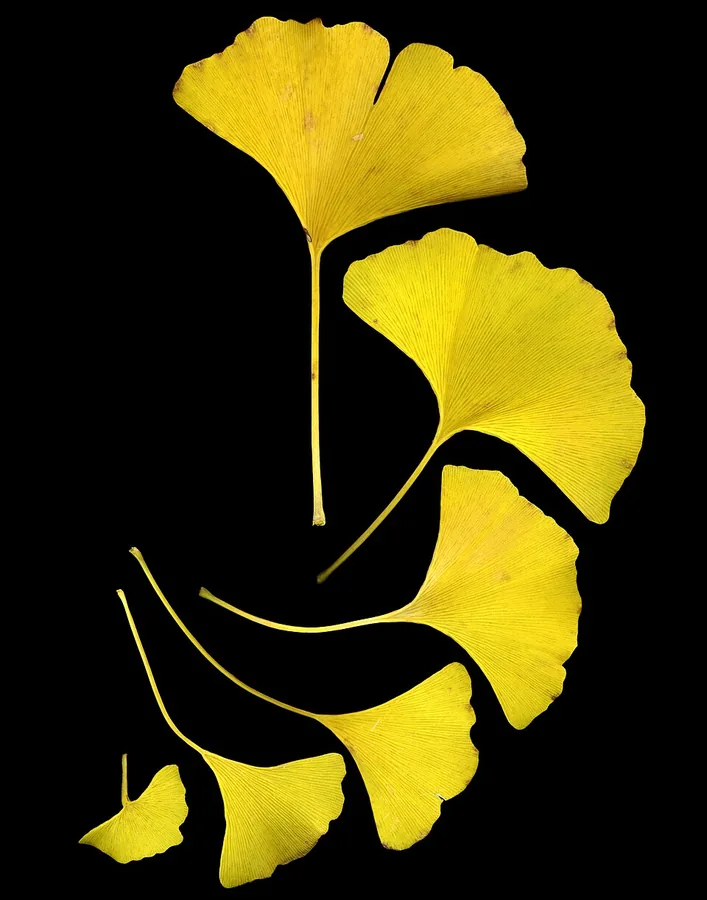
The ginkgo brings a rare sense of permanence to a property, a living fossil and the last survivor of a plant line reaching back more than 200 million years. It reads as instantly distinctive in a landscape, with fan-shaped leaves and a silhouette unlike any neighbor on the block, and it carries drought, heat, pollution, road salt, and pests without losing its composure where lesser shade trees falter. That poise, and its long life, are why it has anchored city streets for generations.
As a slow grower with a very long horizon, it fits a place you intend to keep, rewarding patience over fuss. Over the years a young tree rises to 50 to 80 feet (15.2 to 24.4 m) with a wide, open crown, so it wants a generous setting and then asks little of you beyond room to spread. Its great seasonal moment comes each autumn, when the whole canopy turns a clear, bright gold and lets go, often within a day or two, a fleeting event worth planning a view around.
One quiet decision shapes how the tree lives in a space: the ginkgo is dioecious, so each tree is either male or female. A female sheds a fleshy, foul-smelling fruit in fall that no one wants near a patio, while the fruitless male cultivars stay clean and effortless. Nearly every tree offered for landscaping is a grafted male chosen for exactly that ease.
Care
The short version: give it full sun and well-drained ground, keep it watered through the first few years while it settles into its spot, and once established it carries a landscape with almost no attention.
Light
Set a ginkgo in full sun, where it fills out most fully and stages the best autumn color. It accepts partial shade, but the crown opens and grows thinner as the light falls off, so a bright, open spot serves the look best.
Water
Keep a young tree steadily watered through its first few years as it settles in, letting the top half of the soil dry between drinks. Once established, the ginkgo is genuinely drought-tolerant and asks for extra water only through a long dry spell, which makes it an easy fit for a low-maintenance setting.
Soil
It is unfussy about ground and grows in loam, sand, or clay wherever the site drains. A pH anywhere from 5.0 to 8.0 suits it, a span that covers most gardens without any amendment.
Temperature
This is a cold-hardy, heat-tough tree that takes anything from -40°F to 100°F (-40°C to 38°C). That range is why it settles as gracefully into northern gardens as it does along hot southern streets.
Humidity
Ordinary outdoor air is all it needs, so there is nothing to tend here. Average humidity suits it fine in any climate where it is hardy.
Feeding
Offer a young tree a balanced slow-release tree fertilizer in spring to encourage a strong early frame. An established ginkgo rarely needs feeding and lives comfortably on what the soil already provides.
Pruning
Prune a young tree in late winter to set one strong central leader and a clean line of branches. A mature ginkgo needs very little, so once the frame is shaped the tree largely keeps its own form.
Repotting
A ginkgo belongs in the ground and is rarely repotted, though a young one held in a container will show when it has outgrown its pot. Watch for roots circling or slipping out the drainage holes, water running straight through, and new growth stalling.
Size & spacing
Plan for a large tree that reaches 50 to 80 feet (15.2 to 24.4 m) tall and spreads 30 to 40 feet (9 to 12 m) wide. Give it that much open ground away from buildings, walkways, and power lines so the broad crown can fill the setting as intended.
When to plant
Hardy from zone 3 to zone 8, the ginkgo goes in the ground in spring or fall, when mild weather lets it settle into a new setting before the next stress arrives. It grows slowly, so the early seasons are about steady watering rather than instant presence, and the reward is the golden set piece it stages every autumn.
Northern hemisphere
Southern hemisphere
Typical months for a temperate climate: start earlier in warm zones, later where spring frosts linger.
- Plant: spring or fall
- Harvest: April (inconspicuous; dioecious)
Hardiness
USDA hardiness zones: 3–8
Temperature: down to -40°C
Troubleshooting
A ginkgo asks very little of a landscape, which is a good part of its appeal as a long-term anchor. The few issues that surface trace to a young tree finding its footing or to the litter and irritation of a female tree's fruit. Match what you see below, then act while it still makes a difference.
Browning leaf edges, scorch, and dieback on the branches
On a young tree still finding its place, browning that sits evenly along the leaf edges through a hot, dry stretch is almost always ordinary heat or drought stress. The graver possibility is bacterial leaf scorch, which works through the canopy one section at a time across several seasons. A deep soak and a ring of mulch restore a stressed sapling, while a tree confirmed with the bacterial form is best retired from the setting.
Fix:
- Water deeply during drought, especially for newly planted trees
- Mulch to conserve soil moisture
- Remove severely declining trees if bacterial scorch is confirmed
An itchy, blistering rash after handling crushed fruit
A female tree's fruit pulp holds ginkgolic acids, urushiol-like compounds that meet bare skin much as poison ivy does. Wash the area well with soap and water, then care for the rash exactly as you would a poison-ivy reaction. Gloves keep the moment from happening, and a male cultivar keeps the fruit, and the irritation, out of the garden entirely.
Fix:
- Wash the affected skin thoroughly with soap and water
- Treat dermatitis symptomatically as for poison ivy
A rancid smell and slick fallen fruit under the tree in fall
When the ground beneath the tree turns pungent in autumn, the source is a female ginkgo releasing its fleshy seed coats, whose butyric acid reads as rancid butter. Clear the fallen fruit promptly so it stays off shoes and doorsteps, and slip on gloves, since the pulp can irritate skin. The most elegant fix is upstream: choose a fruitless male cultivar when you plant, and the whole scene never arrives.
Fix:
- Rake and remove fallen fruit promptly
- Wear gloves when handling crushed fruit to avoid skin irritation
Toxicity
The ginkgo is a low-toxicity tree, and its fan-shaped leaves pose little risk to the pets, livestock, or people who share the space. The caution rests with the female tree's fruit and raw seeds: the fleshy pulp can raise a poison-ivy-like rash on bare skin, and raw or large amounts of the inner seed carry ginkgotoxin. Most landscape trees are fruitless males, but where a female fruits, keep pets and curious children clear of the litter.
Toxic to
Cats · Dogs · Horses · Rabbits · Livestock · Birds · People
Cats Caution
For a household cat, the leaves are gentle enough that a passing nibble hardly registers. The real note of care is a female tree's fallen fruit and raw seeds, which can unsettle the stomach, so a cat is best kept clear of the litter that gathers under the tree.
Dogs Caution
A dog crossing paths with the foliage is unlikely to suffer for it. The moment to mind is one working over the dropped fleshy fruit or raw seeds, which can prompt drooling and stomach upset, with a large helping the more serious matter.
Horses Caution
The leaves carry little to concern a horse in the pasture. The graceful precaution is to keep them away from windfall seeds and crushed fruit, since the raw seed holds ginkgotoxin.
Rabbits Caution
A rabbit sampling a leaf or two comes to no harm, thanks to how gentle the foliage is. The raw seeds are another matter, best kept out of reach, since a small animal fares poorly with ginkgotoxin.
Livestock Caution
Cattle, goats, and sheep may browse the leaves with little cause for worry. The autumn drop of fleshy fruit and raw seeds beneath a female tree is the part worth fencing away.
Birds Caution
Birds carry the fallen seeds far and wide, and the foliage gives them nothing to fear. Still, the raw inner seed holds ginkgotoxin, so it is not a thing to lay out for backyard poultry.
People Caution
The leaves and leaf extracts are low in toxicity, yet two points deserve a light touch of caution. Handling the female fruit's pulp can raise a poison-ivy-like rash, and eating raw or large amounts of the inner seed can bring ginkgotoxin poisoning, so cooked seeds stay to small servings.
Only FEMALE trees produce fleshy seed coats; the fruit pulp contains ginkgolic acids (urushiol-like) that can cause poison-ivy-like contact dermatitis in people handling the crushed fruit, and RAW seeds/nuts contain ginkgotoxin (4'-O-methylpyridoxine) which can cause toxicity such as seizures if many are eaten raw. Plant fruitless male cultivars.
Helpline numbers

United States
ASPCA Animal Poison Control: (888) 426-4435 (fee applies)
Poison Control: (800) 222-1222



Canada
Poison Centres: 1-844-764-7669
Varieties
Almost every ginkgo chosen for a yard or a street is a fruitless male cultivar, selected to keep the fall clean and the setting effortless. The ones below are the selections you will most often see specified.
Autumn Gold
A fruitless male whose broad, even crown and clear golden autumn color make it a graceful anchor for a lawn or courtyard, settling around 50 feet (15 m) tall and 30 feet (9 m) wide.
Princeton Sentry
A fruitless male with a narrow, upright, conical line that reads as elegant restraint in a tight courtyard or along a street where space is at a premium.
Magyar
A fruitless male with a poised columnar-to-pyramidal form that lends a clean, architectural note to a street or entry planting.
How to propagate
Ginkgos are propagated to secure a known male, fruitless tree, so the usual routes are grafting and cuttings rather than seed.
GraftingDemanding
Late winter to spring (dormant scion onto seedling understock) · 1-2 years
Grafting is the refined way the fruitless male cultivars are carried forward. A dormant scion is joined to seedling rootstock in late winter or spring, holding the cultivar true and assuring a male tree, and the union settles over a year or two. It calls for a practiced hand, which places it at the demanding end of the craft.
Stem cuttingsModerate
Midsummer (semi-hardwood) · 1-2 years
In midsummer, semi-hardwood cuttings of 10 to 15 cm are taken from a mature male tree, dipped in IBA rooting hormone, and kept under mist. They root across a year or two and grow unhurriedly afterward, yet they carry the parent's known sex, which is the whole reason to choose the method.
SeedDemanding
Fall, after cleaning and stratifying seed · Several years
Seed can be cleaned, stratified in fall, and sown, though the seedlings are slow and take several years to settle. The real obstacle is sex: a ginkgo keeps its identity hidden for 15 to 20 years or more, which makes seed a poor path when a guaranteed fruitless male is the goal.
Myths
Ginkgo trees are poisonous and unwise to plant near pets.
The ginkgo does not appear on the ASPCA toxic-plant lists, and the fruitless male trees chosen for landscaping are considered non-toxic to cats and dogs. The concern is a narrow one, and easily managed: it is the female tree's fallen fruit and raw seeds, never the leaves or wood, that pets are kept from.
Every ginkgo brings a foul-smelling mess to the fall garden.
Only the female tree forms the fleshy seed coats that turn pungent with butyric acid as they break down on the ground. The male cultivars grown for landscaping are fruitless and odor-free, which is precisely why they fill the design palette.