Tree · Taxaceae
Japanese Yew
Taxus cuspidata
A tough, shade-loving evergreen for hedges and topiary that is also one of the deadliest plants you can put in a yard.
Partial shade
Every 7–14 days
USDA 4–7
4–25 ft · 1.2–7.6 m
Overview
Japanese yew is the quiet workhorse of a well-composed garden, a slow-growing evergreen conifer whose dark green needles hold their color from January through December. It takes shaping better than almost any other shrub, which is why designers turn to it for the clean hedges, living screens, and topiary that give a cold-winter garden its architecture. Hardy through zones 4 to 7, it carries the structure of a space through the bleakest months when everything else has gone bare.
That elegance comes with a serious caveat. Every part of the plant except the soft red aril holds taxine alkaloids, a poison that goes straight for the heart. The needles, bark, and seeds stay toxic whether fresh, wilted, or long dried, and the amount that can kill a horse or a child is alarmingly small.
Place it where drainage is sharp and where the household understands the risk, and it will hold a garden's shape for decades with almost no fuss. It simply has no place near a pasture, paddock, or play area, and its clippings should never be left where an animal might reach them.
Care
The short version: set it in well-drained soil anywhere from sun to deep shade, water it until it settles in and then only in drought, shear it in early spring, and keep every part of it away from animals and children.
Light
Light is where this plant earns its keep in a garden. Japanese yew grows in full sun straight through to deep shade, though part shade suits it best, which makes it the rare structural evergreen for a shadowed courtyard or the north face of a house where little else will hold its form.
Water
Keep the soil evenly moist but never soggy while a young plant settles into its spot, then water mainly through dry spells once it is established. The real hazard runs opposite to drought, since standing water and heavy soil bring on fatal root rot. Let the top half of the soil dry between waterings.
Soil
Give it moist, fertile, well-drained sandy or loamy soil and it settles happily into almost any bed. A pH from 5.5 to 7.0 works well, but drainage is the detail you cannot overlook. Yew has zero tolerance for wet ground and will rot where water lingers.
Temperature
This is a cold-hardy evergreen, at ease from about -20°F to 95°F (-29°C to 35°C), which is exactly why it anchors a garden through the harshest winters. Deep cold is no trouble, though dry winter wind can scorch the needles of a plant left too exposed.
Humidity
Average outdoor humidity is all it asks, so there is no number to manage. Good air movement matters far more, keeping the dense interior dry and free of pests so the planting stays crisp.
Feeding
A light hand is all a well-kept yew wants. Work in a balanced slow-release fertilizer or composted organic matter in early spring and leave it at that, since this slow grower has no appetite for heavy feeding.
Pruning
This is where the plant becomes design material, since yew is one of the few conifers that takes hard shearing and renewal pruning in stride, even a cut back into old wood. Shape hedges and topiary in early spring before new growth pushes. Never leave the clippings where an animal can reach them, because they stay deadly long after they wilt.
Repotting
Yew is rarely grown in a container and seldom needs repotting, which keeps it low on the maintenance calendar. When roots start circling the pot, pushing out the drainage holes, or water runs straight through, move it up a size or set it into the garden.
Size & spacing
Scale it to the setting, since size swings widely with the cultivar, from low spreaders to columns reaching 4 to 25 feet (1.2 to 7.5 m) tall and spreading 5 to 25 feet (1.5 to 7.5 m) across. Read the tag for your variety and give it room to fill out without crowding its neighbors.
When to plant
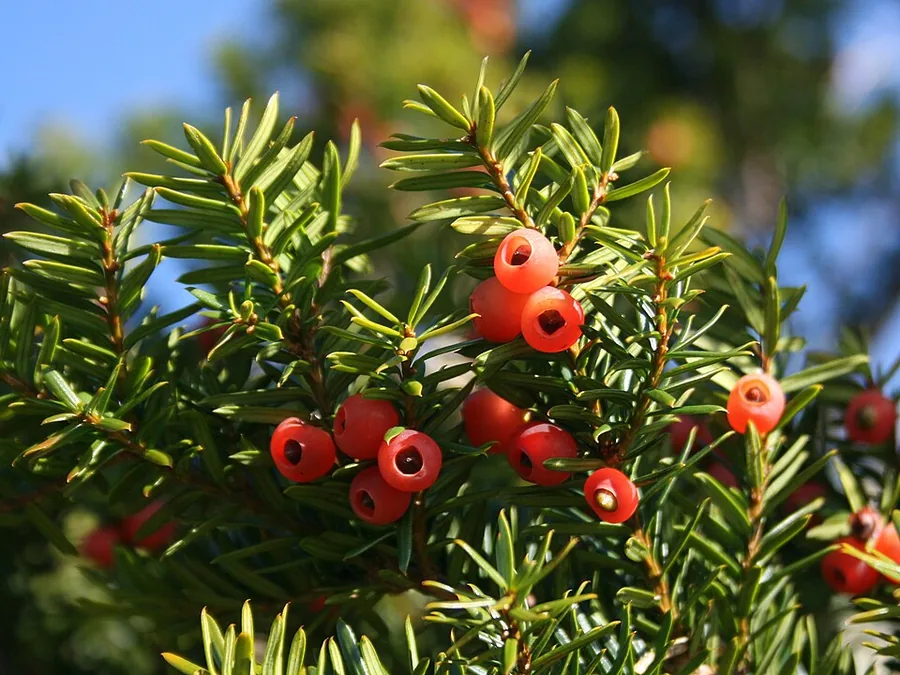
Yew is a woody evergreen, so there is no sowing season to plan around, only the right moment to move a young plant into its place in the garden. Set it out in spring or early fall, when the soil is workable and the roots have time to settle before heat or hard frost. Its spring flowers pass almost unnoticed, while female plants carry their red arils into fall as a last quiet note of color.
Northern hemisphere
Southern hemisphere
Typical months for a temperate climate: start earlier in warm zones, later where spring frosts linger.
- Plant: Spring or early fall
- Harvest: Inconspicuous spring; red arils on female plants in fall
Hardiness
USDA hardiness zones: 4–7
Temperature: down to -34°C
Troubleshooting
A well-placed yew is remarkably easy to live with, and most of what troubles it comes down to wet feet, harsh winter exposure, or a few persistent pests. Learn to read the early signs below and a small correction keeps the planting looking its best. Match what you see, then act while the fix still matters.
Yellowing, browning foliage over dark, softened roots
When the foliage yellows, then browns, and a once-tidy hedge starts to thin, the cause is almost always root rot from ground that stays too wet. A yew planted in a low corner or heavy soil slowly loses its roots to standing water, and with them goes the crisp green line the planting was meant to hold. Shift the plant to better-drained ground, water far less, and clear away anything past recovery so the composition can reset.
Fix:
- Improve drainage or relocate the plant to a well-drained site
- Reduce watering and avoid standing water
- Remove and discard severely affected plants
Bronzed needles on the exposed side after a hard winter
A yew that emerges from winter bronzed and brown along its most exposed face has taken winter burn, a cosmetic setback rather than a true illness. Cold, dry wind pulls moisture from the foliage while frozen roots cannot replace it, so the windward side of a hedge looks scorched while the sheltered side stays a clean, deep green. A deep fall watering, a discreet burlap screen through the coldest months, and a light spring trim once new growth appears restore the even look.
Fix:
- Water thoroughly in fall before the ground freezes
- Provide a windbreak or burlap screen in exposed sites
- Prune out dead foliage in spring once new growth resumes
Notched leaf edges as the planting quietly loses its polish
A hedge that starts to look tired, with C-shaped notches nicked into the leaf edges, is usually hosting the black vine weevil, whose grubs work unseen at the roots while the adults nibble the margins. Scale and mealybugs may join in and drain a planting already off its game. Treating the weevil at both the adult and grub stage, clearing scale with horticultural oil, and keeping the plant vigorous with sharp drainage bring the crisp, well-kept look back.
Fix:
- Treat for weevils targeting adults and larvae
- Control scale and mealybugs with horticultural oil
- Maintain plant vigor with proper drainage and care
Toxicity
For all its polish, this plant deserves real caution rather than a footnote. Nearly every part holds taxine alkaloids that can stop the heart with little or no warning, and dried clippings stay just as lethal as fresh growth. It has killed cats, dogs, horses, livestock, and people, so keep it well away from animals and children and never plant it near pasture.
Toxic to
Cats · Dogs · Horses · Rabbits · Livestock · Birds · People
Cats Severe
For a household cat, even a nibble can be deadly. Trembling, an unsteady walk, and labored breathing may set in before the heart fails, and sometimes there is no warning at all.
Dogs Severe
A dog that chews any part of this plant is in serious danger. Drooling, vomiting, and muscle tremors can give way to seizures and sudden cardiac arrest, often within hours.
Horses Severe
Horses are extraordinarily sensitive, and a mouthful of foliage or clippings can kill within minutes. Trembling, an unsteady gait, and a faltering heartbeat may come first, though many are simply found dead.
Rabbits Severe
The taxine alkaloids stop a rabbit's heart just as readily, and the fatal dose is tiny. Keep every part of the plant, fresh or dried, well beyond reach.
Livestock Severe
Cattle, sheep, and goats are too often found dead within hours of grazing yew or eating dumped trimmings. Those that linger show trembling, labored breathing, and sudden collapse from heart failure.
Birds Severe
Birds can be poisoned by the needles and seed, meeting the same cardiac collapse that strikes other animals. Only the soft red aril flesh is harmless, and the hard seed inside it is not.
People Caution
This is one of the most dangerous plants you can place in a garden, and human deaths from eating the needles or seeds are well documented. The red aril flesh alone is non-toxic, but the seed within is deadly, so keep children well away and never treat any green part as safe.
Never leave yew prunings or clippings where animals can reach them; wilted and dried clippings remain lethal. Keep all plant parts away from children, pets, horses, and livestock, and never plant near pasture or dump trimmings within animal reach.
Helpline numbers

United States
ASPCA Animal Poison Control: (888) 426-4435 (fee applies)
Poison Control: (800) 222-1222



Canada
Poison Centres: 1-844-764-7669
Varieties
Most of the yews chosen for the garden are Anglojap hybrids or close relatives, prized for their form and their staying power through hard winters. These are the ones a designer reaches for most.
Taxus × media 'Hicksii'
An upright, columnar Anglojap yew rising to about 20 feet, the classic choice when a garden calls for a tall, architectural hedge or screen.
Taxus × media 'Densiformis'
A dense, low semi-dwarf that reads wider than it is tall, holding around 3 to 4 feet and ideal for a soft, grounded edge.
Taxus × media 'Hatfieldii'
A male, fruitless cultivar of broad pyramidal to columnar shape reaching about 12 feet, a tidy anchor for a formal corner.
Taxus baccata (English yew)
The European parent of the Anglojap hybrids, elegant in an old-world garden but less cold-hardy than Japanese yew.
Taxus canadensis (Canada yew)
A low, spreading North American native that settles happily into a deeply shaded corner and shrugs off harder cold than most.
How to propagate
Yew comes along by two routes, and neither rewards a hurry. Cuttings are how nurseries keep a cultivar true to the form you fell for, while seed is a slow, exacting path for the patient gardener. Handle every part with care at each stage, since the plant is toxic throughout.
Stem cuttingsModerate
Late summer to fall (semi-hardwood cuttings) · Several weeks to a few months to root
Cuttings are the dependable way to copy a named cultivar true to type, so the mature form you admired repeats faithfully. Take semi-hardwood cuttings in late summer or fall, then allow for a patient wait, since yews are slow and roots may take anywhere from several weeks to a few months to form.
SeedDemanding
Fall after cleaning seed from arils · Often a year or more due to deep dormancy
Raising yew from seed is a slow, considered undertaking. Clean the seed from the red arils in fall and give it a long cold stratification to break a deep dormancy, after which it rises slowly and unevenly, often a year or more later. Handle the seed with care, as it is highly toxic.
Myths
The red yew berries are safe to eat because birds eat them.
Only the soft red aril, the fleshy cup around the seed, is non-toxic, and that is the part a bird usually passes whole. The hard seed inside carries taxine alkaloids, as do the needles and bark. A single swallowed seed can be fatal to a person, so the whole plant belongs firmly off the table.
Dried or wilted yew clippings are safe to feed or discard near animals.
Drying does nothing to blunt the poison. Wilted and dead clippings stay every bit as lethal as fresh growth, and they are a frequent cause of loss because the limp foliage tempts animals that would leave the living plant alone. Many horse and livestock deaths trace straight back to trimmings tossed over a fence.