Tree · Annonaceae
Pawpaw
Asimina triloba
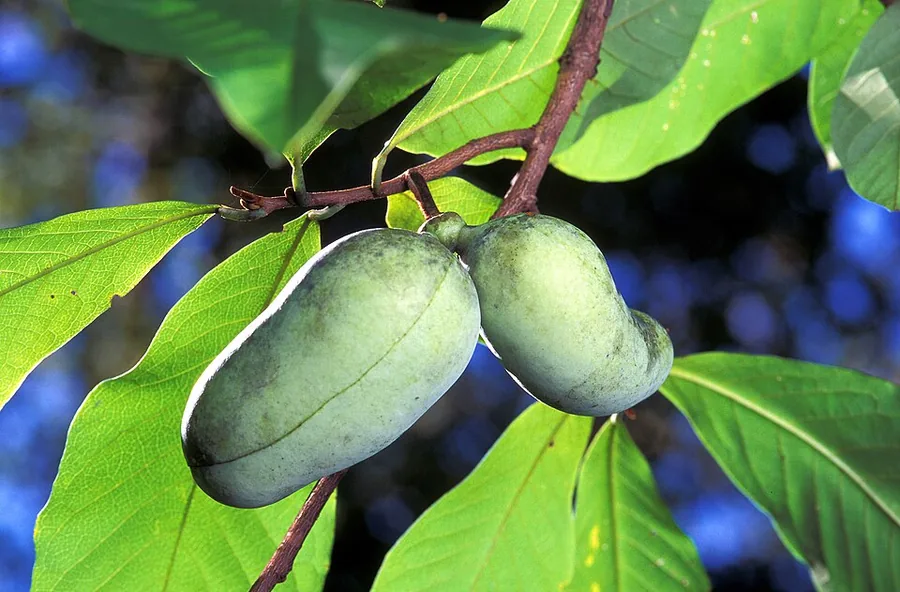
North America's largest native fruit, rich as custard and tasting of banana and mango, ripens on a tree few gardeners know.
Full sun
Every 5–7 days
USDA 5–8
15–30 ft · 4.6–9.1 m
Overview
The pawpaw is the largest fruit native to North America, and it remains one of the quiet luxuries a home garden can hold. It grows wild in the understory of eastern woods, from the Gulf states north into Canada, and offers a soft, green-skinned fruit whose custard flesh tastes of banana and mango at once, the sort of harvest that turns a late-summer kitchen into an occasion.
This is a small, slow tree that suits a naturalistic corner of the yard, one that in the wild ripens in the shade of taller trees but gives its best fruit once it reaches full sun. Its early spring flowers open an unexpected maroon before the leaves arrive and invite flies and beetles rather than bees. That single habit, more than any styling choice, sets the tone of the whole season.
To plant a pawpaw is to design a slower kind of garden, one built on patience and rewarded with a fruit no market can supply. It asks for two unrelated trees to set a crop, steady moisture as it settles, and a few years before it bears. After that it keeps its own quiet company at the edge of a border or the back of a plot.
Care
The short version: settle it into deep, fertile, moisture-holding soil with steady water while it establishes, offer shade for the first year or two, then full sun for the finest fruit, and plant a second unrelated tree so the flowers can cross-pollinate and earn their place in the season.
Light
Young pawpaws want shade for their first year or two, echoing the woodland understory where seedlings begin, which makes a dappled corner an ideal nursery. Once established, the tree fruits best in full sun, though it will still grow and bear where partial or even full shade shapes the setting.
Water
A pawpaw prefers deep, evenly moist soil that still drains, and it appreciates regular watering through the first two years while the roots settle into their place. It takes happily to moist river-bottom ground but never to heavy or waterlogged soil that lingers wet underfoot.
Soil
Give it deep, fertile, well-drained loam that holds moisture, leaning slightly acidic at a pH of 5.5 to 7.0. Heavy clay and ground that stays wet are the two settings it will not accept, so choose the planting spot with those in mind.
Temperature
A pawpaw is remarkably hardy in the cold, comfortable from about -20°F to 90°F (-29°C to 32°C), and it wants a true winter chill to fruit well. The early spring flowers remain vulnerable to a hard late frost, so a sheltered corner earns its keep.
Humidity
It favors the moderate to high humidity of its native eastern range, roughly 50% to 80%, which arrives on its own outdoors in those regions. In the garden there is really no number to attend to.
Feeding
While a young tree establishes, offer a balanced fertilizer such as 20-20-20 every couple of weeks from spring into early summer. Ease off as the tree matures and settles into a steady rhythm of growth.
Pruning
A pawpaw asks for little pruning. In late winter or early spring, take out dead, damaged, or crossing branches and shape the structure, and pull the root suckers so the planting keeps its composed lines rather than drifting into a thicket.
Repotting
Not applicable; grown in the ground as a landscape or orchard tree, not as a container houseplant
Size & spacing
A mature pawpaw reaches 15 to 30 feet (4.5 to 9 m) tall and spreads about as wide, so allow it the same 15 to 30 feet (4.5 to 9 m) in the layout. Since it spreads by suckers, leave room for the small grove it naturally wants to become.
When to plant
A pawpaw keeps time with the temperate woodland it comes from, and it brings that rhythm into the garden. Set containerized trees out in spring as new growth begins, giving the brittle taproot the whole season to settle, watch for the maroon flowers in early to mid spring before the leaves, and gather the ripening fruit from late summer into fall, when the harvest slips easily into daily meals.
Northern hemisphere
Southern hemisphere
Typical months for a temperate climate: start earlier in warm zones, later where spring frosts linger.
- Plant: Spring, during new growth, using containerized stock to protect the brittle taproot
- Harvest: Blooms early to mid spring before the leaves emerge; fruit ripens late summer to early fall (about August to October)
Hardiness
USDA hardiness zones: 5–8
Temperature: down to -29°C
Troubleshooting
A pawpaw is an unusually low-maintenance presence in the landscape, staying remarkably free of pests and disease, so most trouble traces back to pollination or a rough transplant rather than bugs. Match what you see below and the cause is usually clear. Step in early and the fix stays simple.
A tree full of flowers, yet a bare harvest table
When a pawpaw blooms beautifully and still leaves the fruit bowl empty, pollination is nearly always the reason. The species is largely self-incompatible, and bees drift right past the flowers, so a solitary tree or two grafts of one cultivar seldom earns a season worth celebrating. Set two unrelated trees in the garden, and lend a hand with pollination on days when flies and beetles are few.
Fix:
- Plant at least two different cultivars or unrelated seedlings; hand-pollinate flowers if natural fly and beetle activity is low
A promising new tree loses its footing after planting
A pawpaw anchors itself with a single long, fleshy, brittle taproot that carries almost no fine hairs, so it takes badly to being lifted and rehomed, and wild or bare-root plants often fail before they ever furnish a corner of the garden. The graceful way to settle one in is to choose container-grown stock, plant in spring as new growth begins, and grant young seedlings a season or two of shade while the roots make themselves at home.
Fix:
- Use container-grown stock, transplant in spring during new growth, and shade young seedlings for the first one to two years
Blooms fade from the branch before they can become fruit
The peduncle borer moth is the quiet interloper here, its larvae boring into the flower stalks and ending the bloom before it ripens into anything for the table. The intrusion is usually modest, so trim away the spoiled stalks, dispose of them, and let the rest of the display carry on. Pawpaws keep their own house in order the rest of the year, protected by natural acetogenins that leave them nearly pest-free.
Fix:
- Tolerate minor damage; remove and destroy affected flower stalks; trees are otherwise nearly pest-free due to natural acetogenins
A little blemish on the foliage or a nibble at new growth
From time to time a pawpaw picks up Phyllosticta leaf spot or a dusting of flyspeck fungi, or its leaves are grazed by zebra swallowtail larvae, Japanese beetles, or thrips. The effect reads far more dramatic than it truly is. The marks stay purely cosmetic and scarcely touch the harvest, so no spray is called for, and the swallowtail caterpillars leave nothing lasting behind.
Fix:
- Usually cosmetic and not harmful to yield; no treatment normally needed; zebra swallowtail larvae seldom cause permanent damage
Toxicity
The ripe, peeled flesh is a genuine pleasure and safe for people, but the rest of the plant is not meant for the table. The seeds and skin hold acetogenins that upset the stomach, and the leaves, twigs, and bark carry insecticidal compounds. With no pet-toxicity data on file, treat the seeds, skin, foliage, and prunings as a mild caution wherever animals and children share the space.
Toxic to
Cats · Dogs · Horses · Rabbits · Livestock · Birds
Safe for
People
Cats Caution
Nothing cat-specific has been recorded, so a light touch of caution suits the household. Since the seeds, skin, leaves, and twigs hold acetogenins that can upset the stomach, keep a wandering cat away from fallen fruit and prunings.
Dogs Caution
A dog that swallows seeds, skin, or chewed leaves may drool or feel unsettled from the acetogenins. The ripe flesh is gentle enough, yet everything else deserves a spot well beyond a curious nose.
Horses Caution
No grazing record exists for horses, which makes restraint the elegant choice. The bitter leaves and twigs carry insecticidal compounds, so a fence line reads better than an open invitation.
Rabbits Caution
Rabbits are best kept from the foliage, seeds, and skin, since the acetogenins can trouble the gut. A small taste of ripe pulp is the only part worth entertaining, and even then only on rare occasion.
Livestock Caution
Cattle, goats, and sheep tend to pass over the bitter leaves, and that instinct is worth trusting. Keep prunings and fallen seeds clear of the pasture to round out the arrangement.
Birds Caution
In the wild, birds and mammals enjoy the ripe fruit and carry the seeds off to new ground, yet the seeds and skin are no fare for a pet bird. A little ripe pulp is the whole of what should ever be offered.
People Ripe flesh safe
The ripe, peeled flesh is a custard-sweet indulgence and perfectly safe at the table. The seeds and skin, though, hold emetic acetogenins that can unsettle the stomach, and handling the fruit leaves some people with a passing rash.
Wear gloves when harvesting if you are prone to skin irritation; do not eat or let pets or children chew the seeds, skin, leaves, or twigs.
Helpline numbers

United States
ASPCA Animal Poison Control: (888) 426-4435 (fee applies)
Poison Control: (800) 222-1222



Canada
Poison Centres: 1-844-764-7669
Varieties
Wild pawpaws vary a great deal from tree to tree, so breeders have chosen the finest for size, flavor, and few seeds. These named cultivars are the ones to seek out for a garden meant to give back at harvest.
Shenandoah
A Peterson Pawpaws release that brings large, yellow-skinned fruit, butter-colored flesh, a mild sweet flavor, and few seeds for its size to the harvest basket.
Susquehanna
Another Peterson Pawpaws release, cherished for very large fruit, thick flesh, few seeds, and a sweet, rich flavor.
Mango
A vigorous selection that offers round fruit with orange-yellow flesh.
Sunflower
A large, late-ripening pawpaw with its origins in eastern Kansas.
How to propagate
A pawpaw can be raised from seed by a patient gardener, though a named cultivar holds its character only when it is grafted.
SeedModerate
Raising a pawpaw from seed is a slow, unhurried pleasure. The seed asks for 90 to 120 days of cold, moist stratification before it will sprout, and the seedlings take their time in the early going. They also arrive genetically variable, so a seed-grown tree will not echo the parent cultivar.
GraftingDemanding
Named cultivars keep their character through grafting rather than seed. Growers join a cutting of the chosen variety onto a seedling rootstock by whip-and-tongue, cleft, bark inlay, or chip budding, a refined bit of craft that rewards good timing and a steady hand.
Myths
Pawpaws are pollinated by bees.
The flowers release a faint, fetid scent that bees quietly decline. Flies and beetles do the real work, drawn in by that odor, which is why a stand of pawpaws stays hushed of any buzzing even at the height of bloom.
One tree, or two of the same grafted cultivar, will give you a full crop.
Pawpaws are largely self-incompatible, so a flower can never be fertilized by its own pollen or a clone of itself. You need two genetically different trees for a harvest worth the name, which means two seedlings or two separate cultivars, never two copies of a single one.
The whole fruit is safe to eat.
Only the ripe pulp belongs on the plate. The seeds and skin carry acetogenins that can unsettle the stomach, so scoop out the soft flesh and set the rest aside.