Shrub · Oleaceae
Privet
Ligustrum vulgare
The quiet architecture of the garden, a fast hedge that shapes a boundary into anything you please, but one that strays and turns dangerous to grazing animals.
Full sun
Every 7–14 days
USDA 4–8
10–15 ft · 3–4.6 m
Overview
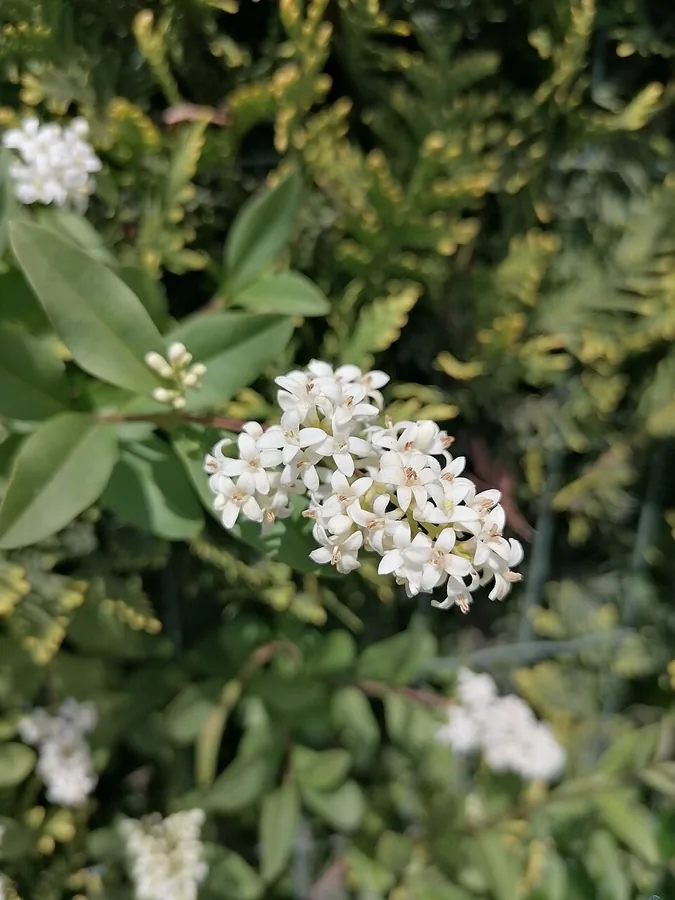
Privet is the shrub that gives a garden its lines. Fast and dense, this olive-family classic takes hard shearing into crisp walls, low borders, and neat garden rooms, the green backdrop that lets a border read as designed rather than accidental. It leafs out early and keeps its small oval foliage late, lifting spikes of white flowers in late spring before the dark berries arrive, a hedge that carries a property through the seasons with an easy, unfussy elegance.
That polish comes with a caveat. Birds take the berries and carry the seed well past the fence line, into woods and along field edges where privet settles into dense thickets and pushes native planting aside. Several species are listed or regulated as invasive, and common privet counts as a significant threat in some regions, so the considerate choice is to think beyond your own boundary before you plant.
There is a safety note to fold into the plan as well. The leaves and above all the berries are toxic to pets, livestock, and people, which shapes where a privet hedge belongs: away from paddocks and grazing, clipped before it fruits, its prunings gathered up rather than left to lie. Site it with that in mind and it remains one of the most obliging structural plants a garden can have.
Care
The short version: set privet in full sun to part shade in any well-drained soil, water new shrubs until they root and then largely leave them to it, and shear to shape in late spring once the flowers have passed.
Light
Privet reads as fullest and most polished in full sun, though it holds a respectable line in partial sun and partial shade. Give it light and the hedge knits into a dense, even face, while heavy shade thins the growth and opens gaps that spoil the clean silhouette.
Water
New plantings want steady water until they root, after which a settled privet gets along on moist to occasionally dry soil with little from you. Let the top half of the soil dry between waterings, on the order of every 7 to 14 days while it finds its place.
Soil
Privet is unbothered by soil, at home in clay, loam, or sand so long as it drains. A pH of 6.0 to 7.5 suits it, which is simply most garden ground, so the hedge slots into an existing bed without special preparation.
Temperature
Few structural shrubs are so unfazed by climate, privet holding through winters near -29°F (-34°C) and summer heat to 100°F (38°C). That range is why the same hedge look travels across so many gardens and regions.
Humidity
Ordinary outdoor air suits privet, so humidity never enters the plan. What does matter to the look is open air movement, since a crowded, still hedge invites the leaf spot and mildew that dull its face.
Feeding
In average soil a privet hedge feeds itself, needing nothing from the gardener. Where growth looks thin, a balanced granular fertilizer in spring restores the density, though a heavy hand only forces soft growth that draws pests and blurs the line.
Pruning
Shaping is where privet earns its place in a design, accepting hard shearing without protest. Cut it to shape in late spring once the flowers fade, or clip through the season to hold a crisp edge, and trim before the fruit sets to keep its seed from straying.
Repotting
Privet belongs in the ground and rarely lives in a container, so repotting seldom arises. If one is potted for a terrace or entry, move it up when roots circle the pot or slip through the drainage holes and water runs straight through.
Size & spacing
Left to grow, privet rises to 10 to 15 feet (3 to 4.5 m) with a spread of 8 to 15 feet (2.4 to 4.5 m), ample for a tall screen or a shaped garden wall. For a seamless hedge, set the plants tighter than that mature spread and shear them into one continuous run.
When to plant
Privet fits neatly into the gardening year. Plant it in spring or fall while the ground works easily, look for the white flowers around June, and time your shaping cut for the close of bloom, ideally before the berries form and travel.
Northern hemisphere
Southern hemisphere
Typical months for a temperate climate: start earlier in warm zones, later where spring frosts linger.
- Plant: Spring or fall
- Harvest: White flowers in late spring to early summer (around June)
Hardiness
USDA hardiness zones: 4–8
Temperature: down to -34°C
Troubleshooting
A privet hedge asks for little rescue, since the plant is famously durable and most of its troubles are cosmetic. Expect the occasional marked or nibbled leaf and a few sap-feeding insects, with root rot in waterlogged ground the single problem that can undo a whole shrub. Match the look below and step in early to keep the line intact.
A whole hedge wilting and yellowing in wet ground
When a normally unshakable privet wilts and yellows, the cause is usually root rot in ground that stays wet. Dig in and the roots come up dark, soft, and decayed, sitting in waterlogged soil. Correct the drainage and ease off the water, though a badly affected shrub is generally past saving and better replaced on a drier site.
Fix:
- Improve drainage and stop overwatering
- Remove severely affected plants
- Replant in well-drained soil
Spotted leaves, dying twigs, and sunken cankers
Dark spotting, blighted twigs, and sunken stem lesions read as anthracnose or twig blight, while a pale, powdery film points to powdery mildew. Cut out and destroy the affected wood, then thin the canopy so air passes through the hedge. Water at the base and clear fallen leaves to keep the spores from returning.
Fix:
- Prune out and destroy infected twigs and branches
- Improve air circulation by thinning the canopy
- Avoid overhead watering and clean up fallen leaves
White waxy insects and a sticky sheen on the hedge
A cottony white bloom and a tacky sheen across the leaves mark whiteflies or white peach scale at the sap. Turn a hard jet of water on the whiteflies to knock them loose, then coat the leaf undersides with horticultural oil or insecticidal soap. Keep on until the sticky honeydew and the black sooty mold clear and the hedge looks clean again.
Fix:
- Spray foliage with a strong jet of water to dislodge whiteflies
- Apply horticultural oil or insecticidal soap, coating undersides of leaves
- Repeat applications per label until populations decline
Scalloped leaf edges and a hedge that looks tired
Notches scalloped into the leaf margins are the mark of a weevil, the ligustrum or Japanese kind, feeding by night while its larvae work at the roots. Shake the adults onto a cloth at first light, and turn to a labeled insecticide only when the damage grows heavy. A vigorous, well-watered hedge carries the cosmetic chewing without losing its shape.
Fix:
- Handpick or shake adults onto a cloth in early morning
- Apply a labeled insecticide if damage is heavy
- Maintain plant vigor with proper watering
Toxicity
Set the aesthetics aside for a moment, because every part of privet is poisonous. The leaves and dark berries carry cardiac glycosides, saponins, and protoanemonin, and the berries are the real hazard. Eaten, they bring vomiting and diarrhea, with incoordination and heart effects after a larger dose, and they can be fatal to horses and other livestock. Keep the berries and prunings well away from animals and small children.
Toxic to
Cats · Dogs · Horses · Rabbits · Livestock · Birds · People
Cats Mild
A cat that samples the leaves or berries usually drools, loses interest in food, and develops an upset, loose stomach. The episode tends to stay mild, but the dark berries hold the most toxin, so a curious cat is best kept away from them.
Dogs Mild
Dogs typically respond with drooling, a sore belly, and loose stools, and can seem dull afterward. Trouble usually starts with a mouthful of dropped berries or fresh clippings.
Horses Severe
Privet is hard on horses. Watch for colic, abdominal pain, drooling, and a depressed, unsteady animal, and bear in mind that a large feed of leaves or berries can be fatal. Handle any suspected case as an emergency.
Rabbits Toxic
The glycosides that harm other animals make privet unsafe for rabbits too, bringing gut upset and lethargy. The leaves and berries should never be offered, even in small amounts.
Livestock Severe
Cattle, goats, and sheep can develop serious gut distress and colic from the foliage and fruit, and heavier feeds turn deadly. Keep privet out of pasture and dispose of prunings well away from where animals graze.
Birds Toxic
Wild birds swallow the berries whole and pass the seed unharmed, the very way privet spreads, but the leaves and fruit are not safe for pet birds. Keep cage birds clear of any trimmings.
People Caution
No part of privet is food. The berries carry the main risk, with vomiting and diarrhea after eating them and incoordination and heart effects after a larger dose. Keep the fruit out of reach of small children.
Keep berries and prunings away from pets and grazing animals; clip flower panicles before berries form to limit fruit on the plant.
Helpline numbers

United States
ASPCA Animal Poison Control: (888) 426-4435 (fee applies)
Poison Control: (800) 222-1222



Canada
Poison Centres: 1-844-764-7669
Varieties
Privet is a family of related shrubs and small trees, and the ones that reach most gardens are chosen for the same reasons: a quick, biddable hedge or a lift of foliage color, even where their wandering habit gives pause.
Ligustrum sinense (Chinese privet)
A semi-evergreen hedging privet that has turned sharply invasive across the eastern and southern US, raising dense thickets from bird-sown seed.
Ligustrum japonicum (Japanese / wax-leaf privet)
A warm-climate favorite prized for large, glossy, thick evergreen leaves, though it too has escaped into the wild across parts of the southern US.
Ligustrum lucidum (glossy privet)
A tree-sized glossy privet listed as a noxious weed in California and naturalized through much of the South.
Ligustrum × vicaryi (golden privet)
Grown for its bright golden-yellow foliage, which reaches its warmest color in full sun.
How to propagate
Privet makes more of itself with almost no invitation, from cuttings, from seed, and from branches that root as they lie, which is precisely why it drifts so easily beyond the garden it was meant to frame.
Stem cuttingsEasy
Softwood cuttings in late spring/early summer or hardwood cuttings in late fall to winter · 4 to 8 weeks to root
Privet takes to cuttings with almost no persuasion. Set softwood cuttings in late spring or early summer, or hardwood cuttings from late fall into winter, and they root in 4 to 8 weeks. That readiness is much of why the plant settles in so aggressively wherever it lands.
SeedEasy
From ripe black berries in fall · Germinates readily; seed is abundantly bird-dispersed
The ripe black berries of fall are heavy with seed that sprouts freely. Privet self-sows with abandon, and birds carry that seed far past the garden, the main force behind its invasiveness. Clipping the flowers before fruit sets is the surest way to keep volunteers in check.
LayeringEasy
Spring through summer · Several weeks to months
Low branches root wherever they rest against the soil, taking several weeks to a few months to anchor. The plant sends up suckers too, so a single shrub quietly widens its footprint without any help.
Myths
Privet is a harmless ornamental hedge you can plant anywhere.
A privet hedge rarely keeps to its own boundary. Birds carry the seed into woods and field edges, where it raises dense thickets that smother native planting, and several species are listed or regulated as noxious weeds. Check local rules before you plant, and consider a native hedge in its place.
Privet berries must be safe because the birds eat them.
A bird happily working through the fruit says nothing about the rest of the household. Birds digest the berries and scatter the seed freely, yet the berries and leaves are toxic to pets and livestock, carrying cardiac glycosides, saponins, and protoanemonin that birds simply shrug off.