Shrub · Oleaceae
Border Forsythia
Forsythia × intermedia
Plant it for the first burst of yellow that opens long before anything else wakes up in spring.
Full sun
Every 7–14 days
USDA 5–8
8–10 ft · 2.4–3 m
Overview
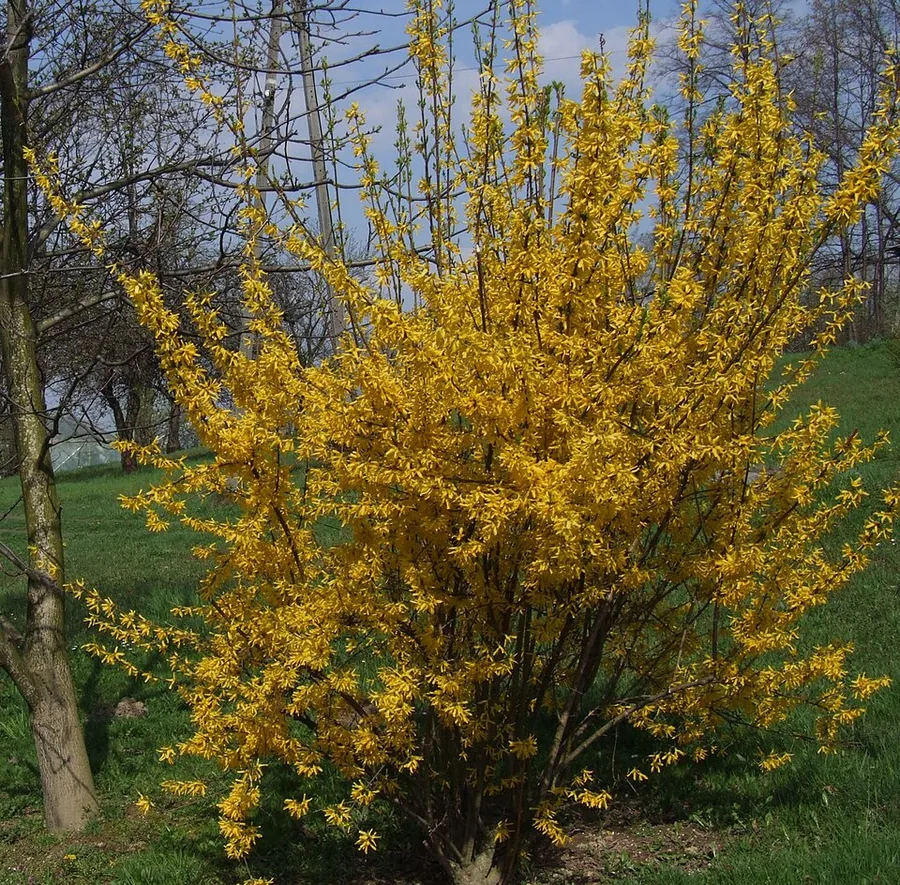
Forsythia is the shrub that turns the corner of a yard into the first event of the season. Early in spring, while the rest of the garden still reads grey and bare, its branches throw out bright yellow bells that catch the eye from across the street. A member of the olive family, it grows fast into a big, arching mound, the kind of generous shape that has anchored shrub borders and framed entryways for generations.
What makes it such an easy fit for a home is how little it demands of the spot you give it. It settles into clay, sand, poor ground, or city soil, takes hardiness zones 5 through 8 comfortably, and forgives a missed watering once it is established. The single thing it asks for is an open, sunny corner. Tuck it into shade and the color fades, and the color is the whole point of giving it a place.
Scale is the detail to plan around. A mature shrub stands 8 to 10 feet (2.4 to 3 m) tall and spreads even wider, and its low branches root wherever they touch down, so it wants real room rather than a tight bed. Set it where it can arch out as a season-opening screen or a corner anchor, give it one trim a year after bloom, and it reads as a deliberate part of the design instead of an overgrown afterthought.
Care
The short version: give it an open, sunny spot for the fullest color, settle it into almost any well-drained soil, keep it evenly watered while it establishes, and prune once a year right after the flowers fade.
Light
Give forsythia an open, full-sun position for the richest display. It will hold in partial shade, but every hour out of the sun trades away flowers, and a shaded shrub turns leafy and short on the color you planted it for.
Water
Water it on a steady schedule through the first year so it settles into its spot, then let it largely fend for itself. An established plant takes short dry stretches in stride and asks only for medium, even moisture, roughly a deep soak every 7 to 14 days in dry weather. Steer clear of low, soggy corners, which invite root rot.
Soil
Forsythia is forgiving about the ground it sits in. It accepts clay, loam, sand, and even tired urban soil, asking mainly for a spot that drains well and sits somewhere in the 6.0 to 8.0 pH range.
Temperature
This is a cold-hardy shrub, at home across roughly -20°F to 95°F (-29°C to 35°C). The plant itself rides out hard winters, though its flower buds can take damage once temperatures drop below about -5°F, worth keeping in mind for an exposed corner.
Humidity
Ordinary outdoor air suits it, so there is no humidity target to manage. Good airflow around the shrub matters far more, since a crowded, damp planting is where leaf spot takes hold and dulls the look.
Feeding
Forsythia is a light feeder. A balanced shrub fertilizer or some compost in early spring is all it wants, and overfeeding only pushes leaves at the expense of the flowers you are after.
Pruning
Prune once a year, right after the flowers fade, to keep the form graceful. Thin the oldest stems out at the base, and cut the whole shrub back near the ground every 3 to 4 years to renew it. Wait past mid-July and you remove next spring's buds, since the flowers set on old wood.
Repotting
Forsythia is a landscape shrub and rarely belongs in a pot. If you do grow one in a container for a patio, repot only when the roots circle and mat, water runs straight through, or new growth stalls.
Size & spacing
Plan the bed for a generous plant. A mature forsythia stands 8 to 10 feet (2.4 to 3 m) tall and spreads even wider, around 10 to 12 feet (3 to 3.7 m), so give it the space to arch out and read as a deliberate anchor rather than a crowd.
When to plant
Forsythia keeps a simple seasonal rhythm that is easy to plan a garden around. Set new plants in spring or fall once the ground is workable and hard frost has passed, look for the yellow bells to open in March and April before the leaves arrive, then give it its single yearly trim as soon as the show winds down.
Northern hemisphere
Southern hemisphere
Typical months for a temperate climate: start earlier in warm zones, later where spring frosts linger.
- Plant: Spring or fall, after the ground is workable and the threat of hard frost has passed.
- Harvest: Early spring (March to April), before the leaves emerge.
Hardiness
USDA hardiness zones: 5–8
Temperature: down to -29°C
Troubleshooting
Forsythia is an easygoing shrub, so a well-placed one rarely causes concern, and most issues trace back to a poor spot or a mistimed trim. The notes below cover what tends to go wrong in a home garden. Match what you see, then address the cause behind it.
A centerpiece shrub in decline
A forsythia that wilts and slips away in damp, heavy ground is most often losing the battle to Phytophthora root rot, which leaves the roots dark and soft. Small knots or swellings on the roots instead point to root-knot nematode, and either one deepens where water lingers in compacted soil. Lift a fading plant to read its roots, open up the drainage, and pull back on watering. When a shrub is too far gone to anchor the planting, it is kinder to remove it and begin again on a raised, free-draining site.
Fix:
- Improve drainage and reduce watering
- Remove severely affected plants
- Replant in a raised, well-drained site
A spring border that stayed quiet
When the season turns and the border refuses to glow, the cause is almost always pruning at the wrong moment. The buds rest on old wood, so a trim made after mid-July quietly erases the display you were counting on for next year. Heavy shade dims the effect as well, and a punishing winter can take the buds once the cold sinks below about -5°F (-21°C). Time your pruning for just after bloom, set the shrub in open sun, and lean on a hardy cultivar where the season runs cold.
Fix:
- Prune only immediately after flowering, never in summer or late winter
- Move or limb up nearby plants to give the shrub full sun
- In cold regions choose hardier cultivars such as Northern Sun or Meadowlark
When the foliage loses its polish
A shrub meant to read as a clean green backdrop loses its composure when fungal leaf spot marks the foliage, while sunken, dead tips usually signal stem dieback or canker that a drought-stressed plant invited in. Glance at the base too, since rough woody swellings there are the mark of crown gall. Restore the look by cutting the dead and cankered wood back to healthy tissue, wiping the pruners between cuts, and thinning the shrub so air moves freely through it. Directing water to the base keeps the leaves dry and the spores from settling.
Fix:
- Remove and discard affected leaves and prune out dead or cankered wood to healthy tissue
- Disinfect pruners between cuts
- Improve air circulation by thinning the shrub
- Water at the base to keep foliage dry
Toxicity
For a home with pets or children, forsythia is an easy yes: it is non-toxic across the board. The ASPCA lists it as safe for dogs, cats, and horses, and it carries no poisonous compounds. The flowers taste bitter, which keeps most animals from making a habit of the border anyway.
Safe for
People · Cats · Dogs · Horses · Rabbits · Livestock · Birds
Cats None
A household cat can move freely through the border. A taste of leaf or flower brings no poisoning, and the bitter note in the bloom tends to send a curious cat on its way before it eats much.
Dogs None
A dog can wander the garden and brush or chew the branches without harm. At most, a large mouthful of any greenery might bring a brief, mild stomach upset that settles on its own.
Horses None
Listed as non-toxic to horses, so a shrub set near a paddock poses no poisoning risk to a grazing animal.
Rabbits Safe
Nothing in the plant can poison a rabbit, so a low stem near a garden path is no danger. The bitter flowers generally keep browsing to a minimum anyway.
Livestock Safe
Cattle, goats, and sheep can share a pasture edge planted with forsythia with no poisoning concern.
Birds Safe
Songbirds drawn to perch in the arching branches face no toxic hazard from the leaves, flowers, or stems.
People Safe
Safe to plant where children play in the yard and safe to prune without gloves. Nothing on the shrub is poisonous, though washing your hands after any garden work remains good practice.
No special handling required; the flowers are bitter, which discourages nibbling. Wash hands after pruning as a general practice.
Varieties
Most forsythia offered for the garden is this hybrid, but the named cultivars differ in size, hardiness, and how freely they flower, which matters when you are matching one to a space. A few are worth knowing as you plan.
Lynwood (Lynwood Gold)
The upright classic that designers reach for first, lined with bright yellow flowers spaced evenly along every stem for a tidy, dependable show.
Spectabilis
The dramatic choice for a focal planting, drenching its branches in dense, deep yellow bloom.
Beatrix Farrand
A robust performer for a generous bed, opening large flowers in a rich canary yellow.
Northern Sun
The dependable pick for cold-country gardens, hardy to about zone 4, rising near 10 feet and holding its buds through a hard winter.
Gold Tide
A low, spreading dwarf that suits a refined groundcover sweep or a planting to soften a bank or slope.
Companions
Forsythia pairs well with early bloomers that pick up where its yellow leaves off, and poorly with anything trying to grow in the shade beneath its dense canopy.
Plant near
Daffodils: Yellow daffodils bloom at the same time and echo the forsythia's early-spring color at ground level.
Lilac: Lilac flowers shortly after forsythia, extending the shrub-border bloom season; both share full-sun, well-drained conditions.
Keep apart
Turfgrass directly beneath the canopy: The dense arching canopy and surface roots shade and compete with lawn grass, which struggles under the shrub.
How to propagate
Filling out a border or starting a young hedge is simple here. Forsythia roots from cuttings or layers itself wherever a branch leans down to the soil, so a single plant easily becomes a sweep of them.
Stem cuttingsEasy
Late spring to summer · 4 to 8 weeks to root
Multiplying this shrub for a longer hedge or a gift to a neighbor takes little effort. Take softwood cuttings in late spring or early summer, or semi-hardwood cuttings later in the year, and most will root within 4 to 8 weeks.
LayeringEasy
Spring through summer · One growing season to root
The graceful arching branches root themselves wherever they rest on the soil, which makes filling out a border almost effortless. Pin a low branch down any time from spring through summer, allow a full growing season for it to root, then separate it from the parent and set the new plant where you want it.
Myths
Forsythia should be cut back hard in late winter to make it bloom better.
A hard late-winter cut feels like good housekeeping, yet it strips the flower buds that formed on last year's wood. Heavy pruning at the wrong time thins or undoes the very display the shrub is grown for. Save the shears for just after flowering and the coming season's show stays safe.
Forsythia berries and flowers are poisonous to pets and children.
This is a worry a home gardener can set aside. The ASPCA lists Forsythia, or Golden Bells, as non-toxic to dogs, cats, and horses, and it is considered safe around children as well. The plant carries no toxic principles, and the bitter flowers discourage browsing on their own.