Vegetable · Rosaceae
Strawberry
Fragaria × ananassa
Give it full sun, steady water, and clean straw mulch, and the strawberry rewards the season with sweet fruit year after year.
Full sun
Every 2–4 days
59–77°F · 15–25°C
90–120 days
Overview
Few plants earn a place in the summer garden as effortlessly as the strawberry. A member of the rose family, it grows as a low, spreading perennial that sends runners out to knit a bed together over time. One planting will carry the patch for several years before it asks to be renewed, which makes it a quiet fixture rather than a yearly project.
There is more than one kind, and the type sets the rhythm of the season. June-bearers bring one generous crop over a couple of weeks in early summer, the makings of a single lavish harvest, while day-neutral and everbearing plants keep a bowl on the counter filled from late spring into fall. June-bearers spread freely by runners and day-neutrals hold back, which shapes how the bed reads through the year.
Strawberries reward a little attention with a great deal of pleasure. Give them sun, even moisture, and a bed of clean straw beneath the fruit, and the berries arrive sweet and unblemished, ready for the kitchen. Let the patch crowd or the fruit rest on wet soil, though, and the reward turns to gray mold and soft, spoiled berries instead.
Care
The short version: a sunny bed, evenly moist soil taking about an inch to an inch and a half of water a week, rich sandy loam leaning acidic, and a clean straw mulch that keeps the fruit off bare ground.
Light
Strawberries want full sun, ideally 8 or more hours a day, which is what carries the fruit to full sweetness. A touch of partial sun is tolerated, but real shade thins the crop and leaves the berries dull and watery, so choose the brightest corner of the plot.
Water
Keep the soil evenly moist but never waterlogged, which comes to about 1 to 1.5 inches (2.5 to 4 cm) of water a week. Follow it closely through flowering and fruiting, and always water at the base so the foliage and berries stay dry.
Soil
Set the patch in well-drained sandy loam enriched with plenty of organic matter. A pH of 5.8 to 6.5, on the acidic side, suits them best, and it is that easy drainage that keeps root rot away.
Temperature
Strawberries are at their best in the 59°F to 77°F (15°C to 25°C) range. They are hardy enough to overwinter in the ground, though the flowers and fruit falter once summer heat pushes well past that band.
Humidity
Average humidity of 40% to 70% suits them without any fuss, so there is no figure to chase. Air movement matters more, since the still, damp air around a crowded bed is where gray mold and leaf fungi settle in.
Feeding
Feed a balanced 10-10-10 in spring at planting, then again after summer renovation. Keep spring nitrogen light on fruiting June-bearers, or the plants turn soft and leafy at the expense of firm fruit.
Pruning
Pinch the first-year blossoms off June-bearers so they build strong crowns, and thin the runners so the bed keeps its shape rather than crowding itself. Renovate June-bearing beds after harvest by mowing the old foliage and thinning the plants, and remove every runner on day-neutral types.
Repotting
Refresh or pot up container plants every 1 to 2 years, and renew in-ground beds every 3 to 4 years. Declining fruit size, quick drying, and roots circling the pot all quietly signal the time has come.
Size & spacing
The plants stay low, at 6 to 12 inches (15 to 30 cm) tall, and spread 12 to 24 inches (30 to 60 cm) wide as the runners fill in. Give them that space so air moves freely through the bed and the fruit stays clean.
When to plant
Strawberries belong to the early part of the year, going in while the ground is still cool. Set out dormant crowns or transplants in early spring the moment the soil can be worked, and the patch will hand you fruit from early summer through fall, depending on the type you choose to grow.
Northern hemisphere
Southern hemisphere
Typical months for a temperate climate: start earlier in warm zones, later where spring frosts linger.
- Plant: Early spring, as soon as the soil can be worked; set dormant crowns or transplants 2 to 4 weeks before the last frost.
- Harvest: June-bearing: harvested over 2 to 3 weeks in early summer; day-neutral and everbearing: harvested from late spring through fall.
Hardiness
USDA hardiness zones: 3–10
Temperature: down to -40°C
Troubleshooting
Most strawberry trouble surfaces on the fruit, the leaves, or the roots, and damp conditions are usually behind it. Learn the early signs and you can step in before anything travels through the bed and dulls the season. Match what you see below, then act while it still makes a difference.
Stunted plants that flag in dry weather and stall
A soilborne rot such as red stele or Verticillium wilt works out of sight at the roots, and a plant will not come back once it takes hold. Lifting a struggling plant and slicing a root lengthwise settles the question, and anything showing the rot is best pulled and destroyed. A well-drained bed, resistant cultivars, and a site that has not lately grown tomatoes or potatoes keep the patch healthy for the long season ahead.
Fix:
- Remove and destroy affected plants
- Improve soil drainage and avoid waterlogging
Soft brown patches and fuzzy gray mold on ripening berries
The culprit is gray mold, a fungus called Botrytis cinerea that arrives in wet, humid weather just as the fruit reaches its peak. Make a habit of picking ripe berries often and lifting away any that are already marked before the spores travel. A tidy layer of clean straw, room between the plants, and fruit kept off bare soil keep a picking bowl looking as good as it tastes.
Fix:
- Remove and destroy infected berries promptly
- Harvest ripe fruit frequently
- Improve air circulation and keep fruit off bare soil
Purple spots and scorched edges across the foliage
This is leaf scorch and leaf spot, a pair of fungi that fleck the top of the leaf and singe the margins reddish-brown. It reads worse than it is and seldom touches the harvest itself. Clearing the old marked foliage at renovation keeps the patch looking crisp, dry leaves discourage a return, and a labeled fungicide is worth reaching for only when an outbreak truly spreads.
Fix:
- Remove and destroy old infected foliage at renovation
- Apply a labeled fungicide if infection is severe
Toxicity
A note of ease for households with pets: strawberries are safe from root to runner to fruit. The leaves, stems, and berries carry no toxic compound, so a curious cat, dog, or rabbit that takes a bite is in no danger. The fruit makes a wholesome treat for pets and people alike, at its best offered in small amounts.
Safe for
People · Cats · Dogs · Horses · Rabbits · Livestock · Birds
Cats None
A strawberry patch is a calm corner of the garden for cats, since the leaves, runners, and fruit hold nothing that can harm them. A curious cat that samples a leaf is in no danger.
Dogs None
Dogs can wander the beds and even enjoy a ripe berry as part of the day. Keep any treat modest, since a large helping of fruit may unsettle the stomach.
Horses Safe
Horses can graze beside the patch in comfort, as the whole plant is free of anything toxic.
Rabbits Safe
Rabbits come to no harm from the leaves or fruit, and a thin slice of berry now and then is a charming little treat.
Livestock Safe
Cattle, goats, and sheep can browse the foliage without any toxic risk.
Birds Safe
Birds gather for ripe strawberries and take no harm, though they will happily clear the bed before the household does.
People Safe
Strawberries are a kitchen classic, safe to enjoy fresh or cooked, and the rest of the plant is harmless too.
No toxic principle is present in the plant; the ripe fruit is edible and safe for pets and people.
Varieties
Strawberries fall into three broad fruiting types and a long list of named cultivars. These are the ones worth knowing as you plan the bed.
June-bearing (Junebearer)
It delivers one lavish crop over 2 to 3 weeks in early summer and sends out plenty of runners to fill a bed.
Day-neutral
It fruits right through the season regardless of day length, asking little in return by making few runners.
Honeoye
A dependably cold-hardy June-bearer that crops well and offers large, firm, bright-red berries.
Albion
A refined day-neutral prized for big, conical, sweet berries and reliable disease resistance.
Seascape
An easygoing, heat-tolerant day-neutral that settles into a wide range of climates.
Ozark Beauty
A well-loved everbearer that offers two main crops, one in spring and another in fall.
Companions
Strawberries do best beside low crops and pollinator plants that share the bed without crowding them, and worst beside relatives and heavy feeders that pass along wilt or steal nutrients.
Plant near
Bush beans: Legumes fix nitrogen and compete little with shallow strawberry roots.
Spinach: Low-growing leafy crop that uses bed space efficiently without shading strawberries.
Borage: Attracts pollinators that improve strawberry fruit set.
How to propagate
Strawberries are among the easiest plants to multiply, in large part because they see to it themselves, sending out runners that root into new plants across the season.
Offsets & pupsEasy
Summer to early fall · 4 to 8 weeks
The most graceful way to expand a patch is to let it expand itself. Through summer and into early fall, daughter plants appear along the runners, and pegging one down to root before cutting it free of the parent gives a new plant for the price of a moment's attention. It settles in within 4 to 8 weeks, and a single June-bearer can offer roughly 120 runner plants across a season.
DivisionModerate
Early spring or after renovation · 4 to 6 weeks
A planting that has aged into several crowns can be lifted and split to bring a tired bed back to life. The moment for it is early spring or just after renovation, when the rooted crowns part easily by hand and go back into fresh ground. Each piece roots and takes hold in about 4 to 6 weeks.
SeedDemanding
8 to 10 weeks before the last spring frost, indoors · 2 to 3 months to transplant size
Raising strawberries from seed is a quiet pursuit for breeders and alpine types, since hybrid garden strawberries never come true to the parent. Sow indoors 8 to 10 weeks before the last spring frost and let the calendar do its work, as the seedlings take 2 to 3 months to reach transplant size.
Myths
The strawberry is a true berry.
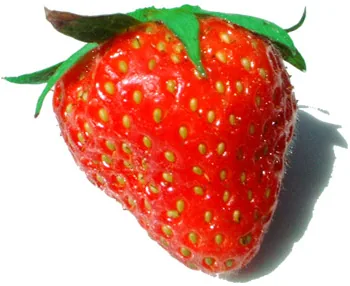
The name suggests otherwise, yet botanists file it as an accessory fruit. The sweet red flesh grows from the receptacle, and the real fruits are the tiny achenes, the little seed-like flecks set across the surface.
Let June-bearing plants fruit heavily in their first year.
An early crop looks like a head start, but it drains a young plant before it has built its base. Pinch off the first-year blossoms on June-bearers and the crowns and runners come in stronger, rewarding the patient gardener with far larger harvests in the seasons to follow.