Vegetable · Amaranthaceae
Spinach
Spinacia oleracea
Sown cool and picked young, spinach brings tender leaves from bed to table in about six weeks.
Full sun
Every 2–4 days
32–77°F · 0–25°C
40–50 days
Overview
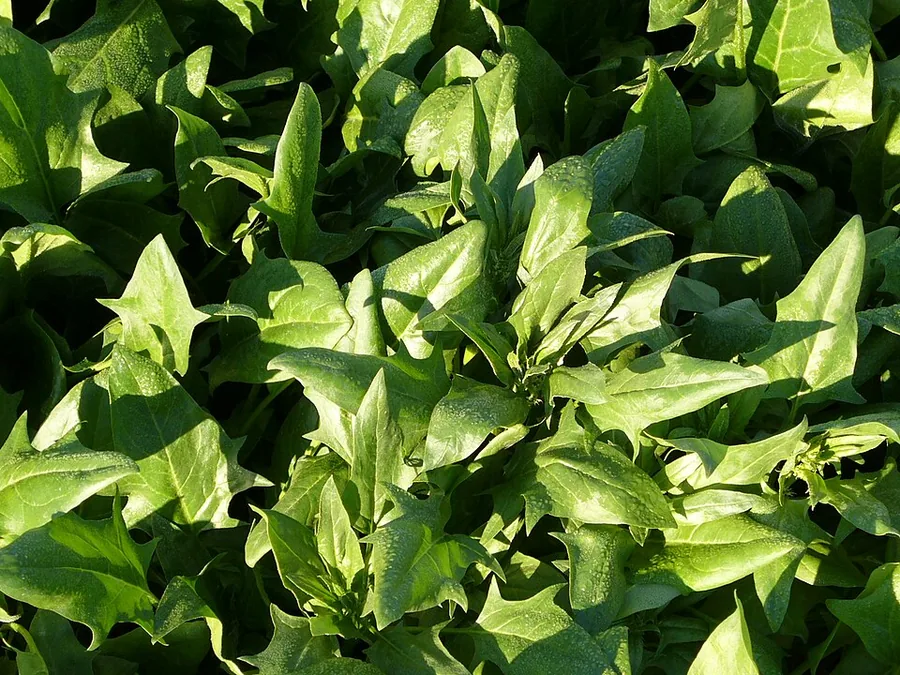
Spinach belongs to the gentle bookends of the growing year, the cool weeks of early spring and the fading warmth of fall. It carries a garden from seed to a generous cutting of tender leaves in about 40 to 50 days, which makes it the crop that opens the season at the table and quietly closes it. Ask it to perform through high summer and it bolts before the kitchen ever catches up.
Its compact frame, just 6 to 12 inches (15 to 30 cm) across, lets it settle into the smallest corner of a plot, a raised bed on the patio, or a wide container by the kitchen door. Picking the outer leaves and leaving the heart to grow turns one sowing into weeks of steady gathering, an easy ritual that folds neatly into a daily routine. It asks for little and rewards the habit of stepping outside with a bowl.
There is a note of restraint to keep in mind at the table. Spinach is a high-oxalate green, wholesome for the household yet best shared with pets and grazing animals in small measures rather than by the bowl.
Care
The short version: plant spinach while spring or fall still runs cool, give it full sun to partial shade and a rich, moisture-holding bed, and gather the outer leaves regularly before summer heat tips it into bolting.
Light
Spinach settles happily into full sun through the cool months and accepts partial shade without complaint. As summer warms the beds, a stretch of afternoon shade earns its place, easing the plant away from the bolting that heat invites.
Water
Aim for evenly moist ground, glancing over the bed every few days, since shallow roots and tender leaves lose their poise quickly when dry. That steady moisture keeps the foliage supple and holds off bolting a little longer as the weather warms.
Soil
Give spinach a rich, well-drained bed generous with organic matter. It stays untroubled by pH across 6.0 to 7.5, and a foundation of compost repays the effort with leaves that come fuller and faster.
Temperature
Cool weather sets the whole tone. Spinach carries from near freezing to about 77°F (25°C) and shows its best at the lower reaches, which is why spring and fall plantings so outshine anything sown into summer.
Humidity
Ordinary outdoor air is all spinach expects, so there is no figure worth minding. Air movement is the thing to court, since leaves left crowded and damp give downy mildew its opening.
Feeding
Spinach is a heavy feeder with a real appetite for nitrogen to keep the leaves coming. Turn compost or a balanced, nitrogen-rich fertilizer through the soil ahead of sowing, then side-dress midseason should the foliage begin to pale.
Pruning
No real pruning is called for. Gathering the outer leaves as they mature keeps the center producing, while any leaf that yellows or any stem that bolts is simply removed.
Repotting
Grown as an annual, spinach seldom lasts beyond a single season and is never repotted. Once a planting has given all it will, clear the ground and sow afresh rather than moving anything along.
Size & spacing
The plants keep to a modest 6 to 12 inches (15 to 30 cm) in height and roughly the same in width. Space the thinned seedlings 3 to 6 inches apart so air can move between them and each has room to fill out.
When to plant
Spinach keeps a cool-weather calendar and has no patience for heat. Set the first sowing in as soon as spring soil gives way, follow with another in late summer for an autumn harvest, and pick steadily across the cool stretch that leads up to bolting.
Northern hemisphere
Southern hemisphere
Typical months for a temperate climate: start earlier in warm zones, later where spring frosts linger.
- Sow: Usually direct-sown; optionally start 4-6 weeks before the last spring frost if transplanting.
- Plant: Early spring as soon as soil is workable (about 4-6 weeks before last frost) once soil reaches 45°F, and again in late summer for a fall crop.
- Harvest: Harvest leaves roughly 40-50 days after sowing, before plants bolt; grown for foliage rather than bloom.
Hardiness
USDA hardiness zones: 2–11
Temperature: down to -46°C
Troubleshooting
Spinach tends to signal trouble on its leaves or in a sudden bid to flower, and reading those cues early keeps the harvest on the table. Match what appears below and step in before the flavor sours or a disease works its way through the bed.
Yellow blotches above, a soft bloom of mold below
This is downy mildew, a quick disease that flourishes where beds sit cool, wet, and close. Look for a gray to violet fuzz beneath the leaves set against yellow patches above. Take out the affected leaves, open the spacing so air can pass, and water low at the roots early in the day so the leaves dry without delay.
Fix:
- Remove and destroy infected leaves and plants
- Improve air circulation and avoid overhead watering
A flowering stalk rises and the flavor turns sharp
This is bolting, the plant's turn toward seed once the days stretch long and the heat builds. Its energy leaves the foliage for a central stalk, and the leaves left behind grow small and sharp on the palate. Lift the entire plant as soon as that stalk shows, and begin a fresh sowing while the air stays cool.
Fix:
- Harvest the entire plant promptly once bolting begins
- Remove bolted plants and sow a fresh cool-season planting
Pale, wandering lines drawn inside the leaves
Those pale lines are the trace of leafminer larvae feeding within the leaf, tucked between its surfaces where sprays never reach. The tidy response is to lift off the marked leaves and discard them as soon as they show. A floating row cover, laid over the bed early, stops the egg-laying flies from settling on the crop.
Fix:
- Pick off and destroy mined leaves
- Remove badly infested plants
Toxicity
Spinach is a nourishing green with nothing poisonous about it, a reassuring thing in a household kitchen garden. The single caveat is its high oxalate content, a quiet dietary footnote for anyone prone to kidney stones and a reason to offer cats, dogs, and horses only modest tastes rather than full servings.
Toxic to
Cats · Dogs · Horses
Safe for
People · Rabbits · Livestock · Birds — the leaves
Cats Caution
A small taste of spinach does a cat no harm, yet the leaves are rich in soluble oxalates. Offered often or in a large portion, they can weigh on the kidneys and unsettle the stomach, so let it remain a rare treat.
Dogs Caution
Most dogs take a little spinach without issue, though the oxalates gather over time. Large or regular helpings can irritate the gut and press on the kidneys, a point that matters most for a dog already inclined to kidney trouble.
Horses Caution
Spinach is no poison to a horse, but its heavy oxalate load can hinder calcium and weigh on the kidneys when eaten in quantity. An occasional handful marks the sensible limit.
Rabbits Safe
Rabbits may enjoy spinach as one thread in a varied leafy diet. Because of the oxalates, it is wiser to alternate it with other greens than to serve it daily.
Livestock Safe
Cattle, goats, and sheep do well on moderate amounts of spinach, trimmings included, and the leaves hold no toxin to endanger a grazing animal.
Birds Safe
Hens in the yard and pet birds take gladly to spinach. Serve it among a few other greens so the oxalates never dominate what they eat.
People Edible
For the household, spinach is a nourishing leafy green enjoyed raw or cooked. Its natural oxalates matter only to those prone to kidney stones, and a turn in the pan brings the levels down.
Spinach is high in oxalates, a human dietary consideration (relevant to kidney-stone-prone individuals); cooking reduces oxalate levels.
Helpline numbers

United States
ASPCA Animal Poison Control: (888) 426-4435 (fee applies)
Poison Control: (800) 222-1222



Canada
Poison Centres: 1-844-764-7669
Varieties
Spinach arranges itself into savoy, semi-savoy, and smooth-leaf types, and a handful of trusted varieties will see most kitchen gardens through. These are the ones to plant with confidence.
Bloomsdale Long Standing
A treasured heirloom savoy whose thick, richly crinkled dark-green leaves stand up to the cold.
Tyee
A semi-savoy hybrid that keeps its cool in warm spells without bolting and comes ready in about 45 days.
Melody
A 1977 All-America Selections standout prized for slow bolting, fine flavor, and lightly crinkled leaves.
Companions
Spinach grows best alongside other cool-season crops, especially legumes that share its early timing and feed nitrogen back into the bed.
Plant near
Peas: Shares cool-season preferences and the legume fixes nitrogen, making it an efficient early-spring interplant.
Bush beans: Listed on cool-season interplanting guides as a compatible companion that supplies nitrogen.
Brassicas: Cool-season brassicas pair well with spinach for interplanting in spring and fall beds.
How to propagate
Few greens are easier to bring into a garden than spinach, dropped straight into the soil from seed with no transplants to fuss over.
SeedEasy
Direct sow in early spring once soil reaches about 45°F and again in late summer for fall. · Germinates in about 7-14 days; harvestable in roughly 40-50 days.
Spinach almost always begins from seed sown right where it will grow, with no transplanting to manage. Set the seeds 1/4 to 1/2 inch deep once the soil has warmed to about 45°F (7°C), then thin the young plants to 3 to 6 inches apart. Germination comes in 7 to 14 days, and the first leaves are ready to gather in roughly 40 to 50 days.
Myths
Spinach is a rich, readily absorbed source of dietary iron.
Spinach does hold iron, though in the non-heme form, and its own oxalates bind up much of it as it passes through. The reality falls well short of the Popeye reputation, so it earns its place for other nutrients rather than iron alone.
Spinach must have full sun the entire day to thrive.
It does well in full sun yet accepts partial shade with good grace. A measure of afternoon shade is welcome once the heat arrives, holding back the bolting that warmth would otherwise hasten.