Tree · Sciadopityaceae
Japanese Umbrella Pine
Sciadopitys verticillata
A living fossil that lends a garden quiet, sculptural poise, asking only for patience and steady water.
Full sun
Every 5–10 days
USDA 5–8
25–30 ft · 7.6–9.1 m
Overview
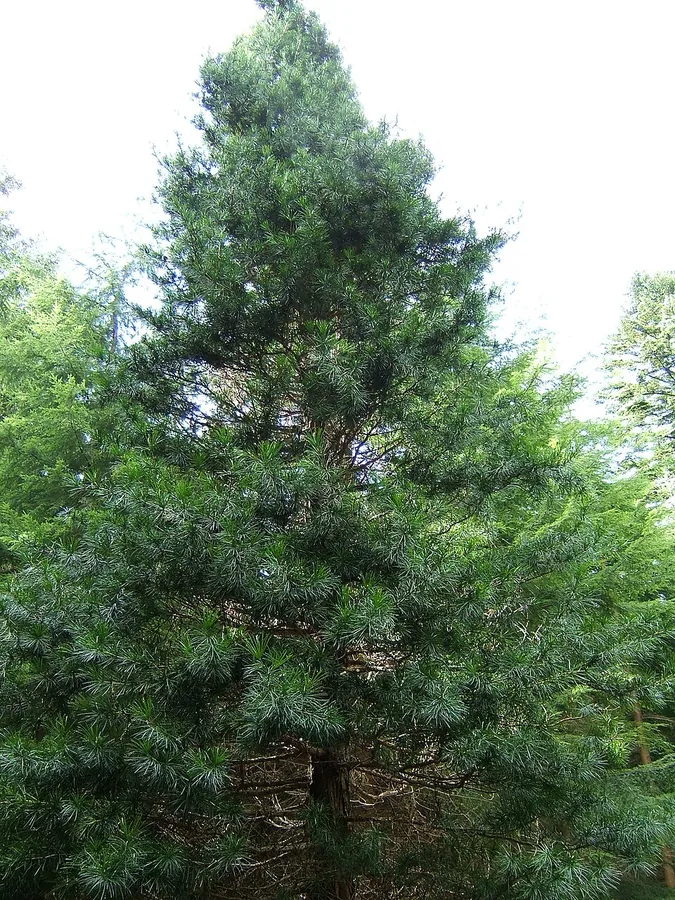
Few conifers carry a garden the way the Japanese umbrella pine does. Slow and composed, it holds its glossy needles in whorls that echo the ribs of a parasol, a form that reads as sculpture in a quiet corner. It is not, despite the name, a pine. This is the sole survivor of its own botanical family, Sciadopityaceae, a lineage older than 200 million years, a piece of the age of the dinosaurs standing in a modern landscape.
Left to mature, it rises into a narrow, dignified pyramid, a presence that anchors a border or frames an entrance over the decades it needs to reach 25 to 30 feet (7.5 to 9 m). Its year-round green gives a garden structure through every season, a steady note when perennials come and go. The tree traces its roots to the misty mountains of Japan, where it has long graced temple grounds, and it brings that same contemplative mood to a collector's garden today.
This is a plant for the patient, considered garden. It commands a higher price than most conifers, the cost of the years a nursery spends bringing it on, and it repays that investment with a calm, enduring presence rather than a quick flourish. Set it in rich, moist ground, sheltered from harsh wind, and it becomes a fixture you plan a whole scene around.
Care
The short version: place it in full sun to part shade, in rich, slightly acidic soil kept evenly moist, and give it shelter from drying winter wind, and it settles beautifully into zones 5 to 8.
Light
Give it full sun to partial shade. In cooler regions it stands comfortably in open sun, while in hotter climates a measure of afternoon shade keeps the needles from scorching and preserves that composed, even look.
Water
Keep the soil evenly moist, watering every 5 to 10 days and soaking deeply through dry weather. Drought is not something this tree forgives, so a reliable routine matters, above all while it is young and settling into its place.
Soil
Set it in rich, well-drained loam with a gentle acidity, around a pH of 5.5 to 6.5. Drainage is the one non-negotiable, since roots left in wet ground are the surest way to undo an otherwise elegant tree.
Temperature
It weathers a wide range, from -20°F to 90°F (-29°C to 32°C), comfortable across zones 5 to 8. Cold alone rarely marks it. Drying winter wind is the real threat to its looks, which makes a sheltered position part of styling it well.
Humidity
There is no humidity figure to manage here; ordinary outdoor air is enough. A native of damp mountain forests, it minds a hot, dry, exposed setting far more than it minds moist air, worth remembering when you choose its spot.
Feeding
A single spring feeding keeps it content. Choose a balanced or acidic slow-release fertilizer made for evergreens, applied with a light hand, since a slow, measured grower has no use for a heavy push.
Pruning
Pruning stays minimal, which suits its naturally poised habit. Remove only dead or damaged branches and keep a single central leader, working in late winter to early spring so the cuts close as growth returns.
Repotting
A container specimen wants a larger home every 2 to 3 years. Roots circling the pot, roots slipping through the drainage holes, or soil that dries too quickly all signal it has outgrown its setting.
Size & spacing
Plan for a mature 25 to 30 feet (7.5 to 9 m) in height and 15 to 20 feet (4.6 to 6 m) across. It fills in slowly, so give it that full footprint from the start and let the broad pyramid become the anchor of the view.
When to plant
Even a tree this unhurried rewards a well-chosen planting moment. Set it out in spring or early fall, while the soil holds warmth and moisture, so its slow roots can settle into the scene before high summer or deep frost tests them.
Northern hemisphere
Southern hemisphere
Typical months for a temperate climate: start earlier in warm zones, later where spring frosts linger.
- Plant: Spring or early fall
- Harvest: May to June (inconspicuous)
Hardiness
USDA hardiness zones: 5–8
Temperature: down to -29°C
Troubleshooting
This is an unusually trouble-free tree, free of serious pests and diseases, so most concerns come down to placement rather than misfortune. The needles are the first place stress shows, and they read like a diagnostic. Find the picture that matches yours below, then adjust the setting rather than the symptom.
Yellowing, thinning needles and a fading form
When the crown yellows and thins, the trouble almost always sits at the roots. They may be languishing in wet, poorly drained soil, or struggling in a hot, dry, exposed position. A little excavation can reveal dark, soft roots where drainage has failed. Restore the drainage, mulch to steady the moisture, and offer afternoon shade where summers run hot, and the tree recovers its stature.
Fix:
- Improve drainage and avoid waterlogging
- Provide afternoon shade in hot-summer regions
- Maintain even soil moisture and mulch the root zone
Needles turning brown or bronze across winter
The look of browned or bronzed foliage is almost always winter burn, a passing blemish rather than a real loss. Cold, dry wind draws moisture from the needles faster than the frozen roots can restore it, so the discoloration settles on the wind-facing or sun-struck side. Fresh growth reclaims the color in spring. To keep the tree looking its best, screen it from wind, water the ground before it freezes, or plant a color-stable cultivar such as Wintergreen.
Fix:
- Shelter the plant from harsh winter winds with a barrier or screen
- Water thoroughly before the ground freezes
- Choose a winter-color-stable cultivar such as Wintergreen
Toxicity
For a home that includes animals, this tree brings peace of mind along with its poise. For all its resemblance to the poisonous yews, the Japanese umbrella pine holds no known toxins and appears on no dangerous-plant list. Cats, dogs, horses, and grazing livestock can move through a garden built around it without concern.
Safe for
People · Cats · Dogs · Horses · Rabbits · Livestock · Birds
Cats None
Safe in a home with cats. A curious one that mouths a needle comes to no harm, and the stiff, resinous foliage seldom invites their attention anyway.
Dogs None
No toxins here to trouble a dog. One that chews a fallen branch might feel a brief, mild upset from the roughage, nothing more.
Horses Safe
Safe for horses, free of the toxins that make true yews and other hazardous conifers so dangerous.
Rabbits Safe
No poisoning risk to rabbits, which tend to pass over the tough, leathery needles for softer greens.
Livestock Safe
Grazing cattle, goats, and sheep can browse the foliage with no toxic danger.
Birds Safe
Harmless to birds, which may shelter among the dense, whorled branches in perfect safety.
People Safe
Safe for people as well. Grown for beauty rather than the table, it offers no part to eat, and handling it carries no risk.
No special handling precautions for toxicity; an outdoor landscape conifer rather than a houseplant.
Varieties
The species itself makes a handsome specimen, and it is what most gardeners plant. Yet a few named cultivars are worth seeking when a scheme calls for surer winter color, a slimmer profile, or a scale that suits a smaller, more intimate garden.
Wintergreen
It keeps a deep, glossy green right through winter, holding its color while the plain species turns bronze.
Joe Kozey
A narrow, upright column of a tree, its sturdy branches carrying heavy snow with ease.
Sternschnuppe
A vigorous selection that wears long, lustrous deep-green needles on a broad, pyramidal frame.
Mr. Happy
A compact dwarf that suits a rock garden or a container, settings the full-size tree could never grace.
Picola
A slow-growing dwarf that rounds into a tidy globe, made for the smaller garden.
How to propagate
Increasing this tree is an exercise in patience more than craft. Both approaches unfold slowly and suit the gardener content to plan years ahead, part of what lends the plant its quiet exclusivity.
SeedDemanding
Sow when cones ripen; seed is slow and germination can be erratic · Several years; extremely slow early growth
Raising it from seed is a long, quiet undertaking. The cones take 18 to 20 months to ripen before seed can be gathered, and germination arrives unevenly. The seedlings then advance at a crawl, often reaching just 4 to 5 feet across their first 10 years.
Stem cuttingsDemanding
Take cuttings from semi-hardwood growth · Months to root; slow to develop
Cuttings from semi-hardwood growth root slowly, over months rather than weeks. It remains the customary route for named cultivars, since it holds the parent's exact form that seed would surrender.
Myths
The Japanese umbrella pine is a variety of true pine.
The name and the silhouette suggest a pine, yet the tree is nothing of the sort. It stands as the last living member of its own family, Sciadopityaceae, an ancient line that parted ways long before the true pines appeared. For all its pine-like presence, it claims no close relative among them.