Houseplant · Bromeliaceae
Urn Plant
Aechmea fasciata
Keep the central cup full and the light bright, and this sculptural bromeliad pays you back in months of color.
Bright indirect
Every 7–14 days
59–86°F · 15–30°C
USDA 10–11
Overview
The name comes from the watertight vase at the plant's heart, a hollow well shaped by leaves that overlap into a tight silver rosette. High in the canopy of its native forests, this silver-banded rosette grips a branch and gathers rainfall in that well, taking its water from above rather than from the ground. Indoors it asks for the very same arrangement, which is what lends it both its quiet drama and its ease once the routine becomes second nature.
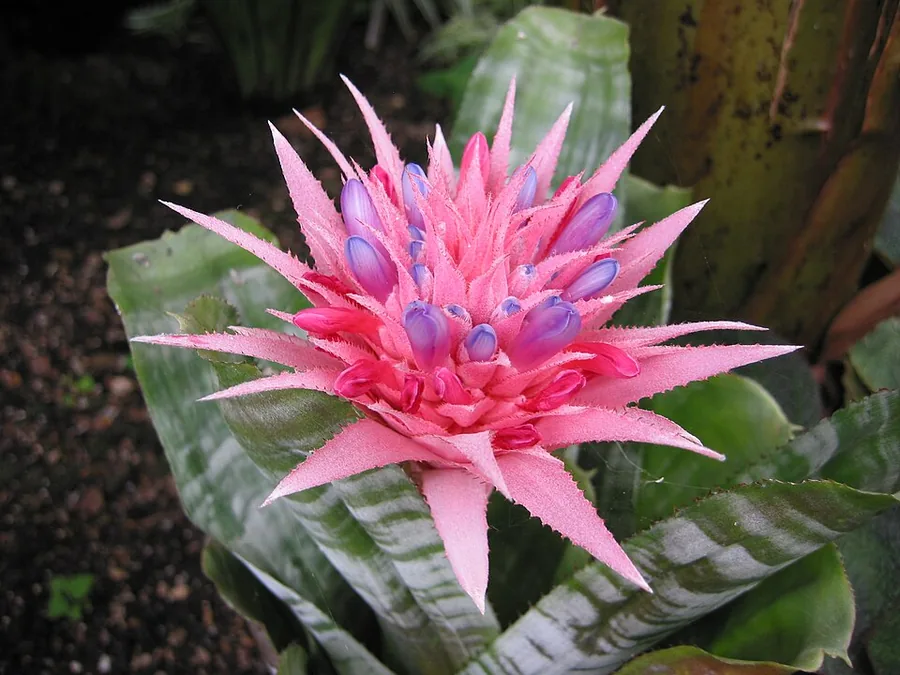
Then comes the flowering, the centerpiece of the whole performance. A rosette that has matured lifts a long-lasting pink bract spangled with violet flowers that deepen toward red, and the display lingers for several months. That bract is the dividend paid for patience, since each rosette flowers only once across its life before it gradually bows out.
What reads as a finale is really a passing of the torch. As the mother dims, she raises offsets called pups around her base, and each matures into a plant of its own. Offer bright, filtered light and a cup kept full, and one urn plant will keep this elegant cycle turning for years.
Care
The short version: bright, indirect light, the central cup kept brimming with fresh water while the potting mix dries between drinks. Place it somewhere warm and humid, feed at half strength across the growing season, and leave a little space between its spined edges and passing hands.
Light
For the richest leaf color and the surest bloom, settle the urn plant in bright, indirect light. It tolerates partial shade or medium indirect light well enough, yet a shortfall of light is the most common reason a sound rosette never comes into flower.
Water
Here is the habit that distinguishes bromeliads from the rest: keep the central cup brimming with fresh water at all times, and let the potting mix dry out between drinks. Tip out and refresh the cup from time to time so the water never sours or accumulates mineral salts. Where the tap runs hard, lean on rain or distilled water, and expect to wet the mix roughly every 7 to 14 days.
Soil
Set it into a loose, fast-draining bromeliad mix, the acidic bark-based blend marketed for orchids. Its roots serve mainly to anchor rather than to feed, so they resent staying wet, and an open medium lets water pass straight through.
Temperature
Everyday indoor warmth is exactly to its taste, anywhere from 59°F to 86°F (15°C to 30°C). Hold it above 59°F (15°C) and clear of cold drafts, since damp and chilly conditions are precisely what coax rot into the heart of the plant.
Humidity
This bromeliad favors air kept on the moist side, around 50% to 70% humidity. Should the room run dry, mist the foliage or rest the pot on a pebble tray to lift the moisture cradling it.
Feeding
Offer food monthly through spring and summer, using a balanced liquid fertilizer thinned to half strength or less. Water it into the soil or mist it across the leaves as you like, but keep a light hand, because this plant needs far less nourishment than most houseplants.
Pruning
When the flower stalk and pink bract have browned, take them off, and tidy away any dead or marred outer leaves. The mother rosette declines slowly once it has flowered, so lift it out only after the pups have taken hold. Pull on gloves first, as the leaf margins carry small spines.
Repotting
Move it on only occasionally, roughly every 2 to 3 years, chiefly when you are potting up or dividing pups. Look out for roots threading through the drainage holes, a plant grown top-heavy, or pups crowding their quarters, then graduate it into fresh bromeliad mix.
Size & spacing
Grown indoors, the urn plant rises to about 12 to 35 inches (30 to 90 cm) tall and fans out 12 to 24 inches (30 to 60 cm) wide. Its pace is slow, so the specimen you carry home stays close to that size for a good long while.
Troubleshooting
Nearly every urn plant complaint begins at the cup or the roots and surfaces in the leaves or the core. Learn to read those first quiet signals and you can intervene long before a minor lapse turns grave. Find the picture that matches yours below, then act while the gesture still counts.
A core gone soft and dark
A center that turns mushy and black is crown rot, the result of water left to stagnate in the cup or a plant kept cold and damp. Empty and rinse the urn, give it a warmer and brighter home, and lift out any sound pups if the mother has begun to collapse.
Fix:
- Drain and flush the cup, move to a warmer, brighter spot
- Reduce moisture and improve air circulation
- If the mother is collapsing, salvage healthy pups and discard the rotted rosette
Drooping foliage above dark, soft roots
A plant that sags over blackened, slimy roots is showing root rot from a waterlogged mix that stays wet or drains too slowly. Move it into fresh, quick-draining bromeliad mix, snip off the spoiled roots, and let the cup do the watering rather than the soil.
Fix:
- Repot into fresh, fast-draining bromeliad mix
- Let the mix dry between waterings
- Trim away rotted roots
A tacky sheen with white fluff or firm bumps
A sticky film paired with cottony tufts or hard nubs is the calling card of scale insects or mealybugs tucked into the leaf bases and undersides. Lift them away with a cotton swab and diluted alcohol, treat with insecticidal soap, and keep the plant apart from its neighbors until it reads clean.
Fix:
- Wipe pests off with a cloth or cotton swab dipped in diluted alcohol
- Treat with insecticidal soap or horticultural oil
- Isolate the plant until clear
A robust rosette that withholds its bloom
A healthy plant that never colors up is usually starved of light or simply too young to flower. Set it where filtered sun reaches it and let a small rosette grow on, because each one flowers a single time and only once it has reached full maturity.
Fix:
- Move to a brighter spot with filtered light
- Allow the rosette to reach full size before expecting bloom
Edges that crisp to a dry brown
When the leaf margins turn parched and brown, the culprit is almost always a potting mix left to bake dry while the cup ran empty, with dry room air and hard tap water hastening the look. Top up the urn, give the mix a drink, and move to rain or distilled water so salts stop accumulating.
Fix:
- Refill the central urn and water the mix
- Raise humidity by misting or using a pebble tray
- Flush the cup and mix with rain or distilled water
Toxicity
Here is the reassurance pet owners want: the urn plant is safe to live with. The ASPCA lists it as non-toxic to cats and dogs, and no chemical poison has been recorded for this bromeliad. The one thing worth minding is the foliage, edged with fine spines that can scratch, so set the plant where pets and small children will not graze against it.
Safe for
People · Cats · Dogs · Horses · Rabbits · Livestock · Birds
Cats Safe
On the ASPCA roster this bromeliad sits among the non-toxic plants for cats, so a stray nibble carries no risk of poisoning.
Dogs Safe
A dog can share its corner of the room in comfort, and a chewed leaf brings nothing worse than a mess.
Horses Safe
For horses the urn plant poses no toxic hazard at all.
Rabbits Safe
Rabbits come to no harm near it, though greens are best kept a modest part of their diet.
Livestock Safe
Cattle, goats, and sheep may graze in its presence without any poisoning concern.
Birds Safe
Both pet birds and backyard poultry remain perfectly safe alongside it.
People Safe
With no toxins to speak of, the plant stays safe in homes with children and inquisitive toddlers.
Leaf margins bear small spines/teeth that can scratch or prick skin, so handle the plant with care (gloves help). Any mild irritation from chewing would be physical/mechanical, not from toxins.
Varieties
Aechmea fasciata appears in a handful of named forms, each playing a small variation on leaf color or flower. The selections below are the ones most likely to turn up in a shop.
Aechmea fasciata var. purpurea
A purplish-red wash colors the foliage, deepest where it pools across the leaf undersides.
'Primera'
A reliable commercial cultivar known for crisp silver banding and an oversized pink flower head.
'Morgana'
A compact form treasured for the rich rose-pink of its bracts.
How to propagate
After it blooms, the urn plant multiplies itself at no cost through the pups it offers up. There are no seeds to coax along and no rooting hormone to bother with, only a sense of timing and a little patience.
Offsets & pupsEasy
After the mother rosette flowers and begins to decline, once pups reach about one-third to one-half the parent's size (roughly 6 in / 15 cm tall) · Several weeks to a few months to root and establish
Once the mother has flowered and slips into decline, she raises offsets known as pups at her base, and these are how the plant carries its line forward. Let each pup grow to roughly a third or half the parent's size, about 6 inches (15 cm) tall, before twisting or cutting it free with a few roots intact. Settle it into fresh bromeliad mix, keep it warm and bright with the cup topped up, and allow several weeks to a few months for it to root and find its feet.
Myths
The urn plant is poisonous to cats and dogs.
The ASPCA places Aechmea fasciata firmly among plants that are non-toxic to cats and dogs alike. The single genuine risk is a scratch from those spined leaf edges, never the foliage itself. No part of this bromeliad can poison a pet.
You should water only the soil and keep the central cup empty.
In the wild this plant takes its water through the cup, so it prefers that vase brimming. Keep fresh water sitting in the central urn while the potting mix is allowed to dry between drinks. Full cup, dry soil: that is the rhythm.
The whole plant dies right after it flowers, so it is a throwaway.
It is only the rosette that bloomed that fades, and it does so at a leisurely pace. On its way out it raises offsets, known as pups, around its base, and these mature into entirely new plants. A single flowering bequeaths the next generation.