Houseplant · Araceae
Alocasia 'Polly'
Alocasia × amazonica 'Polly'
Give it a warm, humid, brightly lit spot, and the African mask plant turns any room into a quiet statement.
Bright indirect
USDA 10–12
1–4 ft · 0.3–1.2 m
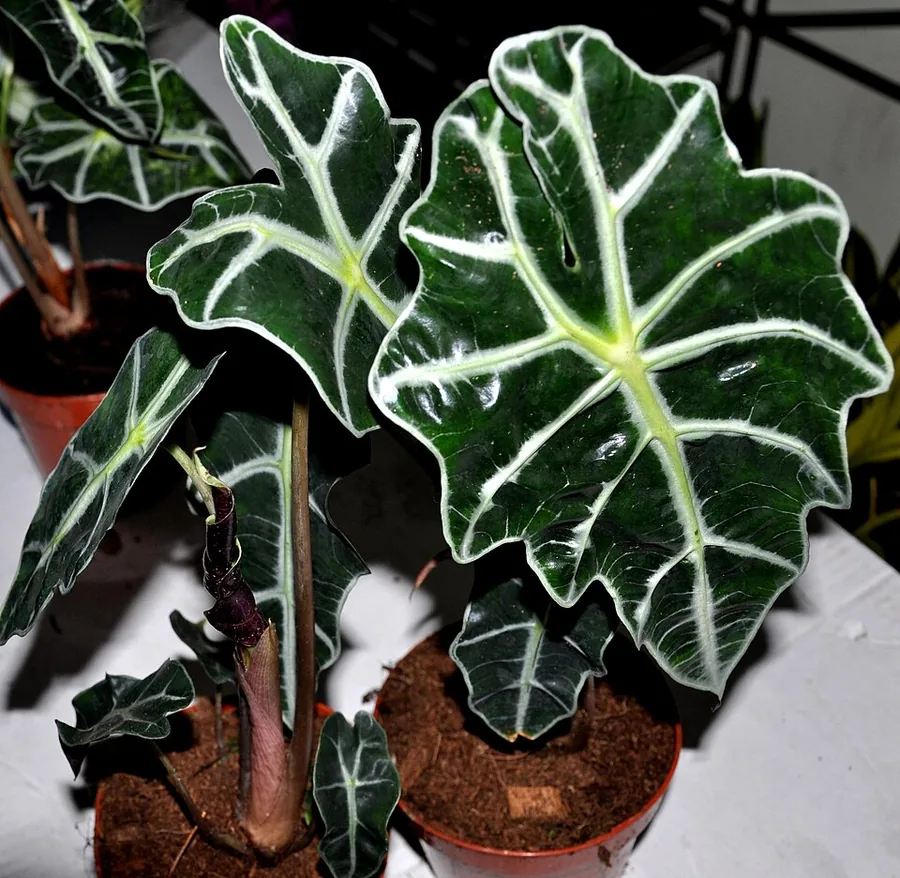
Overview
Sold as the African mask plant, Alocasia 'Polly' is a foliage piece first and a flowering plant a distant second. Its arrowhead leaves carry a graphic, almost architectural presence that anchors a corner without crowding it. Topping out around 2 feet tall, it suits a bright reading nook, the end of a console, or a shelf where one good plant does the work of three.
A member of the Araceae family, this indoor-bred hybrid asks for the warm, humid, bright setting its tropical parents knew. That makes it a slightly more particular companion than the average houseplant, so it rewards a little planning. Pair it with a steadily lit room, air a touch damper than usual, and warmth that holds through the year, and it settles into a daily routine as easily as it settles into a pot.
The detail worth knowing before it joins a room is the winter rest. As the light shortens, the plant slows and can shed most of its leaves, looking briefly past its best. It is only pausing. Water it less and keep it warm, and the look comes back with fresh foliage when spring returns, ready to dress the space again.
Care
The short version: set it in bright indirect light, keep the soil evenly moist but never soggy, hold the room above 60°F (15.6°C) year round, and give it air a little more humid than most. Through winter, ease off the water while it rests.
Light
Place it in bright, indirect light, the soft glow near an east window or a step back from a sunnier one. It accepts a little partial shade or gentle sun, but harsh direct rays scorch the leaves and deep shade leaves it pale and stretched, which dulls the look.
Water
Through the growing season, keep the soil evenly moist but never soggy, letting the surface dry a touch before the next drink. Pull right back in winter while it rests, since the quickest way to lose it is to leave it standing wet, which rots the roots and stem.
Soil
Settle it into rich, loamy soil that holds moisture yet drains freely, with plenty of organic matter mixed through. It is relaxed about acidity, content anywhere from pH 5.5 to 7.5, though it will never put up with a mix that stays waterlogged.
Temperature
Warmth matters all year. Keep the room above 60°F (15.6°C) and the plant clear of cold drafts and chilly panes. Below about 50°F (10°C) it slips into early dormancy and can take damage.
Humidity
As a high-humidity tropical, it answers dry indoor air with brown, crispy leaf edges that spoil the display. Lift the moisture around it with a humidifier, a pebble tray, or a grouped arrangement, and keep it away from heating vents.
Feeding
Offer a balanced houseplant fertilizer across spring and summer while it is actively growing. Stop completely in winter, when it rests and has no use for it.
Pruning
Trim away yellowed, damaged, or spent leaves right at the base as they appear, which keeps the form clean. Heading into winter indoors, you can cut it back to the top one or two leaves as it eases into dormancy.
Repotting
Move it on every 1 to 2 years, or sooner if roots circle the pot, offsets crowd the surface, or the soil dries unusually fast. Keep it potted all year rather than lifting and storing it as a bare corm.
Overwintering
Bring it indoors before the first fall frost and expect a semi-dormant spell, often with dropped leaves. Keep it on the drier side, cut back to a leaf or two, and resume watering and feeding once growth returns in spring.
Size & spacing
Indoors it keeps a tidy scale, standing 1 to 4 feet (30 to 120 cm) tall with a spread of 12 to 24 inches (30 to 60 cm). Leave it room to hold its leaves out so it reads as a feature rather than a crowd on a shelf.
Troubleshooting
Most setbacks with this plant come down to water, dry air, or an occasional pest, and the leaves and stem base read like a status report for the room. Glance at them early and they tell you whether the watering is heavy, the air has gone dry, or something has moved in. Find the match below and step in before the display suffers.
Wilting leaves and a soft, mushy stem base
A sculptural plant that suddenly sags and softens at its base has slipped into root and stem rot, the result of standing water or a pot that refuses to drain. The roots that should look firm and pale turn brown and slick, and the once steady stem gives way. Set the watering aside, lift the plant from its display pot, trim out every spoiled root, and replant it in fresh, free-draining mix in a vessel that drains properly.
Fix:
- Stop watering and allow the soil to dry appropriately
- Remove the plant, cut away rotted roots/tissue, and repot into fresh, well-drained mix
- Ensure the pot has drainage and discard standing water
Speckled or webbed leaves and sticky or cottony patches
A polished plant marred by speckling, fine webs, or sticky film has picked up sap-feeding pests. Pale stippling under a veil of webbing points to spider mites, which arrive when the air turns dry; soft white tufts in the leaf joints are mealybugs, and a clustered, sticky coating belongs to aphids. Rinse the foliage, wipe the visitors off, follow with insecticidal soap or horticultural oil, and keep the plant apart from the rest of the collection until it shows clean again.
Fix:
- Rinse foliage and wipe off pests
- Treat with insecticidal soap or horticultural oil, repeating as needed
- Isolate affected plants to limit spread
Leaves dropping as the days get shorter
When the room loses its long afternoon light, expect a quiet seasonal pause rather than a loss, because this is winter semi-dormancy. The display thins as foliage falls away, yet the rhizome holds firm below the surface, biding its time. Scale back the watering, leave a leaf or two on show, settle it somewhere warm and well lit, and the room's centerpiece returns with new growth once spring arrives.
Fix:
- Reduce watering and keep the plant on the drier side while semi-dormant
- Cut back all but the top one or two leaves
- Keep in a warm, bright location and avoid cold drafts
- Resume regular watering and fertilizing when growth resumes in spring
Brown, crispy edges while the leaf center stays green
Edges that brown and crisp while the heart of the leaf stays green usually mean the room has gone too dry for a high-humidity tropical. The look suffers most beside a heat vent or through the dry stretch of winter. Bring the moisture back with a humidifier, a pebble tray, or a grouped arrangement of plants, keep the soil evenly damp, and shift the display away from radiators and drafty corners.
Fix:
- Raise ambient humidity (group plants, use a humidifier or pebble tray)
- Keep soil evenly moist during active growth
- Move away from heating vents and cold drafts
Toxicity
This is a genuinely toxic plant, beautiful as it is. Every part holds insoluble calcium oxalate crystals, microscopic needles that burn the mouth and throat the moment they are chewed, and the sap can leave bare skin irritated. Position it well clear of pets, livestock, and children, and wash your hands after handling it.
Toxic to
Cats · Dogs · Horses · Rabbits · Livestock · Birds · People
Cats Moderate
Place this where a cat can reach it and a single bite delivers an instant burning mouth from the calcium oxalate crystals. Heavy drooling, pawing at the face, vomiting, and trouble swallowing tend to follow.
Dogs Moderate
A dog that chews any part meets sharp oral pain, drooling, and vomiting almost at once. Swelling of the mouth, tongue, and lips can set in and make swallowing difficult.
Horses Moderate
The same crystals irritate a horse's mouth and throat, leaving it drooling with sore, swollen lips and tongue. Unable to vomit, a horse must simply wait out the discomfort until it eases.
Rabbits Toxic
To a rabbit the leaves are a painful mouthful, prompting mouth irritation, drooling, and a refusal to eat. Style it somewhere a rabbit cannot reach.
Livestock Toxic
Cattle, goats, and sheep that browse the foliage end up with a burning mouth, heavy salivation, and a swollen, painful tongue. The irritation leaves them off their feed.
Birds Toxic
A curious bird that pecks at the leaves meets the same stinging crystals, with mouth irritation and drooling the likely result. There is nothing to gain from displaying it near a bird.
People Caution
No part of this plant belongs on a plate, and a taste brings a sharp burning of the mouth and throat. The sap alone can leave skin red and itchy, so wash your hands after handling it and keep it clear of small children.
All parts contain insoluble calcium oxalate crystals; sap can cause contact dermatitis. Wash hands after handling and keep away from pets and children
Helpline numbers

United States
ASPCA Animal Poison Control: (888) 426-4435 (fee applies)
Poison Control: (800) 222-1222



Canada
Poison Centres: 1-844-764-7669
Varieties
What reaches the shop as 'Polly' is a single cultivar of one hybrid, and now and then a close relative under the same parentage turns up beside it. These are the names worth recognizing.
Alocasia × amazonica 'Polly'
This is the compact form found in most homes, reaching about 2 feet tall, with leathery wavy-edged arrowhead leaves in dark bronze-green and standout veins of white to silver.
Alocasia × amazonica 'Boa'
Another named selection of the same hybrid, listed in the Missouri Botanical Garden Plant Finder next to 'Polly'.
How to propagate
There is no seed-sowing involved at home. The simple route to a second plant for another room is to split this one, drawing on the pups it gathers at its base, which is easiest at repotting time in the warmer months.
DivisionModerate
Spring to summer, at repotting · Several weeks
To bring a second statement plant into another room, divide this one as you repot it in spring or summer. It grows from a rhizome and gathers small pups around its base, so ease the clump apart and pot up each piece with roots of its own. Allow the new divisions several weeks of warmth and steady moisture to settle before fresh growth appears.
Offsets & pupsModerate
Spring to summer · Several weeks
A rooted offset can also be lifted away from the parent clump in spring or summer and given its own pot for a different corner. Each pup roots and finds its footing across several weeks, so keep it warm and lightly moist while it establishes.
Myths
A leafless Alocasia 'Polly' that has dropped its foliage over winter is dead.
A bare plant in winter has not failed your room; it has simply taken its natural seasonal rest, often letting go of most or all of its leaves. Slide the rootball out and check the rhizome before deciding it is finished. A firm rhizome means fresh foliage will return to fill the space once warmth and watering come back in spring.