Houseplant · Araceae
Alocasia Zebrina
Alocasia zebrina
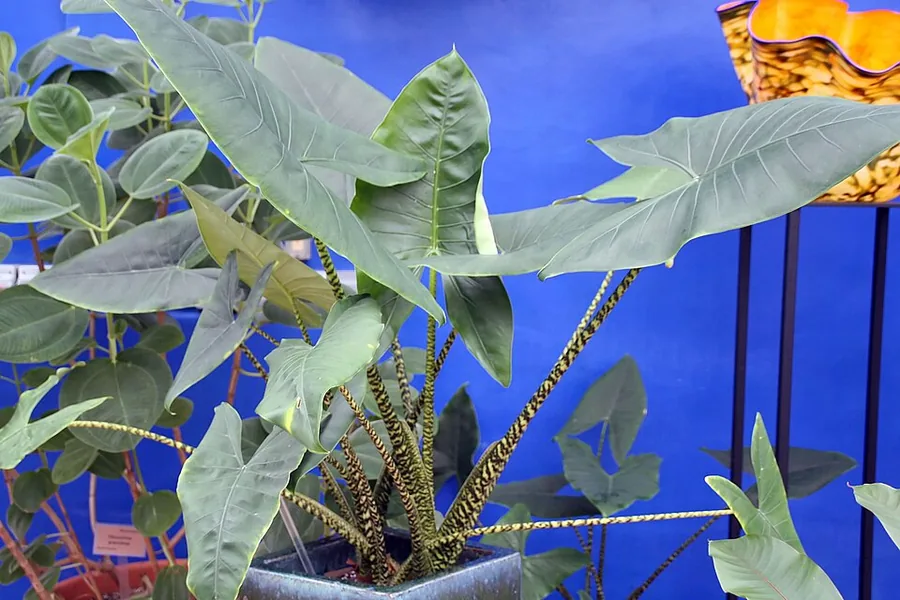
Those striped, zebra-print stems raise arrow-shaped leaves into a piece of living sculpture for the room.
Bright indirect
68–77°F · 20–25°C
USDA 10–12
3 ft · 0.9 m
Overview
Alocasia zebrina takes its name from the striped stems that lift each glossy, arrow-shaped leaf into the air, and in a room it reads less like a houseplant and more like a sculptural object. It hails from the rainforests of the Philippines and its warm, humid forest floor, which sets the tone for the warm, bright corner it asks for indoors. This is a plant chosen for its architectural shape rather than any bloom.
Its reputation as a demanding plant is well deserved, and that is worth knowing before it joins the room. Zebrina is particular about water, set on humid air, and quick to falter when its roots stay wet. Place it in bright indirect light and water with restraint, though, and it grows fast, raising new leaves across spring and summer before easing into a quiet winter pause.
One detail shapes where it belongs in a home: every part of the plant is toxic to pets and people, owing to the calcium oxalate crystals held through its tissue. It rewards a considered spot, lifted on a plant stand or shelf and well out of reach of cats, dogs, and small children.
Care
The short version: give it bright indirect light, humid air, and warmth between 68°F and 77°F (20°C to 25°C). Let the top half of the soil dry before the next watering, ease off through winter, and never leave the roots sitting wet.
Light
Set zebrina in bright indirect light, the soft glow near a window that never lands direct midday sun on its leaves. It will get by in partial shade or medium light, though the stems lengthen and weaken in those corners. Strong direct sun scorches the foliage, so a sheer curtain softens a bright window beautifully.
Water
Wait until the top half of the soil has dried before watering again, then water thoroughly and let it drain. This plant resents wet feet, and overwatering is the quickest route to rotted roots and spotted leaves. Through winter, while it rests, water far less since it draws on so little.
Soil
Choose an organically rich, well-draining mix that holds some moisture yet never turns to muck. The genus is relaxed about texture and takes clay, loam, or sand, and it settles comfortably across a wide pH of 5.5 to 8.0.
Temperature
Keep the room warm, between 68°F and 77°F (20°C to 25°C). Zebrina is tropical with no patience for cold, so place it away from drafty windows and chilly rooms, and bring any plant summered outdoors back in well before the nights cool.
Humidity
This plant asks for high humidity, more than most rooms hold. A pebble tray, a humidifier, or a bright, naturally damp bathroom each help. Dry air wears the plant down and opens the door to spider mites.
Feeding
Feed only across the growing season, spring into summer, while the plant is busy raising new leaves. A regular fertilizer on a seasonal rhythm is enough. Stop feeding in winter while it rests, since the nutrients go to waste then.
Pruning
There is little real pruning to do. Simply remove dead, yellowing, or damaged leaves as they appear, cutting them at the base. Clearing tired foliage keeps the display crisp and removes easy shelter for pests.
Repotting
No fixed schedule is published for zebrina, so let the plant lead and repot once it outgrows its container or the mix breaks down. A move up to a slightly larger pot in spring, as growth begins, gives the roots the gentlest start.
Overwintering
Zebrina lives indoors year-round and is treated as a houseplant. If yours summers outside, bring it in before the first fall frost and keep it cool, around 60°F to 65°F (16°C to 18°C), and humid, watering sparingly while it rests through winter.
Size & spacing
Indoors it reaches about 3 feet (91 cm) tall and roughly as wide, so give it floor or table space where the arching leaves and tall stems can frame the room without crowding.
Troubleshooting
Most of what unsettles zebrina comes back to water or light, both easy to adjust once the plant is well placed. Watch the leaves and stems early, and since one sign can point two ways, a quick check of the soil usually settles which.
A soft base and a droop while the soil stays wet
A plant that wilts in soil that never dries is almost always dealing with root rot brought on by too much water. Lift it and check: healthy roots are firm and pale, while soft brown ones confirm the problem. Trim the spoiled roots, settle the plant into fresh free-draining mix, water less generously, and choose a pot that empties freely.
Fix:
- Reduce watering frequency
- Repot into fresh, well-draining mix and remove rotted roots
- Ensure the container drains freely
Stems drawing out and tipping toward the light
When the stems grow long and slack and the whole plant tilts toward the window, it has run short on light and is reaching for a brighter spot. Relocate it to a position with bright indirect light, somewhere it can stand tall as a centerpiece. A weekly quarter turn keeps the silhouette balanced rather than lopsided.
Fix:
- Move to a brighter spot with bright indirect light
- Rotate the plant periodically for even growth
Faint webbing and a dulled, speckled cast on the leaves
Dry indoor air sets the stage for spider mites, which leave the foliage stippled and tired with thin webbing beneath. Rinse the leaves clean, raise the humidity around its spot, and apply insecticidal soap or horticultural oil as the label directs. Move the plant away from the rest of the room for a while so the mites cannot drift across the collection.
Fix:
- Rinse foliage and increase humidity
- Treat with appropriate insecticidal soap or horticultural oil per label
- Isolate the plant to limit spread
A sticky sheen and clustered insects on the stems
Soft white tufts mark mealybugs, while tight gatherings of small soft insects are aphids, and both leave a tacky honeydew across the plant. Wipe the insects away and treat with insecticidal soap or horticultural oil per the label. Keep the plant set apart and repeat the treatment until the foliage stays clear.
Fix:
- Wipe off insects and treat with insecticidal soap or horticultural oil per label
- Isolate the plant and repeat treatment as needed
Fewer leaves and a slowdown as the season turns
A thinner canopy and a quieter pace through the cold months are simply winter rest, not a failing display, as long as the rhizome stays firm to the touch. Pull back on water, set aside the feeding, and keep its corner warm and bright. The plant returns to form on its own once spring brings the light back.
Fix:
- Reduce watering and stop heavy feeding during dormancy
- Keep the plant warm (cool but not cold) and in good light
- Resume normal care as growth restarts in spring
Leaves losing their color to yellow
A yellowing leaf usually traces back to watering, though a dim corner can have the same effect. Both too much water and too little read alike on the foliage, so feel the soil before deciding what to change. Keep the mix evenly moist without ever letting it sit wet, and settle the plant where bright indirect light reaches it.
Fix:
- Adjust watering to keep soil evenly moist but not saturated
- Correct light levels to bright indirect light
Toxicity
This is a genuinely toxic plant. Every part carries needle-like calcium oxalate crystals that burn the mouth and throat the instant they are chewed. Keep it well out of reach of pets and children, and wash your hands once you have handled it.
Toxic to
Cats · Dogs · Horses · Rabbits · Livestock · Birds · People
Cats Moderate
A cat that takes a bite of a leaf meets a load of needle-fine oxalate crystals, which brings on drooling, pawing at the mouth, and a sore, swollen tongue and lips. Vomiting and difficulty swallowing tend to follow.
Dogs Moderate
Dogs respond just as cats do. The mouth, tongue, and lips swell and sting within minutes of chewing, and heavy drooling, vomiting, and trouble swallowing usually come after.
Horses Moderate
The same crystals leave a horse with a painful, swollen mouth and lips, plenty of drooling, and a struggle to swallow. Because horses cannot vomit, the discomfort lingers in the mouth and throat.
Rabbits Toxic
The oxalate crystals scald a rabbit's mouth and gut the way they would any browsing animal, so nibbling on this plant is never safe. Keep it well clear of any free-roaming rabbit.
Livestock Toxic
Cattle, goats, and sheep that graze the leaves suffer the same burning and swelling in the mouth, along with drooling and a refusal to eat. Fence the plant away wherever stock might reach it.
Birds Toxic
A curious bird that pecks a leaf gets the same sharp oxalate sting to its beak and mouth. No part of it is safe to offer, so keep it entirely away from companion birds.
People Caution
None of this plant belongs on a plate, and a single bite sets off a fast burning, swelling feeling in the mouth and throat. The sap can also bother skin and eyes, so wash your hands after handling and keep it away from small children.
Sap and chewed tissue release needle-like calcium oxalate raphides; keep away from pets and children and wash hands after handling
Helpline numbers

United States
ASPCA Animal Poison Control: (888) 426-4435 (fee applies)
Poison Control: (800) 222-1222



Canada
Poison Centres: 1-844-764-7669
How to propagate
Zebrina will not root from a cutting the way many houseplants do. To make more, you divide the rhizome and lift away the young pups it sends up.
DivisionModerate
Spring to summer · Several weeks
More of this plant comes from division rather than cuttings. During spring or summer, lift it from its pot and separate the small pups that grow along the rhizome or corm, then give each its own container. The divisions need several weeks to settle in and root before fresh growth appears, so let them take their time.
Myths
All elephant ears are one and the same plant, so any of them suits a garden equally well.
That single name spans more than one genus, and they do not all behave alike. UF/IFAS steers gardeners toward ornamental Alocasia rather than the invasive elephant ears Colocasia esculenta and Xanthosoma sagittifolium, and cautions against planting any of them near natural waterways. Confirm exactly which plant you have before it goes in the ground.