Tree · Lauraceae
Avocado
Persea americana
Give it full sun, sharp drainage, and shelter from frost, and an avocado becomes the tree that shades a yard for decades.
Full sun
Every 3–7 days
USDA 9–11
30–66 ft · 9–20 m
Overview
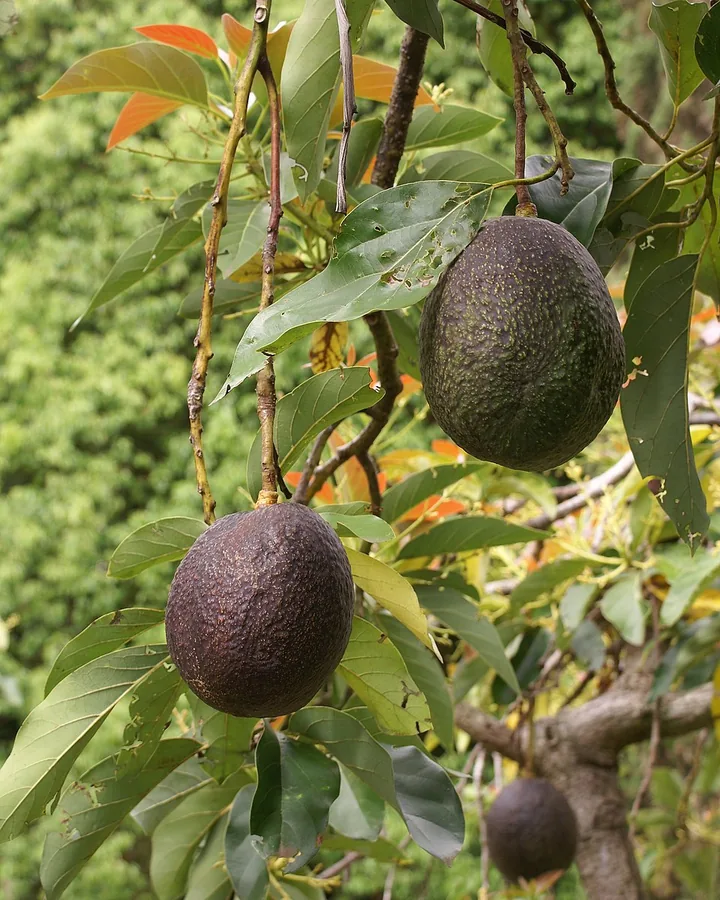
The avocado is a broad evergreen of the laurel family, drawn from the warm uplands of Mexico and Central America, and it brings a generous, sheltering presence to a property. Set in open ground it rises tall and spreads wide, climbing past 65 feet (20 m), and with shallow roots and brittle wood it wants a roomy, settled corner where it can stand for the long haul. The reward is the fruit, buttery and rich, ripening at its own pace once it leaves the branch and lands on the kitchen counter.
Avocados sort into three races, and the distinction quietly shapes where a tree belongs. The Mexican race stands up to the most cold, the West Indian race longs for true tropical warmth, and the Guatemalan race rests in between, so lineage is what decides whether a tree suits a particular garden's winters. Most named cultivars carry a blend of races.
Living with an avocado is an exercise in the long view. Its flowers follow two patterns, type A and type B, opening on offset schedules that give pollination a quiet lift. Plant one in a dry-footed, frost-free spot, and once it eases into bearing it becomes a fixture of the place, feeding a household season after season.
Care
The short version: a sunny, free-draining spot is the foundation of the whole thing, since standing water is what undoes an avocado. Water deeply but let the top half dry between drinks, keep frost off the young trees, and feed across the growing season.
Light
An avocado wants the full-sun position in the garden, six or more hours a day of open light. A little partial sun is workable, but a tree tucked into real shade grows lanky and gives back far less fruit, so save your brightest, most open corner for it.
Water
Water deeply but seldom, then let the top half of the soil dry before the next soak settles in. Young and bearing trees like a steady supply, yet an avocado resents wet feet, and waterlogged ground is what invites the root rot that quietly ends them.
Soil
Reserve a bed of deep, well-drained sandy loam that never stays sodden. A pH between 6.0 and 7.0 keeps the tree at ease, and where the ground holds water, a raised mound turns a doubtful spot into a sound one.
Temperature
An avocado lives comfortably between roughly 23°F to 95°F (-5°C to 35°C), though the cold end leans heavily on the race. Frost-tender types feel the chill long before the Mexican-race trees, so let your winters guide which cultivar you bring home.
Humidity
Average air, around 40% to 60%, keeps a tree at ease. Avocados pay little mind to moisture in the air, so the climate of the garden is one thing you can leave to itself.
Feeding
Feed monthly through the spring-to-fall growing season with a balanced fertilizer carrying nitrogen and micronutrients. An avocado depends in particular on zinc and iron, and a shortfall of either turns up in the foliage before long.
Pruning
An avocado asks for little shaping. Clear out dead, diseased, or crossing branches and head back lightly after harvest to keep height and form in hand, but spare it the heavy cutting that only thins the crop.
Repotting
Avocados belong in the ground, so repotting rarely enters the picture. A young container tree can be potted up every 2 to 3 years while it waits for its permanent place in the garden.
Size & spacing
This is a large tree, reaching 30 to 65 feet (9 to 20 m) with a spread to match, so it asks for a setting of its own. Place it well clear of buildings, foundations, and power lines, and give the brittle, shallow-rooted crown the open ground it needs to spread.
When to plant
An avocado keeps a warm-season rhythm and bristles at a hard freeze, so the calendar shapes how you plant. Settle young trees into the garden in spring, once frost has loosened its grip and the soil has warmed. Bloom drifts in from late winter into spring, and the harvest unfolds over several months on the tree, its window set by the cultivar.
Northern hemisphere
Southern hemisphere
Typical months for a temperate climate: start earlier in warm zones, later where spring frosts linger.
- Sow: Seed can be sprouted indoors year-round in warm conditions, but named cultivars are grafted rather than seed-grown.
- Plant: Spring, after danger of frost has passed and soil has warmed.
- Harvest: Flowers late winter to spring; fruit matures on the tree and is harvested over several months depending on cultivar (e.g., Hass roughly summer to winter).
Hardiness
USDA hardiness zones: 9–11
Temperature: down to -7°C
Troubleshooting
Most of an avocado's troubles begin out of sight, at the roots or in the wake of a cold night, and the canopy is where they finally surface. Keep a casual eye on the crown and you will notice the shift in time to respond. Find the picture that fits below, then act while it still counts.
Pale, wilting leaves and a canopy slowly thinning
This is Phytophthora root rot, the affliction that takes more avocados than any other. The fungus rots the fine feeder roots in waterlogged ground, so the tree starves and wilts even as the watering continues. Set the drainage right first, ease off the water, and lay in coarse mulch kept clear of the trunk.
Fix:
- Improve drainage and stop overwatering
- Apply phosphite (phosphonate) treatments
- Replant or topwork onto tolerant rootstocks using certified disease-free stock
- Maintain coarse wood-chip mulch kept several inches off the trunk and apply gypsum
Frost-burned foliage gone dark and brittle
This is frost damage, and the West Indian and Guatemalan types feel it more keenly than the hardier Mexican race. A freeze blackens the tender new growth and singes the leaf margins, and shoots can die back. Wrap and cover young trees through a freeze, then wait for spring growth to return before clearing away the dead wood.
Fix:
- Protect young trees with covers, trunk wraps, and overhead irrigation during freezes
- Prune frost-damaged wood only after new growth resumes in spring
Brown, crisp tips and edges along the leaves
Browning that works in from the tips and margins is salt tip burn, the build-up of chloride and sodium from salty irrigation water or a heavy hand with fertilizer. It reads worst through the dry season. Flush the salt down past the roots with a slow, deep soak, and lighten the feed.
Fix:
- Leach the soil with deep irrigation
- Reduce fertilizer rates
- Switch to lower-salinity water where possible
Toxicity
The ripe flesh earns its place at the table, but the rest of the tree asks for a careful household. Leaves, bark, fruit, and the heavy pit all hold a compound called persin, dangerous to horses, livestock, and birds above all, and capable of sickening cats and dogs. Keep grazing animals and pet birds well clear, and tidy away any fruit that falls.
Toxic to
Cats · Dogs · Horses · Rabbits · Livestock · Birds
Safe for
People
Cats Mild
A cat that nibbles a little avocado usually comes away lightly touched, with some vomiting or loose stool from the persin. The real concerns are the rich fat, which can set off pancreatitis, and a swallowed pit large enough to lodge in the gut.
Dogs Mild
Most dogs let a small taste pass with little beyond an upset stomach. Mind the fatty flesh, which can bring on pancreatitis, and keep the pit well out of reach, since a gulped seed can choke a dog or block the bowel.
Horses Severe
Horses are struck hard by persin. The signature sign is a swollen, puffy head and neck, often alongside colic, and a serious dose can turn dangerous. Keep them away from the leaves, bark, and any dropped fruit.
Rabbits Toxic
Persin leaves no part of the plant safe for rabbits, so none of it belongs in the hutch or run. Keep leaves, bark, and windfall fruit entirely out of reach.
Livestock Severe
Ruminant stock and donkeys suffer acutely, swelling across the face and throat while heart and lungs come under threat. A nursing animal may develop mastitis besides, so keep grazing animals well clear of the tree and rake up any fallen limbs.
Birds Severe
Birds are the most fragile of all and can die from even a little. Expect weakness, a droopy and restless mood, ruffled or pulled feathers, and labored breathing before the heart fails. Never offer any part of an avocado to a pet bird.
People Flesh safe
The ripe flesh is the part people eat, a healthy and everyday food. The leaves, bark, and skin are not for the table, and a small child should be kept from gnawing on the hard pit.
Keep fallen fruit, pits, leaves, and prunings away from pets and livestock; never feed any part of an avocado to pet birds.
Helpline numbers

United States
ASPCA Animal Poison Control: (888) 426-4435 (fee applies)
Poison Control: (800) 222-1222



Canada
Poison Centres: 1-844-764-7669
Varieties
A short list of cultivars covers nearly every avocado you will meet, each with its own flower type, skin, and appetite for cold.
Hass
A type A cultivar accounting for about 95 percent of California's commercial crop, with pebbly skin that deepens to black as it ripens and a lineage traced to a single patented 1935 tree.
Fuerte
A type B cultivar of Guatemalan and Mexican parentage with smooth green skin, the market's standard avocado before Hass rose to take its place.
Mexicola
A Mexican-race cultivar prized as one of the most cold-hardy, bearing small fruit whose thin, dark skin is good to eat.
How to propagate
An avocado arrives by one of two paths, worlds apart in spirit: a quick, chancy pit perched on a windowsill, or a practiced graft that carries a named variety forward intact.
GraftingDemanding
Spring, during warm weather when the bark slips and growth is active · Grafted trees typically bear in 3-4 years
Grafting is how every named avocado comes into being. In spring, when the bark slips and the tree is in active growth, growers cleft- or tip-graft a cultivar onto a seedling rootstock, holding the fruit true to type and bringing a crop in about 3 to 4 years. It calls for a sure hand, but it is the only way to carry a variety like Hass forward.
SeedEasy
Any time in warm conditions · 5-13 years to fruit, if at all
Sprouting a pit is the easy path and works any time the weather stays warm, though the outcome is a gamble. A seedling varies in its genetics and may take 5 to 13 years to fruit, if it fruits at all, which is why growers mostly raise seedlings as rootstock rather than for the fruit itself.
Myths
A dog or cat that eats avocado will die from it.
In dogs and cats the persin in the flesh seldom amounts to more than a mild stomach upset. The greater risks are pancreatitis from the rich fat and a swallowed pit that can choke or block the gut. Birds, horses, and grazing livestock are the ones truly in harm's way.
A pit rooted on the windowsill yields fruit true to the parent tree.
A seedling avocado is a genetic wild card and may take 5 to 13 years to fruit, if it ever obliges. Named cultivars like Hass are grafted, so they come true to type and bear far sooner.
A solitary avocado tree delivers all the fruit anyone could want.
Avocados carry two flower types, A and B, and setting a type A tree beside a type B improves pollination and fruit set. A lone tree will still offer some fruit, only less dependably.