Tree · Lauraceae
Sassafras
Sassafras albidum
The tree that turns a backyard into an autumn showpiece, all fiery color and mitten-leaf charm.
Full sun
Every 7–14 days
USDA 4–9
30–60 ft · 9.1–18.3 m
Overview
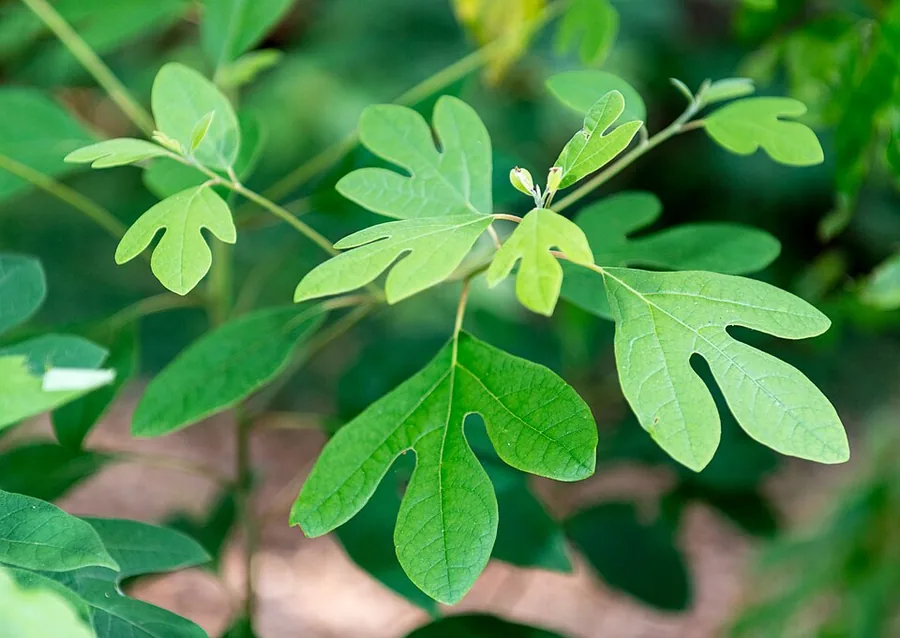
Few native trees set an autumn scene like sassafras. On a single branch it carries three different leaf shapes, from a plain oval to a two-lobed mitten to a three-lobed glove, so the canopy reads as playful even in summer green. When the season turns, it lights up in orange, red, and deep purple, and a brushed leaf or scratched twig releases the warm, spicy scent that once flavored kitchens and root beer.
This is a tree for the looser, wilder part of a property rather than a manicured lawn. It grows fast in full sun to partial shade on moist, acidic ground and takes cold to zone 4, and its shallow roots send up suckers that fill in a naturalistic thicket over time. Placed along a boundary or a woodland edge, that spreading habit becomes an asset, softening a fence line and drawing birds into view.
There is one line to draw in how you live with it. The roots and bark hold safrole, the compound behind the aroma, and it is a liver toxin the FDA removed from food in 1960. So sassafras earns its place for the color it lends a yard and the wildlife it welcomes, not for anything brewed from its roots.
Care
The short version: set it in full sun to part shade on moist, acidic, well-drained soil, keep it watered through its early years, give it room to spread into a wild edge, and thin the suckers when you want the look of a single trunk.
Light
Give sassafras full sun and it repays the open position with the richest fall color, the reason to place it where afternoon light can reach it. It accepts partial sun or partial shade, though a young tree will lean toward the brightest opening, so an unobstructed spot keeps its form balanced.
Water
A young sassafras wants attention while it settles, so keep the soil evenly moist and water every 7 to 14 days through those first seasons. Once established it carries a dry spell with ease. It prefers moist, well-drained ground and looks its worst standing in soggy clay.
Soil
Plant it in moist, acidic, well-drained loam or sandy soil around a pH of 6.0 to 7.0, the conditions it favors in the wild. It manages clay and dry sites, but alkaline ground shows in the leaves as a pale, chlorotic cast that dulls the display.
Temperature
This is a tree that suits demanding sites, holding up from winter lows near -29°F (-34°C) to summer highs of 100°F (38°C). That range covers most of the temperate eastern US, so it fits comfortably into gardens across the region.
Humidity
Ordinary outdoor air is all it asks, so humidity is nothing to manage. A spot with good airflow does more for its looks than any moisture level, keeping the minor leaf fungi from marring the foliage.
Feeding
An established sassafras looks after itself and rarely needs feeding. On thin soil, a balanced slow-release tree fertilizer in spring keeps it in good form, while a tree on decent ground can go without.
Pruning
Shape it in late winter, clearing dead or crossing branches and trimming root suckers where a clean single trunk suits the setting. For a lower, shrubbier presence, the whole tree can be cut to the ground every 2 to 3 years and allowed to return.
Repotting
Sassafras belongs in open ground, never a container. Its deep taproot makes pot culture and the moving of an established tree impractical, so choose its position with the same care you would give a permanent feature and let it stay.
Size & spacing
Plan its place with scale in mind. A mature sassafras stands 30 to 60 feet (9 to 18 m) tall and spreads 25 to 40 feet (7.6 to 12 m) wide, and the suckers carry the colony wider still, so it reads best with open space around it.
When to plant
Living with sassafras means living by its seasons. Plant young trees in spring once frost has passed, watch greenish-yellow flowers arrive from March to May as the leaves open, and let the bluish-black drupes on red stalks mark late summer into early fall as the year winds down.
Northern hemisphere
Southern hemisphere
Typical months for a temperate climate: start earlier in warm zones, later where spring frosts linger.
- Sow: Not typical; seed needs cold-moist stratification, so sow outdoors in fall or stratify 2-4 months before spring sowing
- Plant: Spring, after the last frost, using young container or root-sucker plants
- Harvest: Greenish-yellow flowers March to May before or with leaf-out; bluish-black drupes on red stalks ripen late summer to early fall
Hardiness
USDA hardiness zones: 4–9
Temperature: down to -34°C
Troubleshooting
For all its easy looks, sassafras brings a few things to keep an eye on: a habit of spreading past its bounds and the occasional pest on the foliage. Only laurel wilt, a threat in the southeast, rises to real concern. Find the symptom below and respond early.
Limbs wilting quickly with dark streaks in the wood
The serious one is laurel wilt, a fungus carried by the redbay ambrosia beetle that clogs the sapwood and takes a tree once it settles in. Look for pinhole beetle holes and toothpick-like frass tubes on the trunk along with dark staining beneath the bark, and have a diagnostic lab confirm it in the southeastern range. There is no cure, so the responsible step is to remove and chip or burn affected trees and never move untreated wood that could carry the beetle onward.
Fix:
- No effective cure once infected; remove and properly dispose of (chip or burn) dead and dying trees to reduce beetle breeding sites
- Do not move untreated wood that could spread the beetle
New shoots filling in around the base of the tree
This is root suckering, the tree's own way of colonizing the ground around it, and it does so with real vigor. Cutting or disturbing the shallow lateral roots only prompts more, so a light touch works best. Mow or cut the suckers through the season, lift the ones you can with a length of root attached, and set a buried barrier or a mowed strip to hold the colony to its intended shape.
Fix:
- Mow or cut suckers to the ground repeatedly through the season
- Dig out unwanted suckers with attached root where practical
- Install a root barrier or maintain a mowed strip to contain the colony
Foliage chewed to lace and marked with spots
Chewed leaves usually mean Japanese beetles and other feeders such as scale, while the spots trace to leaf spot fungi or powdery mildew. On an established tree this stays cosmetic and rarely dims the overall picture. Knock the beetles into soapy water, rake up fallen leaves to reduce the spores, and reserve horticultural oil for a heavy run of scale.
Fix:
- Hand-pick or knock Japanese beetles into soapy water
- Tolerate minor leaf spot; rake and remove fallen leaves to reduce fungal inoculum
- Treat heavy scale infestations with horticultural oil
Toxicity
Style aside, one rule shapes how a household lives with this tree. The roots, bark, and oil hold safrole, a liver toxin flagged as a likely carcinogen and off the food list since 1960. The leaves are low-risk to brush against, so the simple etiquette is to keep people and pets from chewing the woody parts or brewing homemade teas.
Toxic to
Cats · Dogs · Horses · Rabbits · Livestock · Birds · People
Cats Caution
The aromatic roots and bark hold safrole, which is hard on a cat's liver, so the concern is a cat gnawing or licking the woody parts rather than passing the leaves. Keep cut roots, bark, and any sassafras oil stored well out of a cat's reach.
Dogs Caution
A dog that chews bark, digs at roots, or gets into sassafras oil takes in safrole, which strains the liver over time. The leaves are low-risk, but the woody parts are not, so keep fallen branches and stored roots away from a curious dog.
Horses Caution
When a horse browses the bark or roots, it meets the same liver-toxic safrole. Fence horses back from any trunk within reach, and clear any prunings that drop into the paddock.
Rabbits Caution
A small animal needs only a small dose, so keep rabbits from nibbling the bark or roots where safrole concentrates. Hold them clear of the trunk and any trimmings.
Livestock Caution
Cattle, goats, and sheep that strip bark or chew exposed roots take in safrole, which burdens the liver. Watch grazing animals near the tree and pull any felled wood out of the pasture.
Birds Caution
Wild birds eat the ripe bluish-black drupes without trouble, since the safrole sits in the woody roots and bark and not the fruit. Even so, keep caged or backyard birds from pecking at loose bark or root pieces.
People Caution
Traditional teas and file powder came from this tree, yet safrole is a hepatotoxin and a likely carcinogen the FDA banned from food in 1960. No amount of homemade root or bark tea or sassafras oil counts as safe, so leave them be and keep children from chewing the bark.
Foliage contact is low-risk, but do not let people or pets chew or ingest roots, bark, or sassafras oil. Avoid homemade root/bark teas and oil.
Helpline numbers

United States
ASPCA Animal Poison Control: (888) 426-4435 (fee applies)
Poison Control: (800) 222-1222



Canada
Poison Centres: 1-844-764-7669
Varieties
There is no catalog to page through here. Sassafras is grown almost entirely as the wild native species, so the choice is really about placing the tree well rather than picking a cultivar.
Sassafras albidum (species)
This is the wild native form, prized for its three leaf shapes and its glowing orange-red-purple autumn color, with almost no named cultivars in circulation to choose between.
How to propagate
Adding more sassafras to a landscape usually starts with the tree itself, dividing off its roots and suckers, while a patient gardener can raise new plants from stratified seed.
SeedModerate
Sow outdoors in fall, or cold-moist stratify 2-4 months and sow in spring · Several months to germinate; 1-2 seasons to establish
Sassafras seed stays dormant until it has weathered a cold, moist spell, so sow it outdoors in fall or give it 2 to 4 months of cold-moist stratification before a spring sowing. Clean the fleshy pulp from the fruit first. From there it asks for patience, taking several months to germinate and a season or two before the young tree is settled into its place.
Stem cuttingsDemanding
Dig dormant root pieces or detach rooted suckers in late winter to early spring · One growing season
The most dependable path is to dig dormant root pieces or lift the tree's own rooted suckers, working in late winter to early spring while it rests. Given a single growing season these settle in and take hold. Trying to move a larger, established plant rarely succeeds, thanks to the deep taproot.
LayeringModerate
Spring · One to two seasons
Sassafras layers itself through its spreading root suckers, so in spring a small one can be severed and moved to a new corner of the garden. Allow it one to two seasons to root down and stand on its own.
Myths
Sassafras root and root-beer flavoring are a harmless natural tonic.
The compound behind that signature scent is safrole, a hepatotoxin and a likely human carcinogen. It caused liver tumors in lab animals, and the FDA banned safrole and sassafras oil as food additives in 1960. A natural pedigree does not make the old root tonics safe, so they belong to history rather than the kitchen.