Herb · Lamiaceae
Bee Balm
Monarda didyma
Few perennials style a summer border like bee balm: sun-drenched, generously watered, and given space, it becomes a living stage for hummingbirds and bees.
Full sun
Every 3–7 days
USDA 4–9
2–4 ft · 0.6–1.2 m
Overview
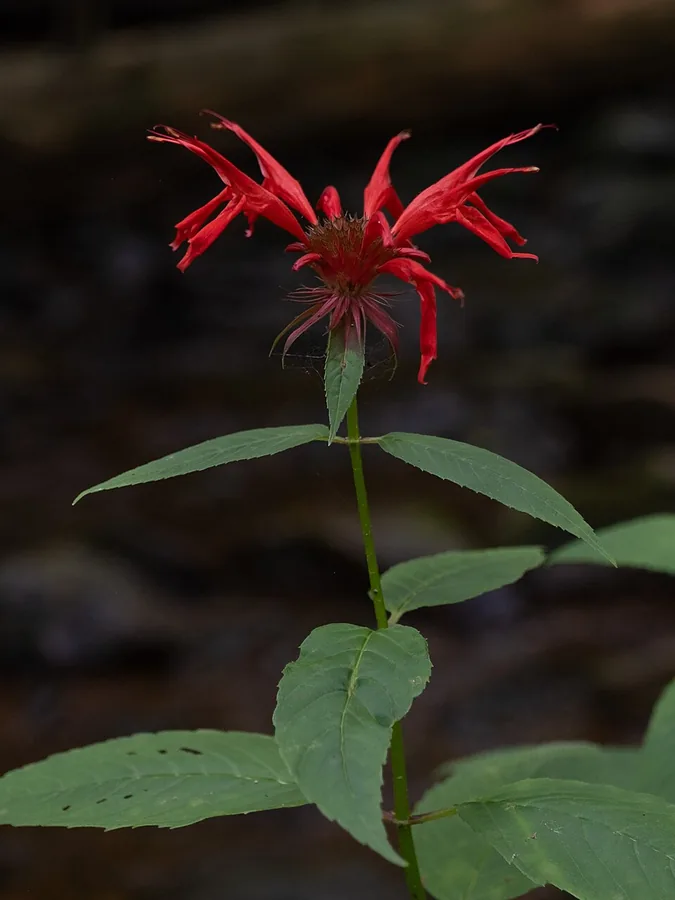
A mint-family native of North America, bee balm brings an easy, cottage-garden mood the moment its flowers open. Ragged heads in red, pink, or wine hover over scented foliage and gather bees, butterflies, and hummingbirds into the border for weeks, giving a quiet corner something to linger by. Brush past on the way through and the leaves release a citrus note, the reason it also answers to bergamot.
Its way of growing shapes how you place it: underground rhizomes let one plant drift into a generous colony over a couple of seasons. That is a gift in a loose, meadow-style scheme and a matter of upkeep in a structured bed, where the odd division holds it to its place. The foliage carries a story of its own, steeped for generations by the Oswego people, which is where the name Oswego tea began.
Little is asked of the gardener who wants it to settle into a space: sun, soil that stays moist, and air drifting freely among the stems. Give those and the reward is color through the heart of summer. Let the air grow still, though, and powdery mildew, this plant's single real shortcoming, finds its opening.
Care
The short version: a sunny position, fertile soil that never quite dries, and generous spacing keep this perennial at its best. Refresh the planting by dividing every 3 to 4 years, and remove faded flower heads to invite an encore of bloom.
Light
Set bee balm in full sun; it is the sort of plant you give the brightest, most open corner of a bed, and it flowers all the better for it. A little partial shade is tolerated, yet shade is what dims the display and lets mildew gain a foothold.
Water
At heart this is a plant of damp meadows, and it looks its best where the ground holds steady moisture. A drink every 3 to 7 days answers most conditions; deliver it low, at the roots rather than over the leaves, and powdery mildew stays out of the picture.
Soil
Plant it in rich, humusy ground that holds moisture, even heavy clay, which bee balm tolerates well. A pH between 6.0 and 7.0 suits it best, on the slightly acidic to neutral side.
Temperature
This is a tough, cold-hardy perennial that takes winters down to -29°F (-34°C) and summer heat up to 90°F (32°C). That range covers a lot of gardens, which is part of why it shows up in so many of them.
Humidity
Ordinary garden humidity in the 40% to 60% range asks nothing special of you. The real luxury this plant craves is airflow; give the planting breathing room and the stagnant conditions mildew loves never settle in.
Feeding
A single spring helping of balanced fertilizer, or an elegant layer of compost, sets the tone for the whole season. This is a native with modest tastes, content in unremarkable garden soil.
Pruning
Trim the faded heads through the season and a second wave of bloom follows; when flowering finally ends, cut the plant to its low foliage so the bed stays composed. Thin any crowded stems for the air's sake, and let a few hollow stems overwinter as nesting quarters for native bees.
Repotting
Bee balm lives as a garden perennial rather than a potted plant, so the real maintenance is dividing the clump every 3 to 4 years. Lift and split it once the center starts to die out or the flowering falls off.
Size & spacing
Plants reach 2 to 4 feet (60 to 120 cm) tall and spread 16 to 35 inches (40 to 90 cm) wide, filling the middle of a border with ease. Grant each clump its full width so air moves freely and mildew stays down.
When to plant
Bee balm keeps the easy seasonal rhythm of a cold-winter perennial. Begin seed under cover toward the end of winter, move plants outdoors in spring once the frost has gone, and the showy flowers arrive from midsummer into early fall to carry the late-season border. Gather the leaves for tea just ahead of bloom, when their flavor is fullest.
Northern hemisphere
Southern hemisphere
Typical months for a temperate climate: start earlier in warm zones, later where spring frosts linger.
- Sow: Late winter, 6-8 weeks before last frost
- Plant: Spring after last frost
- Harvest: Showy flowers mid-to-late summer (July-September); harvest aromatic leaves before flowering for best tea flavor
Hardiness
USDA hardiness zones: 4–9
Temperature: down to -34°C
Troubleshooting
Nearly every setback here traces to the same quiet culprits, crowded, motionless air or a shortage of sun, the very things that dull any planting. A glance at the foliage and the outline of the clump usually tells the story. Match what you see to an entry below, then act before it takes hold.
A Hollow Heart Framed by Racing Edges
A thinning center wrapped in eager new growth is simply the signature of a rhizomatous perennial, the old core fading as the margins press outward. There is no illness at work. Lift and divide the planting every 3 to 4 years, replant the strong outer pieces where the display should read, and remove wayward rhizomes that overstep the composition.
Fix:
- Divide clumps every 3-4 years, replanting vigorous outer sections
- Remove unwanted rhizomes to control spread
White Dusty Film Dulling the Leaves
That chalky bloom is powdery mildew, the reliable spoiler of a bee balm display, and it settles wherever plants stand too close in sheltered, unmoving air. Watering from above and warm, close, breezeless weather only deepen it. Ease the crowding by thinning and dividing, direct water to the base, clear away the worst leaves, and lean on mildew-resistant cultivars when you replant.
Fix:
- Improve air circulation by thinning and dividing crowded clumps
- Avoid overhead watering; water at the base
- Remove and dispose of affected foliage
- Choose mildew-resistant cultivars
Orange-Brown Flecks Beneath the Leaves
Rusty raised flecks along the leaf undersides are the signature of a rust infection. Lift away and discard the blemished leaves, loosen the planting so air travels through it, and steer water clear of the foliage, leaving the spores no damp footing to take.
Fix:
- Remove and destroy infected leaves
- Improve air circulation
- Avoid wetting foliage
Lush Foliage but a Disappointing Show of Bloom
When the color fails to arrive, look to two things: too little sun and a clump grown so dense it has run out of room to perform. Give it a brighter setting or clear what shades it, divide the crowded heart to renew its energy, and keep the faded heads trimmed away to draw a second wave of flower.
Fix:
- Relocate to or thin for full sun
- Divide overcrowded clumps
- Deadhead to encourage rebloom
Toxicity
For a relaxed home and garden, the news is easy: bee balm is entirely safe. Its aromatic leaves are edible, long steeped as Oswego tea, and no extension source records the plant as toxic to people or pets. A curious pet that nibbles a leaf comes to no harm.
Safe for
People · Cats · Dogs · Horses · Rabbits · Livestock · Birds
Cats None
A household cat drawn to the border finds nothing poisonous in this planting. Should one overindulge on any aromatic herb, a passing bout of mild stomach upset is the extent of it, and it clears without help.
Dogs None
A dog roaming the beds can chew or bump the fragrant leaves with complete impunity. Only true overindulgence brings a passing digestive wobble, the result of volume rather than any toxin.
Horses Safe
In pasture, horses take the plant readily, the very grazing habit that lent the wild form its old name, horsemint. Nothing in it warrants concern.
Rabbits Safe
Rabbits face no danger from a taste of the foliage. More often the minty perfume settles the matter for them, and they move along to other plantings.
Livestock Safe
Pastured animals, from sheep and goats to cattle, take the plant in stride. There is simply nothing in it to trouble a herd at grass.
Birds Safe
Birds have nothing to fear from bee balm; quite the opposite, since hummingbirds treat the nectar-laden blooms as a summer-long destination. Even a flock of backyard hens can peck at the foliage safely.
People Safe
For people, the plant is as useful as it is lovely. Its fragrant foliage steeps into the storied Oswego tea, best gathered before bloom, while the flowers lend a graceful edible touch to a summer table.
Generally safe to handle; the aromatic foliage is edible. As with any plant, discourage pets from grazing large quantities.
Varieties
Named bee balm cultivars are many, chosen above all for flower color and for how gracefully they resist mildew. The selections that follow are the ones you will meet most often.
'Jacob Cline'
Its big scarlet flowers and easy way of shaking off mildew have made it a border staple people return to season after season.
'Marshall's Delight'
Offers clear pink flowers on a plant bred for strong mildew resistance.
'Raspberry Wine'
Carries wine-red blooms on tall, vigorous stems that stand well in a border.
'Petite Delight'
Petite enough for containers and small city beds, it pairs lavender-pink flowers with a tidy, compact habit.
How to propagate
Bee balm multiplies with little fuss, and the quickest route is the very division that keeps a planting fresh. When more plants are wanted from scratch, cuttings and seed extend the range through the garden.
DivisionEasy
Spring or fall, every 3-4 years · One growing season
Division is both the tidiest way to make more of this perennial and the very upkeep it asks for anyway. In spring or fall, ease the widening clump from the ground, part it into sections, set the healthy outer growth back in place, and let the tired woody heart go. A single season sees the new pieces at home.
Stem cuttingsModerate
Late spring to early summer from softwood growth · Several weeks to root, established by next season
For a gentler pace, root a few softwood cuttings. Choose shoots without flowers as spring gives way to summer, settle them into moist medium, and allow several weeks for roots; by next season they will have found their footing.
SeedModerate
Start indoors late winter or sow outdoors in spring · Blooms typically in the second year
Seed is an option, sown indoors in late winter or out in the open in spring, though the flowers hold back until the second year. Keep in mind that a named cultivar will not repeat itself from seed, so division is the path to a faithful copy of the parent.
Myths
Bee Balm Is the Source of the Bergamot That Flavors Earl Grey Tea.
The citrus note in Earl Grey is drawn from Citrus bergamia, known as the bergamot orange, an entirely different plant. Bee balm borrowed the bergamot name for its similarly citrusy fragrance, nothing more. The tea and the perennial share only a scent.